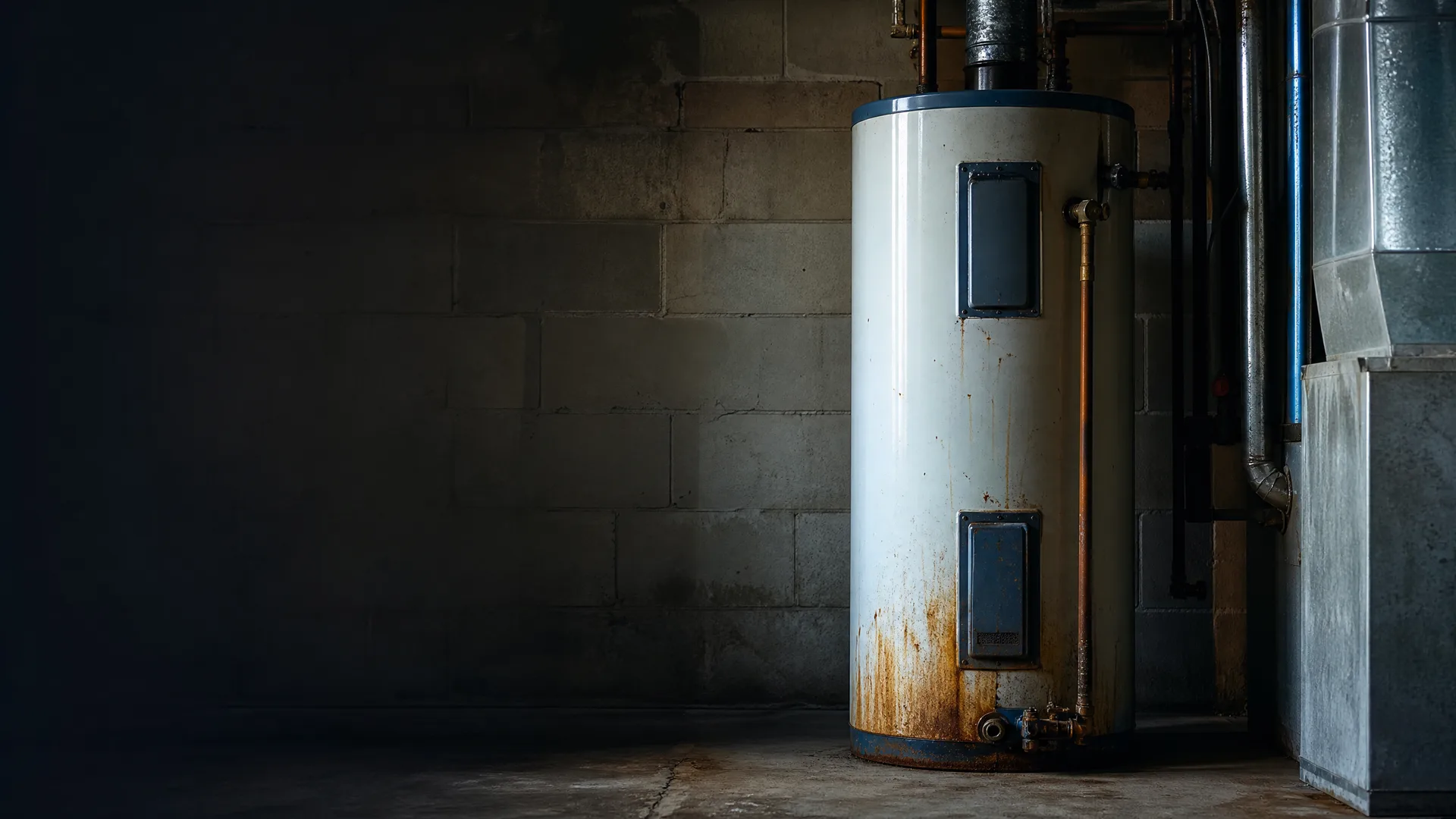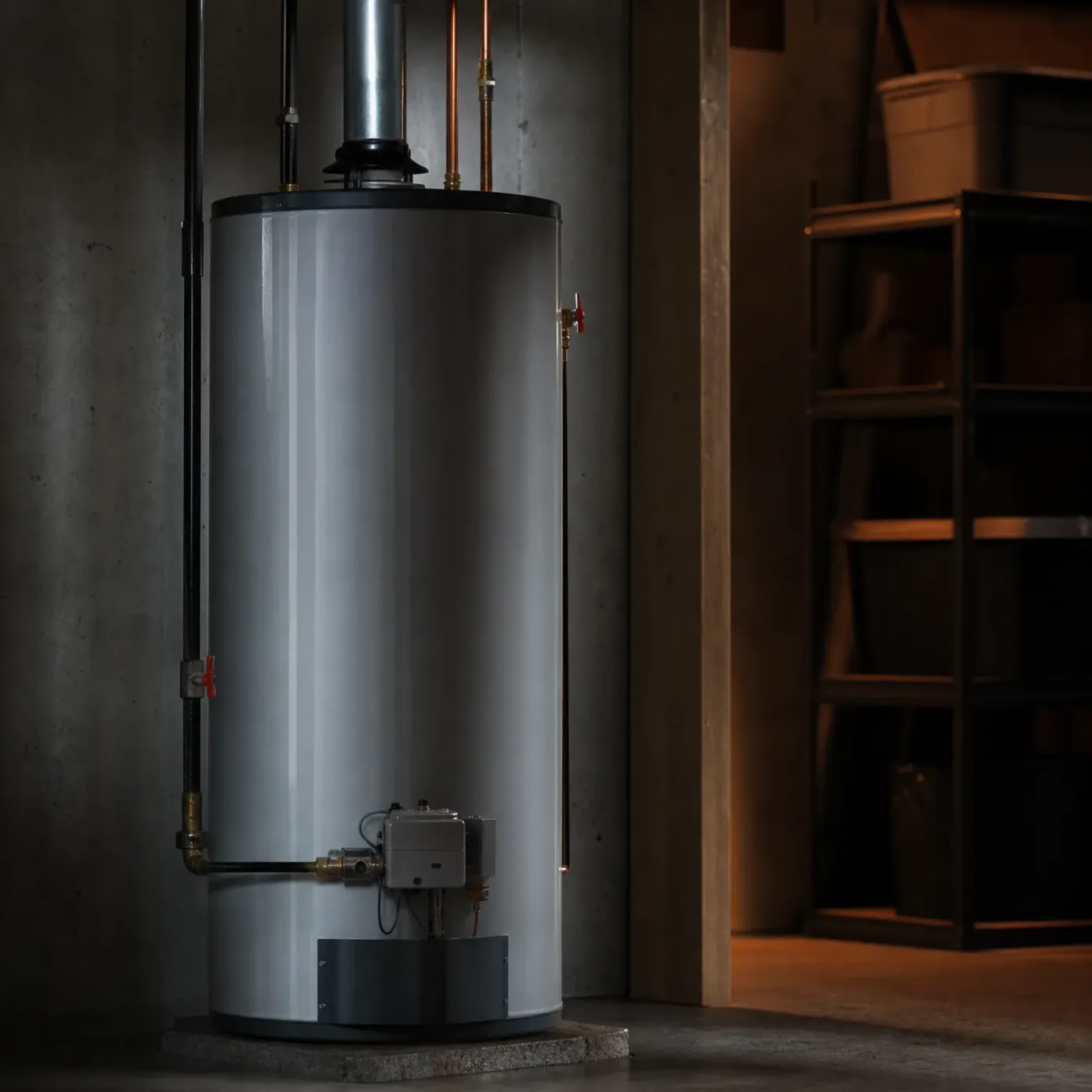
A large gray cylindrical gas water heater with copper and black pipes and a flue stack, standing on a concrete pad against a concrete wall, with a dark metal shelving unit in the background.

It's off your list after this

Gas or electric water heater for a Kansas home

Most homes in Kansas already heat with gas, so switching to electric is rarely about which is better and more about your gas line, your panel, and what a new unit actually costs you to run. This page walks through what that decision looks like for your home. Send the details once, and the search for the right installer is off your plate.

Hand off the search

If your home already has a gas water heater, replacing it with another gas unit is almost always the simpler and cheaper path, since the gas line, vent, and connections are already there. Switching to electric means running new wiring to the tank, sometimes a dedicated circuit, and that adds cost and work beyond the water heater itself. Electric models cost less upfront and don't need venting, which matters if you're converting a space that never had a gas line. Gas units heat water faster and keep working through a power outage, which counts for something in Kansas when summer storms knock the power out. For most homes here, staying with what you have, gas to gas or electric to electric, is the straightforward choice. The exception is if your gas line or vent is old or undersized, which can change the math enough that a licensed installer should look at it before you decide.

63.1% of homes statewide heat with gas

Most houses around you run on gas, and if yours is one of them, a gas water heater is the straightforward replacement. The line and venting are already sized for it, so a licensed installer can swap the tank without opening up new wiring or a new vent path.

ACS 2020-2024 5-year B25040

Staying with gas

If your tank is gas now, keeping it gas is the easier call. The line is already run, the vent is already sized, and a licensed installer can swap the old tank for a new one without touching your walls or your panel. Recovery is faster too, so a full tank of hot water comes back quicker after a houseful of showers. Gas tanks also keep working through a power outage, which matters if your power drops during a storm. For most Kansas homes that already have the gas line in place, this is the path with the fewest surprises.
Switching to electric

Moving to electric means running new wiring to the tank, and your panel has to have room for it. That's a real cost before the water heater itself even comes into play. What you get back is a unit that doesn't need venting, which opens up where it can go, and one less gas appliance in the house. Power in Kansas isn't cheaper than gas to run a tank on, so this switch is rarely about saving money. It tends to make sense when the gas line isn't there to begin with, or when a homeowner wants the tank off gas entirely.

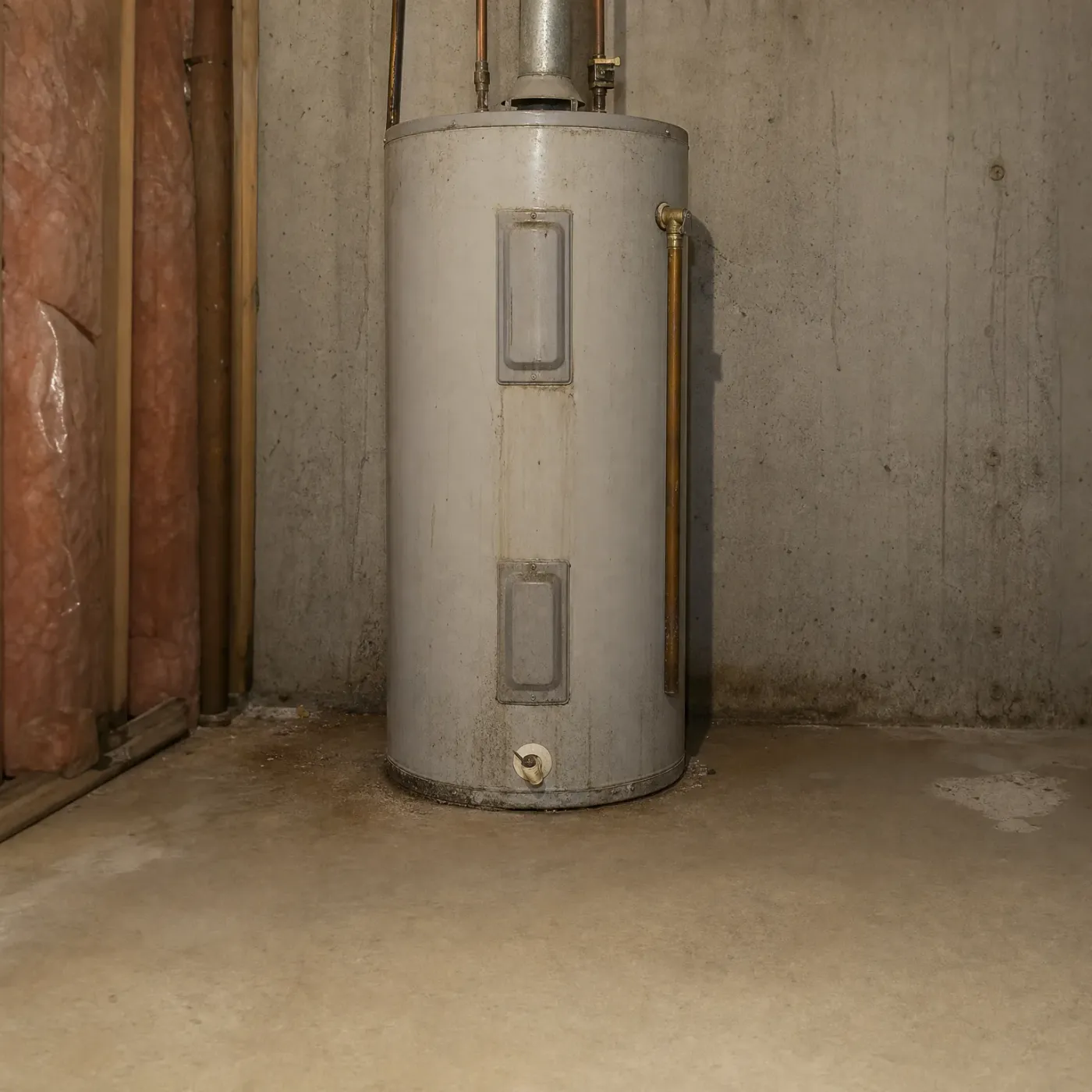
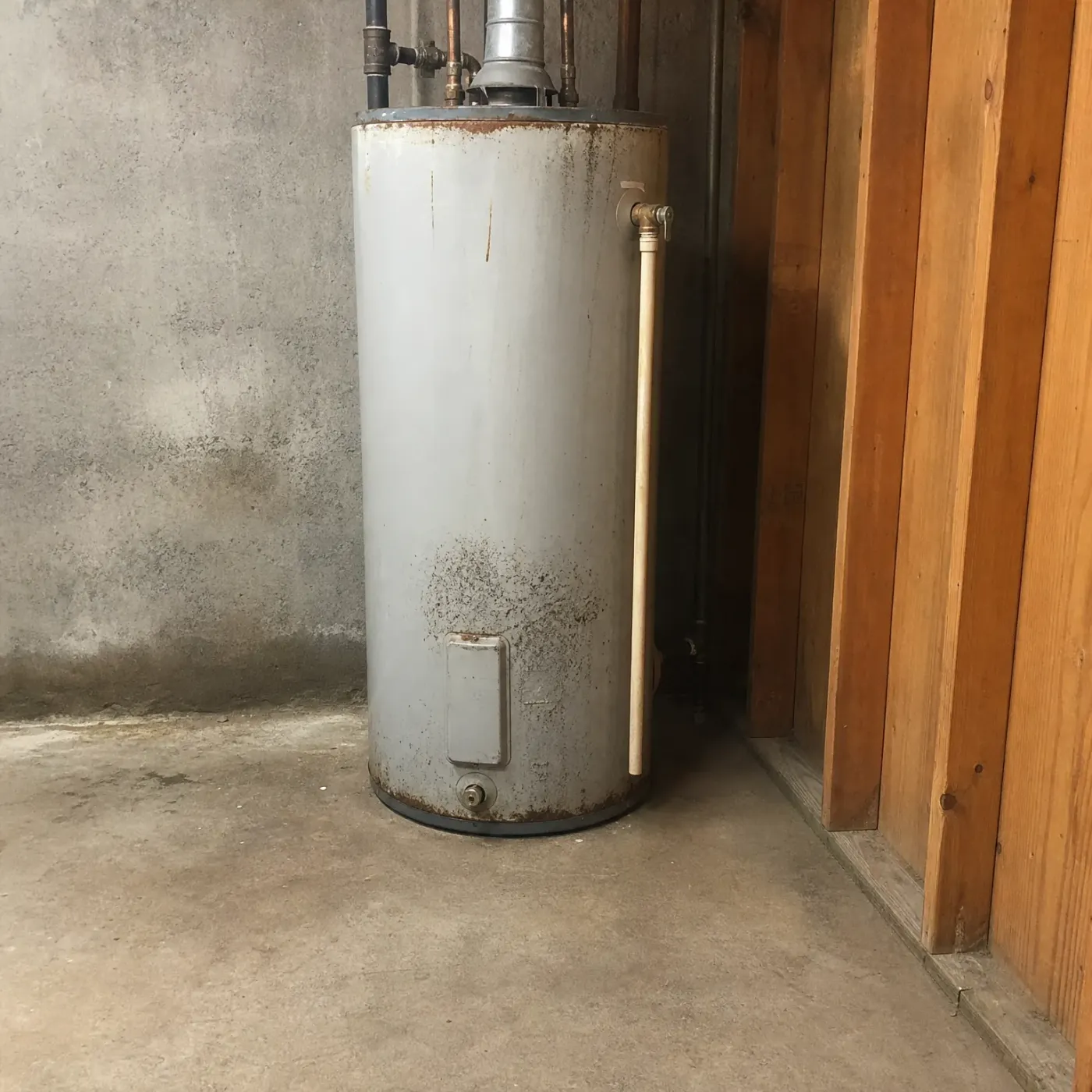
A rusting gray cylindrical water heater with copper pipes and a drain tube stands on a concrete floor against a concrete wall beside vertical wood paneling.
Before you get your water heater installation
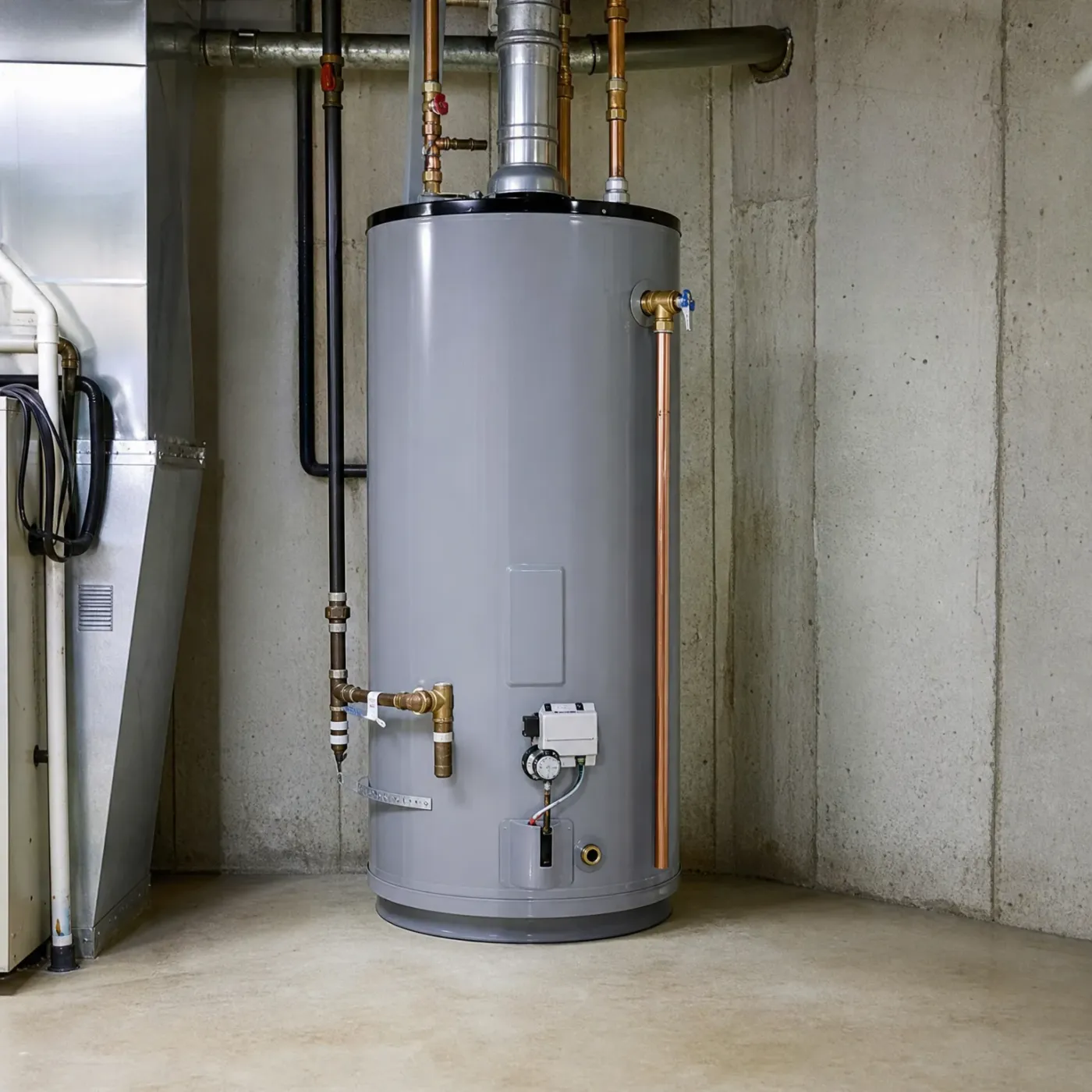
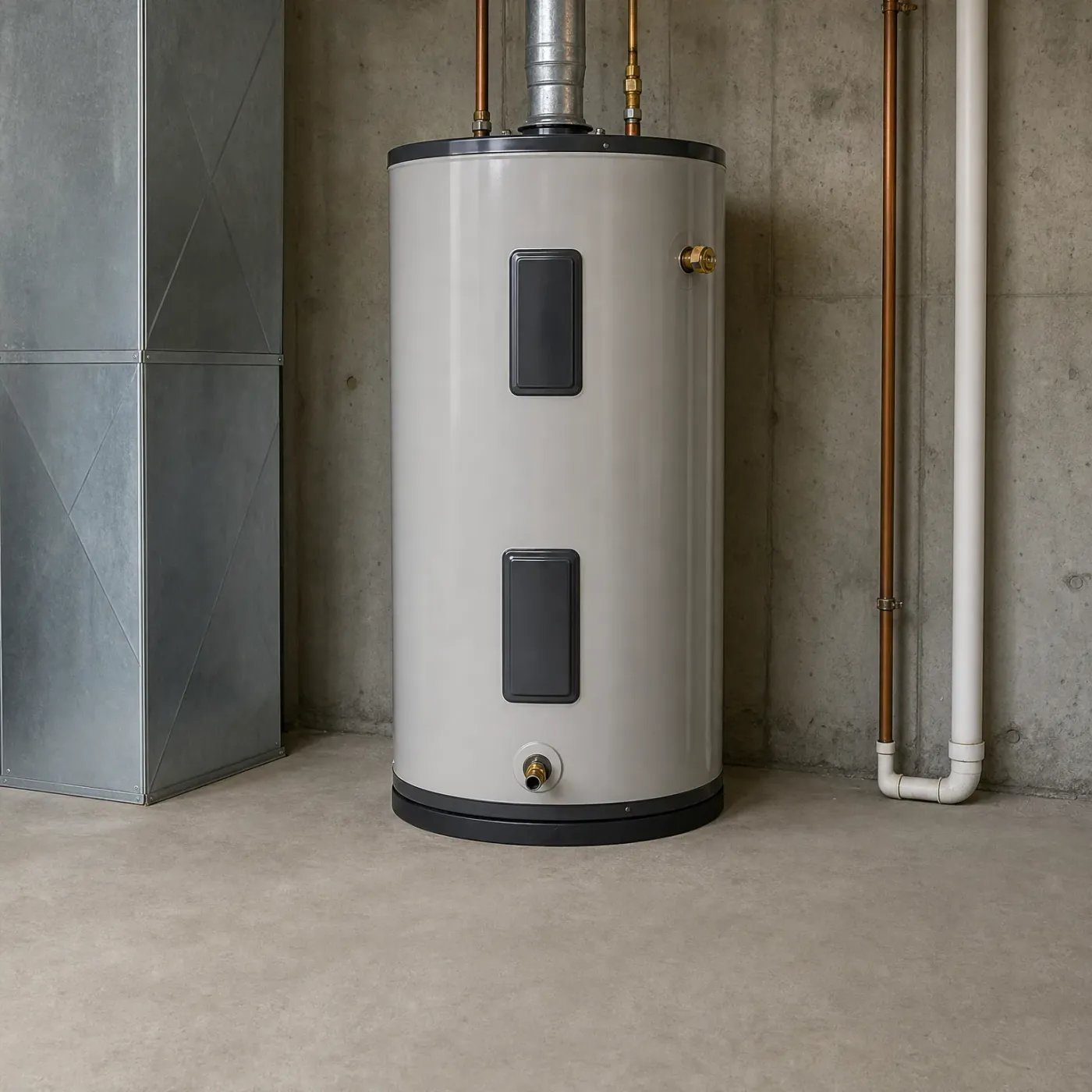
A cylindrical beige water heater with two dark access panels stands on a concrete floor against a concrete wall, with copper and white pipes to the right and sheet-metal ductwork to the left.
After you get your water heater installation

Stop chasing a water heater pro

A water heater that's already decided which fuel it wants makes this easier than it sounds. If gas serves your home now, staying with gas keeps the job to a tank swap, and a licensed installer who works on these units all season in Kansas knows which parts of that old tank tend to give out first and what to check before the new one goes in. You don't need to research that yourself. Send the request through and it goes to one contractor, local to you, not a list of five competing for the callback. That's the whole point of handing it off now. Summers here get sticky enough without also chasing quotes and call-backs while you're without hot water. Once the form is in, the search for someone qualified is off your plate. You just wait for the install.

A rusting white and blue water heater with copper and steel pipes stands against a concrete block wall in a dim basement with a bare concrete floor.

You go down to change the laundry and the light in the utility room is already on, that low evening kind that makes everything look older than it is. The tank is sitting in the corner the way it has for years, and tonight you notice the streaks of rust running down from the seam at the bottom, dried in a pattern like they have been there a while. You crouch down and touch the floor near the base. Dry for now. Upstairs the dishwasher is running and the bathroom tap gets used before bed, the usual draw on a Kansas evening, and you find yourself doing the math on how much longer this tank is going to hold before that rust turns into a puddle.

A large gray cylindrical gas water heater stands in a concrete-walled basement corner, connected to copper and black pipes and a metal flue, with ductwork at left.
A gas water heater working as it should has a steady flame and a clear flue pulling exhaust up and out, same as the one already in your basement.
A gray cylindrical water heater with two access panels and copper piping stands in the corner of a concrete-walled basement next to exposed pink insulation.
Rust streaking down the tank and pooling near the drain valve means the inside is failing, and that's when a swap needs to happen, not later.
A middle-aged woman with shoulder-length dark hair, wearing a gray cardigan over a cream top, sits in an upholstered armchair and looks toward a sunlit window, with a shelf holding framed pictures and a plant behind her.
A woman and a child wrapped together in a thick knitted blanket on a sofa, both with eyes closed, with a lit table lamp and houseplant in the dim background.

Gas or Electric: Where You Stand

  • If your water heater runs on gas now, staying with gas keeps the job to a straight tank swap.
  • Switching to electric means new wiring to the tank and sometimes panel work before the unit goes in.
  • Kansas summers get sticky, but that has no bearing on which fuel makes sense here.
  • A licensed installer who works on these units all season in Kansas can tell you what your home actually needs.
  • The line, vent, and connections already in place are what make gas the simpler path for most homes here.
  • What you have now is usually the strongest sign of what you should install next.

Most homes in Kansas already have a gas water heater, and that single fact answers most of the question. The gas line is run, the vent is sized, and the connections are already in place, so a licensed installer can take out the old tank and set a new one in its spot without opening up a wall or touching your electrical panel. Electric is a different job. It means new wiring to the tank, and for some homes, panel work before the unit can even go in. Neither fuel heats water better than the other once it's installed and running. The real difference is what it takes to get there, and for a home that's already set up for gas, that path is shorter. None of this changes with the weather. Summers here get sticky and winters get cold, but that has nothing to do with which fuel is the right call for your water heater. What matters is what's already running to the tank. A licensed installer who works on these units all season in Kansas can look at your gas line, your vent, and your panel, and tell you straight whether a swap is enough or whether you're looking at more. For most homes here, what you already have is the clearest sign of what to install next.

A gray-haired man in a dark sweater sits on a light gray sofa in a living room, looking toward a sunlit window with trees outside.
A gray-haired man in a dark blue sweater sits on a light gray sofa in a sunlit living room, looking off to the side, with a potted plant, shelving unit, and large glass doors behind him.
A bearded man with graying hair in a dark green sweater sits on a sofa in a living room, looking off to the side, with a sliding glass door and a dim kitchen doorway behind him.
A gray-haired man in a dark knit sweater sits on a light gray sofa in a living room, looking toward a sunlit window, with houseplants, a lamp, and framed art in the background.

Water Heater Installation

Send one request and you're done looking

The pro who reaches out is licensed in Kansas.

A black-framed smartphone standing upright against a plain light gray background, its screen filled with solid green.
Step 1 of 3: Equipment