Profile view of a bearded man wearing a dark baseball cap and a dark gray T-shirt against a plain off-white background.

Hot water runs out fast in Hutchinson, KS

Step 1 of 3: Equipment

Running out of hot water fast usually means the tank can't keep up with what your house needs, or it's not heating as well as it used to. On a 40 or 50 gallon gas tank, a family taking back to back showers on a cold Kansas morning can empty it before everyone's done, especially once winter water coming into the house is colder and takes more time and gas to heat. Sediment that settles at the bottom of the tank over years also cuts how much hot water it can hold and how fast the burner can recover between uses. Sometimes it's not the tank at all. A failing heating element or a bad thermostat on the tank can mean you never get a full tank of hot water to begin with. Either way, this points to a repair a licensed plumber can diagnose, not something to wait out through another cold snap.

A woman with long wavy brown hair in a grey ribbed sweater sits on a couch indoors, looking toward a window, with a potted palm-like plant and fireplace behind her.
A woman with long brown hair wearing a green V-neck top and beige cardigan sits on a light sofa, looking off to the side, with a dining table, lamp and framed picture in the background.
A woman with long dark hair in a cream knit sweater sits on a beige sofa indoors, looking toward a bright window with a houseplant and framed picture in the background.
A woman with long dark hair in a green knit sweater sits on a couch indoors, smiling and looking toward a window with a blurred room behind her.

A tank heating less than it used to

Gas water heaters have a burner under the tank and a dip tube that sends cold water to the bottom to be heated. Sediment settles on the bottom over time, especially with Reno County's hard water, and sits between the burner and the water it's supposed to heat. The burner has to work harder to get the same result, so the tank takes longer to recover between uses and runs out sooner than it did when it was new. A tank that used to get a family through showers without trouble and now comes up short is often telling you sediment has built up, not that it's simply old.
A tank sized for a smaller house

A 40 gallon tank holds less hot water than a 50, and either one can be pushed past what it can deliver when more people are showering back to back on a cold morning. The tank mixes in cold water as it draws down, so the water coming out of the faucet cools well before the tank itself is empty. If running out of hot water has been a problem since you moved in, rather than something that started recently, it points to the tank being undersized for how the house uses it, not a part failing.

Why does hot water run short for a house this size?

  • 2.27 people per household on average

    Most households in the county run 2.27 people, often two or three showers back to back on a work morning. A tank sized for fewer people falls behind fast.

  • Half the homes here were built by 1962

    Half the homes here were built in 1962 or earlier, old enough that the original tank size may not match what the household actually uses now.

  • 65.1% of homes heat with gas

    With 65.1% of homes on gas, most of this shortage comes down to burner and dip tube problems rather than an electric element burning out.

ACS 2020-2024

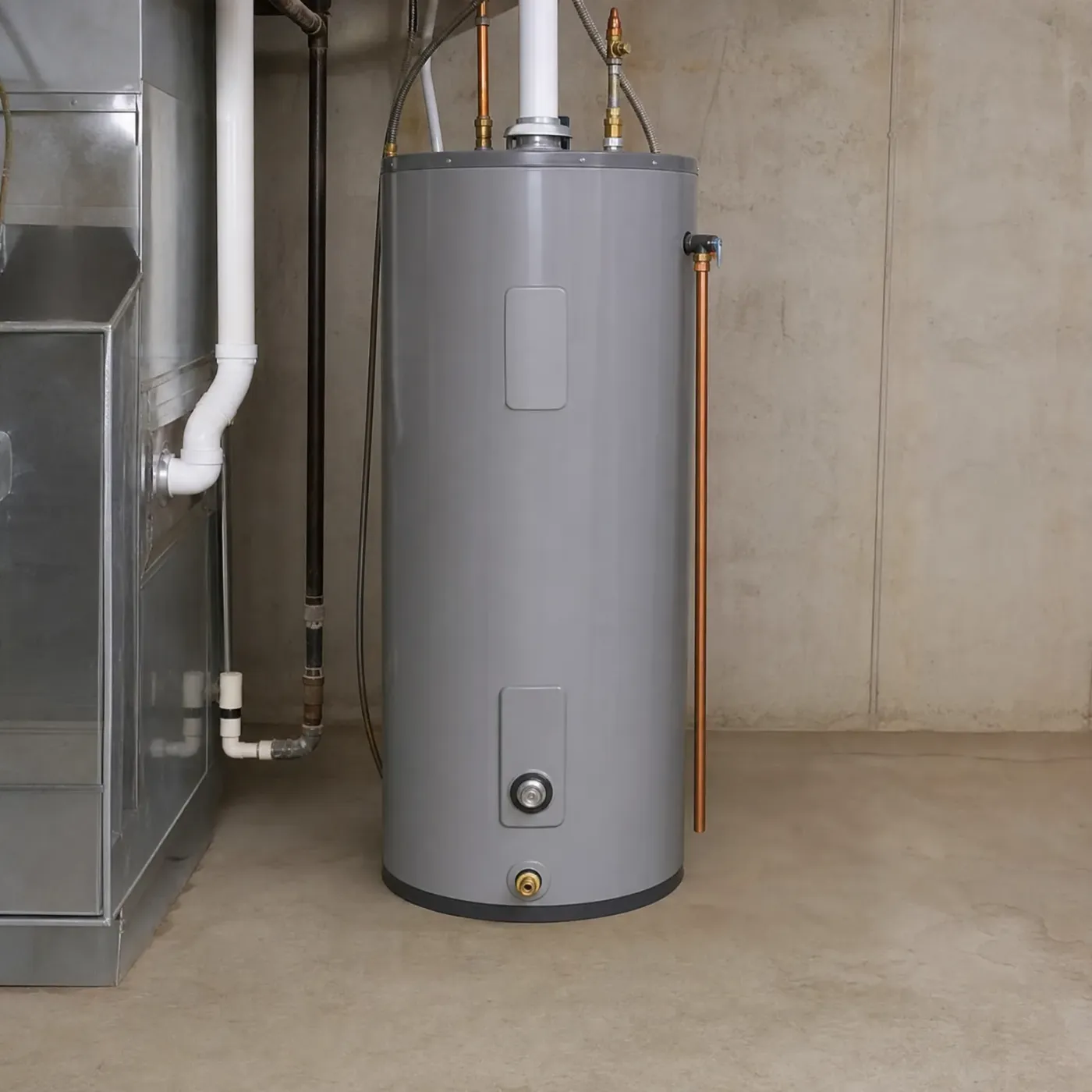
A gray cylindrical water heater stands on a concrete floor against a concrete wall, with copper and white pipes above it and a metal ductwork unit to the left.

Working the way it should

A water heater like this keeps up because nothing is slowing it down. The connections are clean, the valves work, and water moves through the pipes without resistance. Hot water holds up through back to back showers instead of fading halfway.

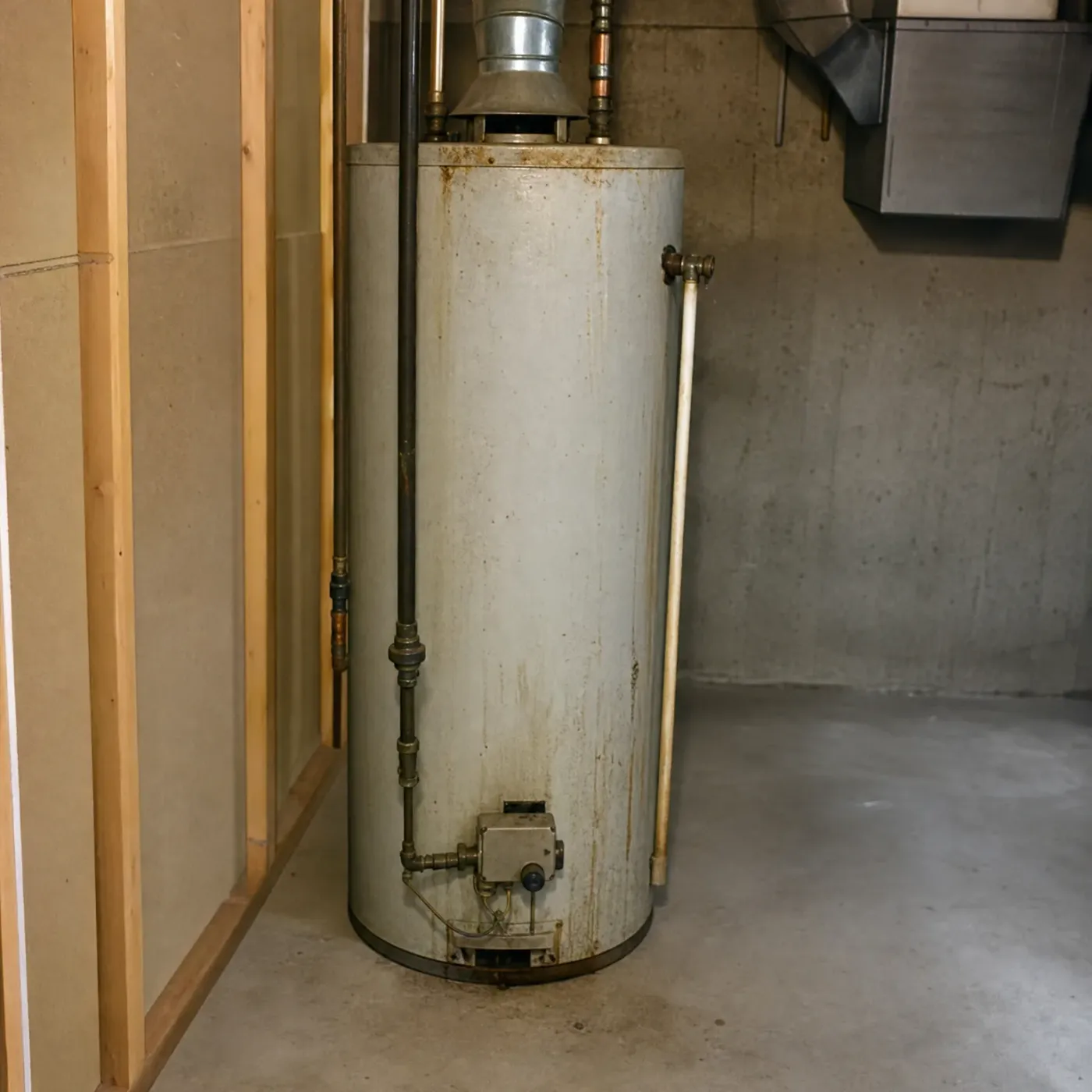
An old rusting gas water heater with flue pipe and connected plumbing stands on a concrete floor in a basement corner beside an unfinished wood-framed wall and a metal duct.

Rust and a struggling burner

Rust like this on the tank often means the inside is corroding too, not just the jacket. A gas valve or flue vent that old may not be drawing or firing the way it was built to. By the time rust shows on the outside, the tank is usually working harder to heat the same amount of water.

Why does my water heater take so long to heat back up between showers?

You run one shower, wait, and the next person gets lukewarm water way sooner than they should. It feels like the tank never fully caught up from the last use. On a gas tank that's working right, recovery between showers shouldn't take this long, so something is slowing down how fast the burner can get a full tank of cold water back up to temperature.

A sediment layer on the bottom of the tank is usually the cause

Recovery time depends on the burner being able to heat the water sitting right above it. Sediment from Reno County's hard water settles on the tank bottom and sits between the burner and the water, so the heat has to work through that layer first. A tank that used to recover in under an hour can take twice that once enough sediment builds up. The burner isn't weaker, it just has more to heat through before the water on top feels any different. A thermocouple or gas valve that's starting to fail can slow recovery too, since the burner won't run at full output. Either way, the tank is working harder to do the same job it used to do faster.

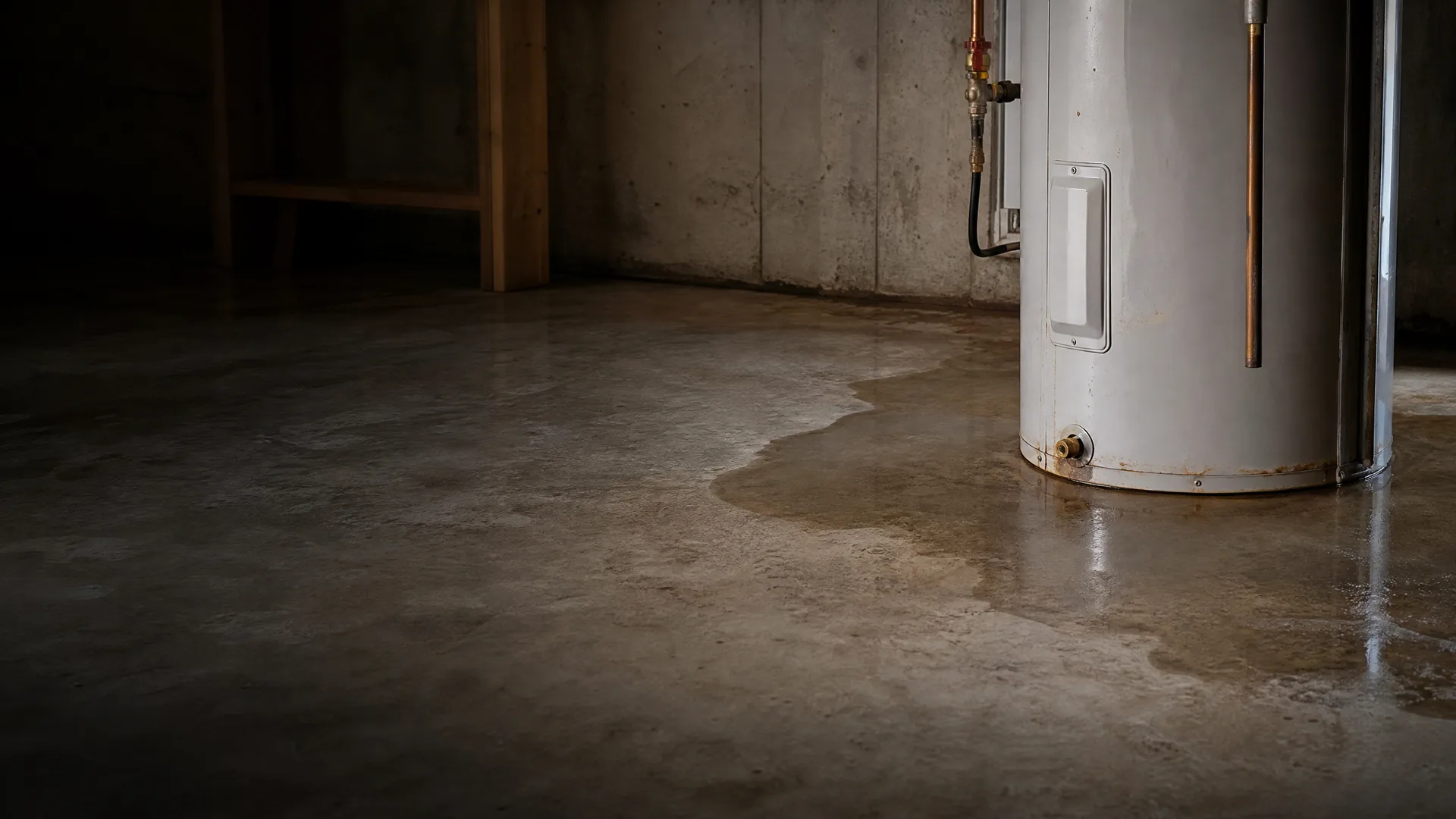
A white cylindrical water heater with copper pipes stands against a concrete basement wall, with water pooled across the surrounding concrete floor.

Saturday morning, and the house is still waking up. You head down to the basement to grab something off the shelf and your socks hit water before you see it. A thin ring of it around the base of the tank, spreading slow across the concrete toward the drain. The tank itself looks fine from the top, no hissing, no smell, just that quiet puddle doing its work while everyone upstairs is still asleep. You crouch down and run a hand along the bottom seam, and it's wet there too, not just condensation. You stand back up, wipe your hand on your jeans, and head for your phone to find someone in Reno County who works on these for a living.

Get matched with a water heater pro in Reno County

A licensed pro who repairs water heaters in Reno County gets your request.

You're not committing to anything by asking.

A tank you can fix still runs out, because it's just not built for what your house asks of it. A bigger gas tank or a tankless unit changes that ceiling.

A tank sized right still runs out short if sediment is eating into the burner's heat or a part has failed. That's a repair, not a bigger tank.

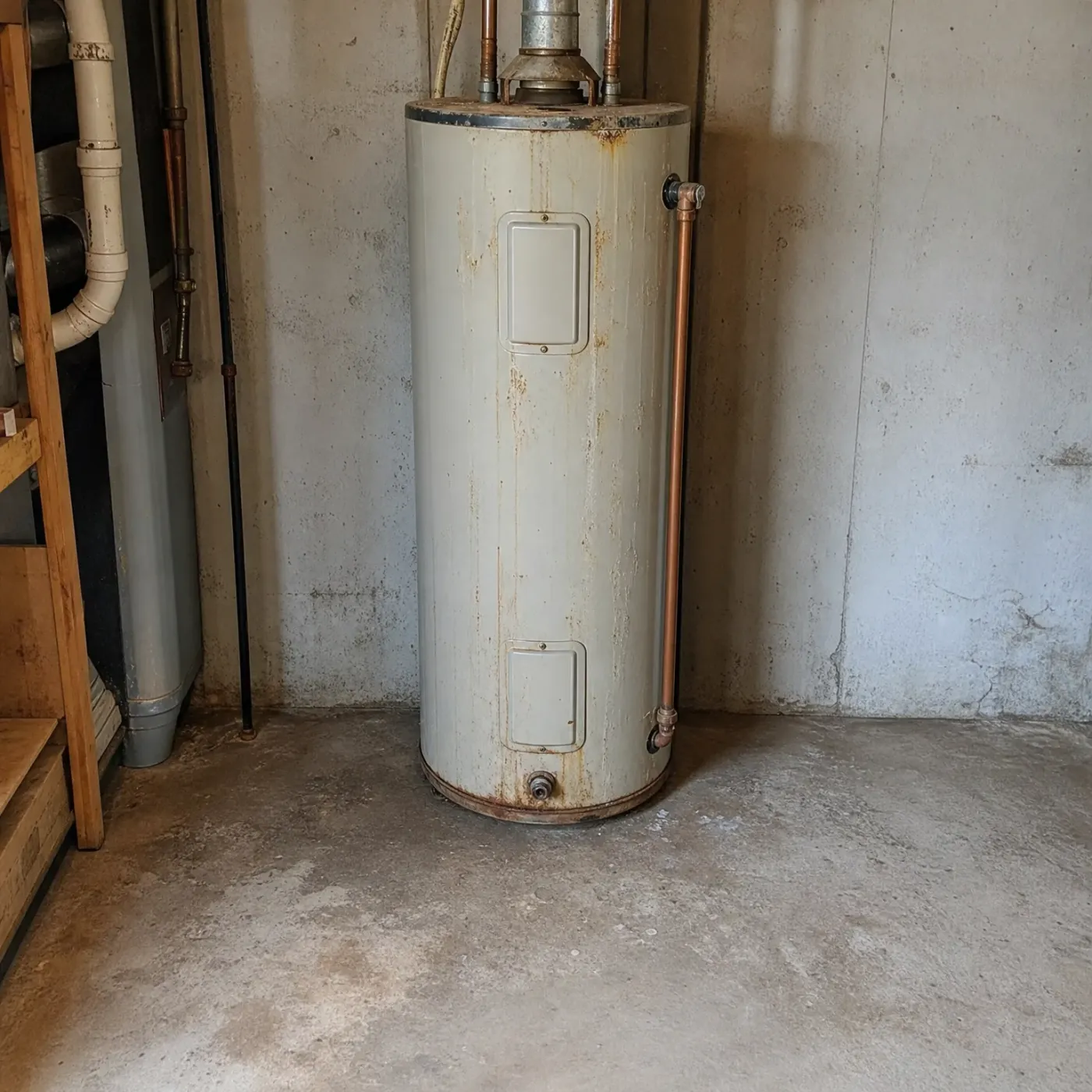
A rusted cream-colored water heater with copper piping and a flue stands in the corner of a concrete-walled basement next to wooden shelving and ductwork.
Before you get your water heater repair
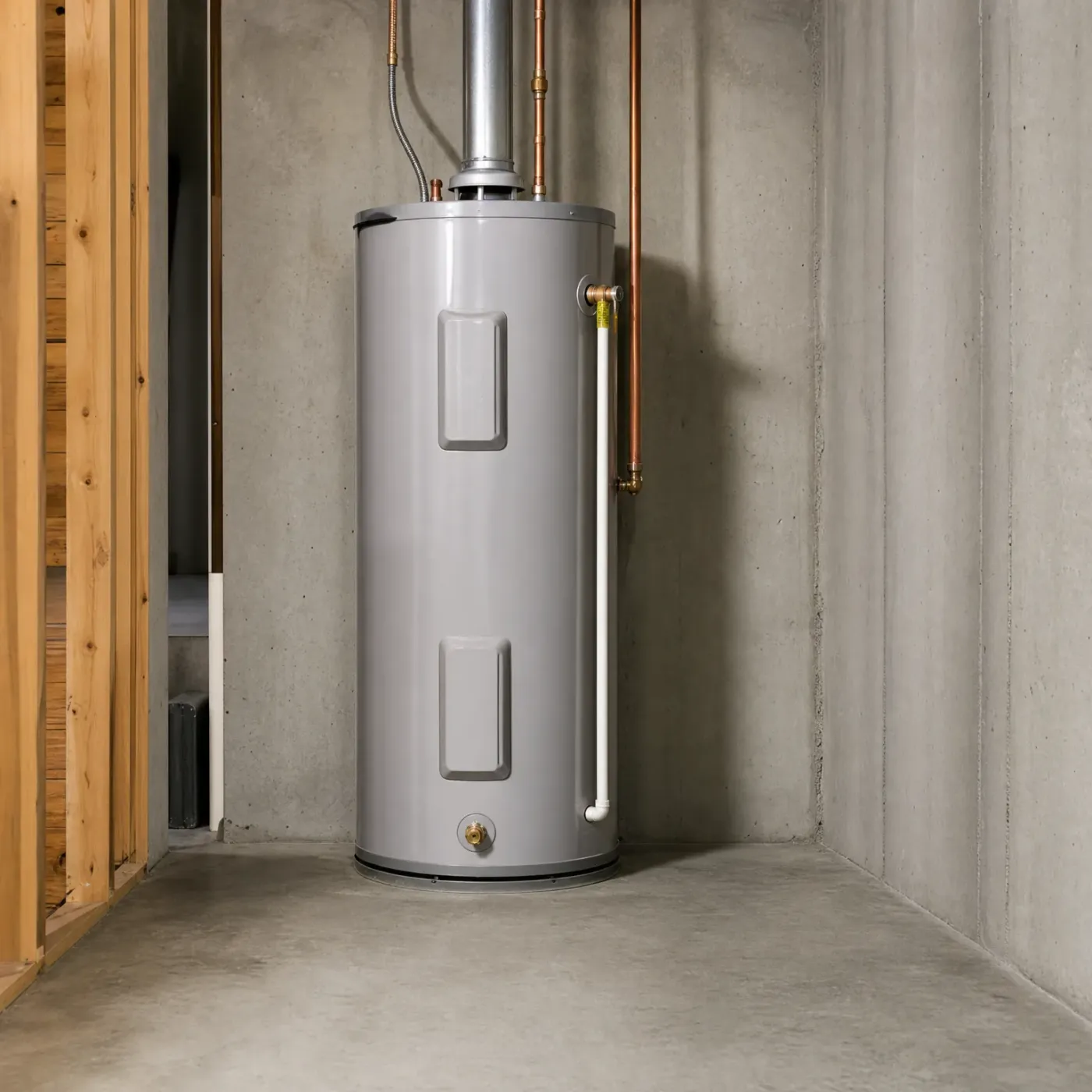
A gray cylindrical water heater standing in a concrete-walled basement corner, with copper and white pipes and a metal flue running up to the ceiling, next to exposed wood framing on the left.
After you get your water heater repair

A gas water heater only makes hot water as fast as its burner can put out heat, so two tanks the same size can recover at different speeds depending on burner size. Inside, a dip tube pushes incoming cold water down to the bottom, near the burner, while the hot water you're using gets drawn off the top. That's how you get hot water while the tank is still refilling. The thermostat usually sits somewhere between 120 and 140 degrees, and if someone's turned it down, there's just less hot water sitting in the tank to begin with. A thermocouple or flame sensor that's wearing out can cut the burner off before the water reaches full temperature, so every cycle falls a little short. Inside the tank, an anode rod corrodes on purpose so the steel lining doesn't, but once it's used up, rust and scale start building faster and that slows heat transfer too. Even gas pressure matters. If the supply to the burner runs low, the flame can't put out full heat, and every recovery cycle takes longer than it should.

How a gas tank actually recovers

  • A gas burner heats water at a set rate, so recovery time depends on burner size, not just tank size.
  • Most residential tanks hold a thermostat set between 120 and 140 degrees, and a lower setting means less usable hot water per tank.
  • The dip tube feeds cold water to the bottom of the tank so the burner heats fresh water while drawing hot water off the top.
  • A thermocouple or flame sensor that's failing can shut the burner down early, cutting a cycle short before the tank reaches temperature.
  • The anode rod inside the tank attracts corrosion so the tank lining doesn't, and a rod that's used up lets rust and scale build faster.
  • Gas supply pressure that's too low starves the burner and stretches out how long each heating cycle takes.
An older woman with short gray hair in a cream cable-knit turtleneck sweater smiles while looking to the side in a wooden kitchen, with a round loaf of bread on a board in the foreground and a lit candle by a dark window.
A woman with dark hair in a bun sits on a sofa with a child resting his head on her shoulder, both wrapped in a cream knit blanket, with a lit lamp and bookshelf in the dim background.

Repair the tank you have

A technician checks the burner, the dip tube, and the sediment, then fixes what's actually wrong. Often cheaper than replacing, if the tank itself is still sound.

Find a local pro

Size up or go tankless

If the tank was always too small for your house, repair won't fix that. A bigger gas tank or a tankless unit is built for what your mornings actually need.

Find a local pro

Fix the Tank, or Size Up

Repair the tank

  • A technician can flush sediment, replace a failing dip tube, or swap a burner that's no longer heating at full rate.
  • Costs less upfront than replacement, and makes sense if the tank is still structurally sound.
  • Fixes what's actually broken, so if the tank was sized right for your house, it goes back to keeping up.
  • A repaired tank still has the same capacity it always had, so if your household has grown, the shortage comes back.
  • Won't help if the tank was always too small for the people showering on a cold morning.

Replace with a bigger tank or tankless

  • Changes the ceiling on how much hot water your house has, instead of just restoring what the tank used to do.
  • Makes sense when the old tank was undersized from the start, not failing from a specific part.
  • A tankless unit heats water on demand, so recovery time between showers isn't limited by a stored volume.
  • Costs more than a repair, and is worth it only if the shortage is about capacity, not a broken part.
  • Sediment and hard water still affect a new unit over time, so replacement resets the clock rather than ending the problem for good.
  1. A technician checks the thermostat setting and burner flame first.

  2. Water drains from the tank to check sediment buildup at the bottom.

  3. The dip tube gets inspected for cracks that let cold water mix in.

  4. The burner or igniter gets tested for a full, steady flame.

Power here costs 14.49 cents per kilowatt-hour

Power here runs about average for the region, so a bigger tank or a tankless unit won't punish your bill the way it might somewhere with steeper rates. For most houses here, the burner is gas anyway, and electricity only runs the igniter and controls. If a repair turns into talk of upgrading size, cost of ownership isn't the thing working against you.

EIA-861 2025

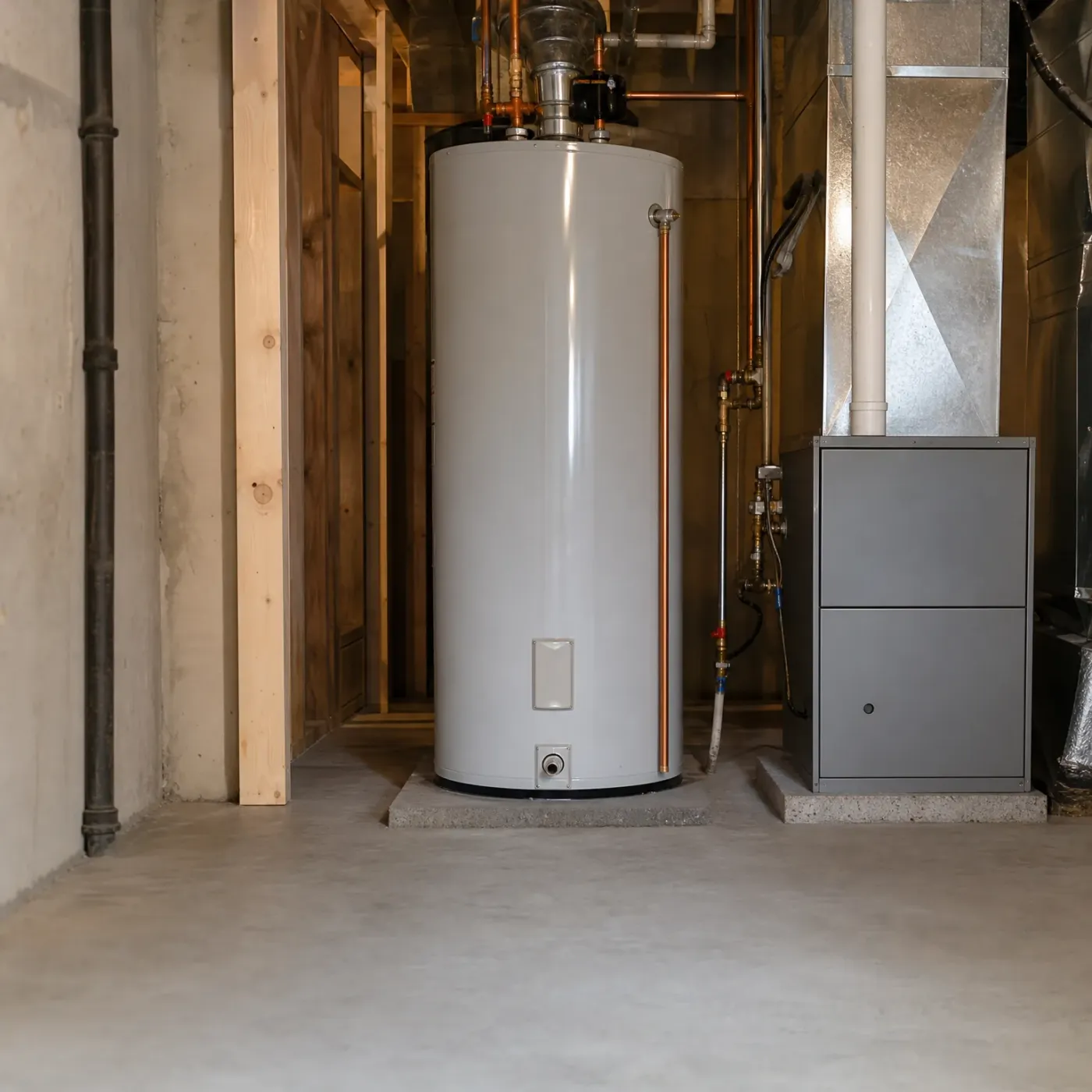
A white cylindrical water heater on a concrete pad in a basement, with copper and metal piping above it and a gray furnace cabinet with ductwork to the right.

Working the way it should

A gas water heater like this keeps up because the burner fires at full strength and the tank holds its full volume. The tank, the furnace, the copper lines all do their job without fighting rust or buildup. Hot water lasts through the morning.

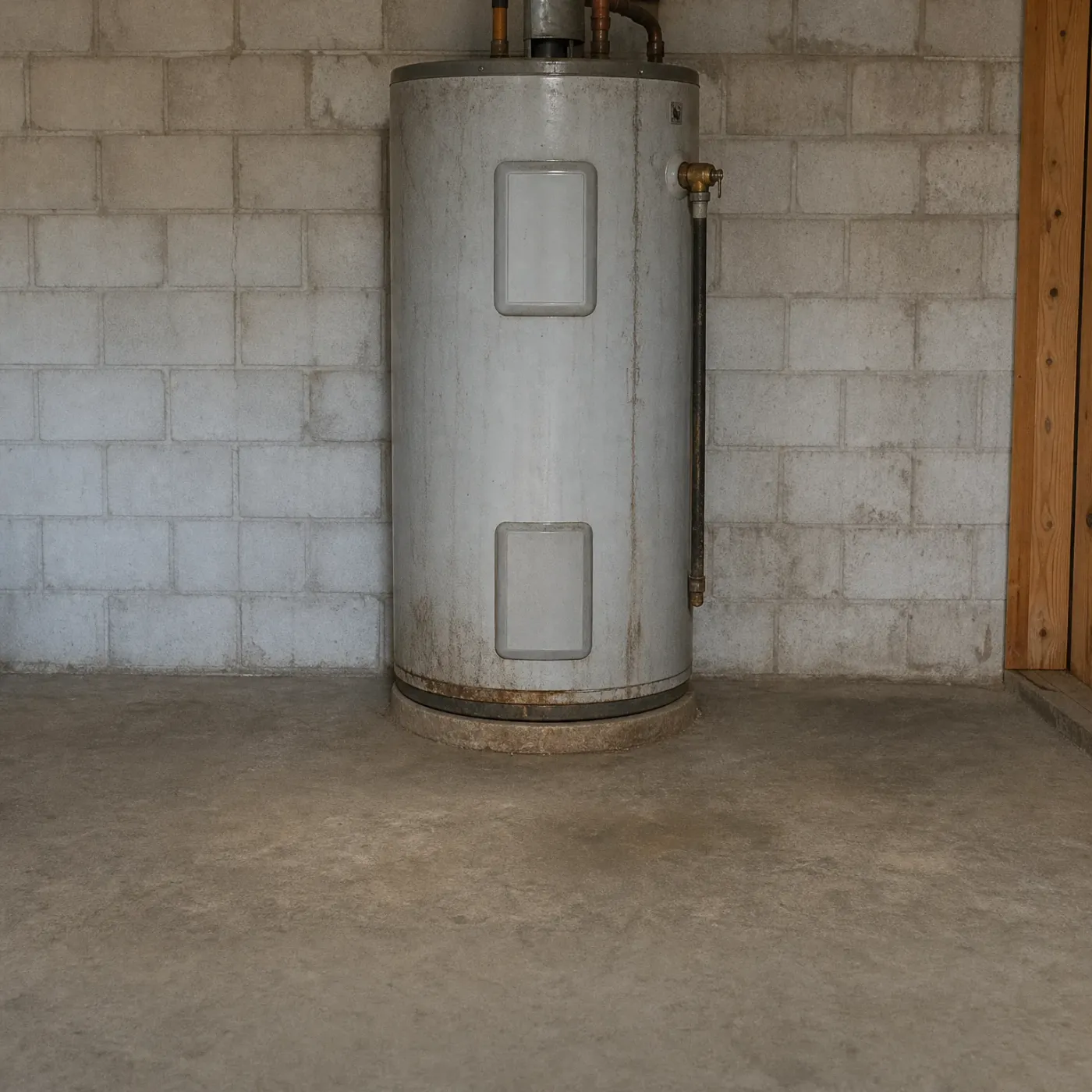
A cylindrical water heater with two access panels and copper pipes stands on a concrete floor against a painted concrete block wall.

Running into trouble

This tank shows its age. Rust spreads across the steel, the access panels sit over a burner that may not fire evenly anymore, and the relief valve is doing more work as pressure builds. A tank like this falls behind fast, and it won't fix itself.

A woman stands in the open black front door of a white-sided house with a dark shingled roof while a man in a navy jacket approaches along the walkway, with lantern wall lights, a potted shrub, and flowering garden beds nearby.

Hot water running out fast has a cause, and it's fixable

A tank that runs short is either too small for your house or not heating the way it did when it was new. Sediment on the bottom, a cracked dip tube, a burner that's lost strength, a thermostat set low. Each of those shows up the same way on a cold morning: the third shower turns cold before anyone wants it to.

Reno County water is hard, and most houses here heat with gas, so the tanks that struggle tend to struggle for the same few reasons. A local technician who works on these units through the summer and winter sees the same sediment, the same dip tubes, the same worn burners often enough to know what to check first. Getting matched with one contractor means one person looks at your tank and your house, not a string of calls from companies that don't know either yet.

A large weathered ceramic vase and a shallow wooden bowl sit on a rustic wooden table beside a window with linen curtains, with a blurred sofa with cushions and a hanging fabric panel in the background.
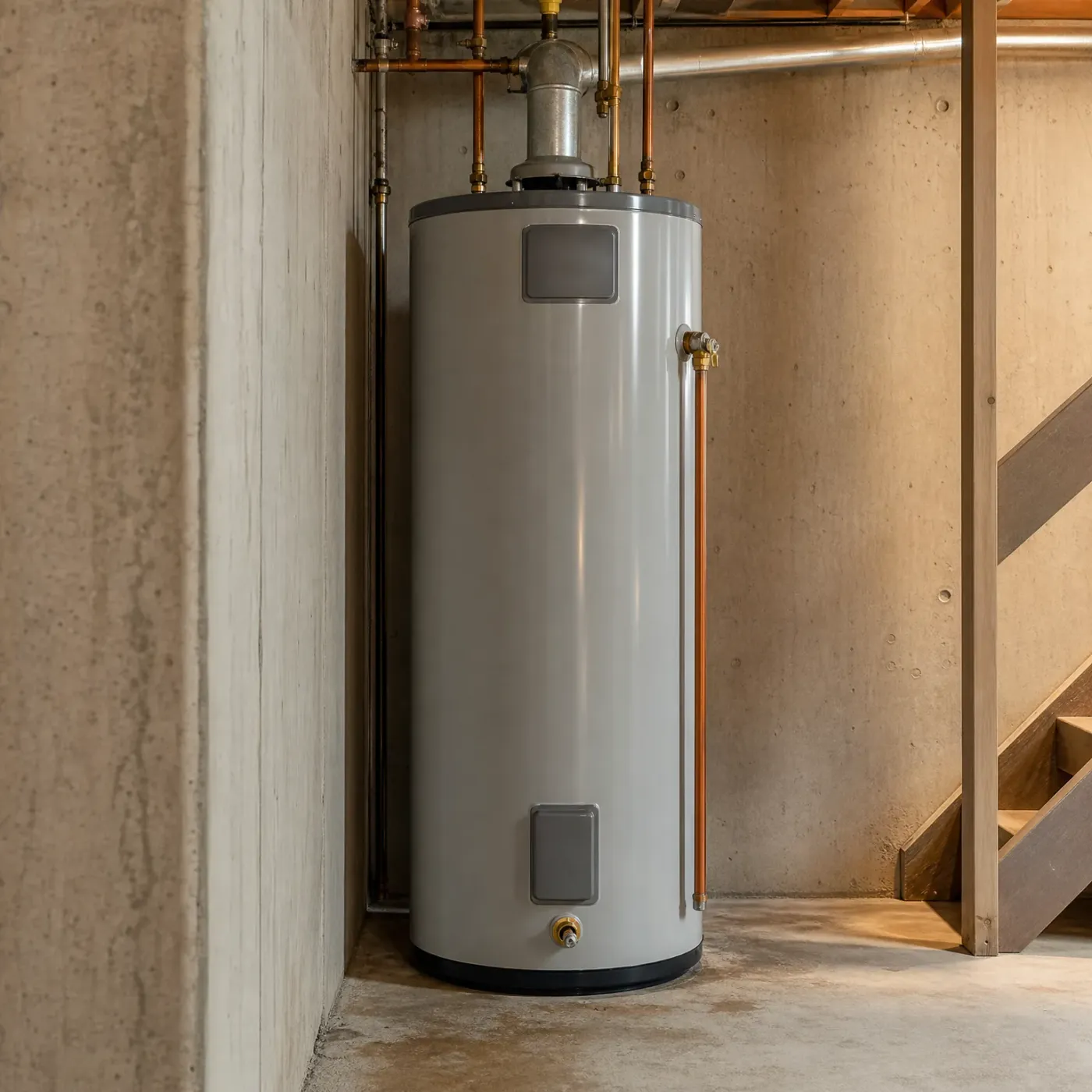
A tall gray cylindrical water heater stands in a concrete basement corner with copper pipes and a metal flue above it and a wooden staircase at right.

A local pro for your water heater repair

Get a licensed local pro

The pro who gets in touch is licensed in Kansas and works in Reno County.

No charge to send it. You decide if you hire them.