Hot water smells like rotten eggs in Kansas City, KS
Describe your water heater job once, to one pro.
That smell usually means sulfur bacteria living in the tank, reacting with the anode rod. It shows up most in homes on well water, but it happens on city water too, especially if the water heater sits unused for a stretch. Either way, it is not something to live with and not something to guess at over the phone.
You could spend an evening searching for a plumber who works on water heaters, not just one who lists it as a service. Then another round of calls to see who actually answers, who can come out this week, and who wants to see the tank before they'll even quote a number. You would explain the smell, the water heater's age if you know it, whether it is gas or electric, to two or three different people, then sit on hold waiting for someone to call back with an estimate.
That is the part this page skips. You tell your situation once, and it goes to a licensed plumber working in Kansas City and the rest of Wyandotte County, someone who deals with this exact complaint on this exact kind of equipment all year, in homes with the same well systems and the same city water lines as yours. One contractor, not five competing for the job, so you are not fielding call after call from companies you never asked to hear from.
Gas water heaters are common in this area, and a plumber working here knows the difference between a rotten egg smell coming from the anode rod and one coming from the gas line itself, which is a separate problem and a more urgent one. That matters more than it sounds like it should. Getting the wrong answer first costs you time and possibly a second visit.
What is below walks through what causes the smell, what fixes it, and when it is more than a smell. The button on this page is where you ask a local plumber to take a look.
Why does my hot water smell like rotten eggs in Kansas City, KS?
You turn on the tap in your Wyandotte County home and the smell hits you right away, that rotten egg odor that makes you wonder if something is wrong with your water heater or your plumbing. It usually only happens with hot water, not cold, and that detail matters. You want to know what's causing it before you decide whether it's a quick fix or a sign of something more serious going on inside the tank.
It's a reaction between the anode rod and bacteria in the tank
The anode rod inside your tank is there to attract corrosion so the tank itself doesn't rust out. When certain bacteria get into the tank, usually through the water supply, they react with that rod and produce hydrogen sulfide gas. That's the rotten egg smell. It's more common on well water, but it happens on city water too, particularly if a water heater sits unused for a week or more, like after a vacation. A tank set to a lower temperature gives those bacteria a better chance to grow, since they thrive in warm, not hot, conditions. The smell doesn't mean the water is unsafe to use, but it does mean something in the tank needs attention, usually the anode rod itself.
Why does this happen more in some Wyandotte County homes than others?
2.7 people per household on average
With 2.7 people typically in a household here, a water heater often sits idle for stretches during the day, long enough for sulfur bacteria to build up and sour the water.
Half the homes here were built by 1962
Half the homes in Wyandotte County date to 1962 or earlier, and an aging tank or anode rod from an older install gives that bacteria more to react with.
67.5% of homes heat with gas
Gas heats 67.5% of homes here, and a gas water heater's anode rod is exactly where this reaction happens, no matter how new or old the unit is.
ACS 2020-2024
How the Smell Actually Forms
The anode rod is a magnesium or aluminum rod inside the tank that sacrifices itself to keep the steel tank from rusting.
Sulfur bacteria feed on that rod and release hydrogen sulfide gas, which is what carries the rotten egg smell.
Hot water shows the smell faster than cold because heat pushes the gas out of the water and into the air you breathe.
A tank set below 140 degrees gives the bacteria a comfortable temperature to keep multiplying.
Swapping the magnesium rod for an aluminum or zinc-alloy one often starves the bacteria without needing to replace the whole tank.
A chlorine bleach flush can kill off the bacteria living in the tank, though it usually comes back if the rod stays the same.
Inside every tank water heater is an anode rod, usually magnesium, bolted into the top and running most of the tank's length. Its job is to corrode instead of the steel tank, which is why a water heater can last years without rusting through. Sulfur bacteria that occur naturally in water feed on that magnesium and produce hydrogen sulfide gas as a byproduct. That gas is what you smell. It dissolves into the water while the tank sits, then releases into the air once the water heats up and moves through your faucet, which is why hot water carries the smell more than cold ever does. Temperature plays a part too. Bacteria multiply fastest in water kept below 140 degrees, a setting common in a lot of water heaters since it is also the safer setting against scalding. The two things that actually change this are the rod and the water sitting in the tank. Swapping the magnesium rod for one made of aluminum or a zinc alloy removes what the bacteria were feeding on in the first place, and it is usually a straightforward swap rather than a reason to replace the tank. A bleach flush clears out the bacteria living in the tank at that moment, but if the rod stays magnesium, there is nothing stopping the smell from building back up over time.
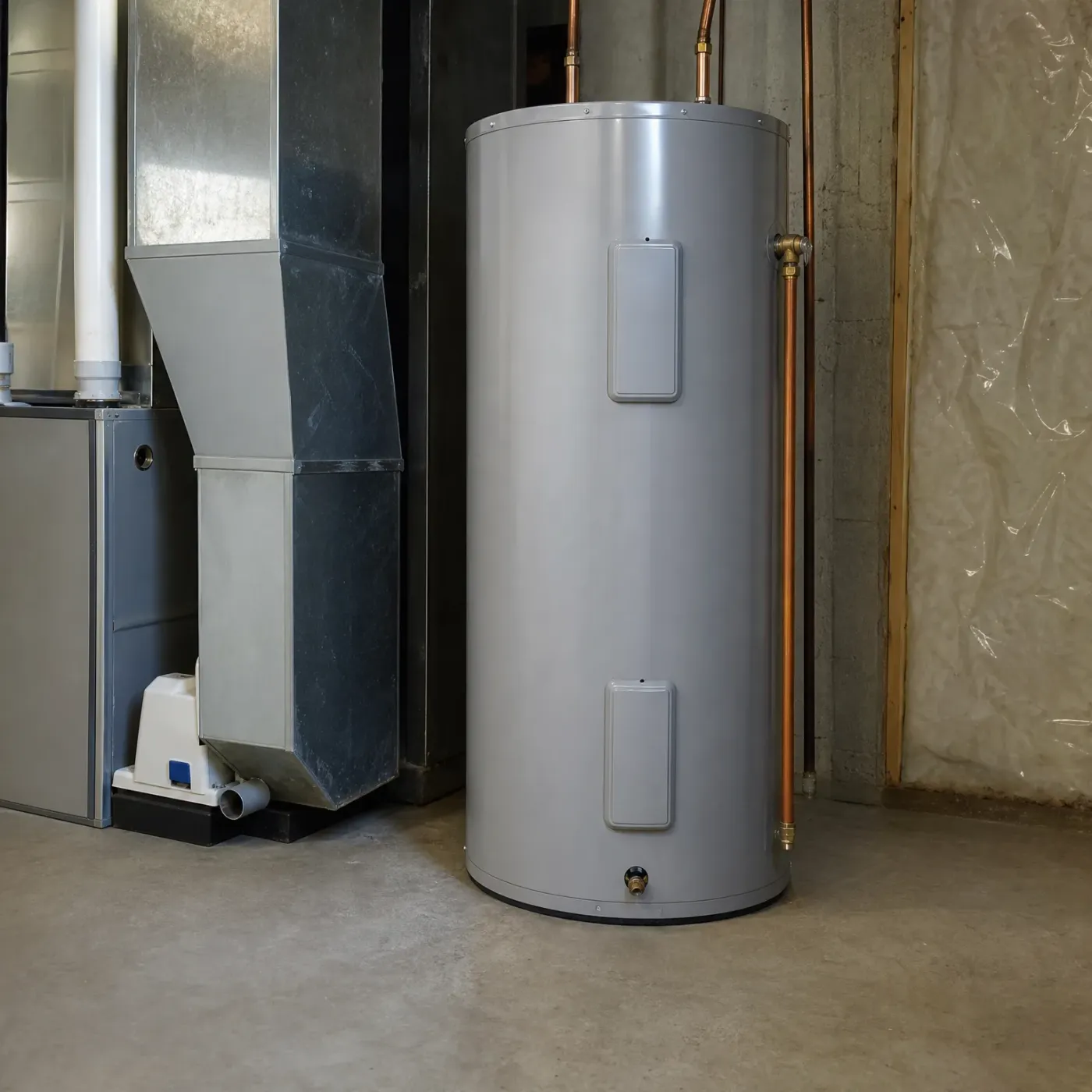
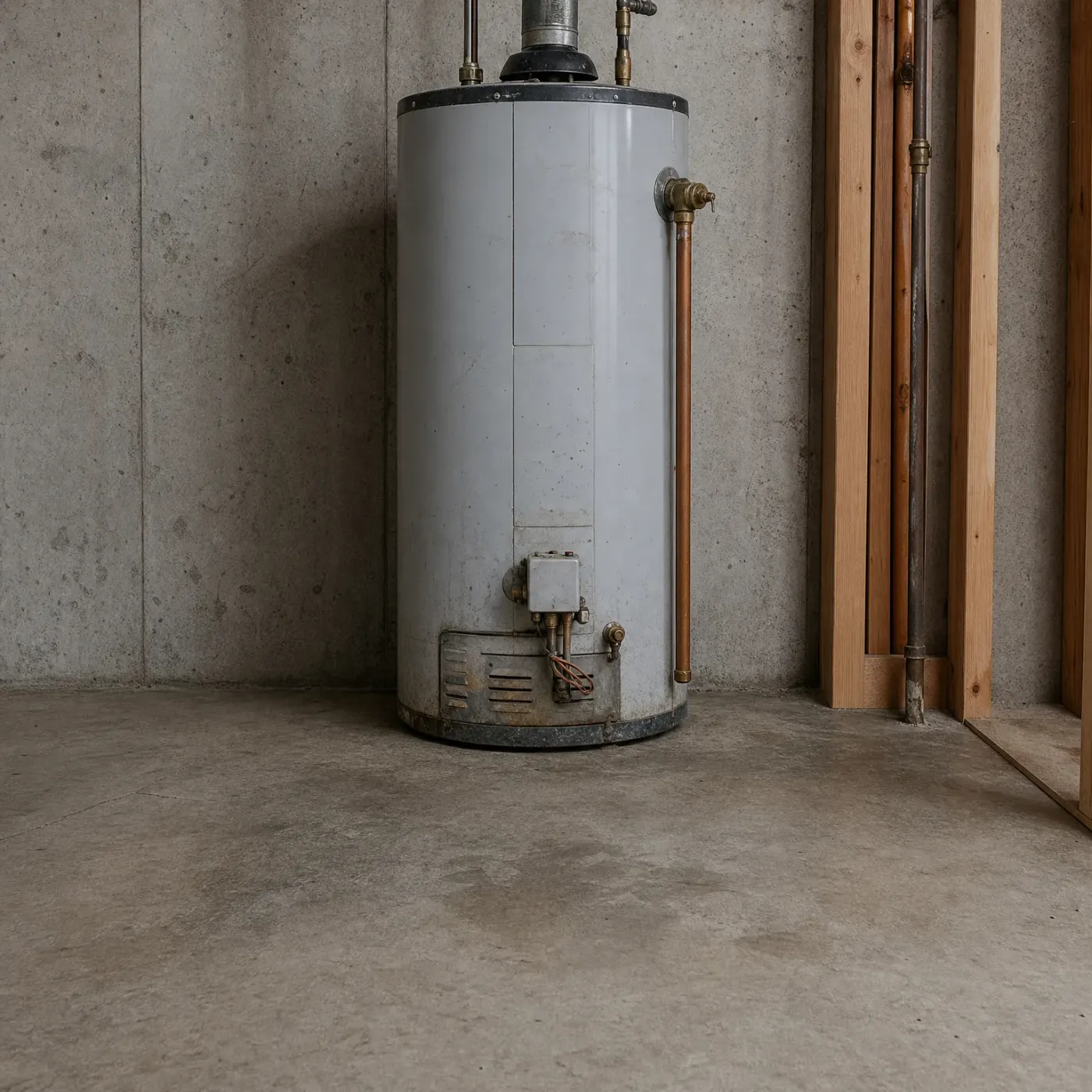
A water heater like this one, with copper lines and fittings in good shape, isn't the kind that usually sours in a well-kept basement.
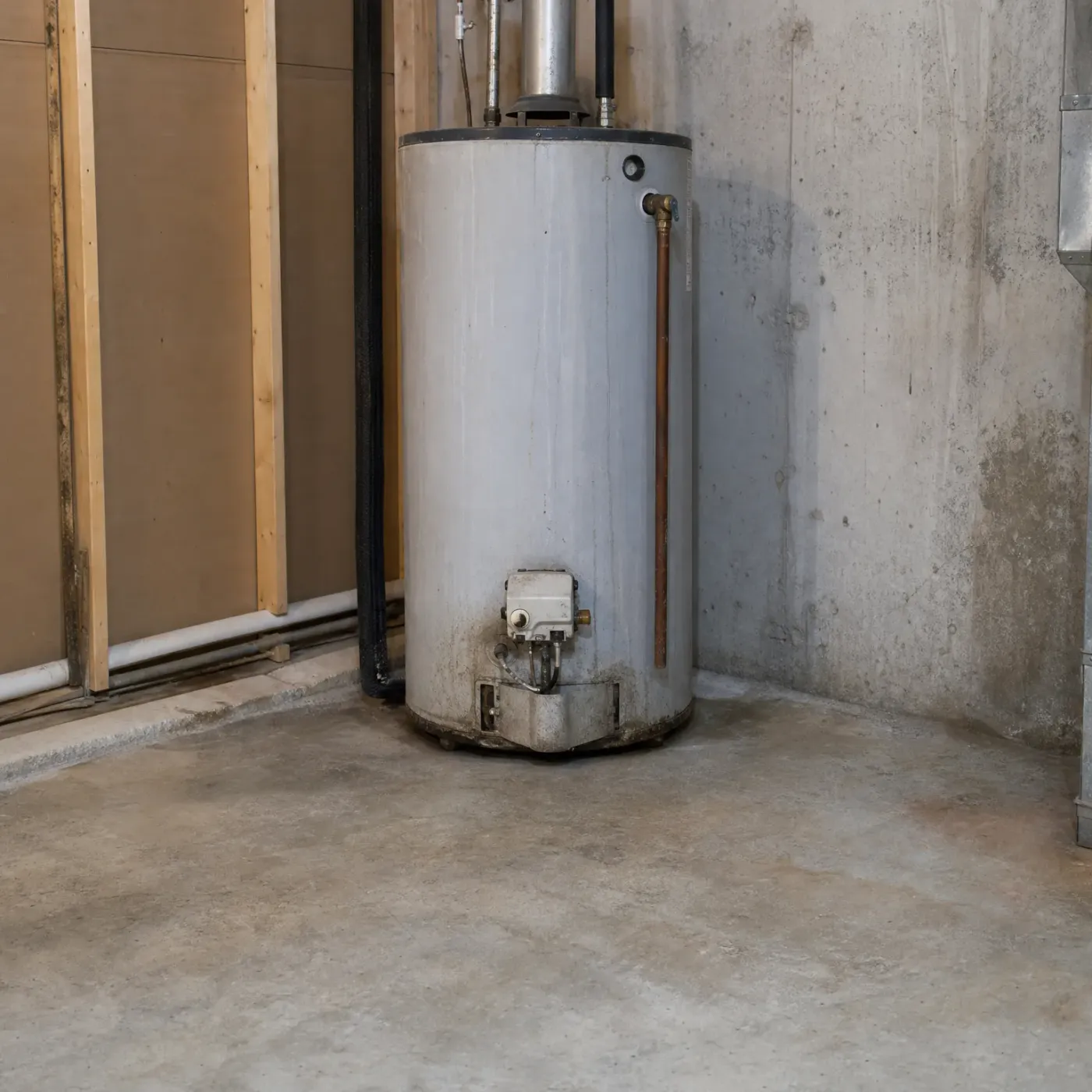
An older gas water heater like this, with rust at the base and grime around the burner, is exactly the kind of unit where that smell shows up.
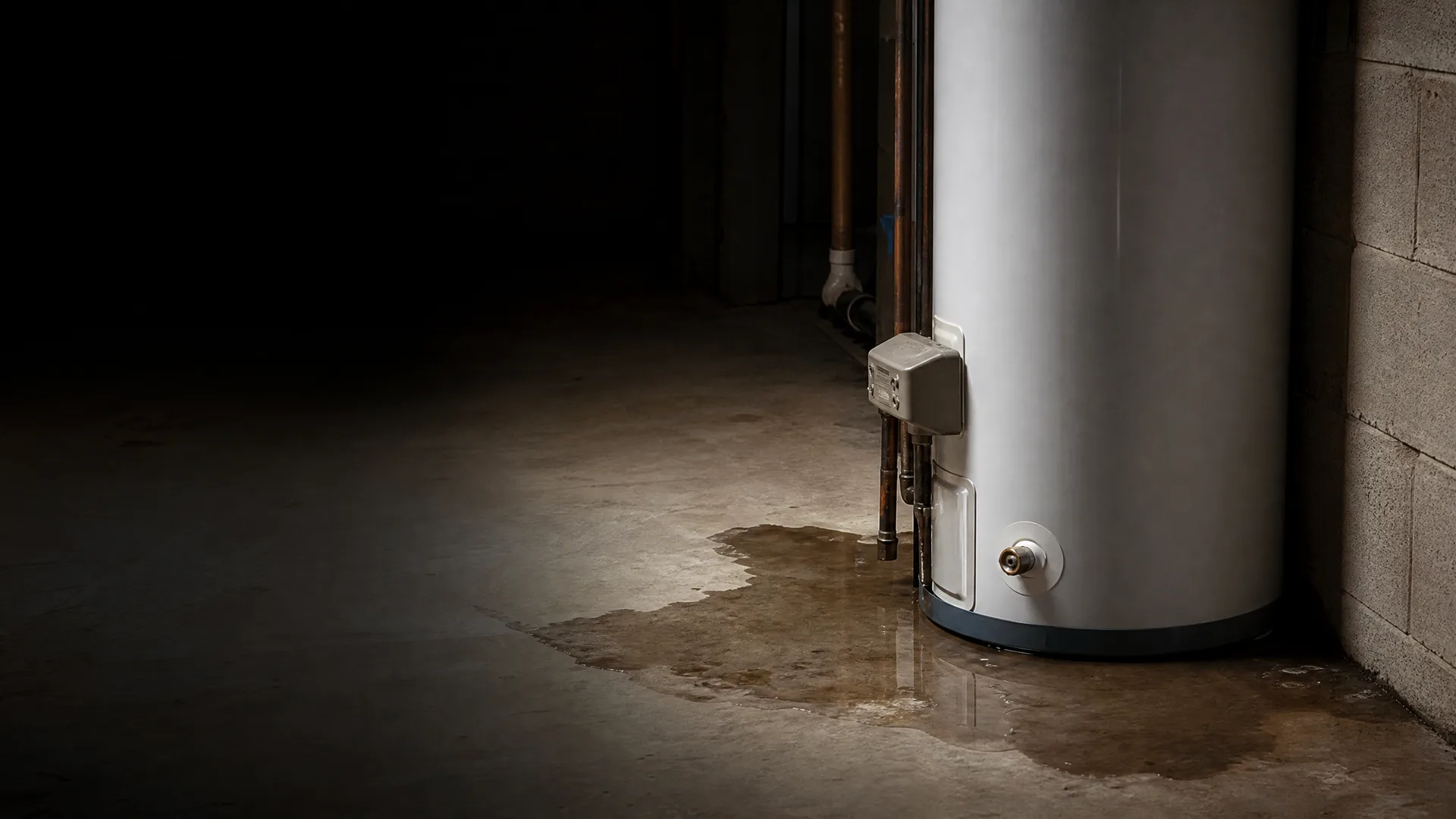
Saturday morning in the basement, laundry half sorted, and you catch the smell before you see anything. It's stronger down here than at the upstairs tap. Then you notice the water, a small pool spreading slow across the concrete at the base of the tank, soaking into a stack of towels you'd left on the floor. You crouch down and the odor is unmistakable now, rotten eggs, coming right off the tank itself. You think about calling around to find someone who works on these in Wyandotte County, checking who's licensed, explaining all this twice or three times over the phone before anyone even looks at it. For now you just stand there, watching the puddle find the drain.
You could spend the afternoon on this instead: calling around to find someone who works on water heaters, explaining the smell and the basement and the age of the tank to three different companies, then sitting with quotes that don't quite match because each contractor heard the problem differently. A request through this page goes to one licensed contractor working in Wyandotte County, someone who deals with this specific smell in homes like yours every year and knows whether it's the anode rod, the water sitting too long, or something further along like the rust and pooling water underneath. You explain it once. No five companies calling back within the hour, no sorting through who said what. That smell isn't going away on its own, and the tank underneath it isn't getting any younger either. Handing it to someone who already knows what usually causes it, in this county, on this kind of water, is the part that saves you the running around.
What the anode rod is doing
That rod is meant to wear down over years, a little at a time, so the tank itself doesn't rust through. As it breaks down, it leaves behind a surface the bacteria can work on, and that's where the smell starts. A contractor can pull the rod and show you how much of it is left. If it's mostly gone, replacing it is usually enough to stop the smell for good.
Why a flush doesn't always fix it
Draining the tank clears out loose sediment, but the bacteria live on the rod itself, not just in the water sitting above it. So a flush can cut the smell for a week or two, then it comes back once fresh water sits long enough to sour again. A contractor who checks the rod along with the tank can tell you whether a flush will hold or whether the rod needs to come out.
Power here costs 14.34 cents per kilowatt-hour
At 14.34 cents per kilowatt-hour, running an electric water heater here costs about what it does most places, nothing unusual either way. If a contractor suggests swapping the anode rod for a different metal or flushing the tank to clear the smell, that work won't run up against a high power rate working against you.
EIA-861 2025
1
Bacteria feed on the anode rod and sulfate in the water
2
That reaction produces hydrogen sulfide gas inside the tank
3
Hot water releases the trapped gas as it runs through the tap
4
A contractor pulls the rod or shock-treats the tank to clear it
Flush the Tank or Replace the Rod
Flush the tank
A contractor drains the tank fully and runs fresh water through it to clear out the sediment the bacteria have been feeding on.
This works well when the tank is still sound and the smell showed up recently, especially after the water heater sat unused for a while.
It costs less than swapping parts and can be done in one visit without opening up the tank.
If the anode rod is already worn down, the smell is likely to come back within a few months.
It won't help if there's rust or a leak at the base, since the problem there is the tank itself, not just the water inside it.
Replace the anode rod
A contractor swaps the magnesium rod for an aluminum or zinc one, which bacteria have a harder time feeding on.
This gets at the actual source of the smell instead of just clearing out what's already built up.
It makes sense for a tank that's otherwise in good shape, with no rust at the base and no sign of a leak.
The new rod still wears down over years, so this isn't a one-time fix, just a longer-lasting one than a flush alone.
On an older tank with rust or grime around the burner, replacing the rod won't solve a problem that's really about the tank's age.
Working the way it should
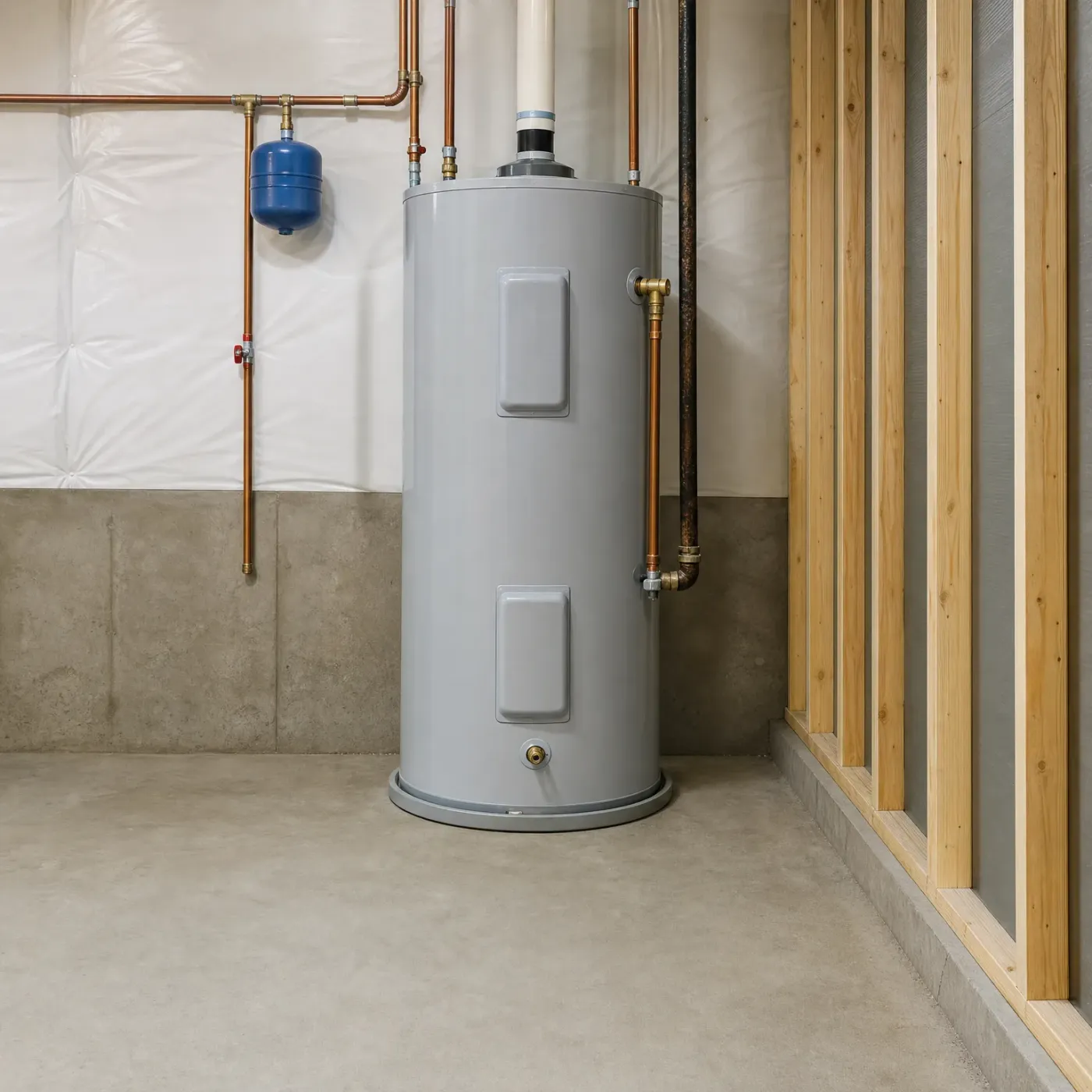
This is a water heater with no rust at the fittings, no grime at the base, copper lines running clean along the wall. A tank in this shape holds up well. If the smell shows up here, a flush or a new anode rod usually clears it.
Where the smell takes hold
Rust at the base, grime built up around the burner, a tank that has clearly been down there a long time. This is the kind of water heater where sulfur bacteria get comfortable and don't let go, and where a flush alone may not be enough.
The smell means sulfur bacteria have gotten into the anode rod, and clearing it means either flushing the tank or replacing the rod, sometimes both. That's a job for someone who has looked inside enough tanks in Wyandotte County to know which one your water heater needs without guessing twice. A local contractor who works on these units all year has likely seen this exact smell in a basement not unlike yours, on a tank the same age, and knows what usually fixes it and what doesn't. You get matched with one contractor, not a handful, so there's no juggling calls or sorting through quotes that each describe the job differently. You explain it once, to the person who's going to do the work. The smell itself isn't dangerous, but it won't clear on its own, and the longer the tank sits the more it gives the bacteria to work with. Get it looked at, get the rod or the tank handled, and the water runs clean again.
No calling every shop in Wyandotte County
The pro who gets in touch is licensed in Kansas and works in Wyandotte County.