

How long a water heater lasts in Kansas
Say what's going on with your water heater, and a pro who works on them reaches out.
Match me with a proA water heater in Kansas usually lasts 8 to 12 years. Tank units fail from the inside out, as sediment builds up on the bottom of the tank and the steel underneath starts to rust through. Hard water in parts of Kansas speeds this up, since minerals settle faster and wear on the tank and heating elements. Most homes here run gas water heaters, and the tank itself, not the gas burner, is usually what gives out first. You'll often see the signs before a full failure: water that takes longer to heat, a rumbling or popping sound as sediment shifts at the bottom, or water with a rusty tint. Once a tank starts leaking at the seams, it's done, and that's a sign to replace rather than repair. If your water heater came with the house and you don't know its age, check the serial number on the manufacturer's label. It tells you the production date and where you stand.




Tank or Tankless: Which Lasts Longer
Tank water heater
- Lasts 8 to 12 years in most Kansas homes before the tank rusts through from the inside.
- Sediment settles on the bottom of the tank over time, and hard water in parts of Kansas speeds that up.
- Gas models are common here and vent through a flue, which a licensed installer sizes to the home.
- Once the tank itself starts leaking, there is no repair for it, only replacement.
- Recovery is fast enough to refill after a full tub without much wait.
- Installation is usually quicker since most homes already have the gas line, vent and water lines in place.
Tankless water heater
- Lasts longer than a tank unit since there is no tank to rust out from sediment.
- Heats water on demand instead of storing it, so there is no standby tank to fail.
- Hard water still matters, since minerals can build up inside the heat exchanger over years of use.
- Needs a larger gas line or a dedicated vent in some homes, which adds work to the installation.
- Takes up far less space than a tank, which matters in a tight closet or utility room.
- Sizing it correctly for the home's fixtures matters more than with a tank, and a qualified installer gets that right the first time.
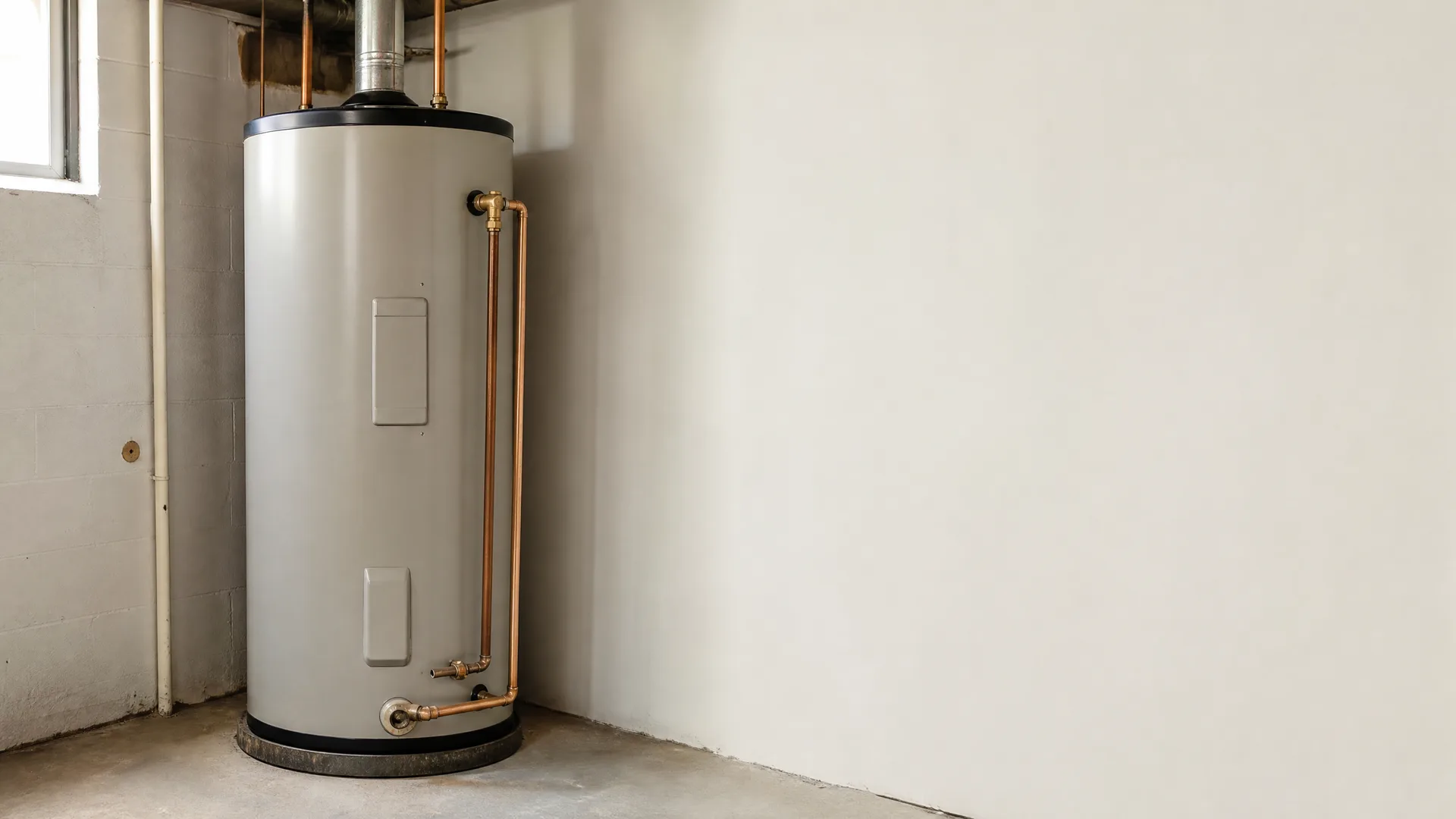
Why the bottom goes first
Gas water heaters heat from a burner underneath the tank. Sediment that settles there sits right against the hottest part of the steel, so that's where rust works fastest. A leak almost always shows up as water pooling under the tank, not at a fitting or valve. Once the tank itself is leaking, there's no patching it. The unit needs to be replaced, not repaired.
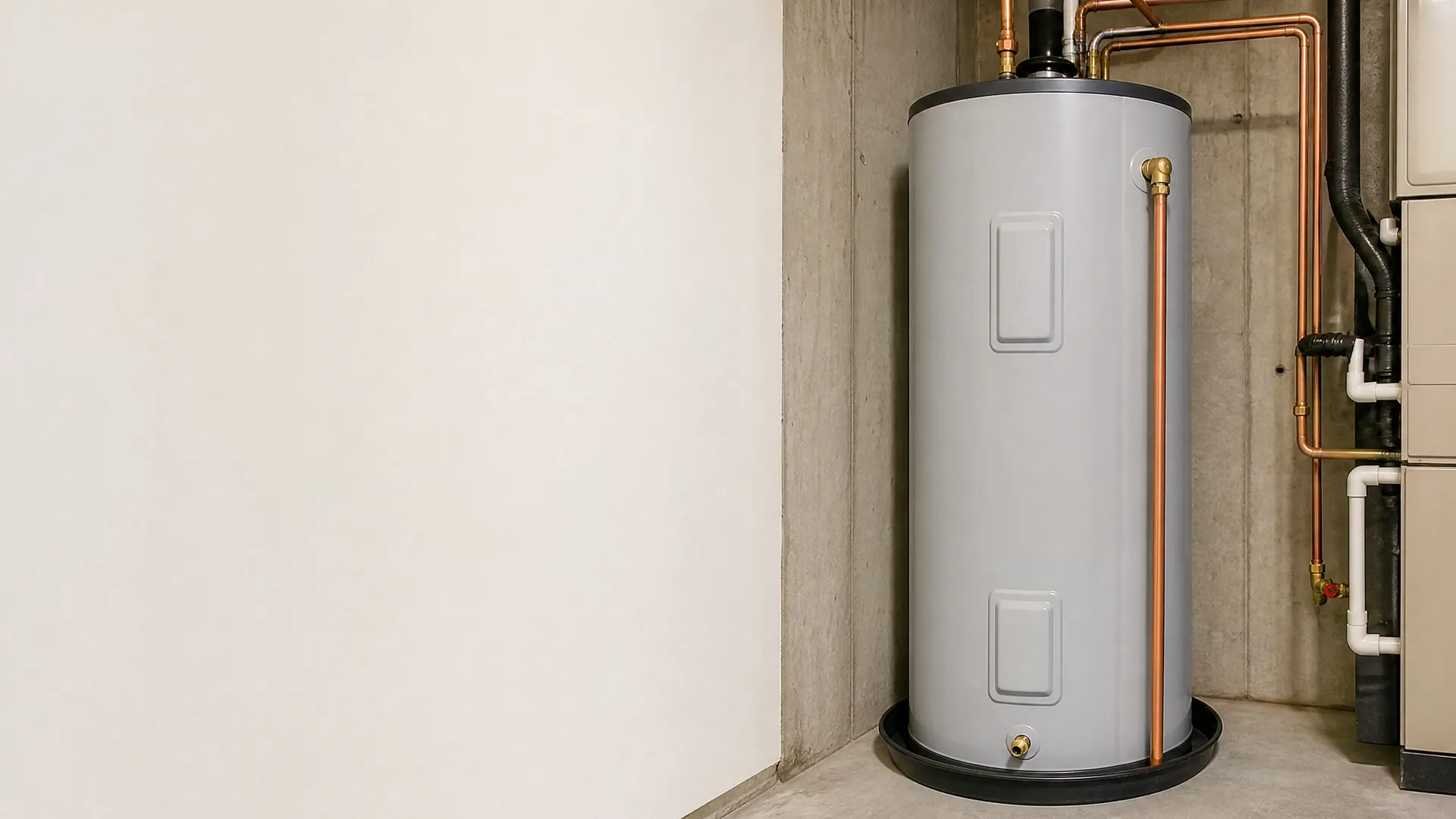
What the anode rod does
Every tank water heater has an anode rod running down the middle, made of magnesium or aluminum. It corrodes on purpose, so the steel tank doesn't have to. Once the rod is used up, the tank starts taking the damage instead, and that's usually when it starts running toward the end of its 8 to 12 years instead of the start. A rod that's still in good shape can stretch a tank's life out some.
Is your water heater on its way out
Look at the floor around the tank. A damp spot or a ring of rust near the base means the tank is leaking from the inside, and that doesn't get better on its own. Water that takes longer to get hot, or doesn't get as hot as it used to, often means sediment has built up low in the tank where the burner heats it. Popping or rumbling sounds while it runs are sediment too, shifting around as the water heats. Rusty water from the hot tap, especially after the tank has sat a while, points the same direction. Left alone, a tank that's failing can leak out fast enough to soak the floor, the wall behind it, or whatever's stored nearby.


Get your water heater to the right pro
Your request goes to one pro, not a list of companies.
A local pro who knows water heaters gets your details and gets in touch.
It costs nothing to send, and you don't have to hire anyone.
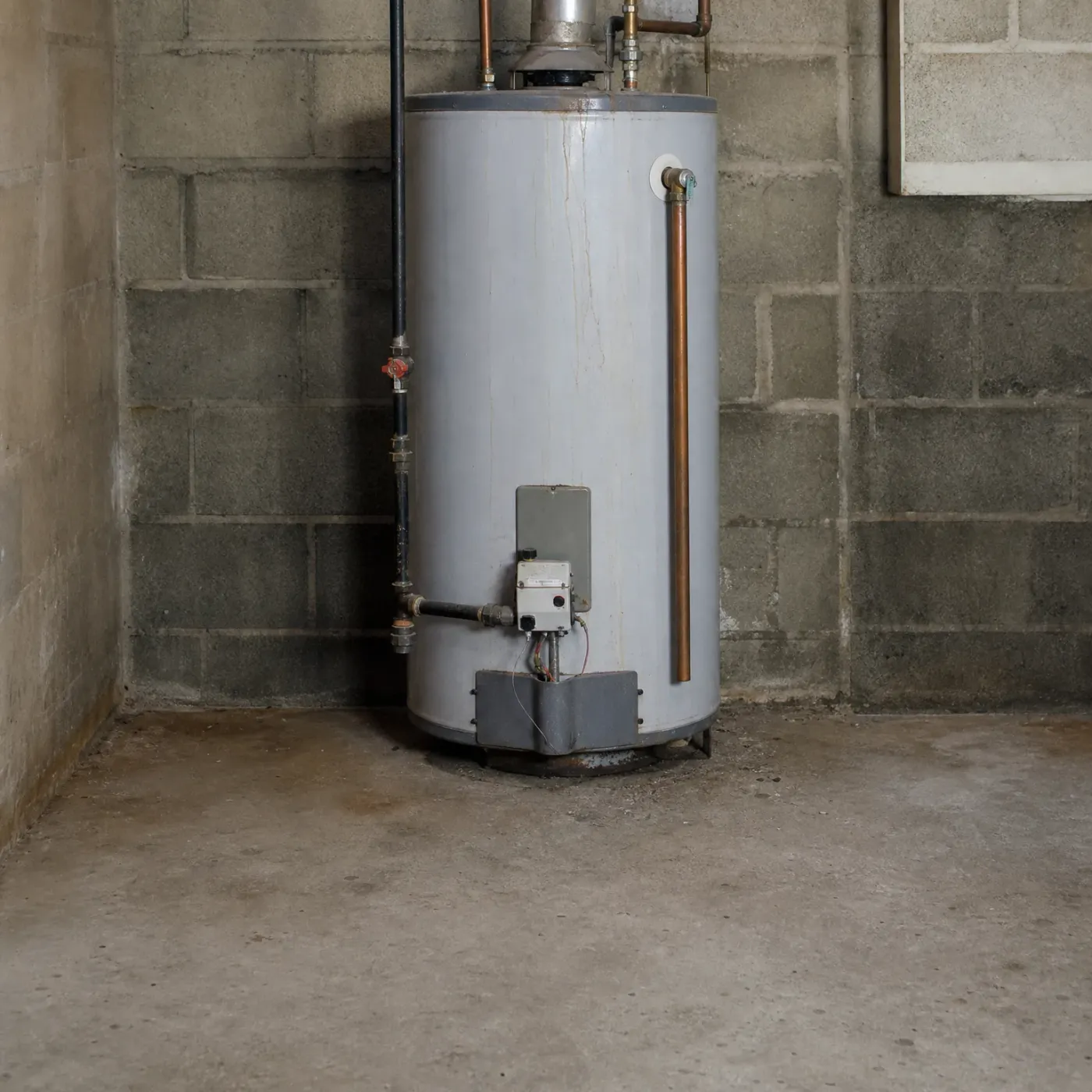
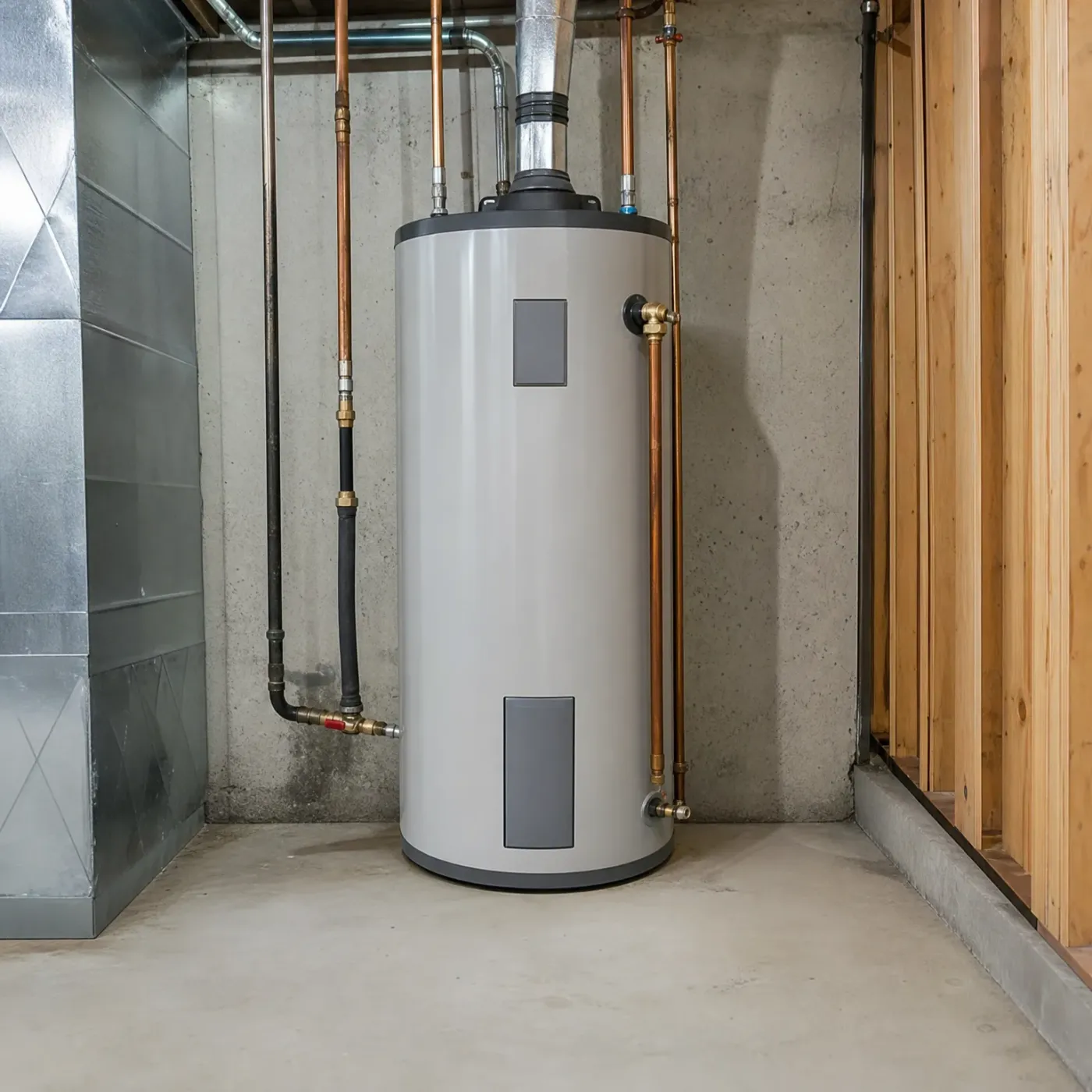
A gas water heater does a few things at once to keep water hot without you noticing. Air comes into the burner chamber from the room, and exhaust leaves through a flue that runs up through the roof or out a sidewall. Before the burner fires, the thermocouple or flame sensor has to confirm a flame is present, or the gas valve shuts things down rather than let gas flow unburned. Cold water entering the tank gets routed straight to the bottom through a dip tube, so it doesn't cool off the hot water sitting near the top where the outlet pulls from. A thermostat mounted on the side of the tank checks the water temperature and calls the burner back on once it drops. Inside the tank, an anode rod corrodes in place of the steel, pulling rust to itself until it's used up. And if pressure ever builds past what the tank can safely hold, the temperature and pressure relief valve opens to let it out. Each part depends on the others working right.
How a gas water heater works
- A gas water heater draws combustion air from the room and vents it out through a flue pipe up through the roof or a sidewall.
- The thermocouple or flame sensor has to prove the pilot or burner is actually lit before the gas valve stays open.
- A dip tube sends incoming cold water to the bottom of the tank so it doesn't mix with the hot water waiting near the top.
- The anode rod inside the tank corrodes on purpose, drawing the rust away from the steel tank walls for as long as it lasts.
- A thermostat on the side of the tank reads the water temperature and tells the gas valve when to fire the burner again.
- The temperature and pressure relief valve opens on its own if pressure inside the tank climbs higher than the tank is built to hold.
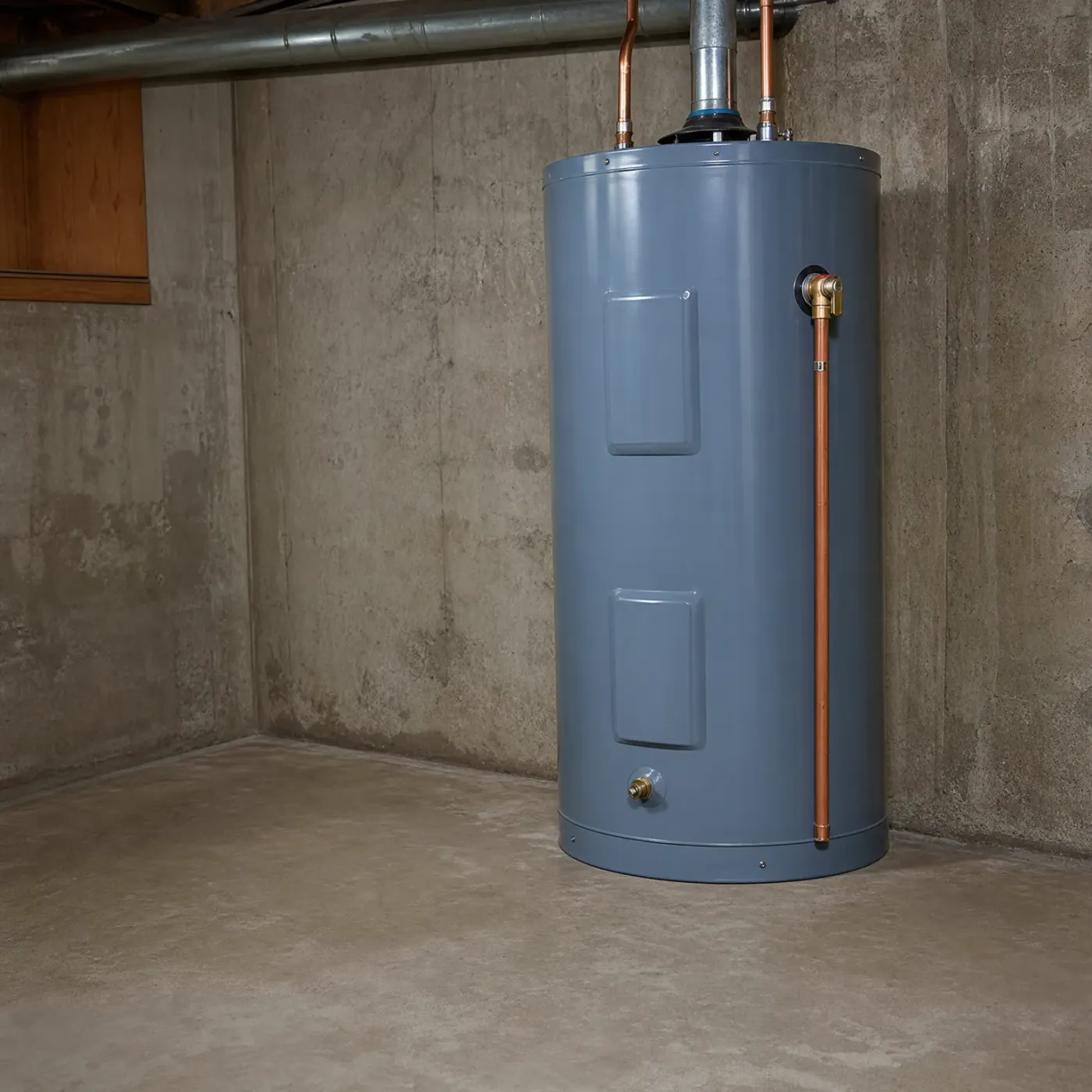
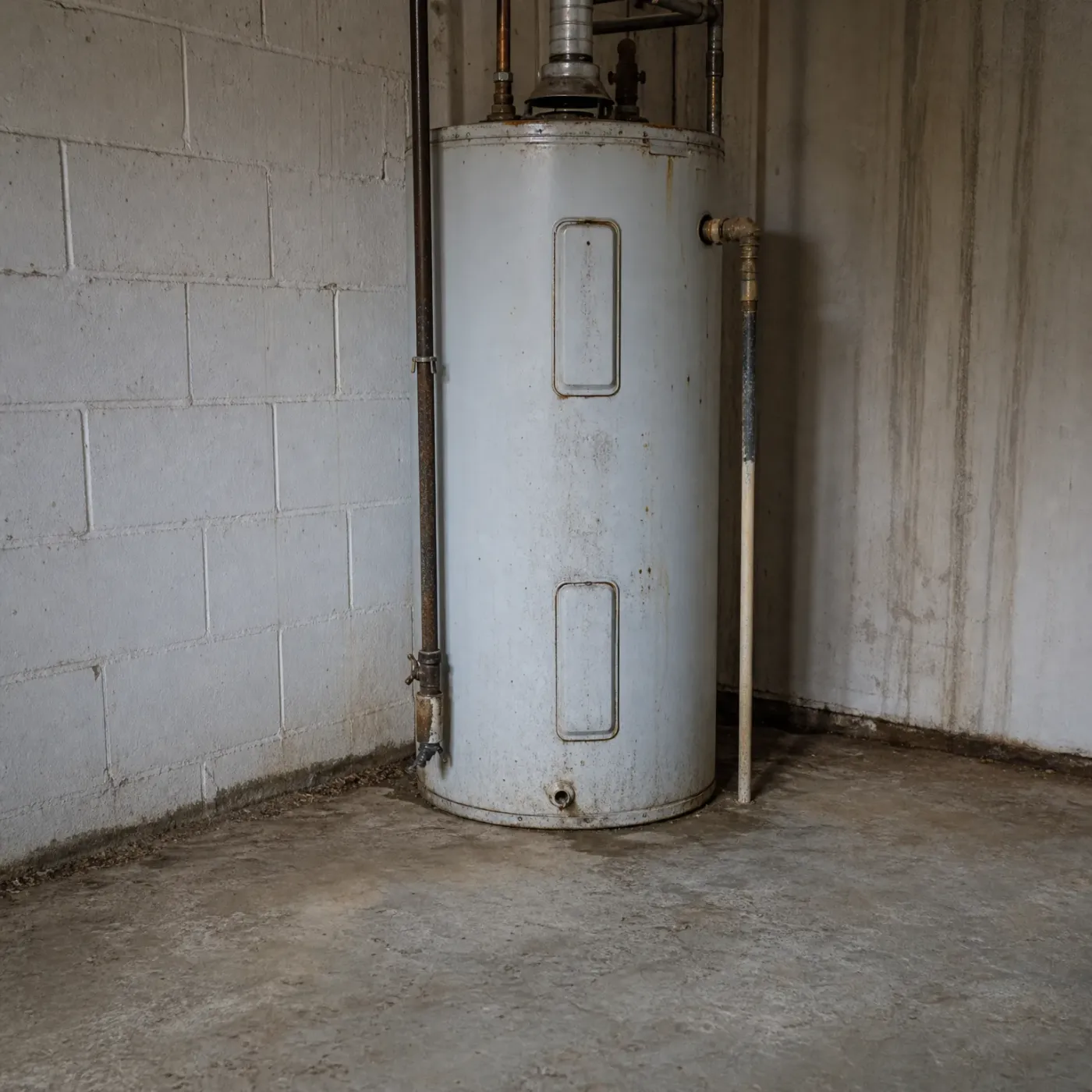

Sediment settles on the tank bottom, right above the gas burner.
Hot steel under the sediment rusts through from the inside.
A pinhole leak forms in the tank floor or seam.
Water pools under the tank or seeps out the base.
63.1% of homes statewide heat with gas
Most houses in Kansas run a gas water heater, since gas heats well over half the homes in the state. That means the thermocouple, burner and venting are the parts worth watching, and a licensed installer who works on gas units regularly knows what tends to go first.
ACS 2020-2024 5-year B25040

Eight to twelve years, give or take
That's the span for most tank water heaters in Kansas, and the fittings and the floor under the tank will tell you where yours stands in it. A clean, dry base means it's still doing its job. Rust at the base means it's near the end, no matter what the calendar says.
When it's time to replace one, a gas water heater is worth having installed by someone who works on them often, not just once in a while. The venting, the gas line and the thermocouple all have to be set up right from the start, and a licensed installer who handles gas units regularly in your area has seen what usually goes wrong with them. Ask to be matched with one and they'll reach out directly, so you're dealing with a single contractor who knows the work, not a handful of callbacks.


Water Heater Installation
The right pro for this job

- Describe your water heater job, and a local pro who handles it gets in touch.
- A local installer who puts in water heaters gets your project.

- Send the form and the search for an installer is over.
- Send the request and finding a pro stops being your problem.

- Answer a few questions instead of calling shop after shop.
- Describe your water heater job once, to one pro.

- The pro who reaches out is licensed in Kansas.
- Only one pro gets your request, so you hear from one company.