How long a water heater lasts in Leavenworth, KS

Send the form and the search for an installer is over.

Hand off the search

A water heater in Leavenworth lasts 8 to 12 years, most commonly around 10. Tank units fail from the inside out, as sediment builds up on the bottom of the tank and the steel behind it slowly corrodes and weakens. Hard water speeds that up, and most of Leavenworth County's water leaves enough mineral behind to shorten a tank's life if it's never flushed. Gas units, which heat most homes here, also lose efficiency as the burner and flue gather scale and soot over the years. Once a tank starts leaking from a rust pinhole, there's no patch for it. If yours is past year 8, it's worth checking the manufacture date on the label and planning for replacement before it fails on its own schedule, not yours.

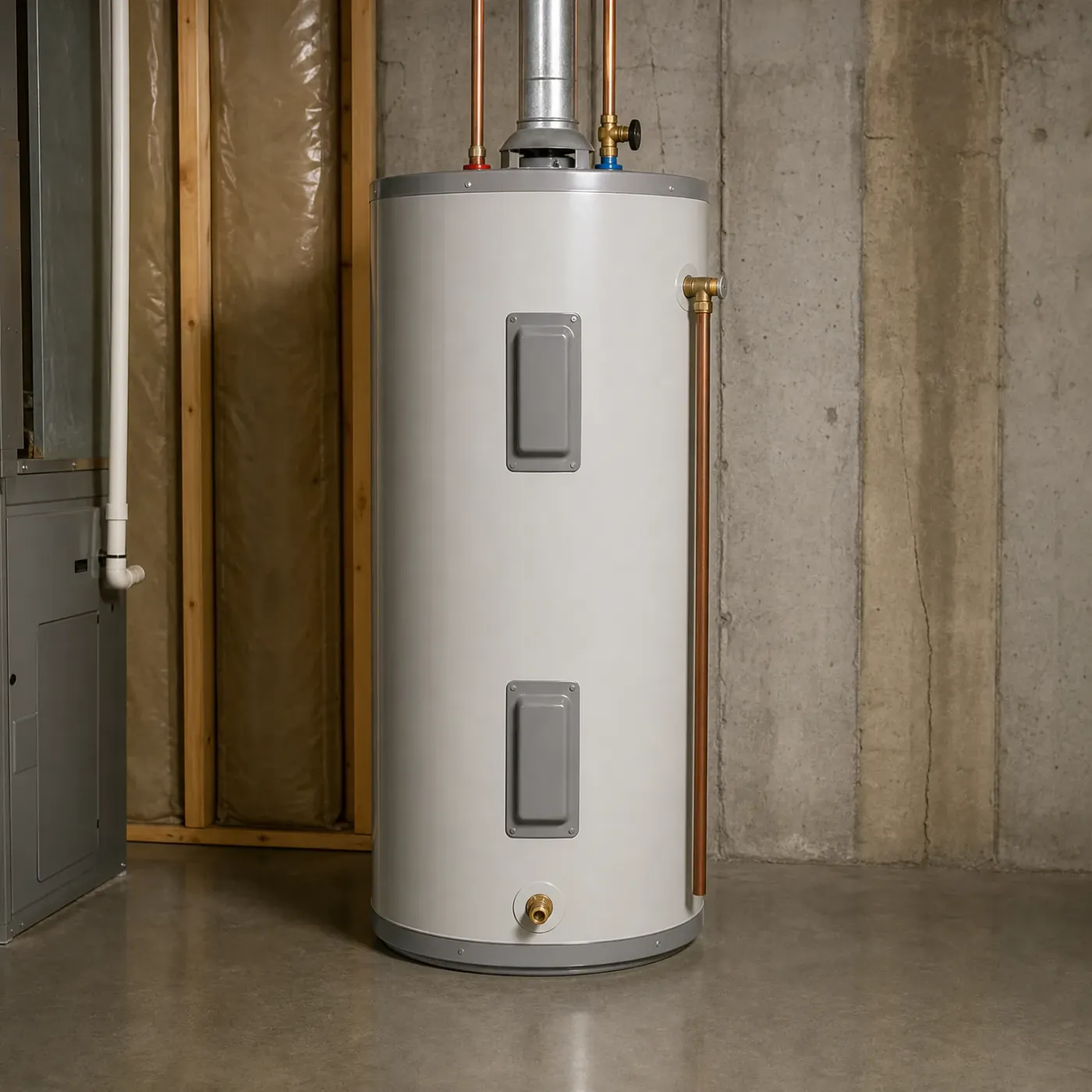
A white cylindrical water heater with two access panels, copper supply pipes and a metal flue, standing on a concrete floor against a concrete wall beside insulated wood framing and a gray electrical panel.

Still doing its job

A water heater like this one runs quiet when it's healthy. No rust streaking down the tank, no damp around the base, no corrosion on the fittings. The flue draws clean and the pipes stay dry. If yours looks like this, you're not on the clock yet.

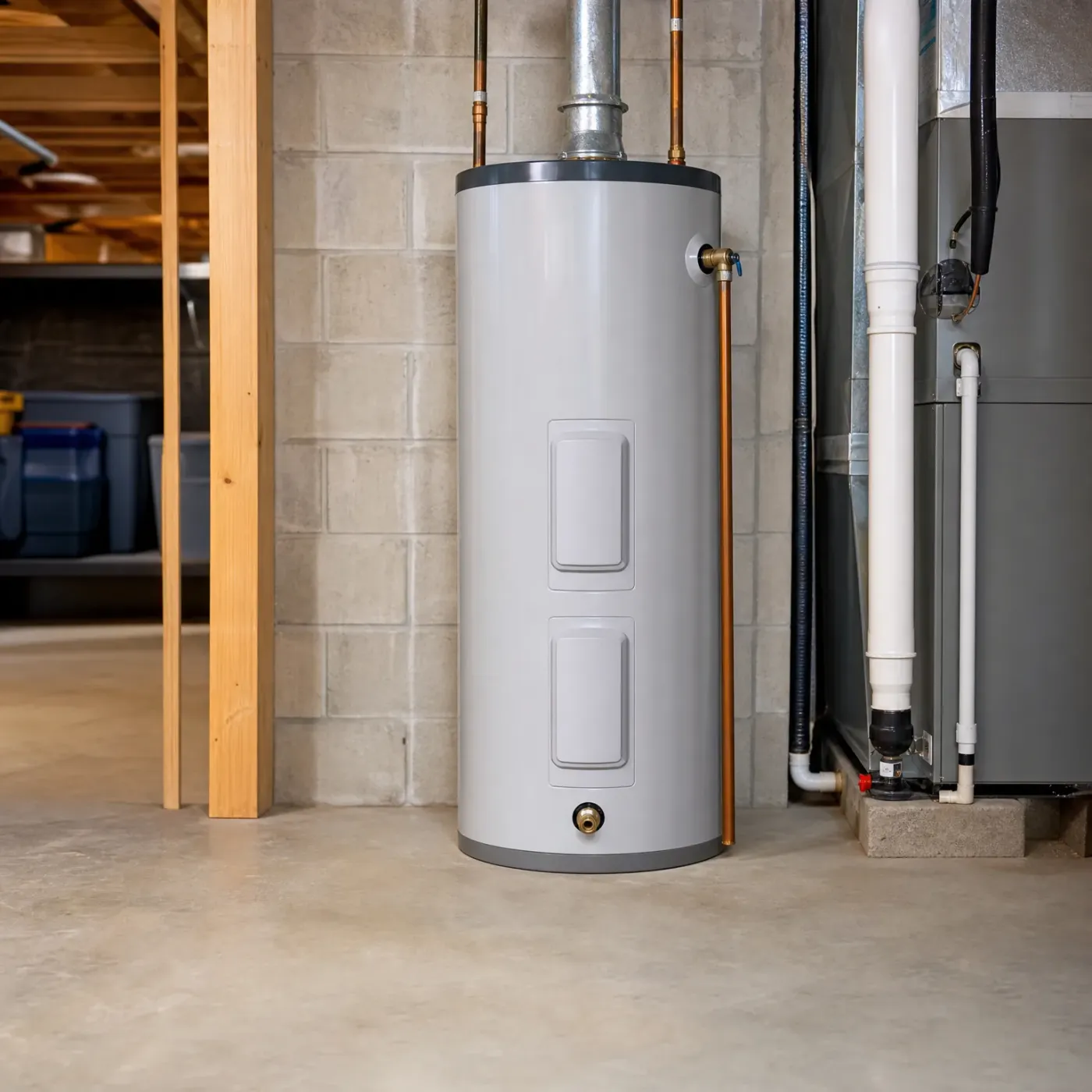
An aging cream-colored water heater with rust streaks and two access panels stands on a concrete floor against a concrete block basement wall, with copper and black pipes running up to the ceiling and a metal duct at left.

Running on borrowed time

Rust working across the tank shell like this means the steel underneath is thinning. Once it shows on the outside, it's further along on the inside. A tank in this shape can hold on a while longer, or it can let go at the seam without much warning.

Is your water heater on its way out?

Look at the floor around the base. Water there, even a small puddle, means the tank itself is failing, not just a fitting. Check the color of your hot water too. Rust-tinged water, or water with a metallic smell, usually means the inside of the tank is corroding. A popping or rumbling sound when the burner fires is sediment shifting at the bottom, and once that sediment has built up enough, it holds heat against the steel and wears it thin from the inside. If you're seeing rust on the tank itself, around the fittings, or on the pressure relief valve, the tank is further along than the water quality alone would explain. Left alone, a failing tank doesn't improve. It leaks, and in Leavenworth's hard water, it tends to get there sooner than the 10-year mark.

A man in a navy sweater reclines with closed eyes in a beige armchair in a living room, with a lamp, wooden cabinet, bookshelf, potted plant, and a side table holding a newspaper and mug nearby.
A man in a blue henley shirt reclines on a leather chair with his eyes closed, beside a window, a houseplant, a side table with a newspaper and a dark mug.
A man in a gray sweatshirt reclines with his eyes closed in a dark leather chair, with a bookshelf behind him and a side table holding folded newspapers, a mug, and a potted plant by a window.
A man in a blue sweater leans back on a brown leather chair with his eyes closed and a slight smile, in a room with bookshelves, framed pictures, a potted plant by a window, a folded newspaper and a dark mug on a table.

Repair or Replace Your Water Heater

Repair it

  • A single part failure, like a thermostat or heating element on an electric unit, usually costs less to fix than replacing the whole tank.
  • If the water heater is under 8 years old and the tank itself isn't leaking, repair is the more sensible move.
  • An anode rod that's been consumed can be swapped out, which buys the tank more years before corrosion sets in.
  • Gas units with a pilot light or igniter problem are often a straightforward fix, not a sign the tank is failing.
  • Repair makes sense when the problem is isolated to one component and the rest of the unit still shows no rust or corrosion.

Replace it

  • Once water is pooling at the base, the tank itself has failed and no repair brings it back.
  • Past 10 years, a failing part is often one symptom of a tank that's corroding from the inside, and another failure tends to follow.
  • Rust-colored water or a metallic smell points to the tank breaking down, not something a repair resolves.
  • Replacing now means choosing a unit sized and vented for your home, rather than being stuck with whatever fails next during a cold snap.
  • If repair costs start approaching what a new unit would run, putting that money into a new tank holds up longer.
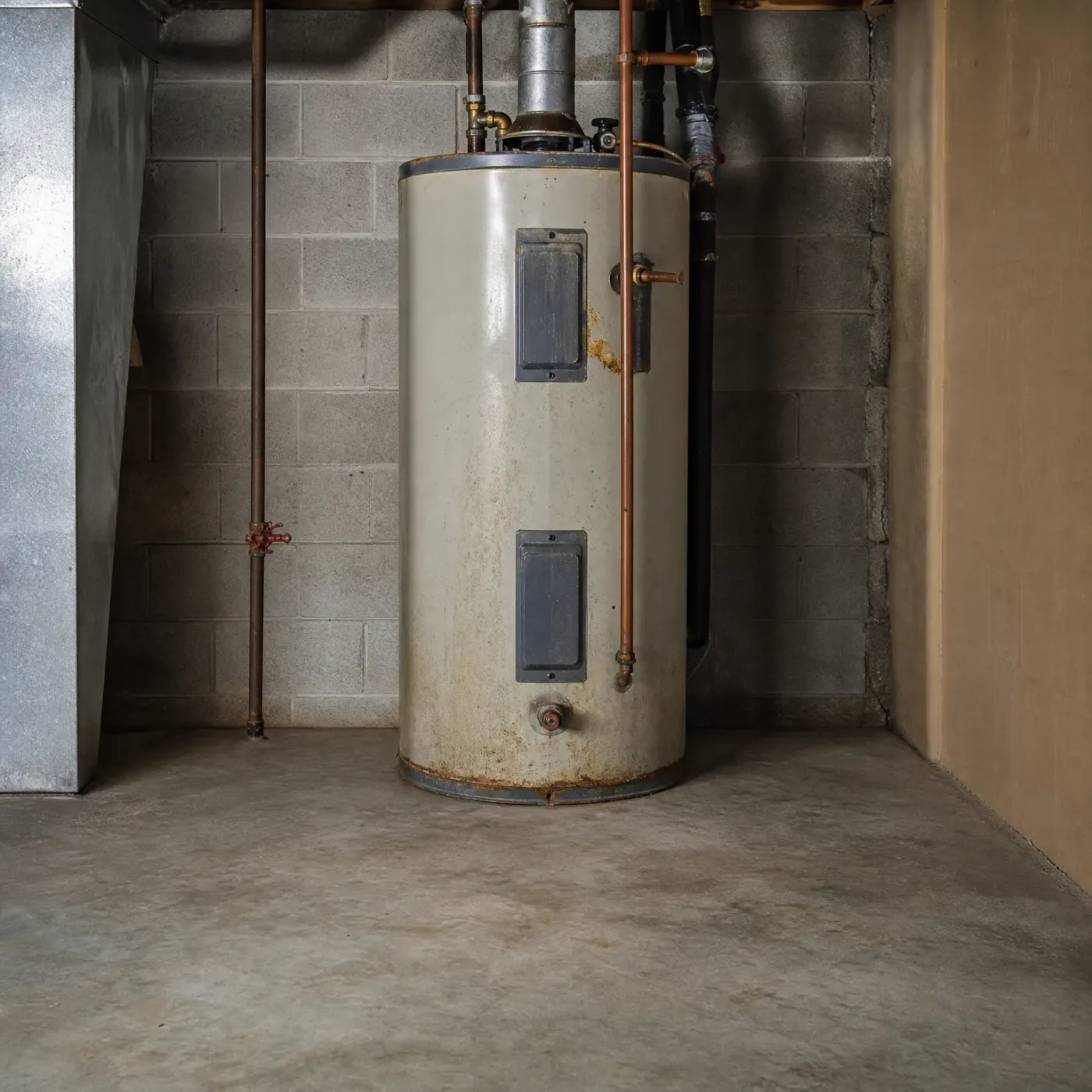
A gray cylindrical water heater with copper pipes stands against a concrete block wall in a basement, next to white PVC piping and a gray furnace, with wood framing and storage bins at left.

Running clean

This one still looks the way it did on install day. The tank is dry underneath, the copper lines are tight, and the flue vent sits straight. No streaking down the side, no discoloration on the steel. A water heater that still looks like this has years left in it.

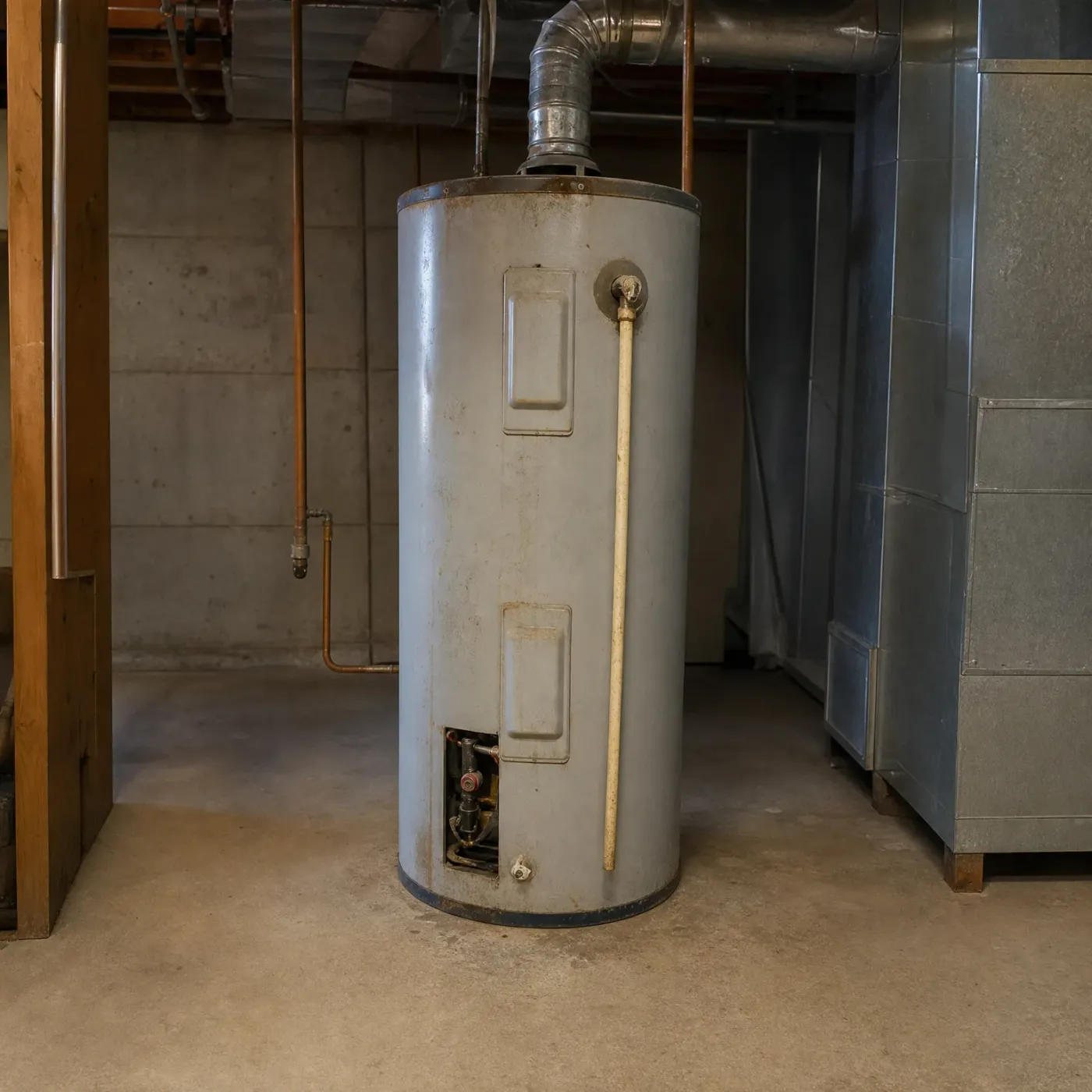
An older gray gas water heater with a metal flue pipe stands on a concrete basement floor beside ductwork and exposed copper piping.

On its way out

Rust has worked its way across the tank and down toward the floor. That relief valve pipe on the side is doing its job, but the tank itself is the problem now, not a part. Once the steel shows rust like this from outside, it's already further along on the inside.

An older man with gray hair and a navy knit sweater sits in an armchair with his eyes closed, near a bright window with potted green plants.
A woman in a cream knit sweater sits with closed eyes in an armchair beside a window showing orange autumn foliage, with a framed picture, plants, and a white mug on a wooden table nearby.

Done looking for a water heater pro

Once a tank passes the age where a repair makes sense, replacing it isn't optional, it's a matter of when, and a water heater usually picks its own time, often a holiday morning or the start of a cold snap. Most homes in Leavenworth County run on gas, and a gas water heater involves venting and a gas line hookup that have to be done right, not just a tank set in place. Finding someone to do that work means calling around to find who's licensed, who answers, who can actually get to your house, then explaining the same thing to each one and sorting through quotes that don't match up. Send the request through once and that work is off your plate. One contractor gets your information and reaches out, and from there it's a conversation about your house, not a search.

Most gas water heaters here are 40 or 50 gallon tanks. Once the anode rod inside is used up, the steel underneath has nothing left protecting it, and corrosion moves faster from that point on.

That's usually the back half of the 8 to 12 year range. If a water heater hasn't been drained or had the anode checked, it's likely closer to 10 than 12 by the time it fails.

2.59 people per household on average

With 2.59 people typically in a Leavenworth County home, most houses here are running a 40 or 50 gallon tank through daily showers, laundry and dishes without much slack. A tank already past 10 years has less margin to keep up with that kind of steady draw.

ACS 2020-2024

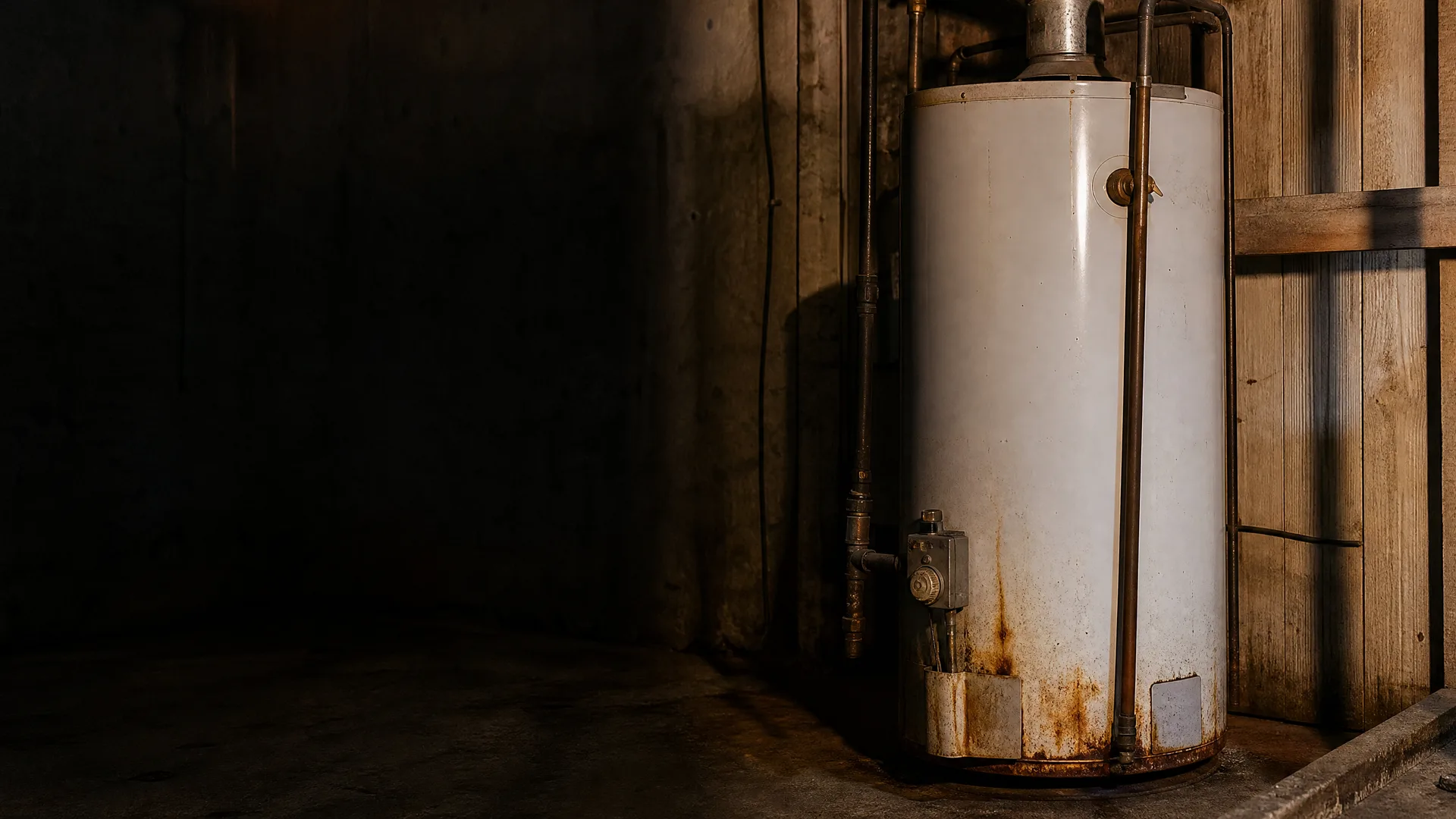
An old white water heater with rust along its base stands against a wooden wall in a dim basement with concrete floor and walls, connected to metal pipes.

You go down to the utility room after dinner to grab something off the shelf, and the overhead bulb catches it before you're even looking for it. Rust streaks run down the side of the tank, past the drain valve, pooling faint and dark where the base meets the concrete. It's cold out, the kind of evening where the furnace has been running most of the day, and the water heater sits there next to it, quiet, doing the same job it's done for years. You crouch down and touch the streak. Dry at the top, damp lower down. You stand there a second, figuring out what you're going to do about it tonight, and what can wait until morning.
A closed laptop and a ceramic mug on a wooden table in front of a kitchen with green cabinets, marble counter, black pot, cutting board, wooden bowl, and a white vase with greenery.

Ten years is the number to watch

A water heater in Leavenworth gives you 8 to 12 years, and most give out around 10. Past that, it's not a question of if, it's when, and the signs are the ones already covered: rust in the water, a damp floor, a tank that's working harder than it used to.

When one of those shows up, you're not left to sort it out alone. You won't need to search through contractors, call a handful of them, explain the same thing to each one, then sit with a stack of quotes trying to compare them. Send the form once and that work is off your plate.

A shallow dark wooden bowl and a stack of books rest on a wooden table in front of a beige sofa with linen and green cushions, with a tall ceramic vase of thin branches beside a window in the background.
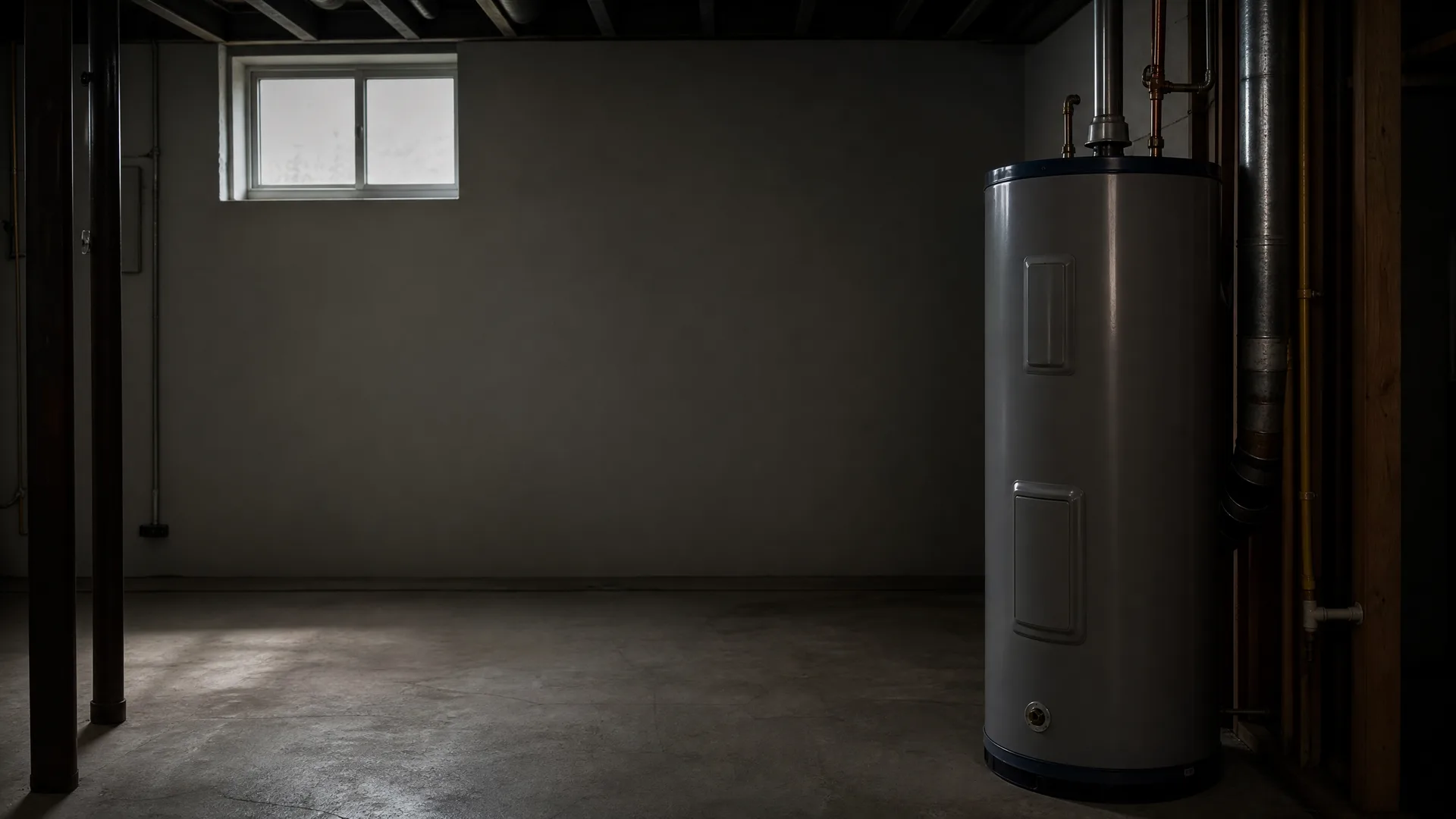
A tall cylindrical water heater with pipes above it stands in the corner of a dim basement with bare concrete floor, gray walls, exposed joists, and a small window.

It's off your list after this

Describe the project once instead of to every installer.

Step 1 of 3: Equipment