Still doing the job
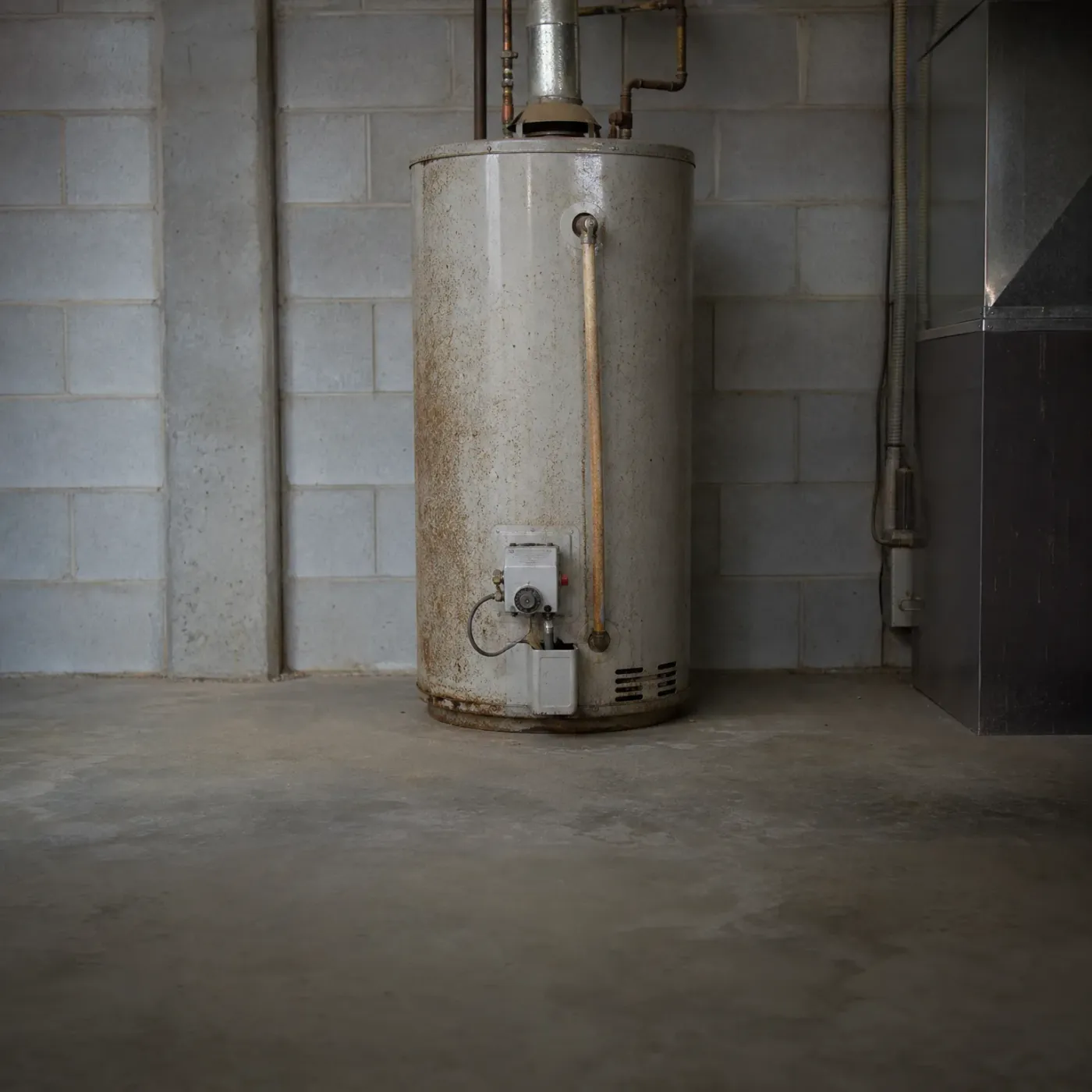
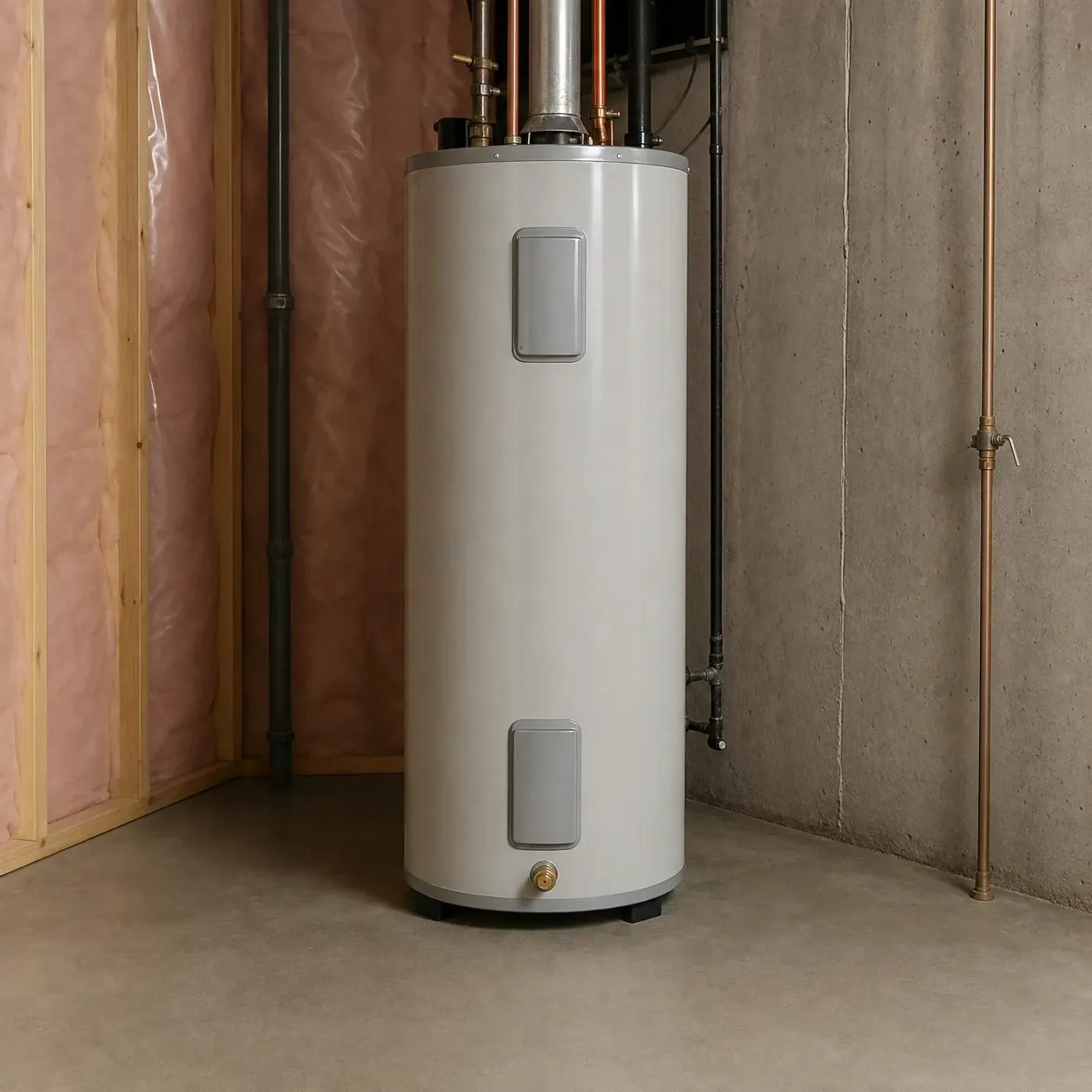
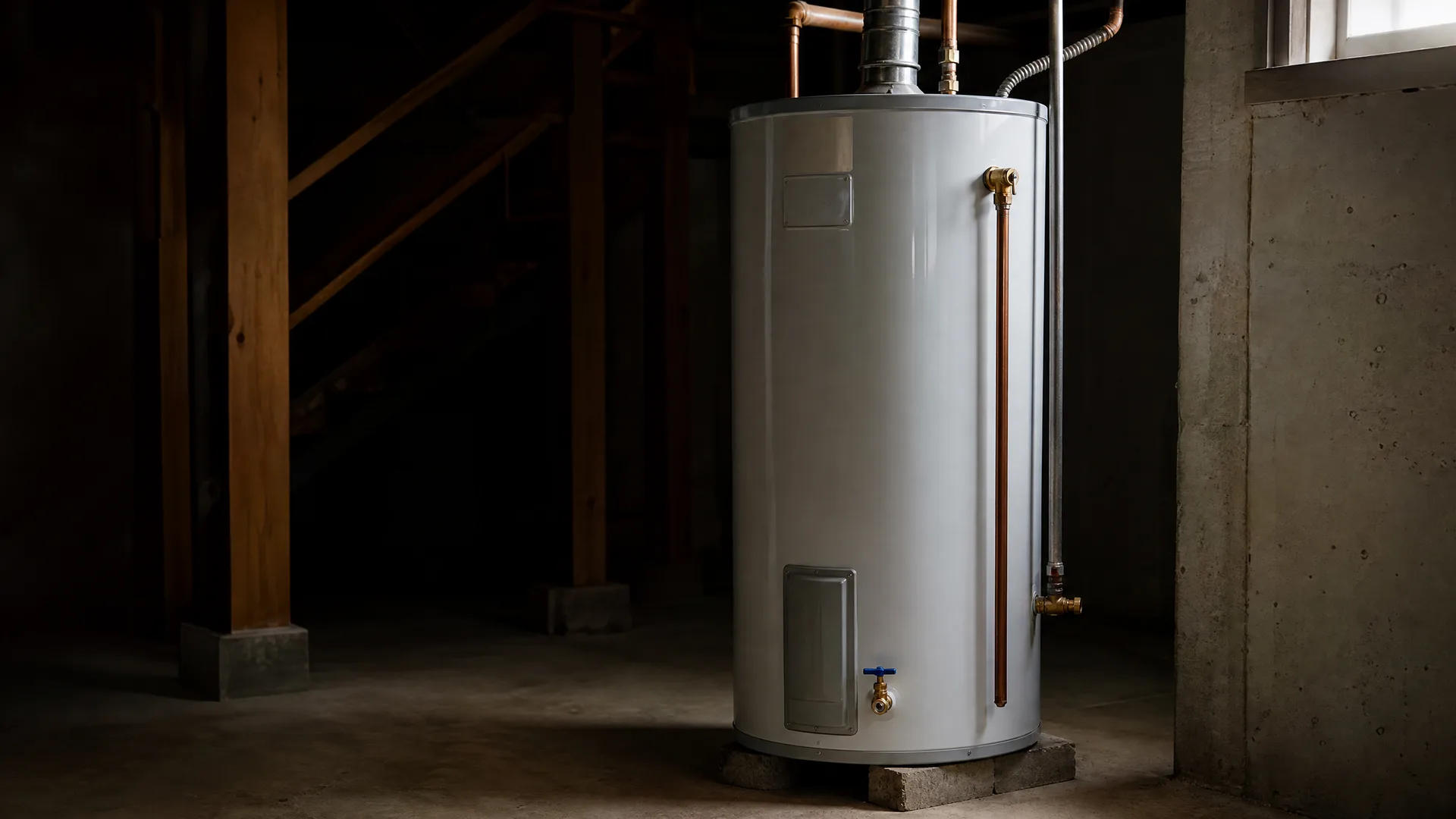
Two access panels, a drain valve, and a relief valve with its copper discharge pipe, all intact. No rust on the jacket, no water on the floor underneath it. A tank in this shape just needs to keep running.
Send the form and stop researching installers for the new water heater.
Let a pro reach outYour water heater's getting older and you're wondering if it's on borrowed time, or maybe it just failed and you're trying to figure out if this is normal for its age or if you got a bad one. Either way, you want a straight number, not a range so wide it's useless.
Most water heaters in Johnson County last between 8 and 12 years. Tank units fail from the inside out: sediment builds up at the bottom of the tank, the metal corrodes, and eventually it leaks. That process runs at roughly the same pace in most homes, which is why the range holds up regardless of whether you're in an older house or a new build. Hard water speeds it along a little, and a tank that's never been flushed will tend toward the shorter end. If yours is past 10 years, it's worth checking the manufacture date on the label near the top, since that's the real age, not the install date. A water heater that old failing isn't a sign anything went wrong. It's just the schedule.




If your water heater is somewhere past eight or ten years old, start paying attention to what it's telling you. Water that takes longer to heat, or doesn't get as hot as it used to, means the tank is working harder to do the same job. A rumbling or popping sound when it runs is sediment hardening on the bottom, and that layer is what eventually burns through the metal. Rusty water from the hot tap, a musty smell near the tank, or dampness on the floor around it are signs the tank itself is giving out. Left alone, a tank that's failing doesn't fail quietly. It can soak a utility closet or a finished basement before anyone notices.
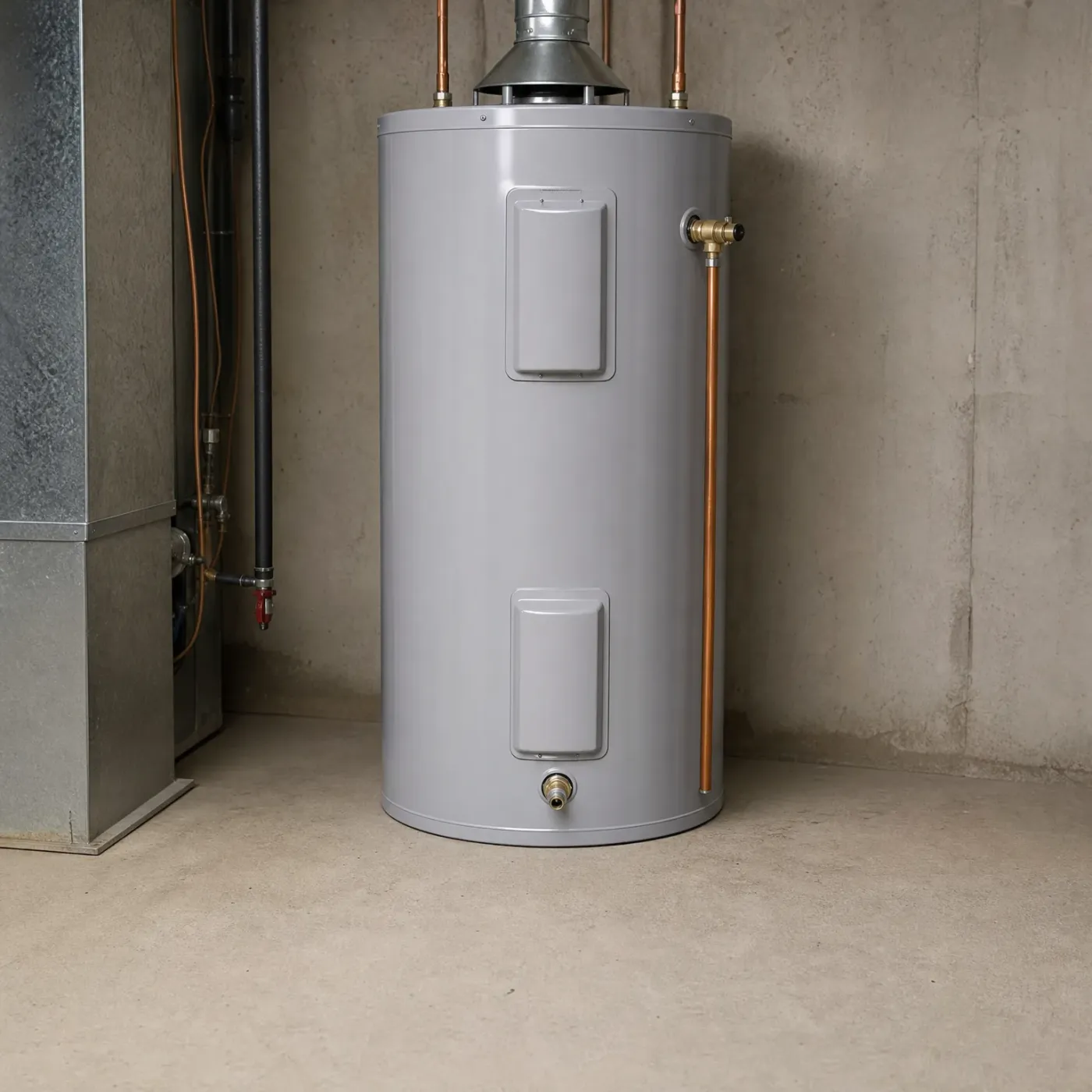
Two access panels, a drain valve, and a relief valve with its copper discharge pipe, all intact. No rust on the jacket, no water on the floor underneath it. A tank in this shape just needs to keep running.
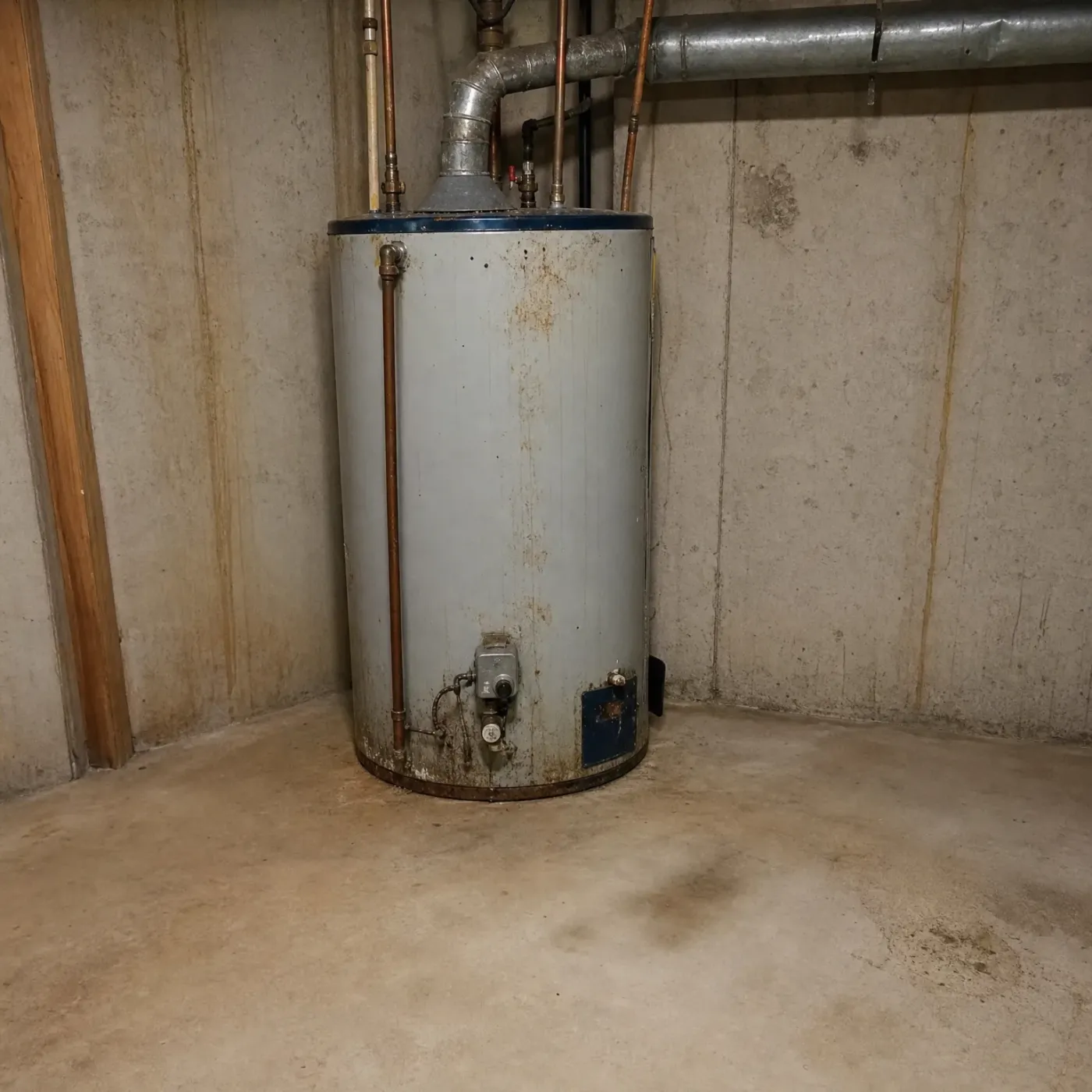
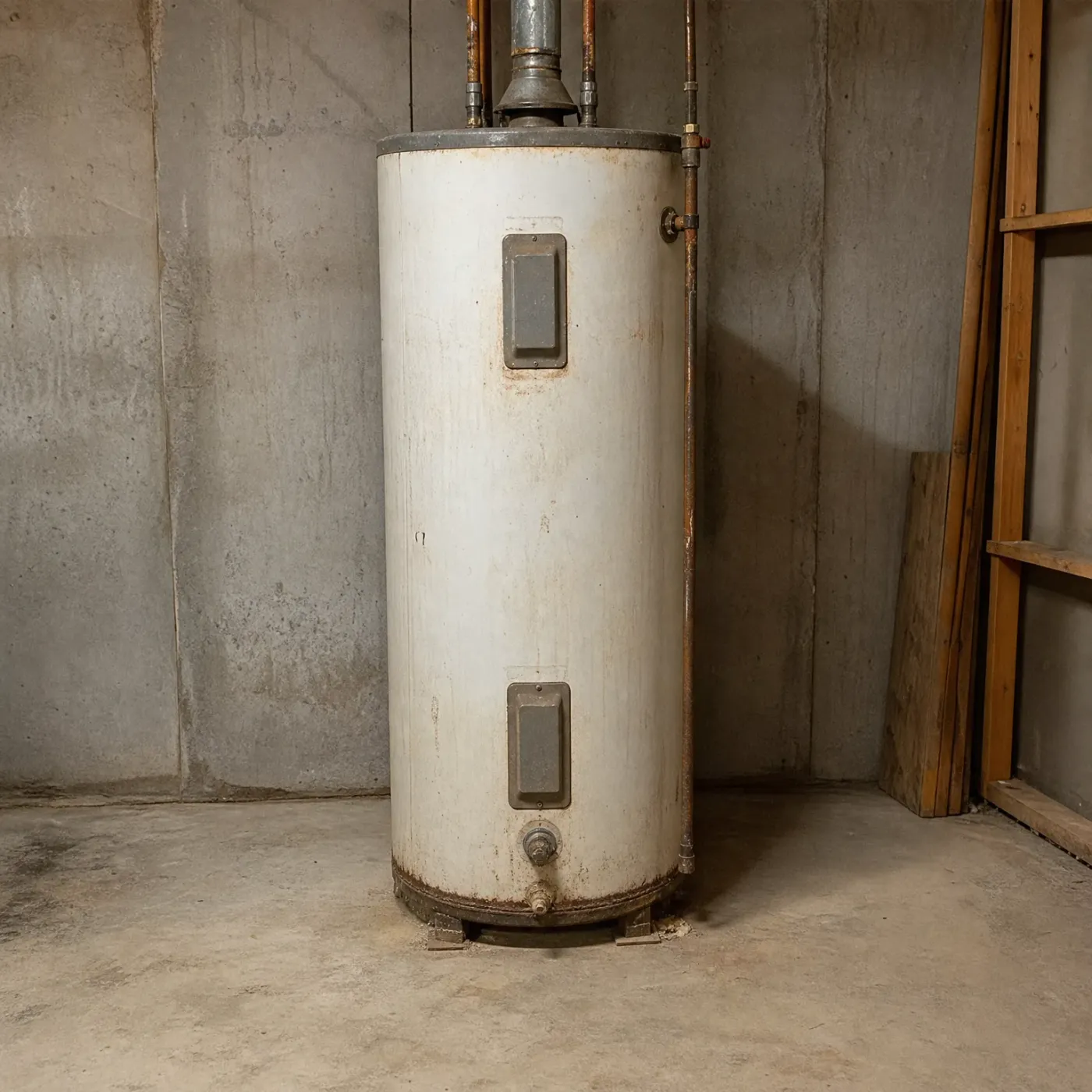
The jacket has gone orange where the steel underneath is giving way, and the staining on the floor shows it's already let go once. Once rust reaches the fittings at the top, the tank is close to leaking for good.


A gas water heater fails at the tank, almost never at the burner. Water sits inside that steel tank around the clock, and a glass lining is supposed to keep it off the metal. That lining was never perfect. It has pinholes from the day it was made, and the tank has a rod of magnesium or aluminum, the anode rod, wired to draw corrosion to itself instead of the steel. For a few years it works. Once that rod is used up, the water starts working on the tank itself, and nothing in the unit tells you when that happens. With Johnson County's hard well-influenced water, mineral scale builds on top of that corrosion, insulating the burner from the water and making it run longer to do the same job. That's why a unit can heat fine for years, then start taking longer, then fail outright within months. The anode rod is the one part made to wear out on purpose. Past ten years, assume it's long gone.
A licensed installer who works in Johnson County gets your project.
Sending the form costs nothing.
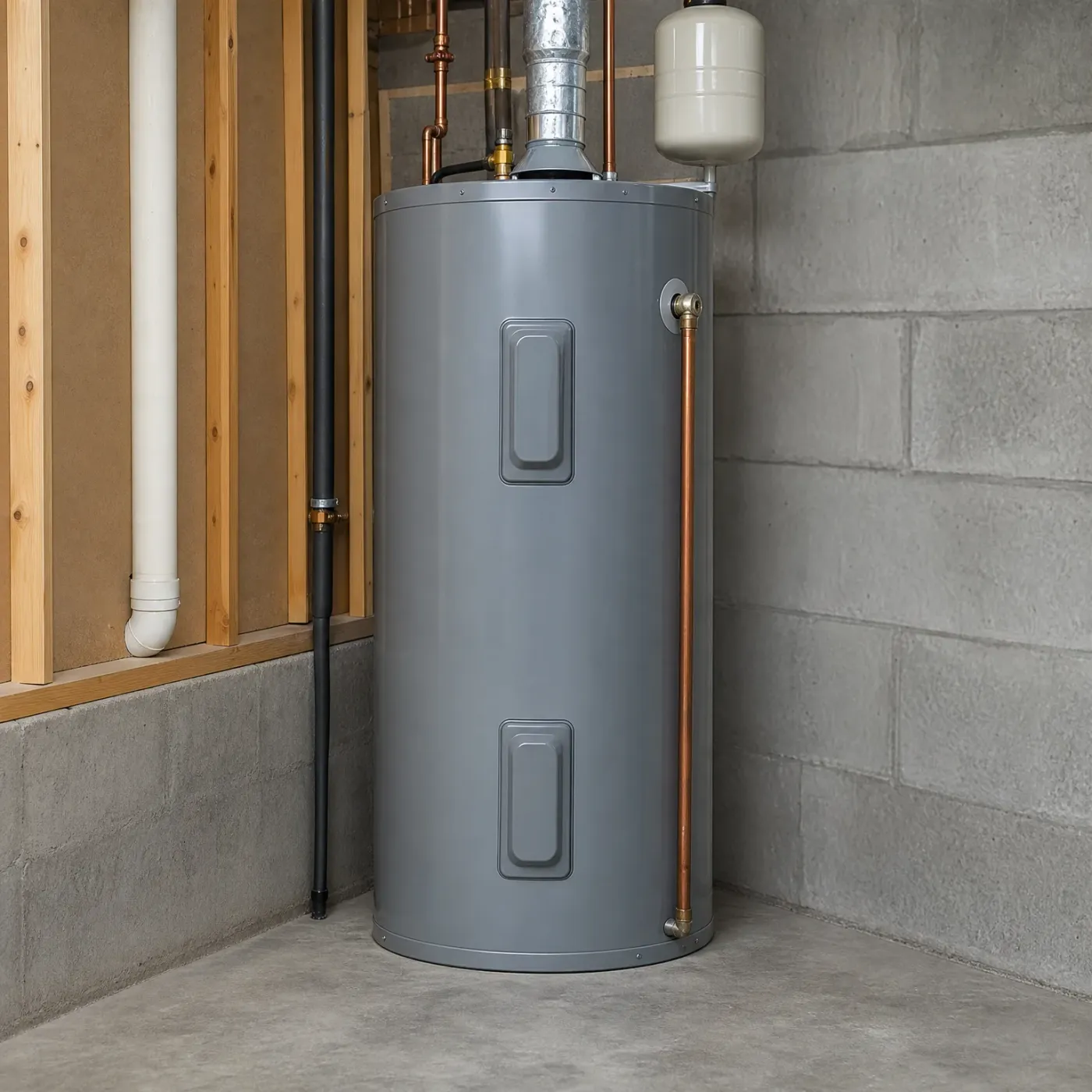
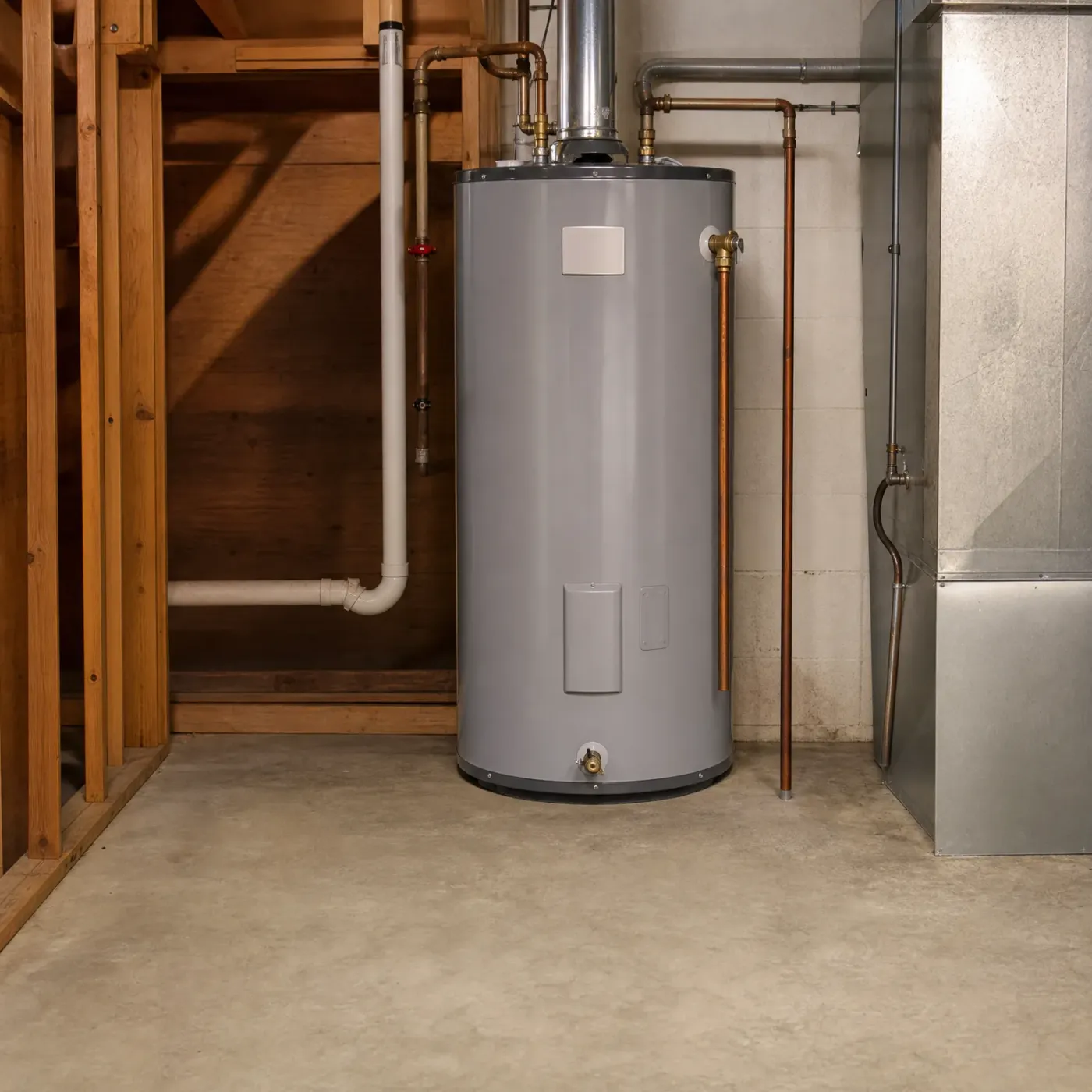
This one sits in a basement corner doing its job, feeding hot water through copper lines with an expansion tank backing it up. No rust on the jacket. No drip under the drain pipe. A setup like this doesn't need attention, just a yearly check to keep it that way.
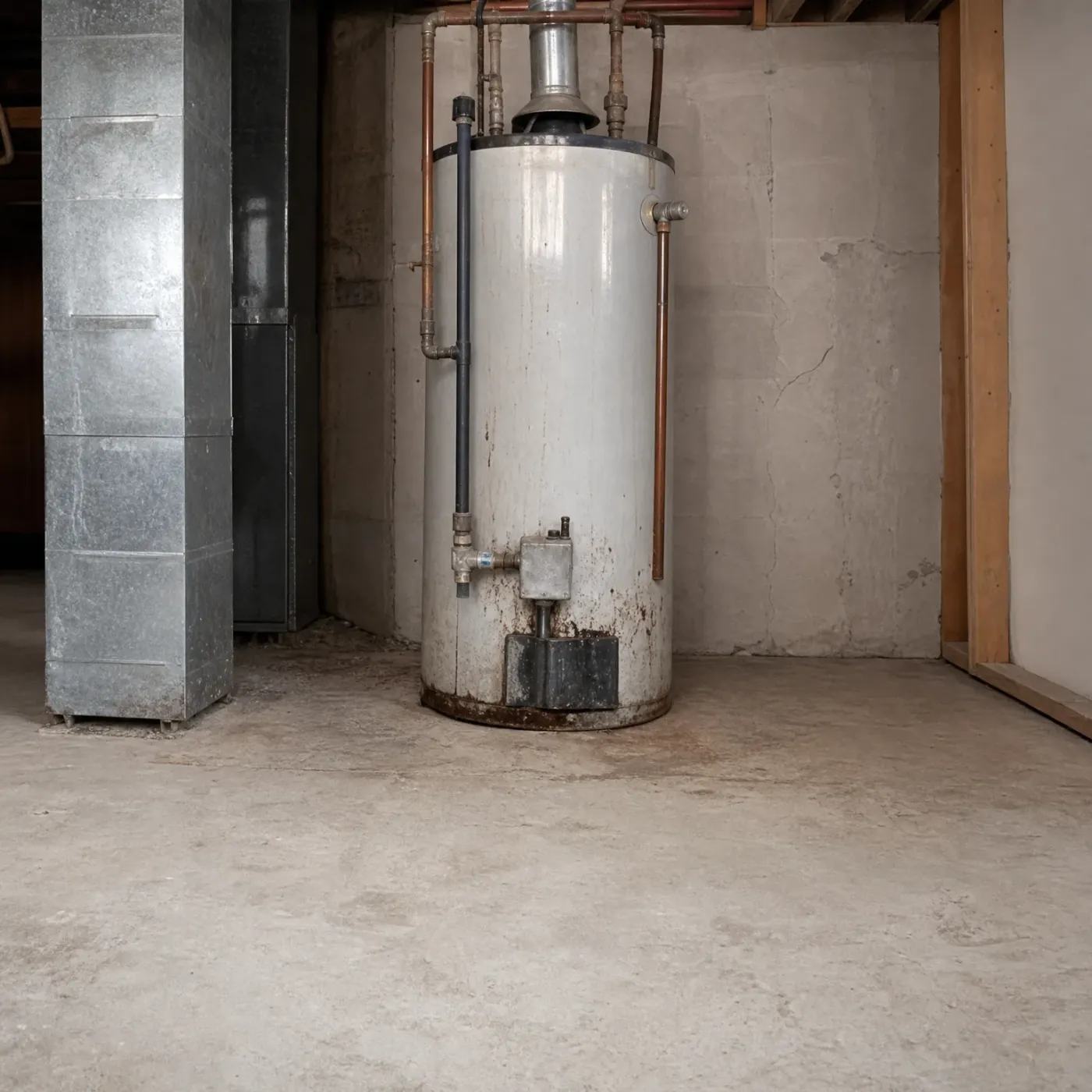
Rust has worked through the jacket and crept down toward the fittings. A gas tank in this shape has likely been losing ground for a while, heating slower or running out faster than it used to. Once corrosion shows on the outside, the tank has been failing on the inside longer than that.
At 13.46 cents a kilowatt-hour, running an electric water heater here costs less than it does in most of the country. That lower rate won't make a failing tank last longer, but if yours is nearing the eight to ten year mark, replacing it with another electric model keeps the monthly cost down while you're at it.
EIA-861 2025
Inside the tank is a rod of magnesium or aluminum wired to the steel. Corrosion needs somewhere to go, and the rod gives it a target instead of the tank wall. That's the whole job. Once the rod is used up, the water starts working on the steel itself, and that's when the tank side of the water heater's life runs out. Some rods last longer than others depending on the water, but nobody checks them on a set schedule, so most people find out the rod is gone only when the tank starts to rust.
A gas water heater has a burner underneath and a flue running up through the middle of the tank, and that flue brings its own heat into the water from the inside as well as the outside. An electric one has two elements sitting in the water itself, no flame, no flue. Either way the tank is the part that gives out, not the heating source. Gas units see more temperature swing at the tank wall because of that flue, which is part of why gas tanks often show wear a little sooner than electric ones storing the same water.
2.46 people per household on average
The average Johnson County home has 2.46 people in it, enough that a tank running on borrowed time gets noticed fast when it falls short.
Half the homes here were built by 1989
Half the homes here were built in 1989 or earlier, which puts a lot of original or second-generation water heaters well past the point of asking questions.
69.4% of homes heat with gas
69.4% of homes here heat water with gas, so when a tank finally fails, it's almost always the tank itself, not a burner or element problem.
ACS 2020-2024
Eight to twelve years is the honest window for a tank in Johnson County, gas or electric. Inside that window, a water heater doing its job quietly is nothing to worry about. Past year ten, the signs are worth watching: water that won't get hot, rust creeping around the fittings, a puddle forming underneath. None of those fix themselves, and none of them mean the unit is broken beyond use on day one. They mean the tank is near the end of what a glass lining and an anode rod can protect against. A rusted jacket and a spent anode rod are two routes to the same place, a tank that costs more to patch than to replace.
What happens next matters as much as what's already happened to the tank. A contractor who works on these units all year in this area has seen the lukewarm-water call and the rusted-fitting call enough times to know which one means act now and which one can wait a season. That's the kind of judgment that's hard to get from a stranger reading a model number off a sticker. When you send a request here, it goes to one licensed installer local to the area, not a batch of companies competing for your callback. You get one contractor who knows the equipment and one conversation about what your tank actually needs. If the tank's past ten years and showing any of the signs above, the next step is simple: get someone out to look at it and tell you where you stand.
Finding a pro stops being your job
