Flushed on schedule
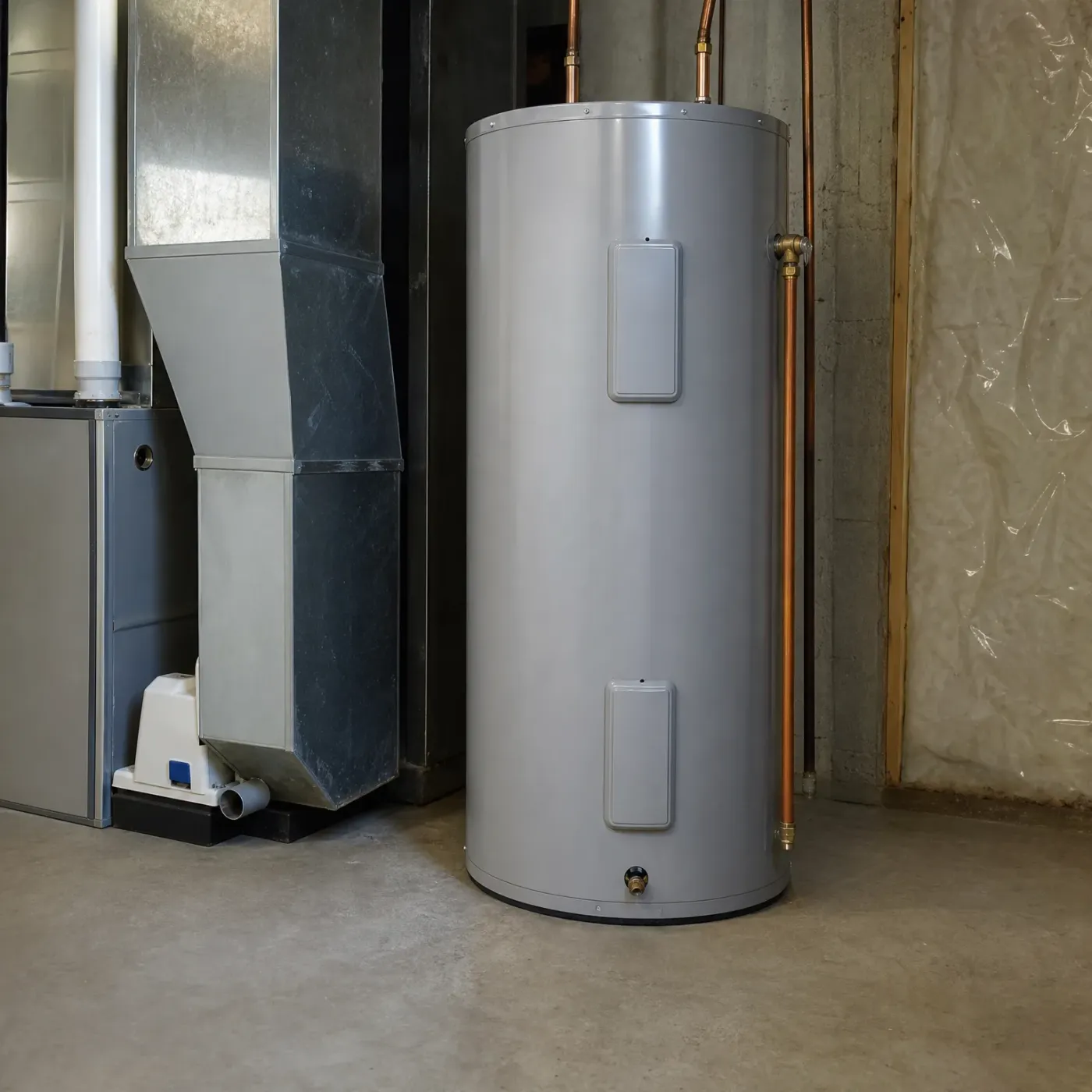
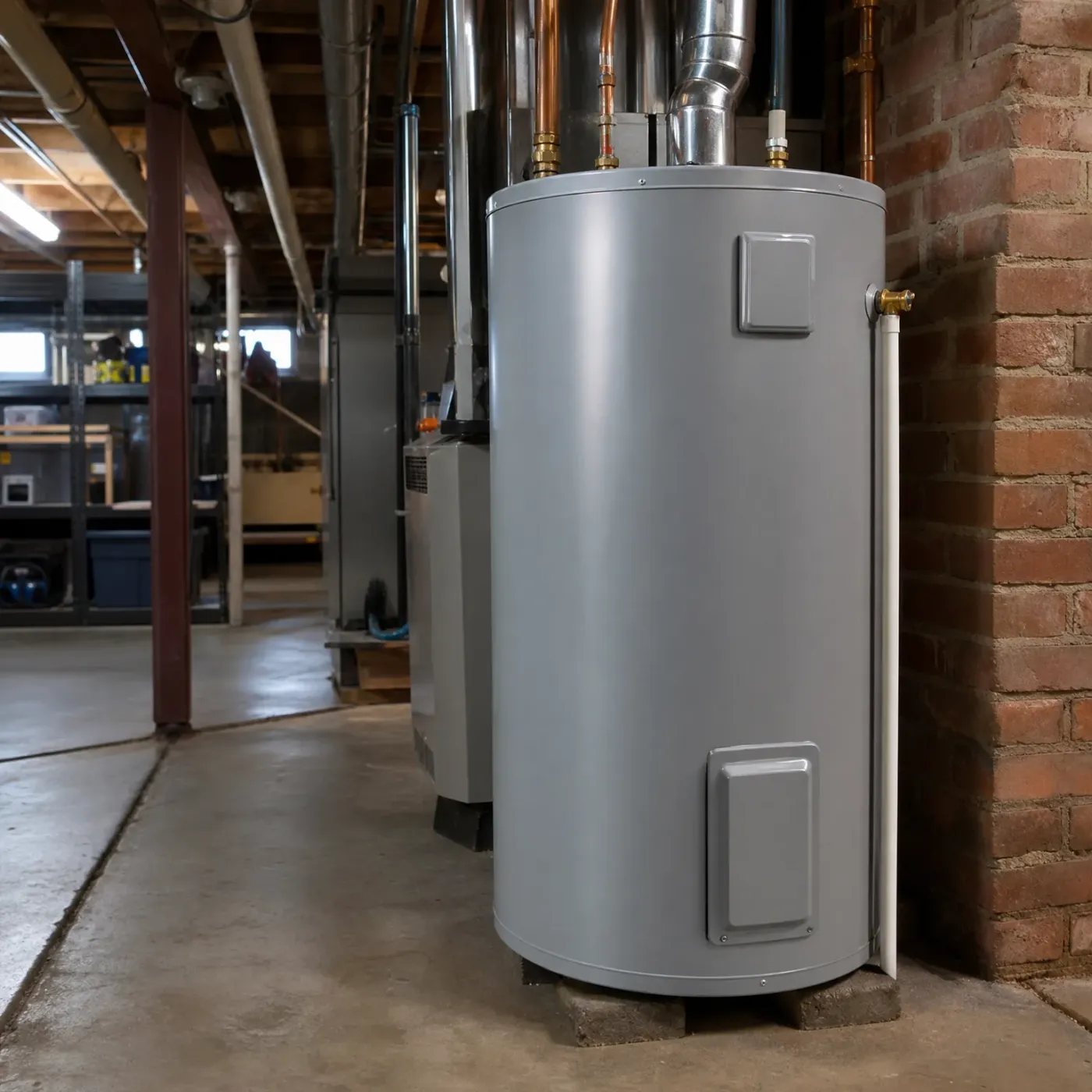
This is a tank doing its job. The copper lines run clean, the vent pipe is clear, and the expansion tank on the wall is handling pressure the way it should. Nothing here is working harder than it needs to.

Flush your water heater once a year. Most of Kansas has hard water, and the minerals in it settle out as sediment on the bottom of the tank every time the burner fires. A gas water heater heats from the bottom, so that layer sits right between the flame and the water, and the tank has to work harder to get the same result. Left alone for a few years, that sediment can harden into a crust that drowns out the burner noise with popping and rumbling, and it shortens the life of the tank. An annual flush clears it out before it builds up. If your water heater came with the house and nobody can say when it was last flushed, that's worth checking into, since sediment that's had years to settle takes more than one flush to clear.
Draining the tank starts at the drain valve near the base, where a garden hose runs the water out into a bucket or floor drain. Shut the cold water supply first, or the tank keeps refilling while you're trying to clear it out. Open a hot water tap somewhere in the house too. That breaks the vacuum inside the tank, so the water drains at a normal pace instead of barely moving. A real flush runs until the water coming out is clear, not just a minute or two of rinsing. With Kansas water, whether it comes from a well or city lines with a high mineral count, sediment builds fast enough that most homes need this every year. Wait a few years between flushes and the sediment can harden enough to clog the drain valve itself, and at that point draining the tank isn't simple anymore. A contractor who flushes tanks all over Kansas has likely run into that exact valve before and knows how to get it open without forcing the job.




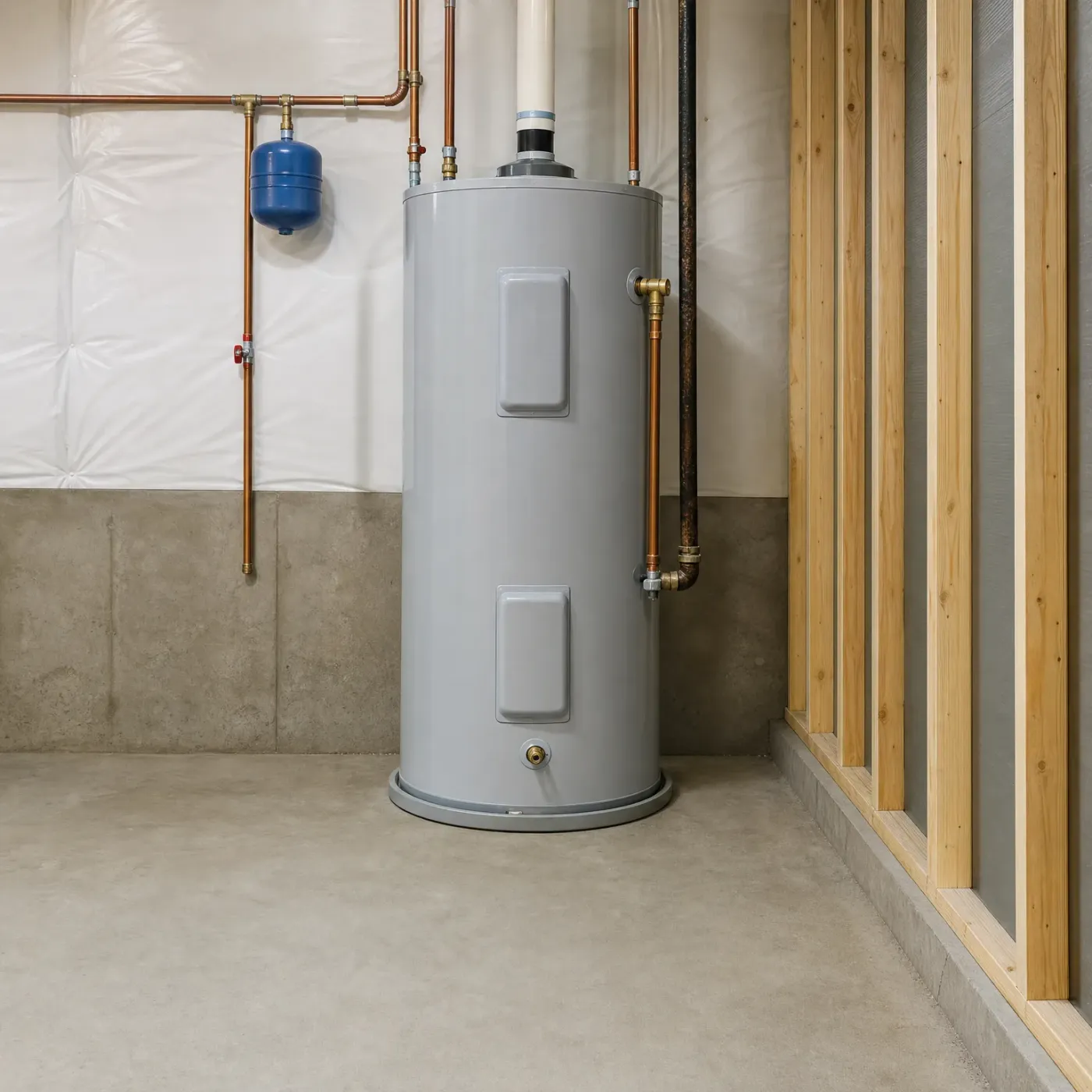
This is a tank doing its job. The copper lines run clean, the vent pipe is clear, and the expansion tank on the wall is handling pressure the way it should. Nothing here is working harder than it needs to.
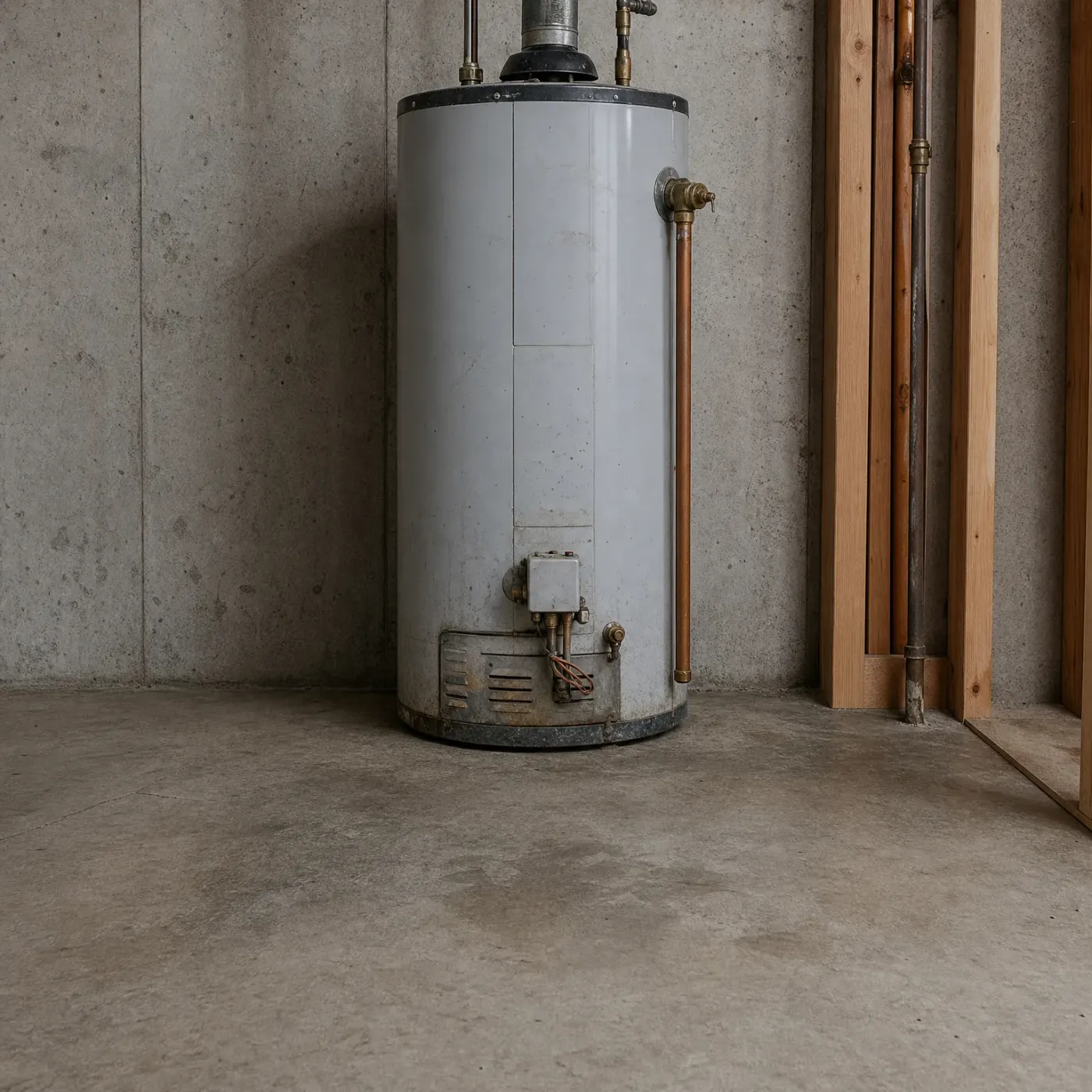
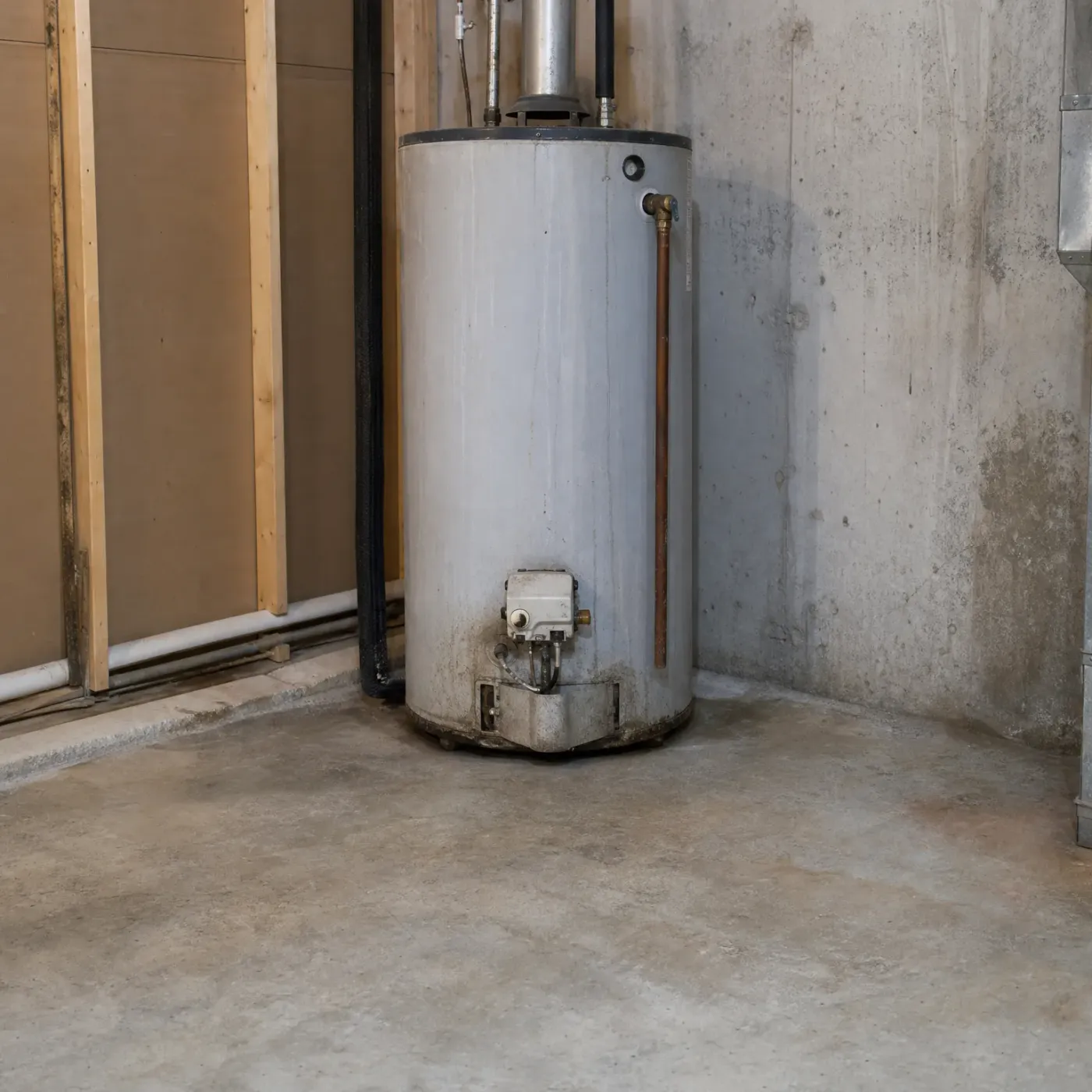
Rust and grime around the burner assembly like this usually mean the tank never got drained. Sediment has been baking onto the bottom for years, and the burner has been firing through it the whole time. A water heater in this shape is closer to failing than most owners think.
Check the recovery time. If a full tank of hot water runs out faster than it used to, or the shower turns lukewarm sooner, sediment is likely taking up space at the bottom of the tank and crowding out the water the burner can actually heat. You might hear it too, a rumbling or popping sound from the tank when the burner is running, which is water trapped under the sediment layer trying to escape. Some homes notice the water heater cycling on more often just to keep up. Left alone, that buildup makes the tank work harder for the same hot water, and over years it can shorten how long the tank itself lasts.
Shut off the gas control and let the tank cool fully
Connect a hose to the drain valve and run it outside
Open the drain valve and let the tank empty out
Open the cold inlet to stir up and flush remaining sediment
A licensed local pro takes the request for your water heater tune-up.
Say what's going on with your water heater, and a pro who works on them reaches out.
It costs nothing to send, and you don't have to hire anyone.
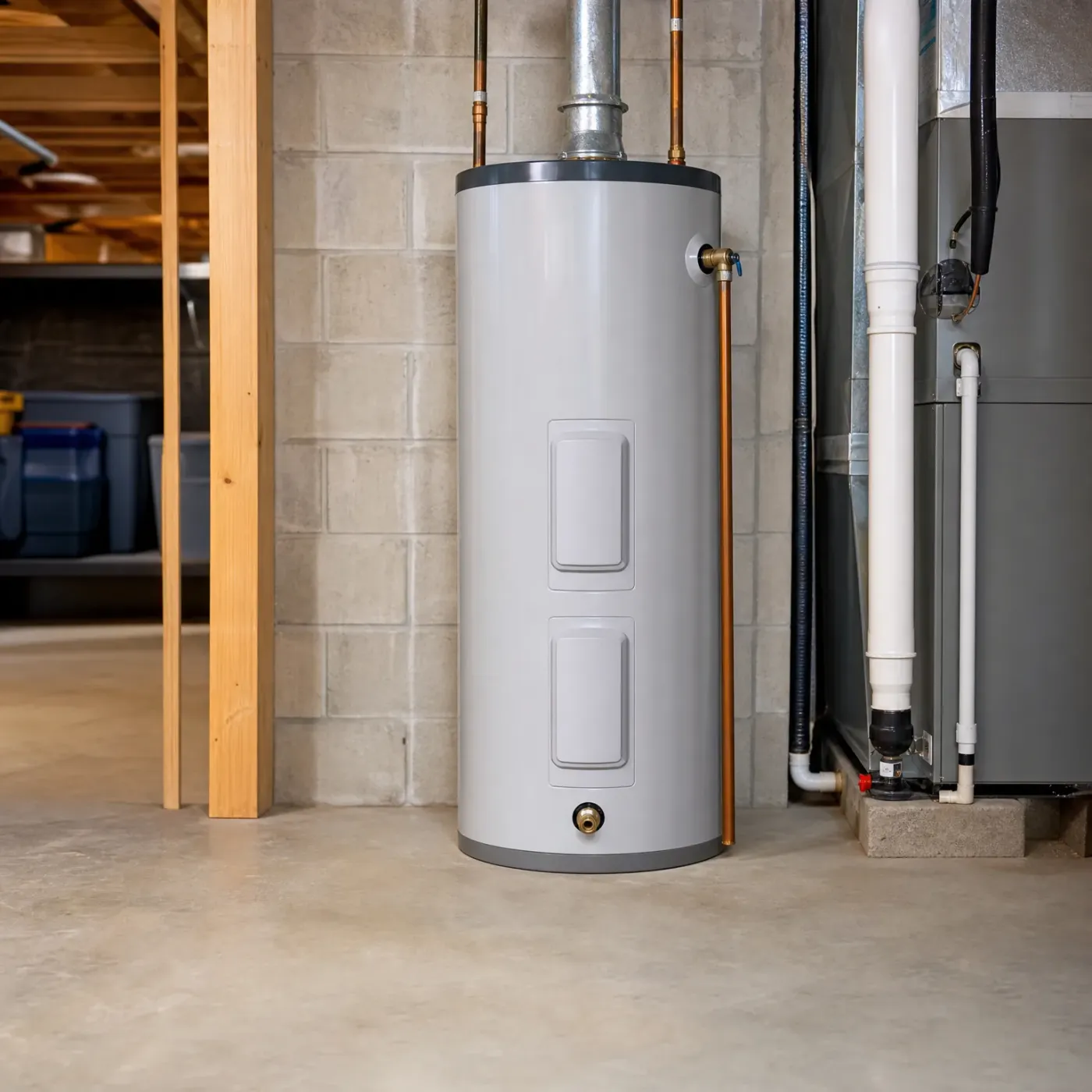
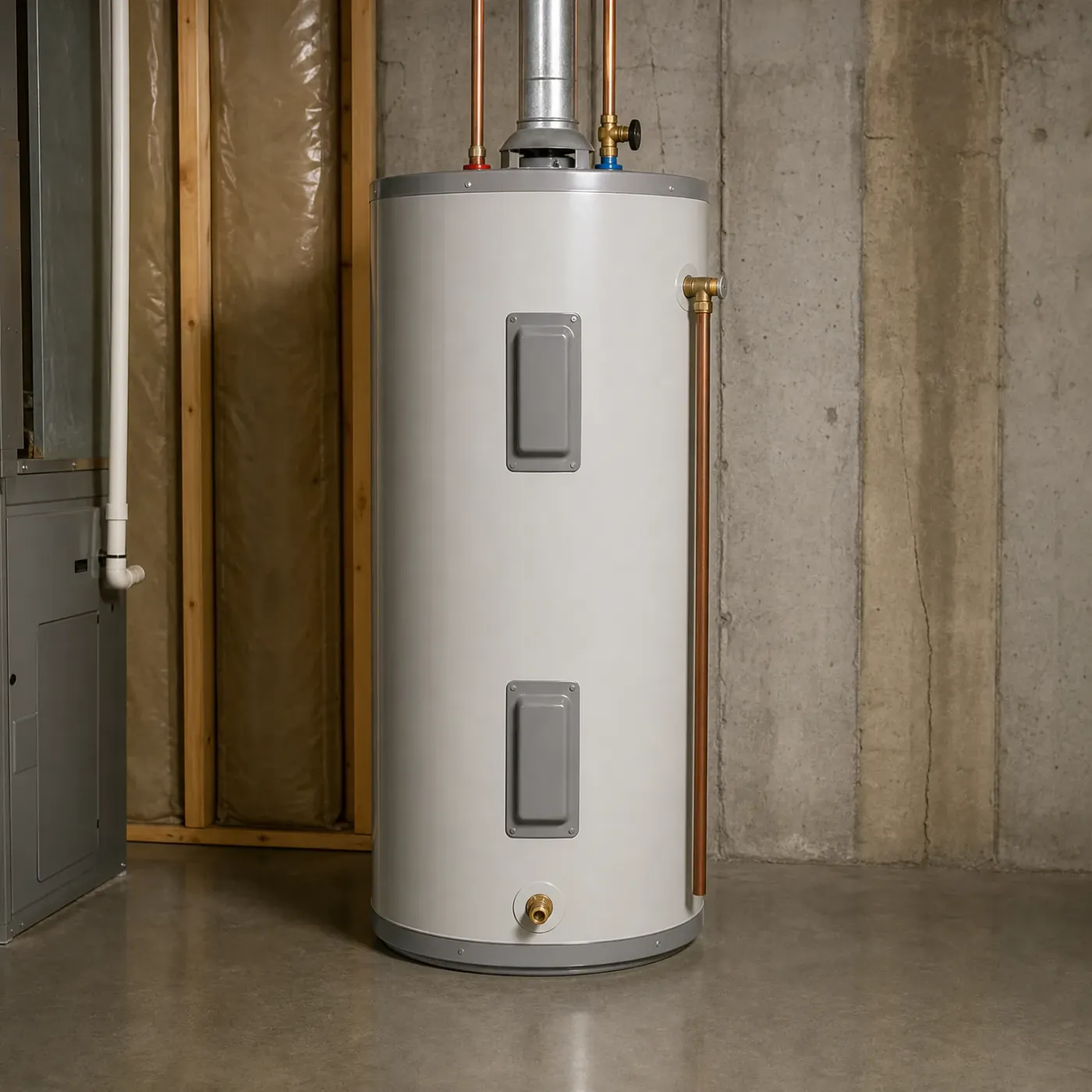
This is what a flushed tank looks like. The copper lines run clean to the fittings, the flue vents straight, and the access panels sit flat against the tank. Nothing here suggests the burner is fighting anything to heat your water.
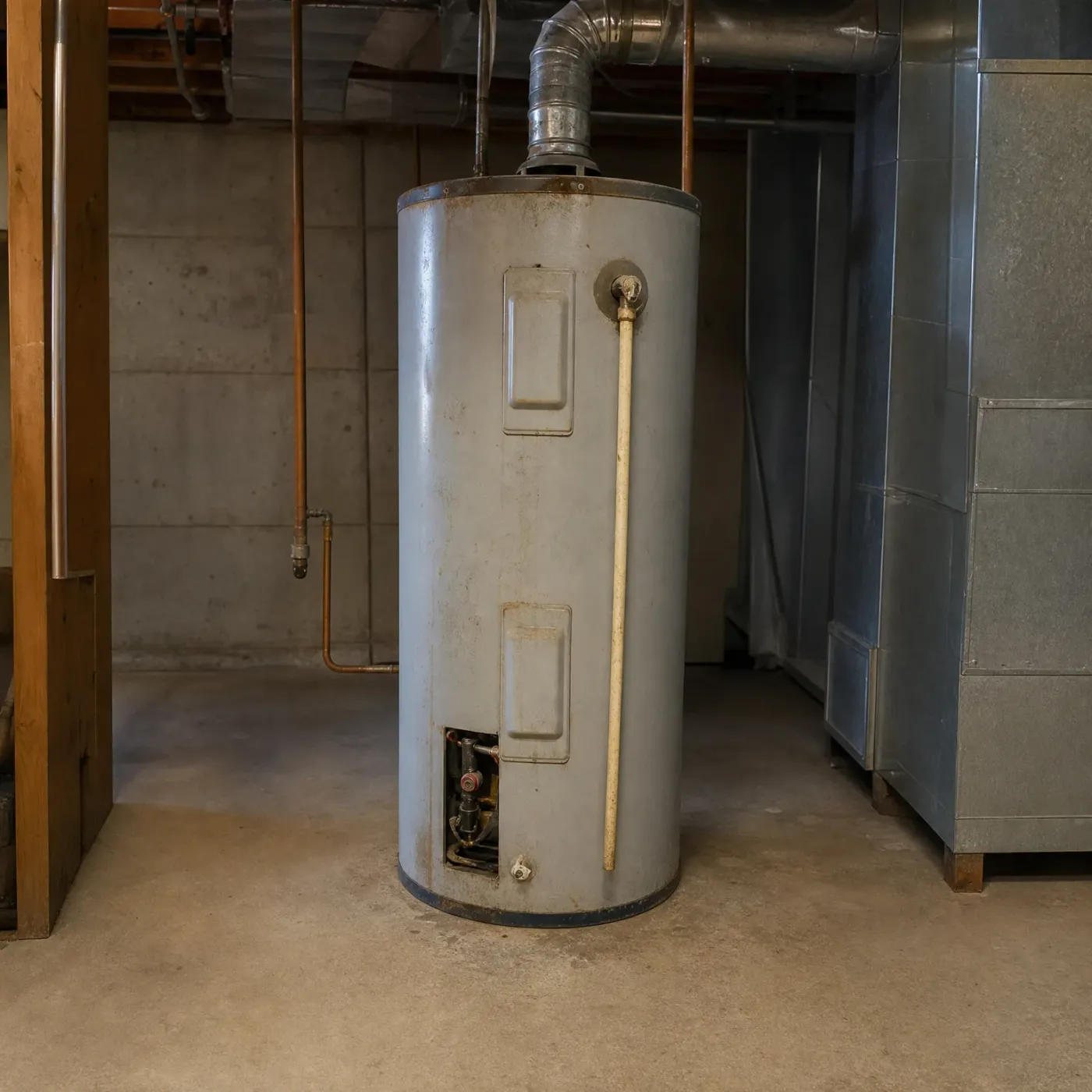
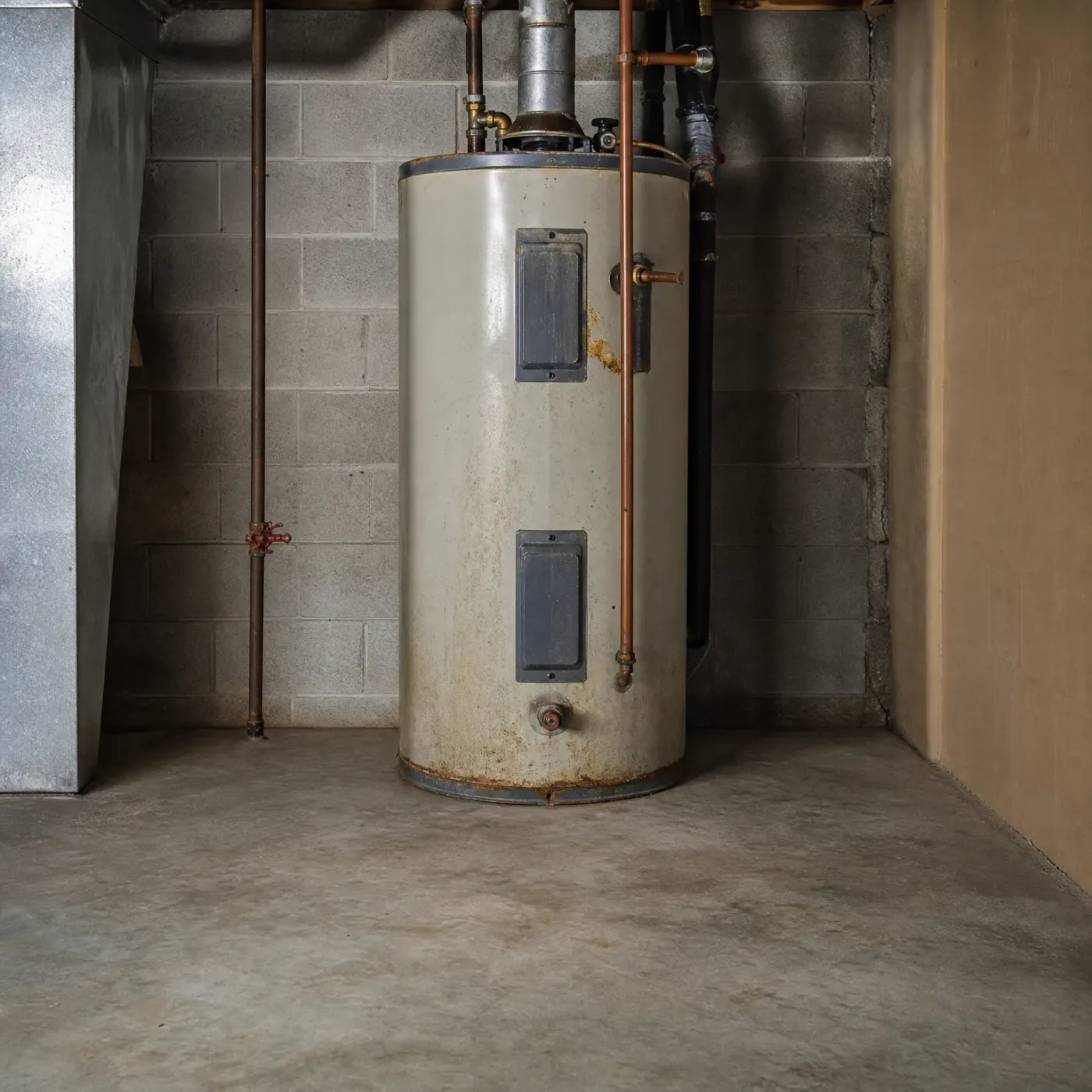
Rust has worked into the gray finish and the surface shows it. The relief valve discharge pipe and the flue are still doing their job, but years without a flush let sediment take hold inside, where you can't see it until recovery time slips.


Most homes in Kansas heat with gas, yours probably included. A gas water heater fires from underneath the tank, so sediment has to sit right on top of the burner before that heat ever reaches the water. Flushing keeps that layer from building between the two.
ACS 2020-2024 5-year B25040
A yearly flush is the whole answer. Kansas water leaves minerals behind, your gas burner sits right under the tank, and a clear tank is what keeps those two from working against each other. Wait a few years and the sediment hardens into a layer the burner has to push heat through, and you feel that as slower recovery and a shorter hot shower.
Finding someone to do it is the easier part, if you let the match work the way it's built to. A contractor who services tanks across Kansas every week has already seen what hard water does to a tank left too long, whether the house is on a well or city mains. That's not guesswork for them. They've opened enough drain valves in enough neighborhoods to know where buildup runs worst and what a tank looks like when it's been neglected versus kept current.
You're matched with one contractor, not several, so there's no juggling calls or comparing quotes from companies that don't know your water. One licensed, local contractor reaches out, looks at your tank, and handles the flush the same way every time: drain it fully, run it until the water's clear, close it back up.
The schedule is simple. Once a year, before sediment has a chance to settle in, is what keeps a gas water heater doing the job it's built for.




Your request goes to one pro, not a list of companies.
No charge to send it. You decide if you hire them.