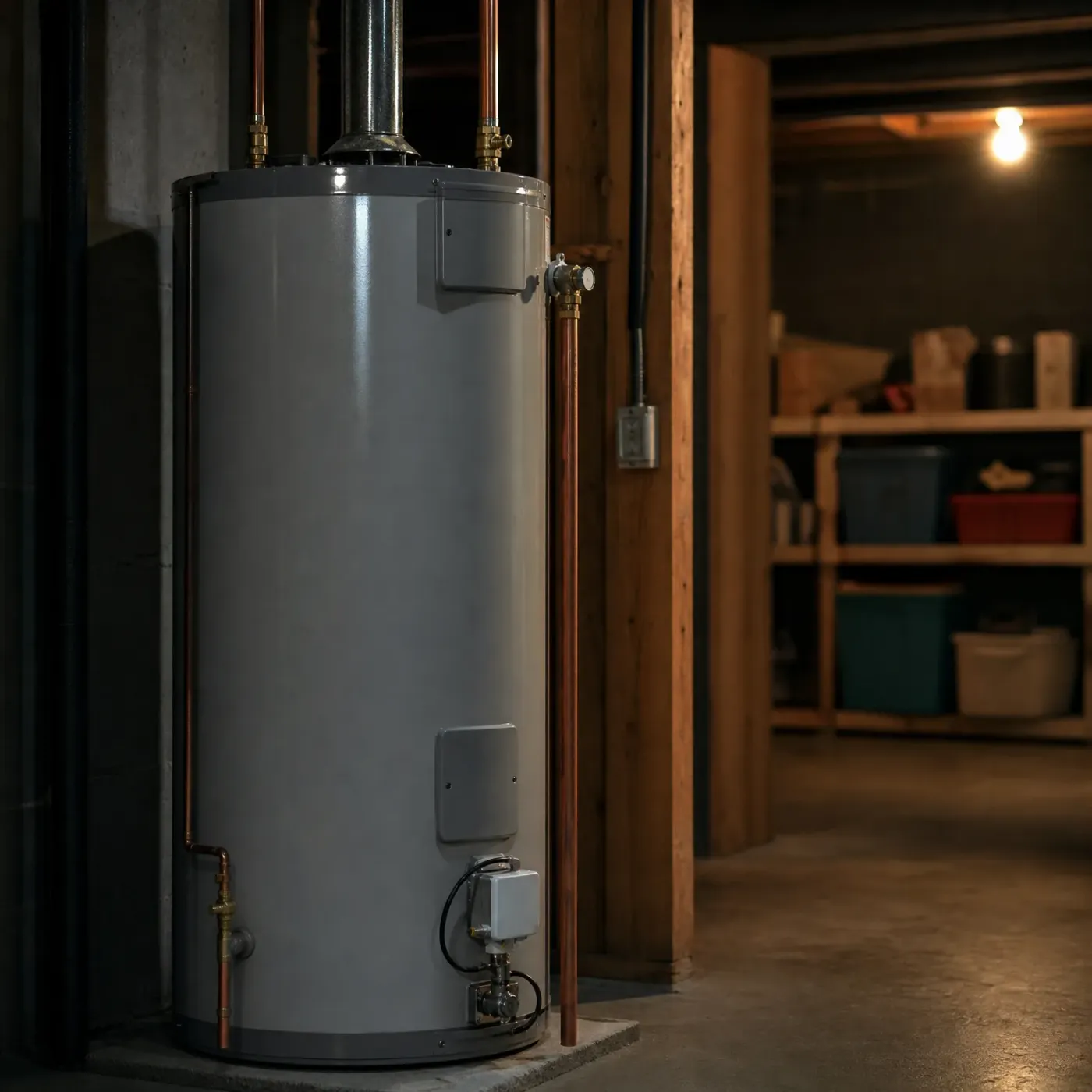
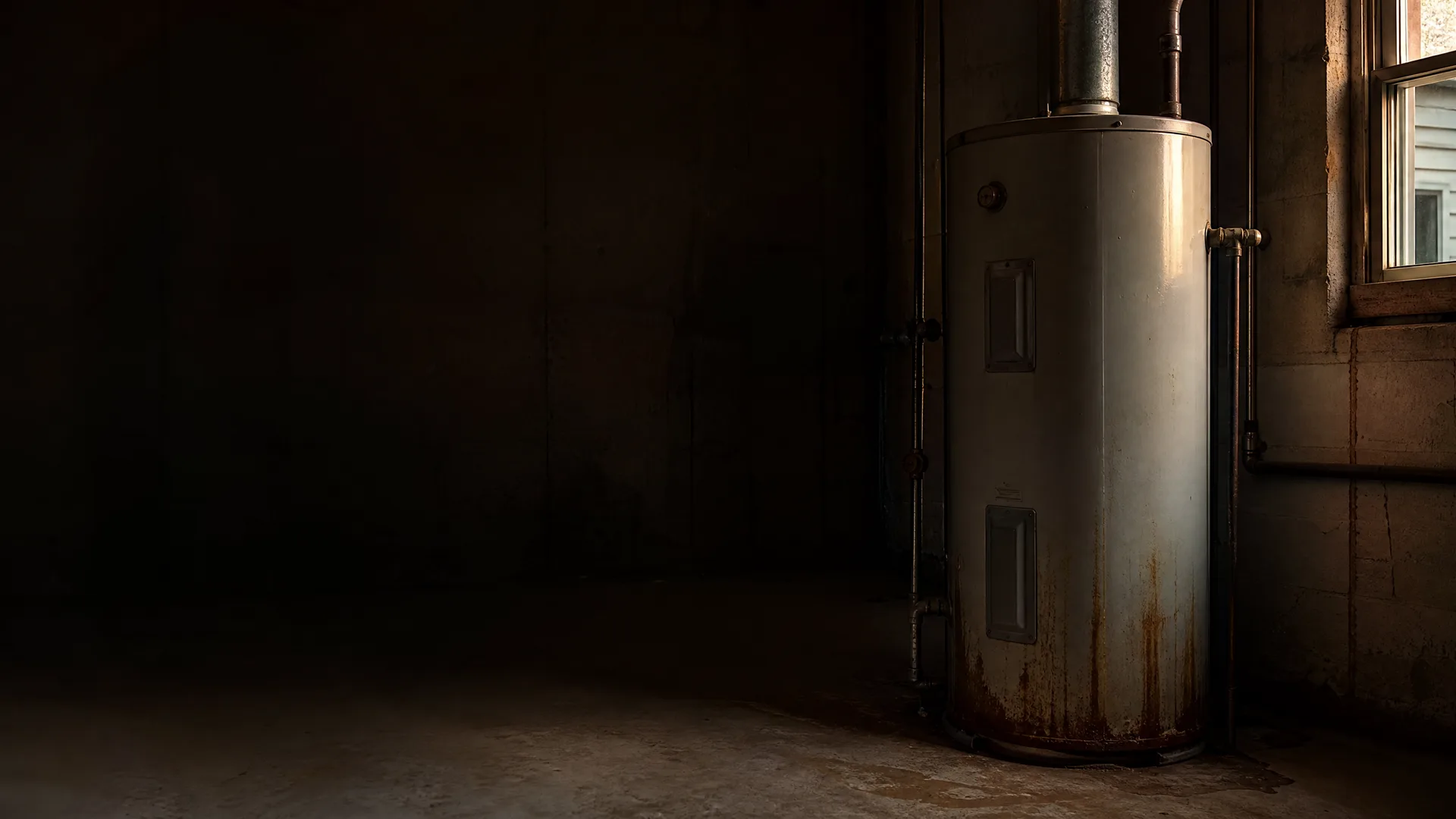







A large gray cylindrical water heater with copper pipes and a metal flue stands on a concrete pad in a dim basement, with wood framing and shelves of storage bins lit by a bare bulb behind it.

A local pro for your water heater installation

Is a heat pump water heater worth it in Kansas

A heat pump water heater pulls heat from the air instead of burning gas or running electric resistance, so it costs less to run than what's probably in your basement or utility closet now. Whether it makes sense for your house depends on where it sits, what it replaces, and what you're paying for power. Answer those below, then get matched with a contractor who can look at your setup directly.

Get matched

A heat pump water heater is worth it for most Kansas homes, because it uses a fraction of the electricity that a standard electric water heater does, and over years of use that difference adds up. Most houses here heat with gas, so the water heater is often the only big electric load in the house, and cutting what it draws has a real effect on the power bill. The catch is where the unit sits. A heat pump water heater pulls heat out of the air around it and needs space to do that, so it works best in a basement or utility room with some volume to it, not a tight closet. It also cools and dehumidifies that space as it runs, which is no trouble in a Kansas summer and barely noticeable in winter if the room is large enough. If your water heater sits somewhere small and closed off, that changes the math.

A rusting cylindrical water heater with connected pipes stands against a dim concrete basement wall near a window.

You're down in the utility room after dinner, and the rust streaks at the base of the tank catch your eye again, the way they have for a couple of weeks now. It's humid out still, that thick Kansas evening air pushing into the one window, and the water heater's been making a low ticking sound since you came down. You crouch and touch the streak near the bottom seam. Damp. Not dripping, just damp, the metal gone soft-looking where the rust has eaten at it. You think about how long it's actually been since anyone looked at this thing. The ticking stops. You stand there a minute longer, listening for it to start again.

How does a heat pump water heater actually work?

You keep hearing that a heat pump water heater pulls heat from the air, and that sounds a little like magic for something that's supposed to heat water in a closet. Before you put one in the house, you want to know what's actually happening inside it, and whether that process is going to work the way it's supposed to in a Kansas basement or utility room that isn't always warm.

It works like a refrigerator running backward

A fan pulls air from the room across a set of coils filled with refrigerant. That refrigerant absorbs the heat sitting in the air, then a compressor squeezes it until it gets hot enough to transfer into the water in the tank below. The air coming out the top of the unit is a few degrees cooler than the air that went in, because that heat left the room and ended up in your water. This only works well when there's enough room air to draw from, which is why these units need space around them, usually a few hundred square feet of basement or utility room, not a closet with the door kept shut.

A gray-haired bearded man in a dark coat and scarf dusted with snow stands smiling in a dimly lit entryway with a white front door, a side table with a lit lamp, an oval mirror, and a patterned rug.
An older bearded man in a dark snow-dusted coat and gray scarf stands just inside a dimly lit home entry, with a framed picture, lit table lamp, and an adjoining room with a fireplace behind him, and snow visible through the open door.
A gray-haired, bearded man in a dark snow-dusted coat stands smiling in a dimly lit entry hall with a staircase, a lit table lamp, a framed picture, and a living room visible through a doorway.
An older man with gray hair and a beard, wearing a dark jacket dusted with snow, stands smiling in a dimly lit hallway with lamps and a living room visible behind him.

Get the right pro for your water heater

A heat pump water heater needs somewhere to pull heat from, and that means a basement or utility closet with some air around it, not a tiny sealed closet. That's worth checking before anything else, because it decides whether the install is a straight swap or needs more work. Kansas summers get sticky, and a heat pump water heater will also pull some moisture out of that air while it runs, which is no small thing in a damp basement in July. Sizing matters too. A tank that's too small for your household runs out of hot water when you need it most, and that's a worse outcome than whatever you're dealing with now. None of this is something to guess at from upstairs. Someone who installs these for a living can look at your space, tell you if it'll work the way you want, and size it right the first time.

A man seen from behind raises his hand to wave at a woman standing in the open front doorway of a single-story house with gray shingle siding, white columns and a gabled porch entry.

What it changes in your house

Put one in a basement or a utility closet off the garage and you will feel it before you think about the water bill. That space will run a few degrees cooler and a little drier, because the unit is pulling heat and moisture out of the air to warm the water. In July that is a small upside. In January, if that closet sits off a room you actually use, it is worth knowing about before the install, not after.

The other thing it changes is how much you think about the water heater at all. Right now that is probably not much, until the day it fails and you are standing in standing water figuring out who to call. A heat pump water heater does not remove that risk, but getting the sizing and placement right the first time does, and that part depends on your house, not a brochure. Answer a few questions about your setup and a contractor who installs these in Kansas homes will look at what you have and follow up. You stop chasing bids and start waiting for the right one.

A gray upholstered sofa with a textured cushion sits beside a dark round side table holding a vase of green foliage, with a table lamp and sheer-curtained window behind.
A gray cylindrical water heater stands in a basement corner against a concrete wall, with copper pipes, insulated flex lines, a metal flue, and insulated wall framing with ductwork to the right.

Working as it should

A gas water heater like this one usually just sits there doing its job, tank holding steady, vent pulling exhaust out through the roof without you giving it a thought. No rust at the base, no water pooling on the concrete. If yours looks like this, a heat pump water heater is a choice you're making, not one being forced on you.

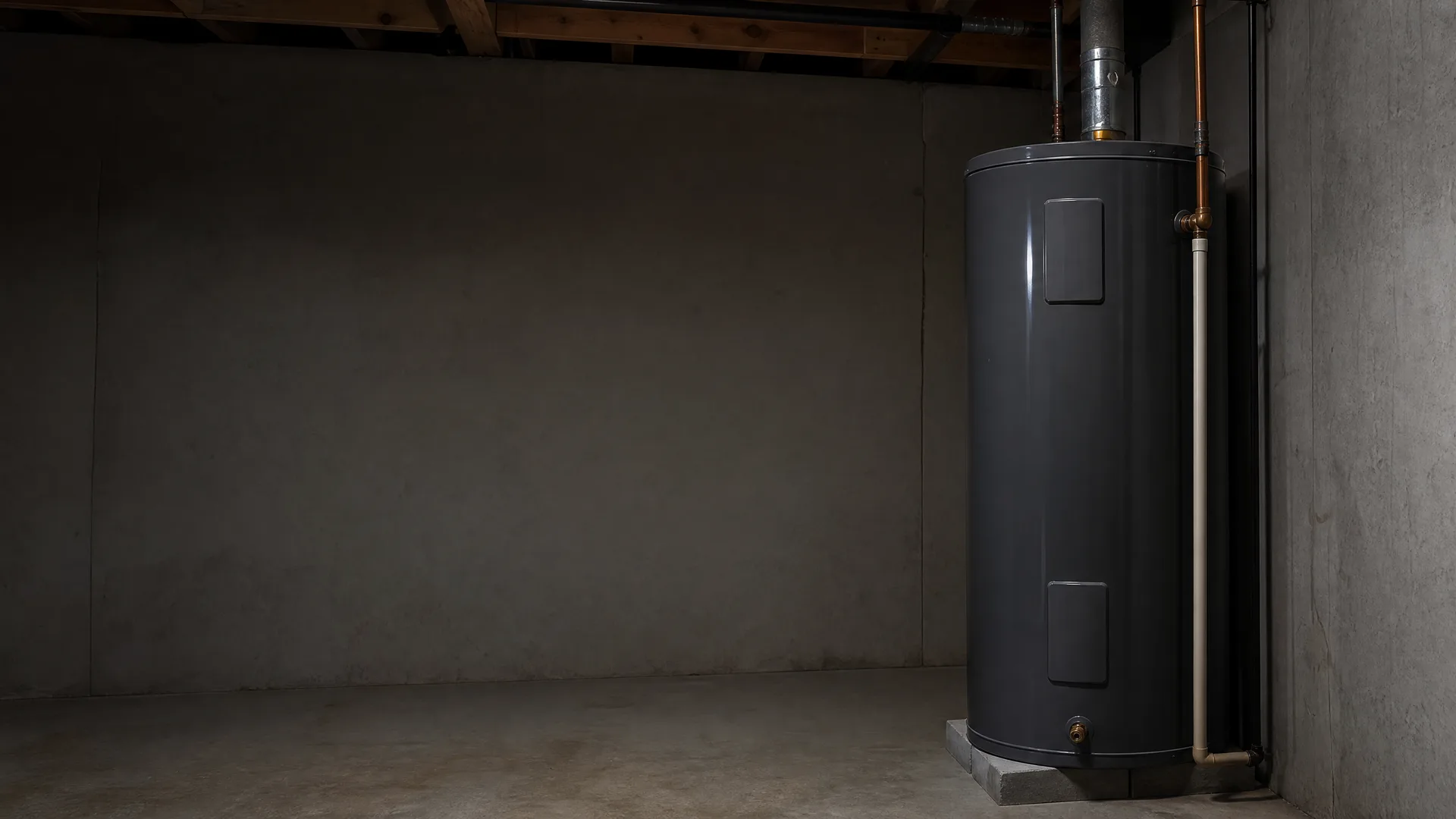
A rusting gas water heater with copper and steel pipes stands against a concrete block wall on a bare concrete floor.

Rusted and failing

Corrosion like this at the base means the tank is giving out, and once rust eats through steel, it doesn't stop on its own. An old electric water heater in this shape is usually past the point of a cheap fix. That's the moment most homeowners in Kansas look at what replaces it, and a heat pump unit is worth asking about.

63.1% of homes statewide heat with gas

Most houses in Kansas heat with gas, and yours is likely one of them. That means your water heater is probably gas too, so swapping in a heat pump water heater means moving from a gas-fired tank to one that runs on electricity, not just replacing one electric unit with another.

ACS 2020-2024 5-year B25040

Where This Leaves You

  • A heat pump water heater makes sense for most Kansas homes once you have the space and the electric setup it needs.
  • It runs on a fraction of the power a standard electric tank uses, which is the whole case for switching.
  • Moving from gas to one of these means a new electric circuit and a new vent, not a straight swap.
  • The space it sits in needs enough air around it to pull heat from, so a cramped closet is worth checking first.
  • A contractor who has sized and installed these in Kansas homes can tell you quickly whether your setup fits.
  • Once you send the details, matching you with that contractor is no longer something you have to track down yourself.

A heat pump water heater is worth it for most Kansas homes, once the space and the electric work line up. The case for it comes down to electricity use. It draws a fraction of what a standard electric tank draws, and if you're currently heating water with gas, you're trading a gas bill for a smaller electric one instead of swapping one electric tank for another. That's a different calculation, and it's one worth running with real numbers for your house before you decide anything.

None of that answers whether your utility room can take one. That part depends on things only someone standing in the room can check: how much air moves through the space, where the electric panel is, whether the vent can go where a vent needs to go. A gas-to-electric swap means new wiring and a new vent, not a tank-for-tank trade, so the install itself is bigger than what you're picturing.

That's the part a contractor sorts out in one visit. Someone who has installed these in Kansas basements and utility closets can look at your setup and tell you fast whether it fits, what it needs, and what changes. Once you send your details, you're not the one tracking that person down. The search ends there, and what's left is a contractor reaching out to look at your specific house.

A dark gray cylindrical water heater with copper and metal pipes stands on a concrete pad in the corner of a dim basement with bare concrete walls and exposed floor joists overhead.

A pro who works on water heaters

After you send the request, you're done searching.

Step 1 of 3: Equipment