Is a tankless water heater worth it in Overland Park, KS

Once you send the form, finding a pro is off your list.

Hand it off

Is a tankless water heater worth it in Overland Park?

You're probably looking at a water heater that's on its way out, or you've just heard that tankless units run more efficiently and last longer. Before you spend the money, you want to know if the switch actually pays off here, with Johnson County winters and gas rates, not just in general terms you read online.

For most homes in Overland Park, yes, especially if you're already replacing a gas water heater

A tankless unit heats water only when you run a tap, so it isn't holding 40 or 50 gallons hot around the clock. Gas is the common fuel here, and gas tankless units are the ones that make the strongest case, since they can keep up with cold incoming water in January without the recovery lag a tank struggles with. Johnson County winters push groundwater temperatures down, which means a tankless unit has to work harder to hit your set temperature, but a properly sized gas unit handles that without trouble. The payoff shows up as lower standby losses year round and a unit that typically lasts longer than a tank, so if yours is already failing, moving to tankless is worth the look.

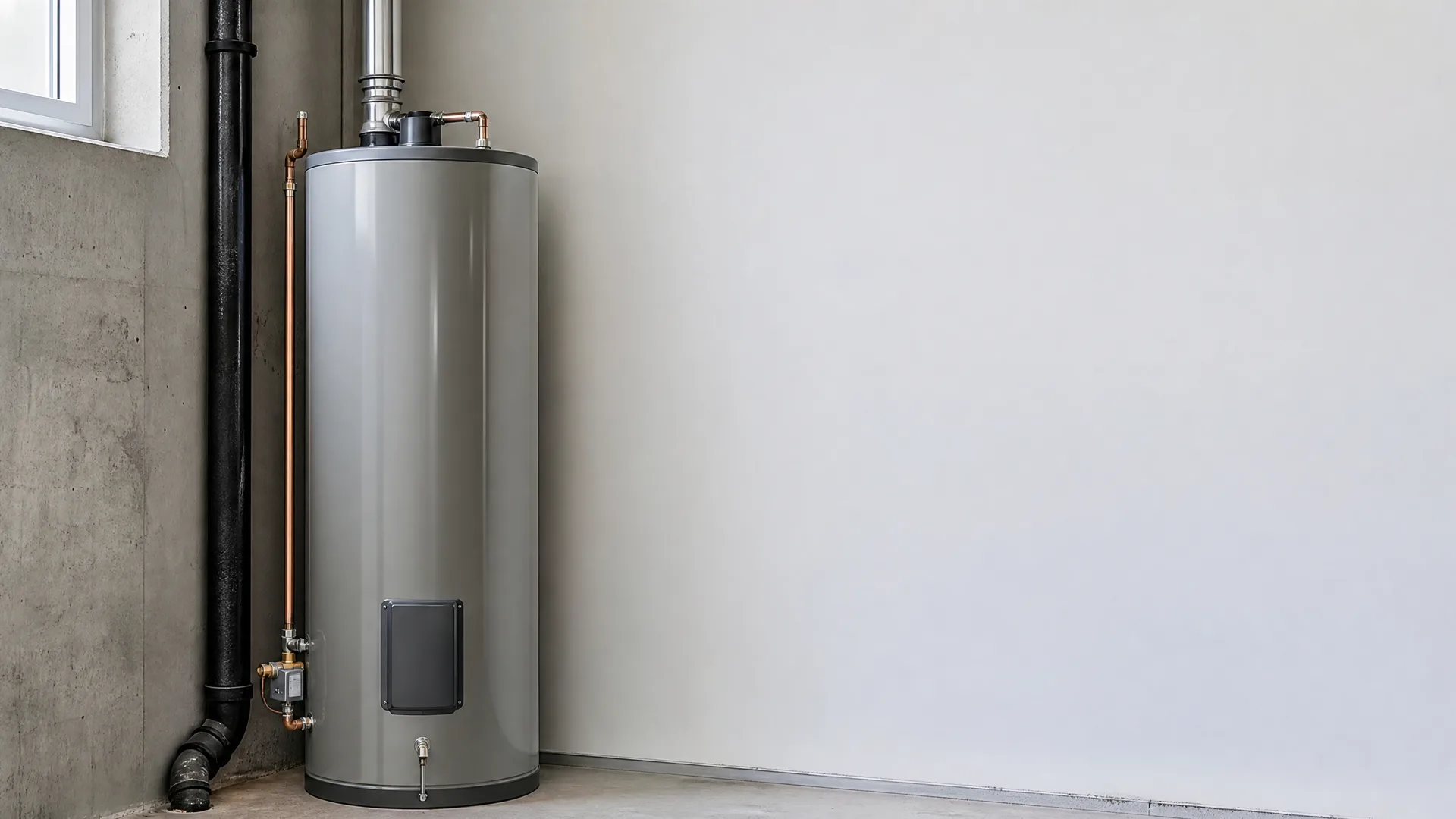
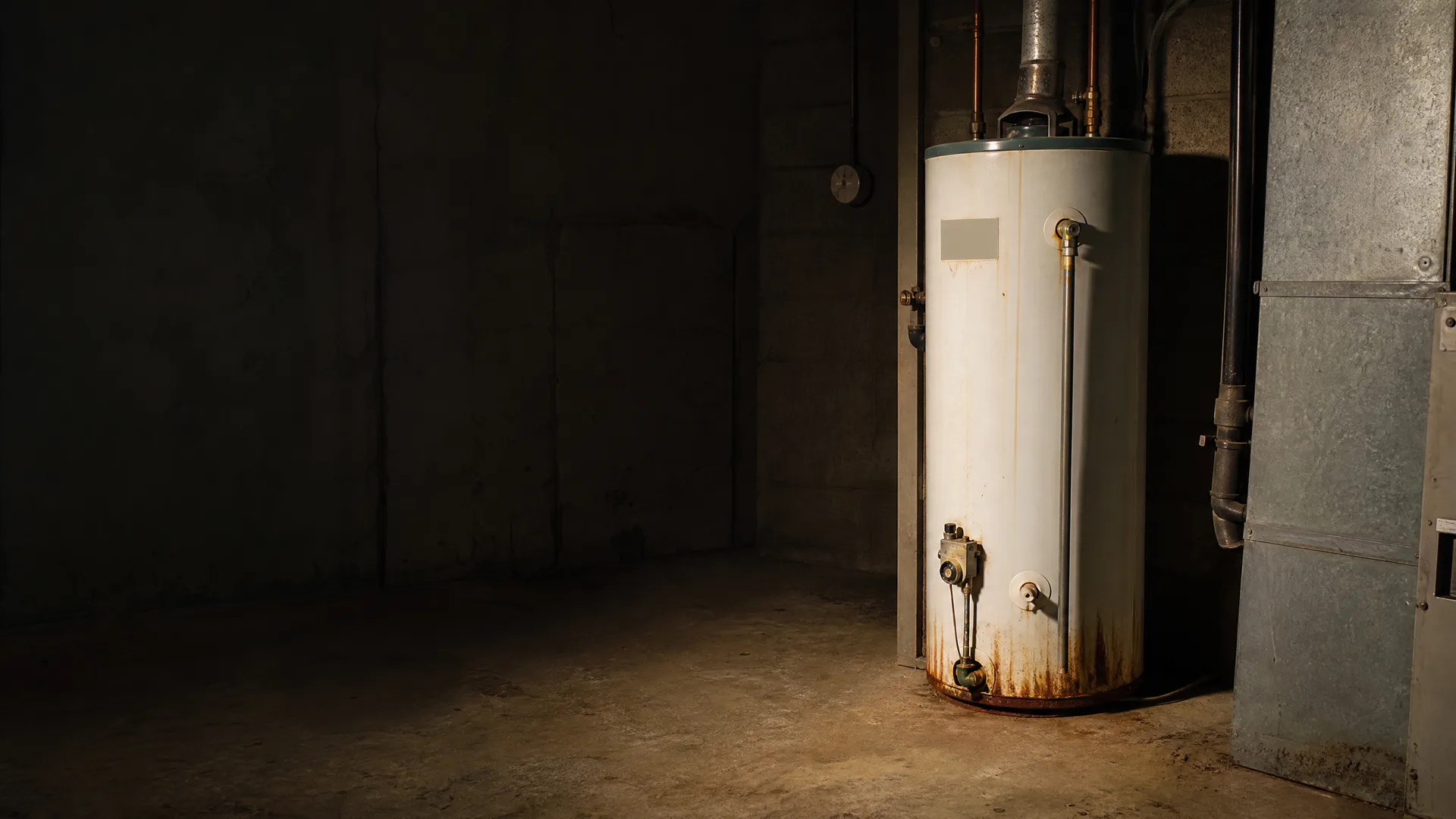
A gray cylindrical water heater with copper piping and a black vent pipe stands in the corner of a room with concrete and white walls.

Gas, not electric, is what matters

Most homes in Johnson County heat water with gas, and that's what makes tankless worth considering here. A gas tankless unit can supply hot water as fast as it's used, since it only fires when a tap opens. An electric tankless model needs a much bigger supply of power to do the same job, which is part of why gas is the more common route in this area.

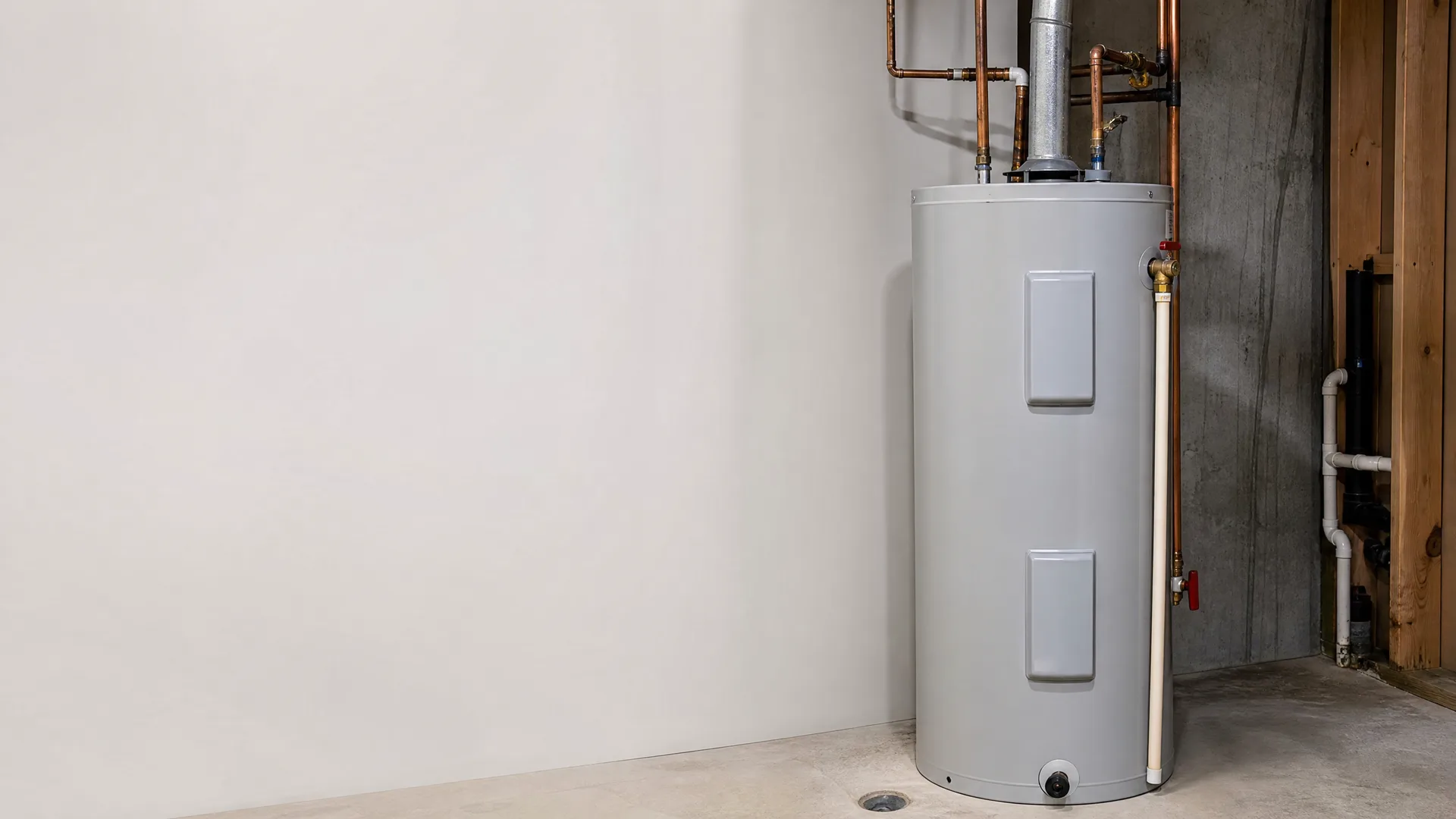
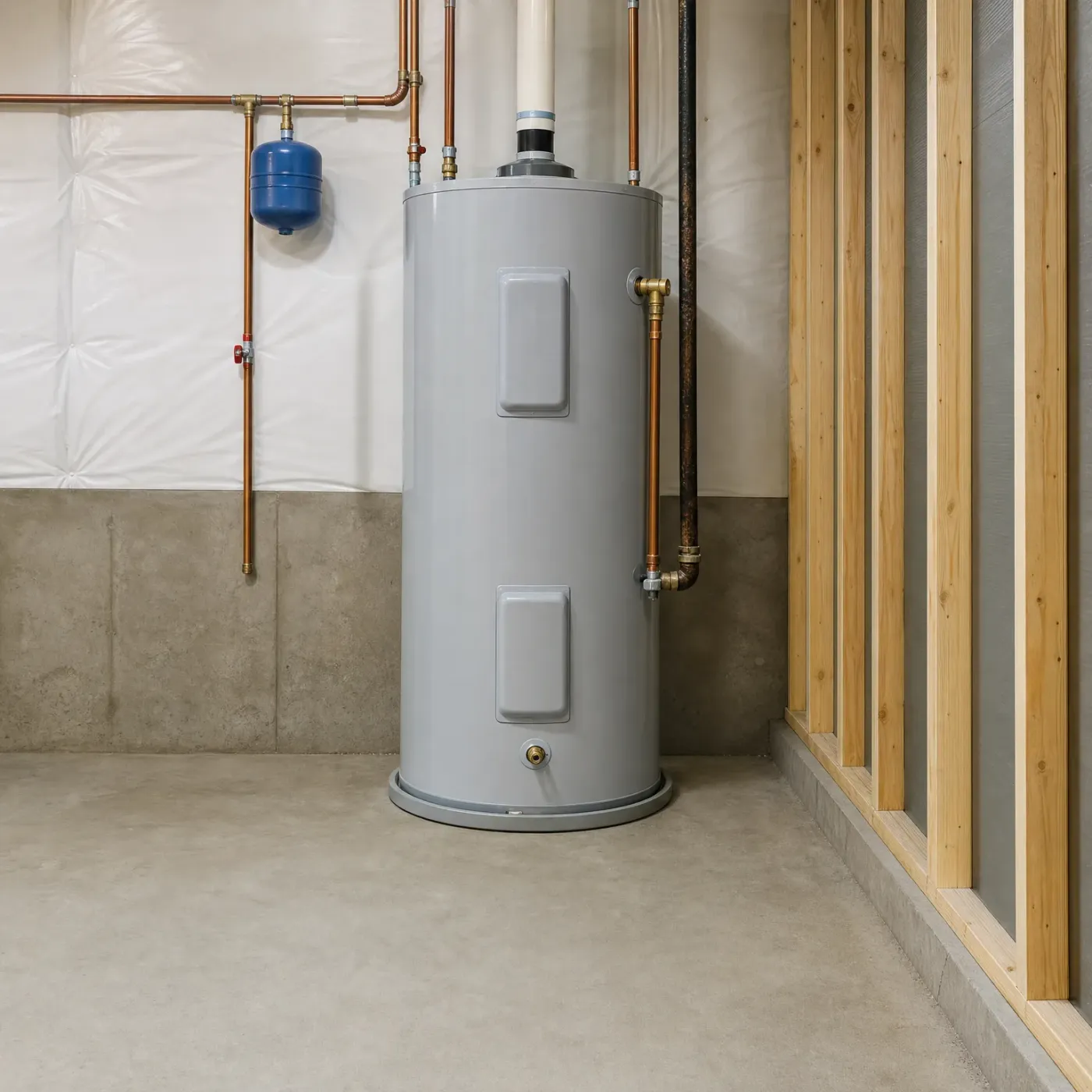
A gray cylindrical electric water heater stands in a basement corner against a white wall, with copper pipes and a vent duct above it and a concrete wall and PVC piping to the right.

A tank still runs all day

A standard tank keeps forty or fifty gallons hot around the clock, whether anyone uses it or not. In Johnson County that means it's reheating water through long, sticky summers and hard winters alike, every day of the year. A tankless unit only heats water on demand, so it isn't holding a reserve hot while the house sits empty during the workday or overnight.

Does your household use enough hot water to make tankless pay off?

  • 2.46 people per household on average

    Johnson County households average 2.46 people, per Census data. A household that size runs the shower, the dishwasher and the washing machine on the same morning more often than a tank can keep up.

  • Half the homes here were built by 1989

    Half the homes in Johnson County were built in 1989 or earlier, per Census data. A water heater that came with a house that age has likely already been swapped once, maybe twice, since a tank doesn't last that long.

  • 69.4% of homes heat with gas

    Gas heats 69.4% of homes in Johnson County, more than any other fuel, per Census data. That's the fuel line a tankless unit needs, and most homes already have it run to the water heater.

ACS 2020-2024

A man in a gray sweater reclines in a brown leather armchair with his eyes closed, beside a wooden side table holding a mug, a folded newspaper and a potted plant, with a bookshelf and sunlit window behind him.
A man with greying hair and a dark sweater leans back on an armchair with his eyes closed and a slight smile, in a living room with a bookshelf, plant, folded newspaper and mug on a wooden table.
A man in a gray fleece jacket sits reclined in a leather chair with his eyes closed, in a room with bookshelves, a table lamp, a window, and a desk holding a folded newspaper and a dark mug.
A bearded man in a gray fleece pullover sits with eyes closed in a brown leather armchair in a living room, with a floor lamp, bookshelf, potted plants, a side table holding newspapers and a dark mug, and a bright window behind him.

Tankless or Tank: Which Fits Your Home

Tankless

  • A gas tankless unit heats water only when a tap opens, so it isn't holding 40 or 50 gallons hot around the clock waiting for you to need it.
  • It takes up a fraction of the space a tank does, which matters if yours is tucked in a closet or utility room you'd like back.
  • It can keep up with a full morning of showers, the dishwasher and the washing machine running together, without running out partway through.
  • Installing one often means venting changes and gas line work, since a tankless unit draws more gas at once than a tank did.
  • It's built to last longer than a tank, so you're not replacing it again in ten or so years.
  • If your home runs on electric rather than gas, the same unit won't deliver the fast recovery you'd get here with gas.

Tank

  • A standard tank heats water ahead of time and stores it, so recovery depends on how much is left in the tank, not just the burner.
  • It costs less to install since it drops into the same spot and connections as the one you're replacing.
  • It's a familiar repair for most plumbers in the area, so parts and service aren't hard to find.
  • A large household running several things at once can draw down a tank faster than it recovers, leaving a cold shower for whoever's last.
  • It loses some heat over the course of the day just sitting full and hot, even when nothing's running.
  • If your gas line and venting already fit a tank, replacing like with like means no extra work beyond swapping the unit.
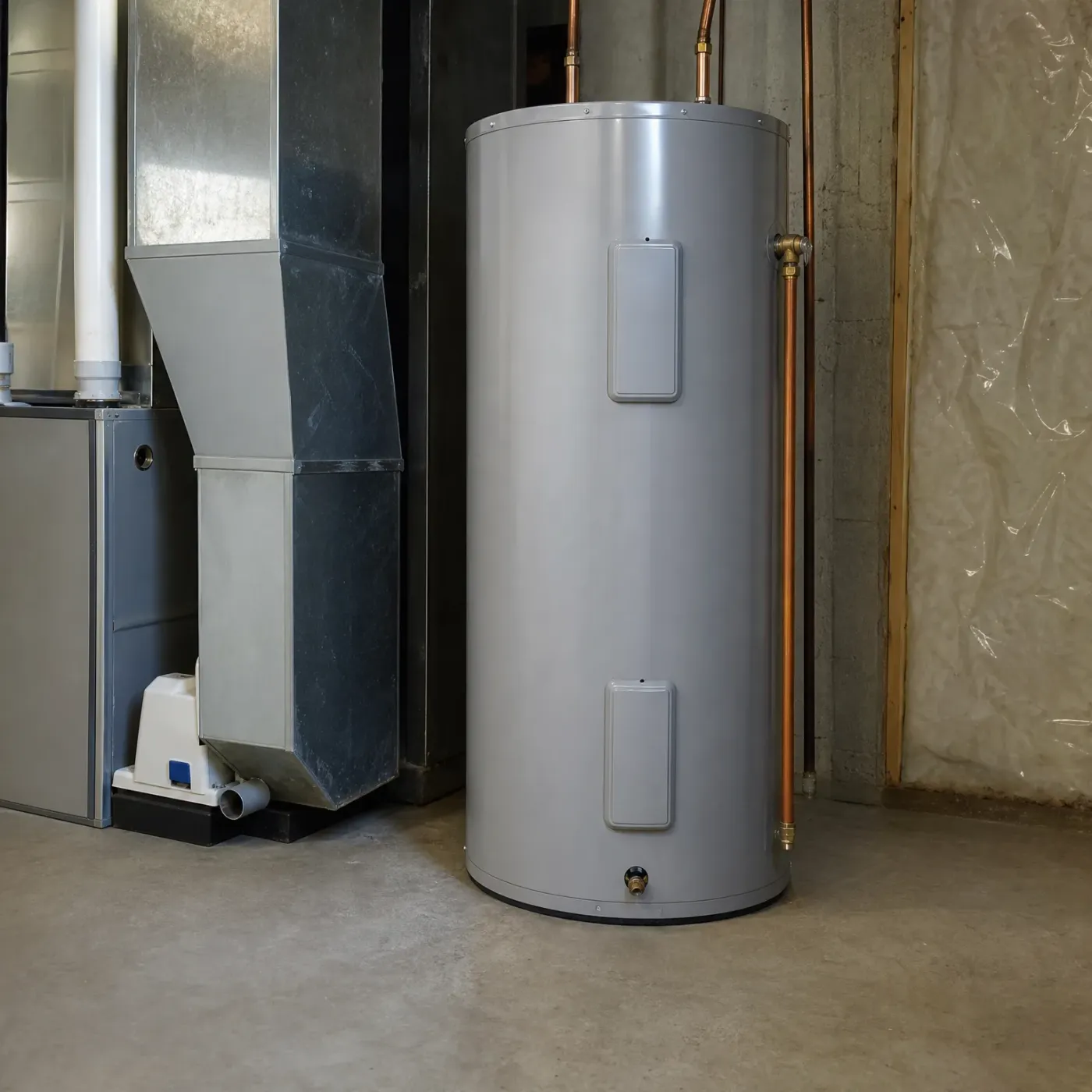
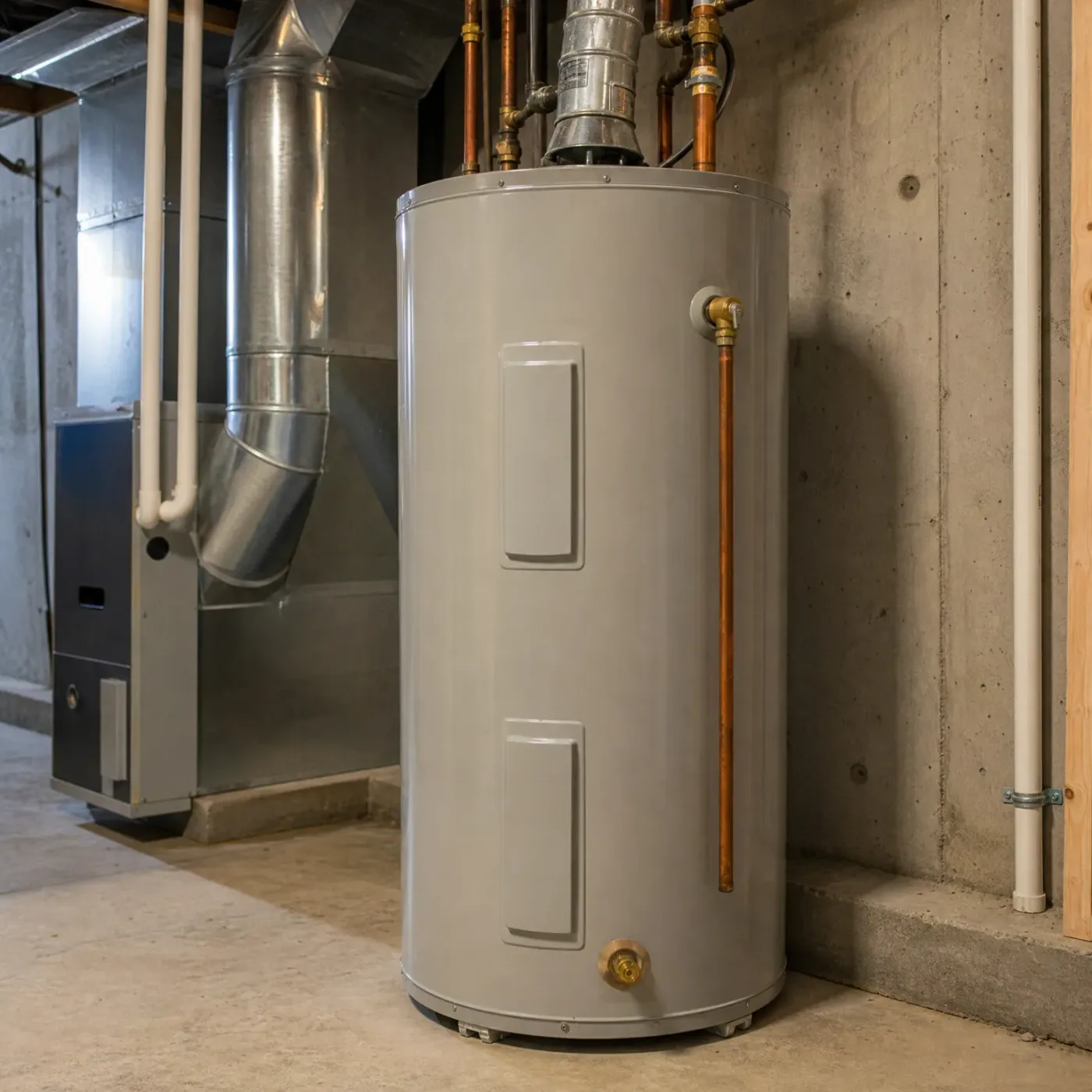
A gray cylindrical electric water heater with two access panels stands on a concrete floor in a basement, with copper pipes above and behind it, sheet-metal ductwork and a furnace to the left, and a plastic-covered insulated wall to the right.

A tank holding steady

This is a standard electric tank, doing what it's built to do. It keeps 40 or 50 gallons hot around the clock so it's ready the moment you turn on the tap. The copper lines and fittings here show a setup that's been maintained, not neglected.

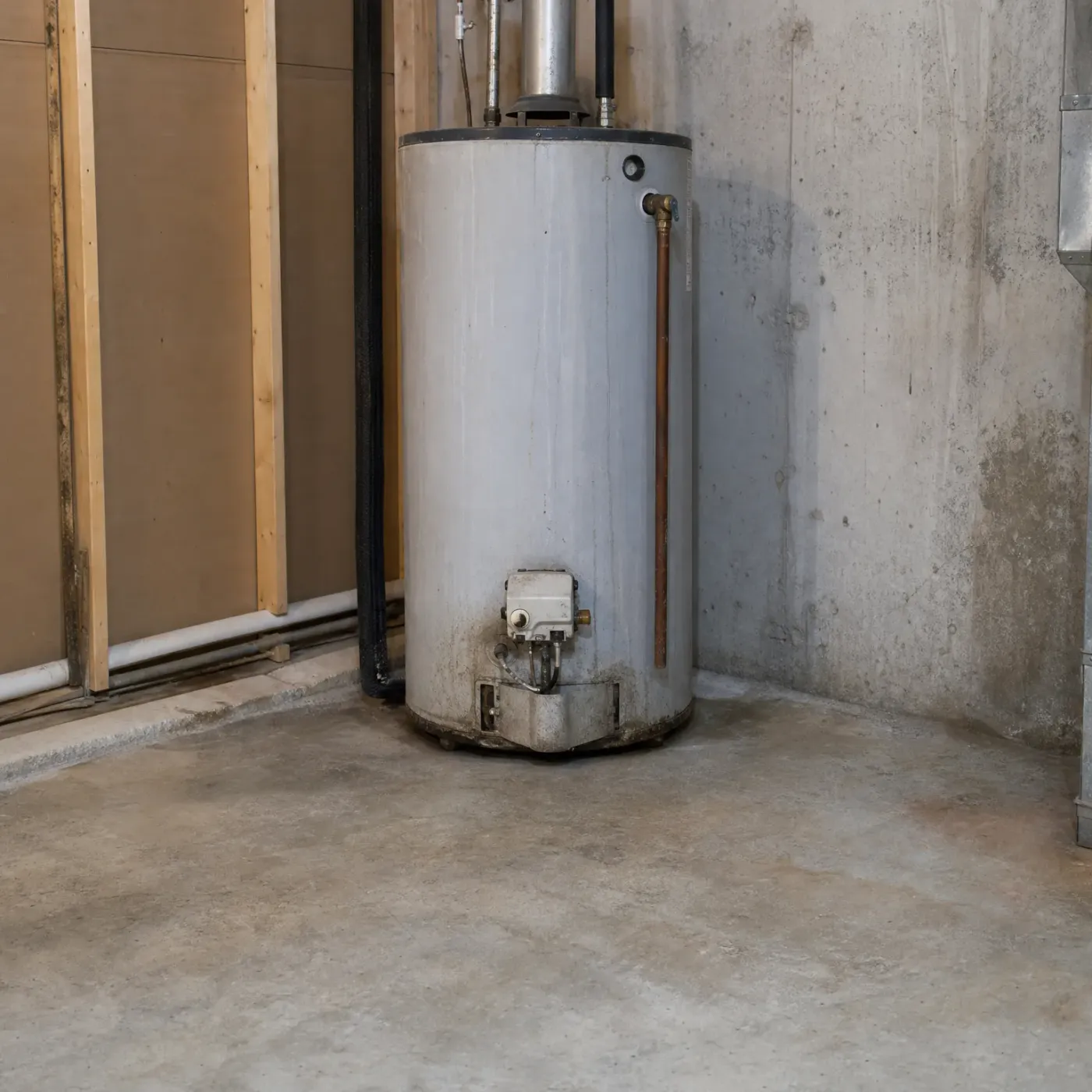
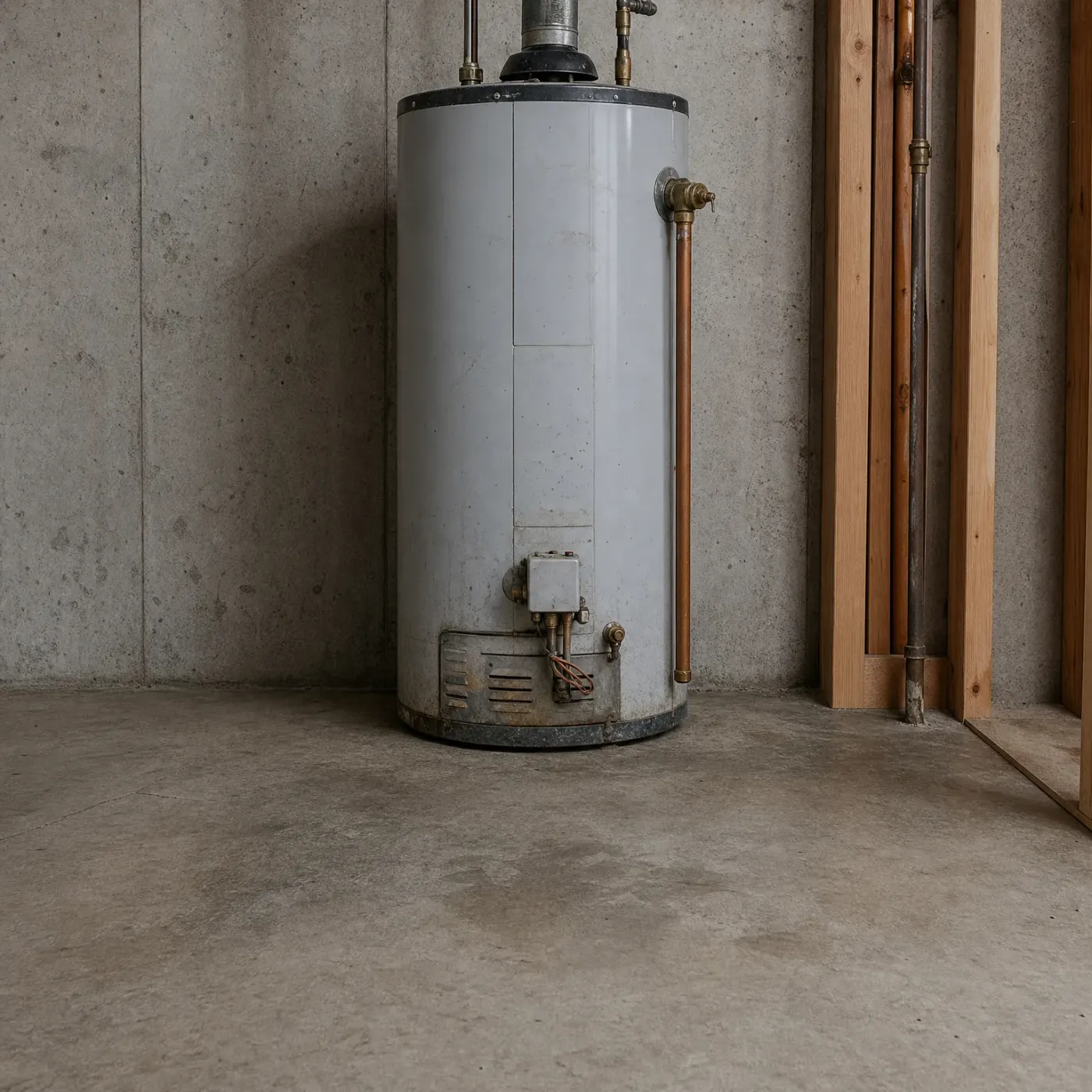
An older gas water heater with a copper pipe and flue stands on a concrete floor in a basement corner between a bare concrete wall and an unfinished wood-framed wall.

A tank near the end

Rust around the base and the burner assembly like this means the tank is failing, not just aging. Once corrosion reaches the burner on a gas unit, it's a matter of when it fails, not if. A water heater in this shape is why people start asking about tankless in the first place.

Running out of hot water more than once lately?

A tank that's struggling shows itself in small ways first. The shower turns lukewarm halfway through, or it never gets as hot as it used to. You hear it tick and rumble while it's heating, which is sediment sitting on the bottom of the tank. Water around the base, even a little, means the tank itself is failing. You might notice the pilot light or burner cycling on more than it seems like it should, working harder for the same result. None of this fixes itself. A tank that's straining to keep up usually keeps straining until it fails outright, often without much warning, and that's a flooded utility closet or a cold morning you didn't plan for.

  1. You open a hot tap and the unit senses flow.

  2. A sensor reads the incoming water temperature.

  3. The gas burner ignites and fires on demand.

  4. Water runs across a heat exchanger and warms fast.

An older gray gas water heater with copper and brass piping stands on a concrete floor against a concrete wall, beside exposed wooden wall framing and vertical pipes.
Before you get your water heater installation
A gray cylindrical water heater stands on a concrete basement floor against a plastic-sheeted insulated wall, with copper supply pipes, a blue expansion tank, a black vertical pipe, and exposed wood wall framing at right.
After you get your water heater installation
A gray cylindrical water heater with copper piping and a flue stands against a concrete basement wall beside a furnace and metal ductwork.

Done looking for a water heater pro

A licensed installer who works in Johnson County gets your project.

After you send the request, you're done searching.

Get one local pro

It costs nothing to send, and you don't have to hire anyone.

A gray-haired man in a blue quarter-zip sweater sits in an armchair with his eyes closed, beside a large window with bare trees outside and a potted plant and lamp nearby.
A woman in a cream knit sweater sits in an armchair with her eyes closed and head tilted back, beside a window showing orange autumn foliage and a wooden side table with a mug.

When tankless makes sense for you

If your household runs the shower, the dishwasher and the washing machine on the same morning, a tank is the one that gives out first. A gas tankless unit doesn't care about that overlap, since it heats water as the tap calls for it instead of drawing down a stored supply. It also buys back space in a closet or utility room, and it keeps working for years past where a tank starts to fail. If yours is on gas already, the fuel lines are most of what a switch needs.

When a tank still does the job

If it's just you or one other person in the house, a 40 or 50 gallon tank may never actually run out on you, and the case for switching gets thinner. A tank also costs less to put in than a tankless unit, and that gap matters if your current one is still working fine. Electric tanks are common in homes without a gas line, and running gas in just for a water heater is its own project. A tank that's heating and holding water the way it should isn't a problem to solve.

Power here costs 13.46 cents per kilowatt-hour

Power here is cheap next to gas, which is part of why a gas tankless unit pencils out faster than an electric one. If you did switch to electric tankless, those units pull a heavy draw to heat water fast, and at this rate your bill would show it.

EIA-861 2025

A rusting white cylindrical gas water heater with copper pipes stands against a concrete wall in a dim basement with a bare concrete floor.

It's past eight on a cold night and you're down in the utility room because the water upstairs never got hot. The old tank sits against the wall, rust streaked down its base where it's been sweating for weeks. You put your hand on the side and it's barely warm. Somewhere outside the wind's picking up, the kind of night where everyone in the house wants a hot shower before bed. You crouch down and look at the streaks again, trying to guess how much longer this one has. The pilot light flickers behind its little window, steady for now, but you've stopped trusting it.


For most homes in Overland Park, a gas tankless unit is worth it if your household is running hot water from more than one place at once on a regular morning, and the math gets better the longer you plan to stay in the house. If your current tank is still keeping up and you've got the closet space, there's no reason to rush into a switch. A local contractor who installs these year-round in Johnson County homes knows which brands hold up to this water and this gas supply, and which ones end up getting callbacks. Once you send the request, it goes to one contractor, not a handful competing for your number, so you're dealing with someone who already knows the local permitting and venting requirements instead of starting from scratch. Whatever you decide, you'll be making the call with a clear picture of what tankless does differently in a house like yours, not a sales pitch dressed up as an explanation.

A shingled two-story house with lit windows and stone accents at dusk, with a stone paver walkway and landscape lighting leading past ornamental grasses toward a calm bay under an orange and blue sky.

Water Heater Installation

It's off your list after this

Step 1 of 3: Equipment
  • A multi-pane white window looking out on snow-covered evergreen and bare trees, with a ceramic mug, pine cones, a book, a knit blanket and a burlap cushion in the foreground.
    • Your new water heater project goes to an installer who works in Johnson County.
    • Get matched with a pro who works on water heaters in Johnson County.
  • A cream knit throw and striped pillow on a light upholstered sofa beside a window, with a woven basket of split firewood in the foreground.
    • Send the request and finding a pro stops being your problem.
    • After this form, you can stop searching for a water heater pro.
  • A weathered wooden bench with a beige cushion and a fringed brown throw sits on a wood-plank porch beside a large planter with a thin-branched shrub, against a light-colored house wall with a dark-framed window.
    • Skip collecting and comparing quotes for the new water heater.
    • Fill out one short form instead of calling around.
  • Exterior of a dark shingle-sided house with a white-trimmed divided-light window, a yellow-leaved tree, trimmed shrubs, and two small pumpkins on a stone pillar cap.
    • A licensed pro who works in Johnson County gets your request.
    • One installer gets your project, so there's no bidding war over it.