Send the request today and let a water heater pro reach out to you.
You turn the tap and nothing warm comes out. In Manhattan and the rest of Riley County that's not just an inconvenience. Cold snaps here mean you need hot water for dishes, showers, laundry, the same as always, and a water heater that's quit doesn't wait for a good time to do it.
Most homes in this area run on gas, and a gas water heater that's gone cold usually means the pilot's out, the igniter's failed, or the gas supply to the unit has a problem. Electric units have their own failures, a bad heating element or a tripped limit switch. Either way, it's not something to leave alone through a Kansas winter.
The part you don't have to do is find out who's any good at fixing it. You could spend the evening calling around, explaining the same problem to three or four different shops, waiting on callbacks, trying to compare one quote against another without knowing if you're comparing the same job. That's hours you don't get back, and you still don't have hot water at the end of it.
Send the form on this page and that search is over. You're not left to sort through listings or guess who actually answers the phone. A licensed contractor who works on water heaters in Riley County gets your information, and finding someone stops being something you have to do yourself.
The water heater itself still needs a real diagnosis, a look at the tank, the burner or the element, maybe the gas line or the breaker. That part takes a visit. But the part that's yours right now, the search, the calls, the comparing, ends when you send this.
No hot water usually means one part has failed, not the whole unit. On a gas water heater, the pilot or igniter may have gone out, or the thermocouple that senses the flame has worn out and is shutting off gas as a safety measure. On an electric unit, one or both heating elements may have burned out, which often shows up as water that starts warm and turns cold fast. A tripped breaker or a reset switch on the thermostat can also cut power to the tank entirely. Sediment settled at the bottom of the tank, common after a few years of use, can insulate the water from the burner or element and leave you with a tank that's heating but not getting hot. None of this means a new water heater. Most of these are single-part repairs, and a licensed plumber can tell which one it is by checking the pilot, the elements and the breaker in a single visit.
What does a water heater outage mean for your house?
2.22 people per household on average
Riley County households average 2.22 people. A full house with no hot water means dishes, showers and laundry all waiting on the same fix.
Half the homes here were built by 1984
Half the homes in Riley County were built in 1984 or earlier. If yours is one of them, check whether your water heater is original or already a replacement.
50.3% of homes heat with gas
Gas heats 50.3% of homes here, more than any other fuel. A gas unit with no hot water often points to the pilot, the igniter or the thermocouple.
ACS 2020-2024
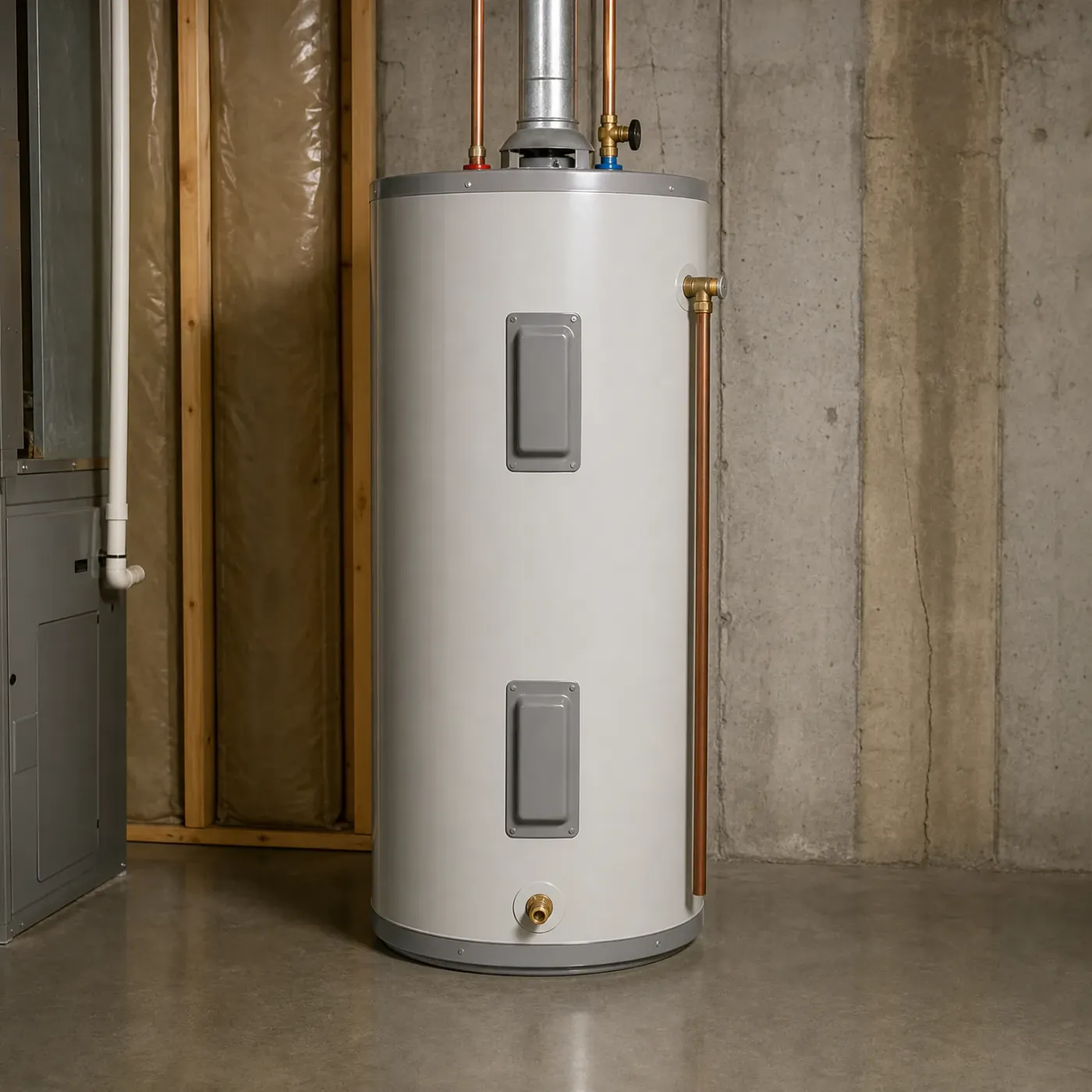
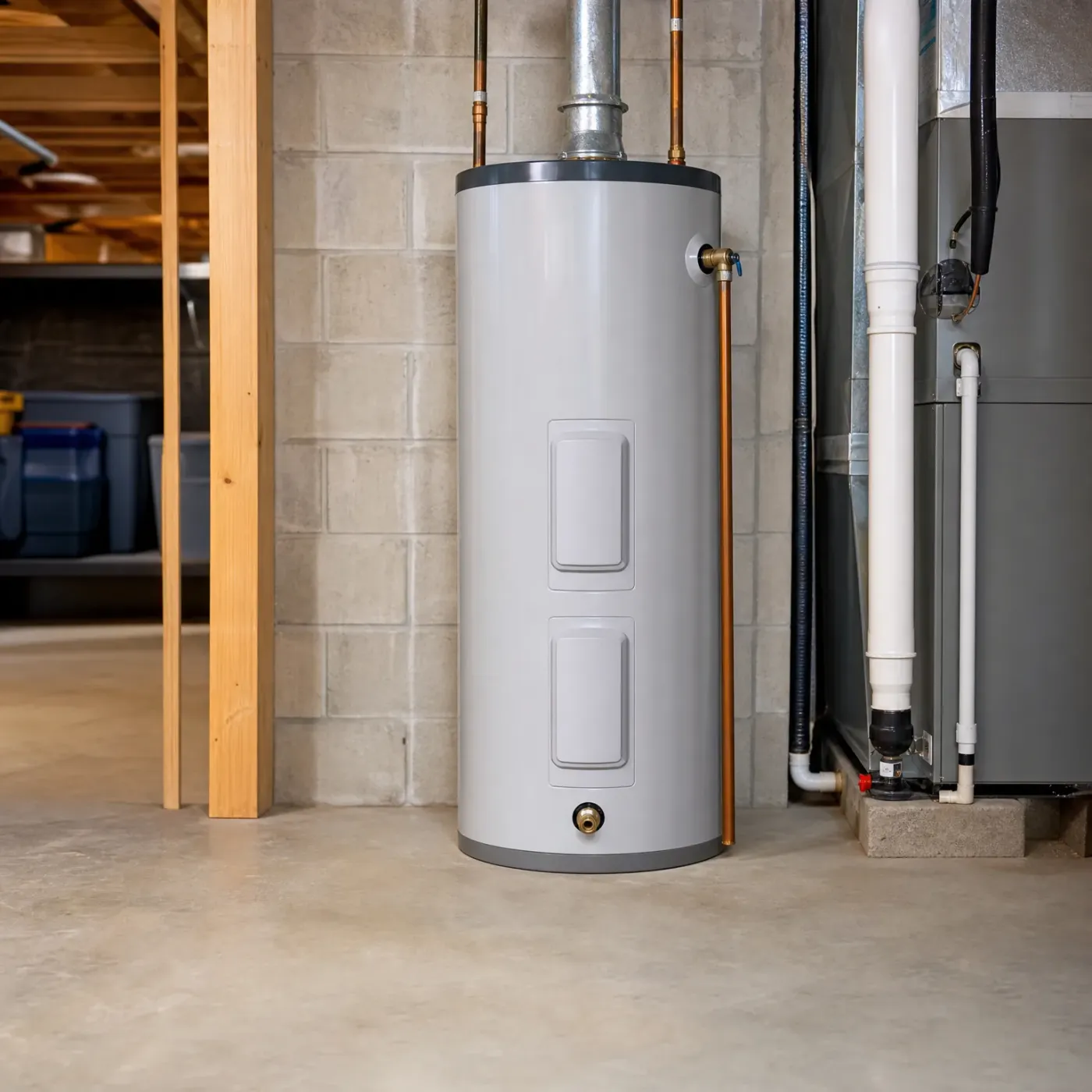
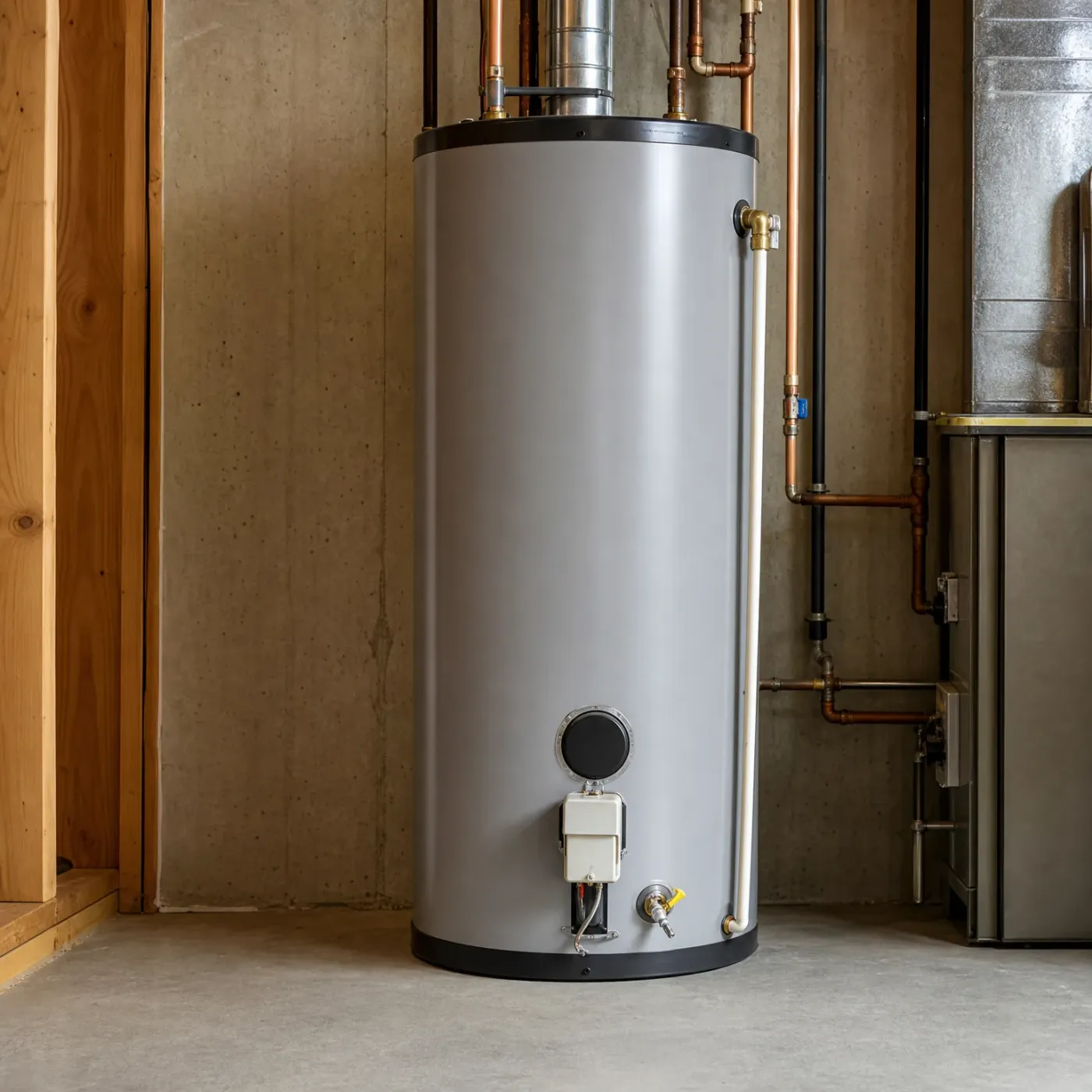
Still working the way it should
The tank sits upright with clean connections, copper lines running to the supply and discharge, the flue vent seated at the top. Both thermostat panels are closed up. Nothing leaking, nothing rusted through. This is a water heater doing its job.
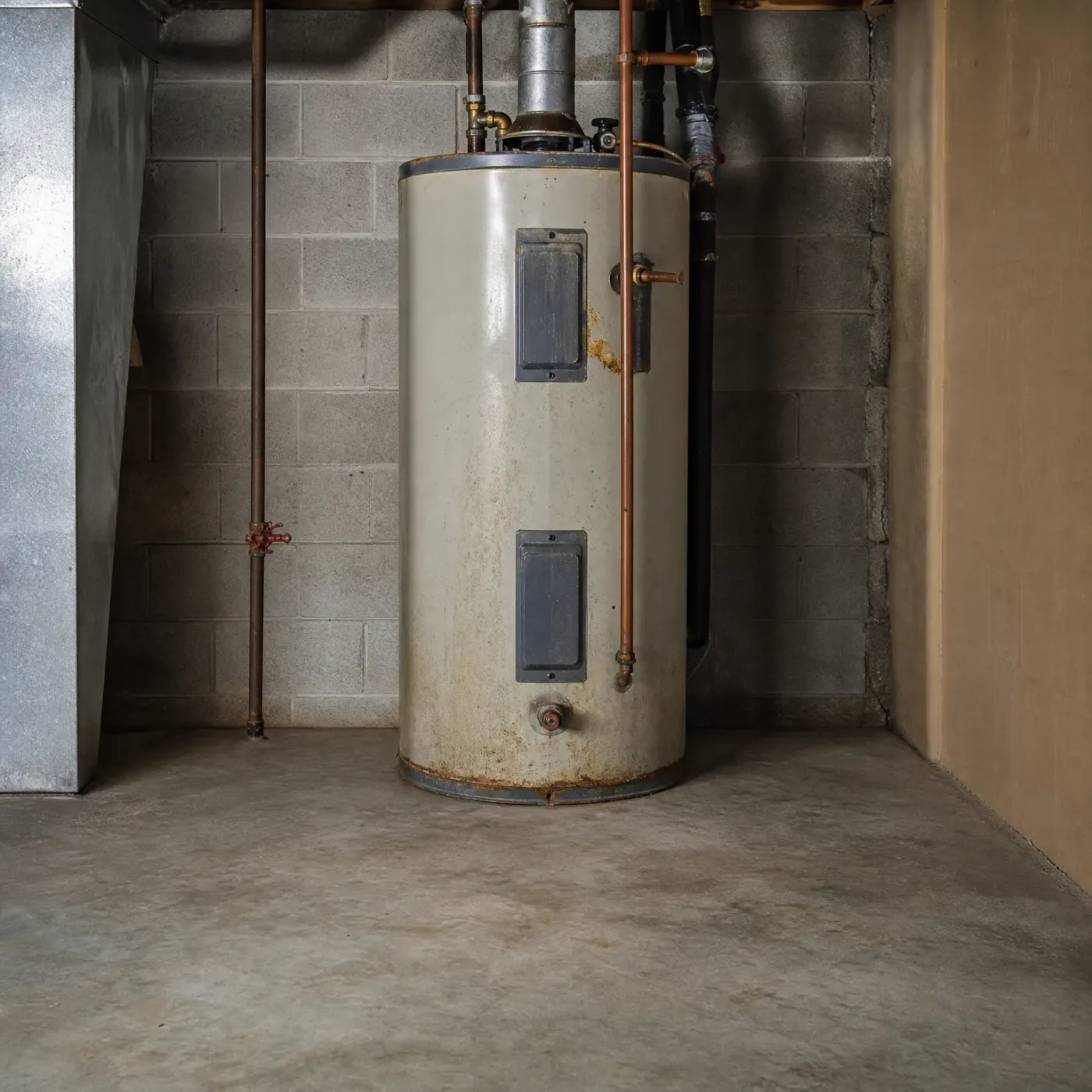
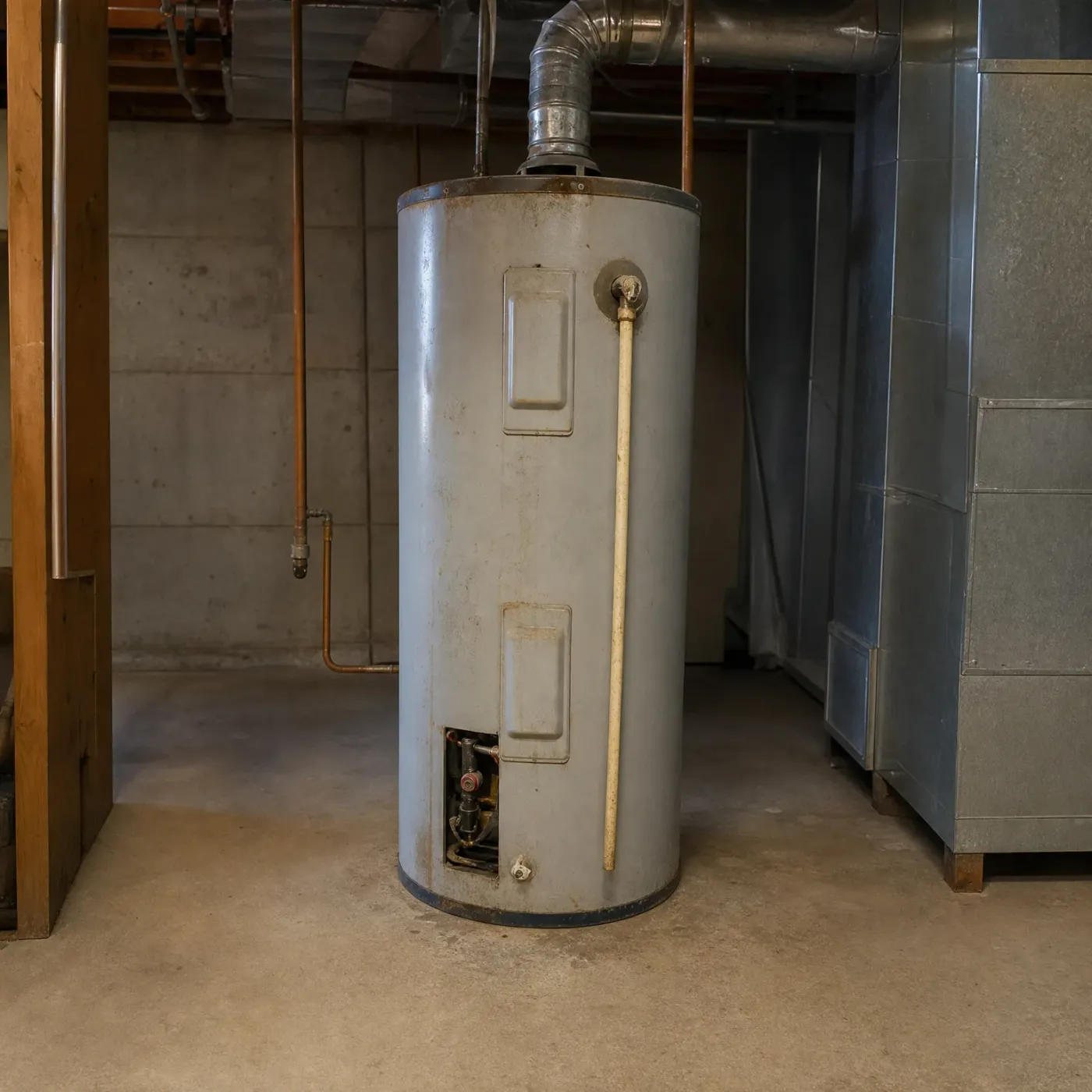
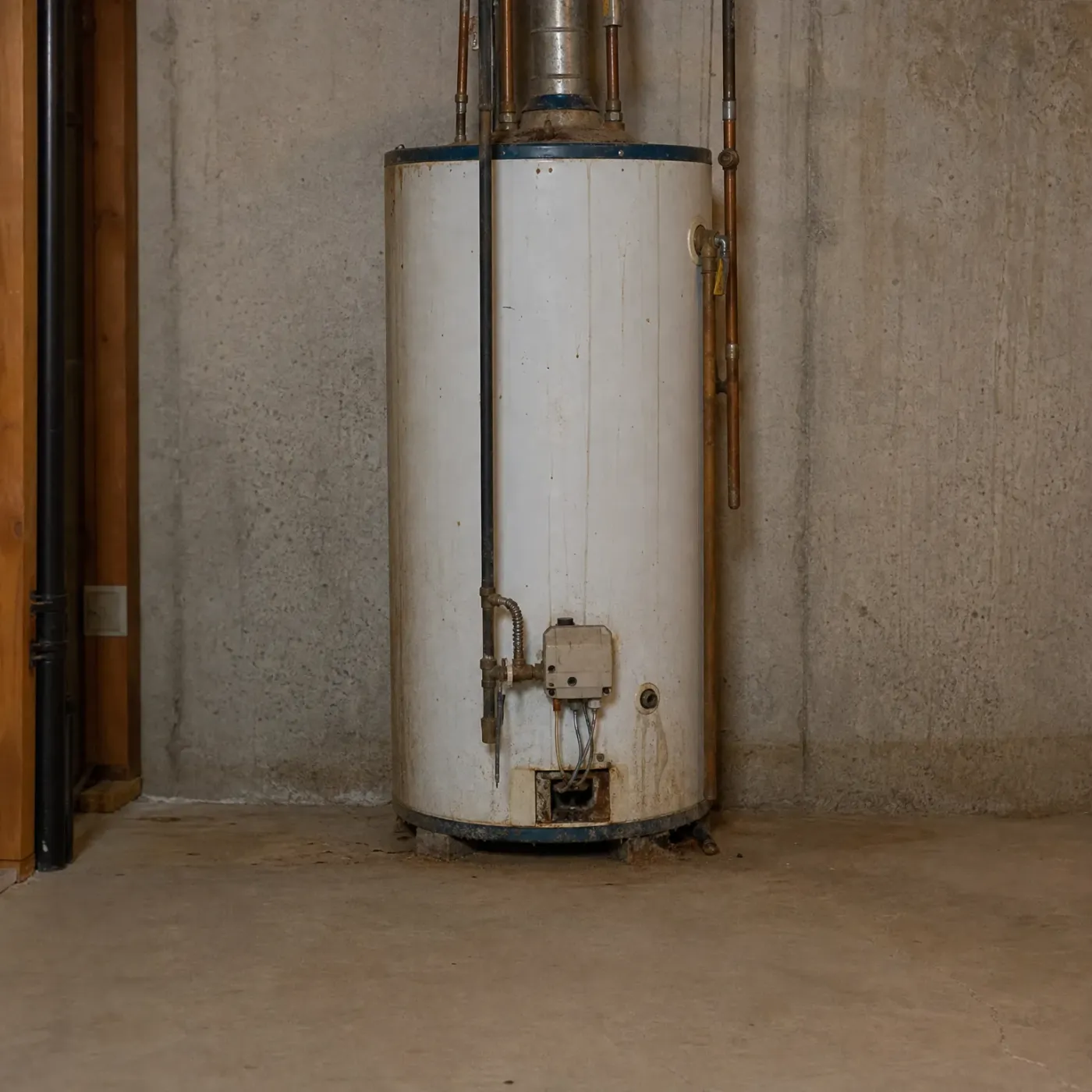
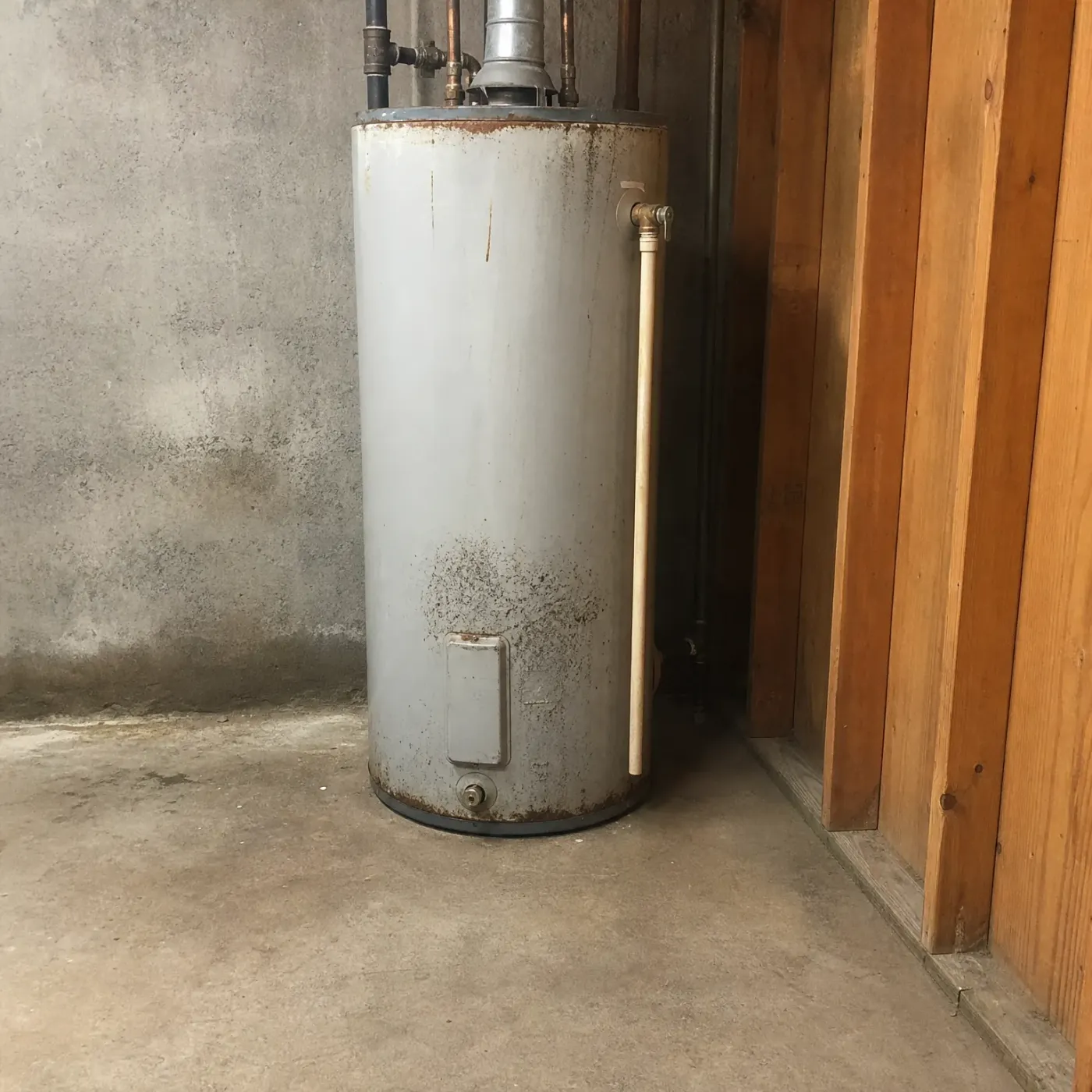
Rust tells you it's near the end
White turns streaked and brown where the tank has been sweating or leaking for a while. When rust shows up on the outside like this, the inside has usually been corroding longer. A unit in this shape is a candidate for replacement, not another repair.
Repair the Heater or Replace It
Call a plumber
A gas thermocouple or igniter swap usually takes one visit and the tank stays in place.
An electric heating element or thermostat can be tested and replaced without disturbing the tank or its connections.
If the tank itself is sound, with no rust at the seams or water pooling at the base, repair solves the problem without new plumbing or electrical work.
Repair costs less upfront than a full replacement, and a working tank under ten years old still has useful life left in it.
Some failures, like a tripped high-limit switch or a blown fuse on an electric unit, take only a reset or a simple part.
Replace the unit
Rust at a fitting or water pooled under the tank means the steel has failed and no part fixes that.
A tank built before 1984 is older than half the homes in Riley County and is working past what it was built to last.
Repeated calls for the same failure, a thermocouple or element that keeps going, often cost more over time than one replacement.
A new unit comes with a fresh warranty, so parts and labor are covered again from the start.
If the gas valve or control board has failed, the part is often discontinued or costs close to what a new heater runs.
Explain the water heater problem once instead of to every shop in Riley County.
There's no charge for the request.
Why gas units fail more in winter
A gas water heater needs a steady draft to vent exhaust and keep the pilot or igniter working. Cold air pulls harder through the flue and the intake, and that draft can snuff a weak pilot flame or make an igniter fire poorly. The thermocouple reads that flame and if it doesn't sense heat, it shuts the gas valve off entirely, which is the safety behavior working as designed. None of this means the tank is failing. It means one small part at the burner assembly needs attention, and that part is usually accessible without draining or moving the tank.
What an electric failure looks like
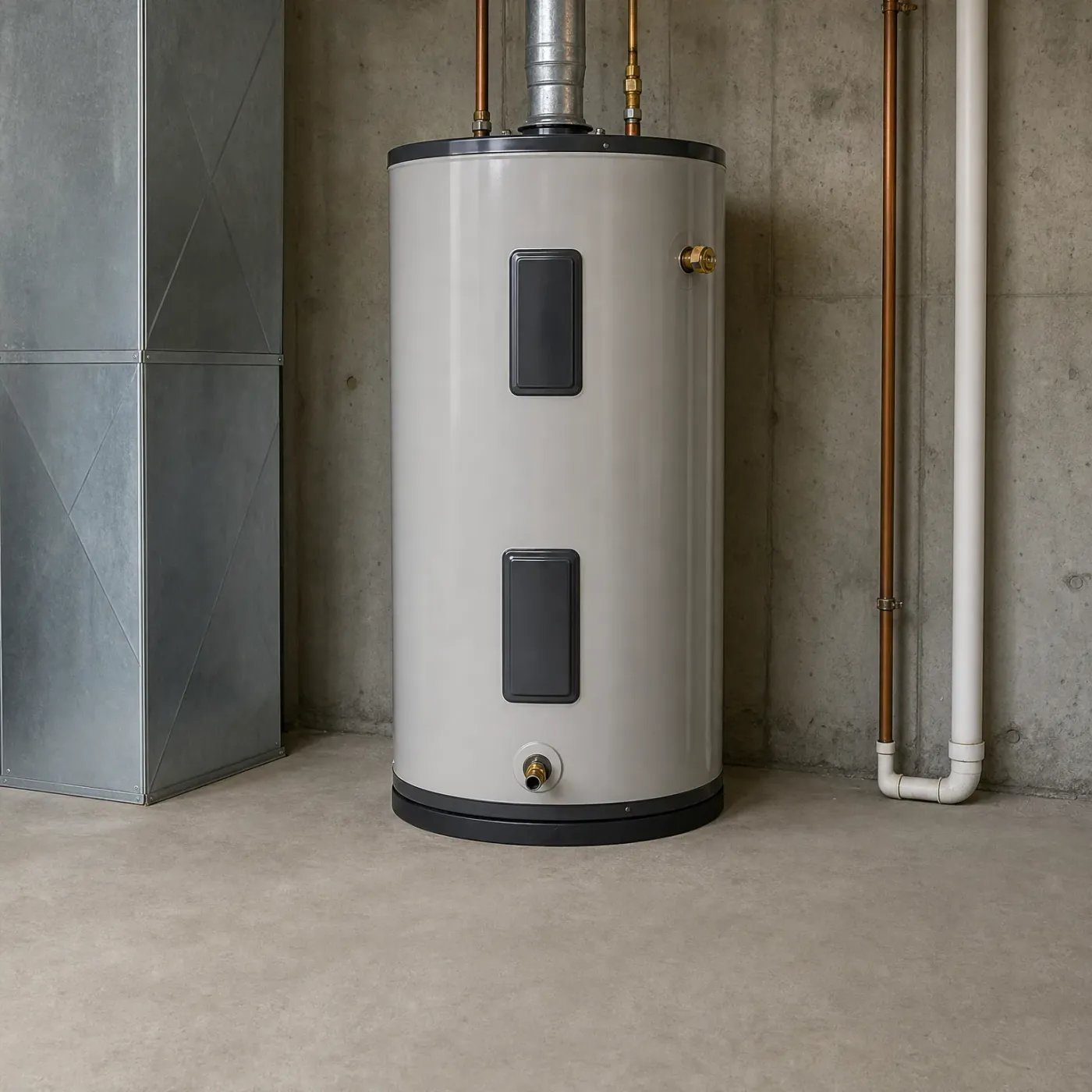
An electric water heater has no flue and no pilot, so cold weather doesn't affect it the same way. When one heats poorly or not at all, the cause is usually a heating element that's burned out or a thermostat that's stopped signaling it to fire. Most tanks have two elements, an upper and a lower, so a failed lower element can still leave you with a little warm water before it runs out fast. A plumber tests each element and thermostat with a meter rather than guessing, since both parts sit behind the access panels and can be swapped without touching the tank itself.
Before you get your water heater repairAfter you get your water heater repair
Running the way it should
Clean copper lines run to the tank, the flue sits straight at the top, the gas valve box is intact. No rust on the jacket, no streaks down the side. A water heater in this shape should give you hot water on demand without a second thought.
Rusted and failing
Rust stains run down the jacket, the paint has worn through in patches, and the flue pipe at the top is corroded. A tank that looks like this is further along than a bad thermocouple or a failed element. Corrosion like this is often what's behind the cold water, not just a single part.
What a cold snap does to a household with no hot water
A household in Riley County averages a little over two people, and both of them need hot water on the same morning. Dishes pile up in the sink. Showers get pushed to the next person or skipped. Laundry waits. None of that eases up because the water heater picked a bad week to fail, and cold snaps are exactly when gas units are most likely to quit.
Finding someone to fix it is its own chore on top of that. You'd normally be calling around, explaining the same problem to three different plumbers, then sitting with quotes trying to compare one against another. Send the form once and that part is off your plate. You're not the one tracking down who's licensed, who answers, who can actually get to a failed thermocouple or a dead heating element.
1
Cold water enters the tank and the thermostat calls for heat.
2
Gas valve opens and the igniter or pilot lights the burner.
3
Flame heats the tank until the thermostat shuts the gas valve.
4
Hot water rises to the top and feeds the outlet pipe on demand.
Copper lines run clean to the tank, the panels are shut, and nothing on the jacket is wet or stained.
Rust has eaten through the jacket and left soot near the base, a sign the tank itself is failing, not just a part.
Power here costs 15.04 cents per kilowatt-hour
At 15.04 cents per kilowatt-hour, running an electric water heater here costs about what it does anywhere in the country. So if your tank is electric and it quit, a bad thermostat or heating element is a cheap part to replace next to the bill you'd face swapping in a whole new unit.
EIA-861 2025
Where this leaves you
Most no hot water calls in Riley County trace back to one failed part, not a dead tank.
A gas unit usually points to the thermocouple, pilot or igniter; an electric unit usually points to a thermostat or heating element.
Rust through the jacket or soot near the base means the tank itself is failing and repair won't fix it.
Cold weather makes a weak pilot or poor draft worse, which is why outages cluster in the coldest months.
A single visit from a plumber usually confirms which part failed and whether the tank is still sound.
Once you know which case you're in, the next step is getting the right part fixed or the tank replaced.
A water heater that quits almost always comes down to one part. Gas units lose the pilot or igniter, or the thermocouple wears out and cuts the gas as a safety measure. Electric units lose a thermostat or a heating element. Either way, the tank itself is usually fine, and a plumber can confirm that in one visit. What they're checking for is rust through the jacket or soot near the base, because that means the tank is the problem, not a part inside it. In Riley County, cold weather is often what tips a weak pilot or a poor draft into a full outage, which is why these calls cluster in the coldest stretch of winter. That timing doesn't change what's wrong, just when you notice it. Once a plumber has looked at the unit, you'll know which case you're in: a part that gets swapped and the tank stays right where it is, or a tank old enough that replacing it makes more sense than chasing another repair. Either answer gets your hot water back and gives you a clear next step instead of guessing at it yourself. You don't need to know which one it is before you call. You just need someone to look at the tank, tell you straight what failed, and fix what's actually wrong instead of what seems obvious from the tap.
Water Heater Repair
Stop chasing a water heater pro
Skip calling shops to ask who repairs water heaters in Riley County.