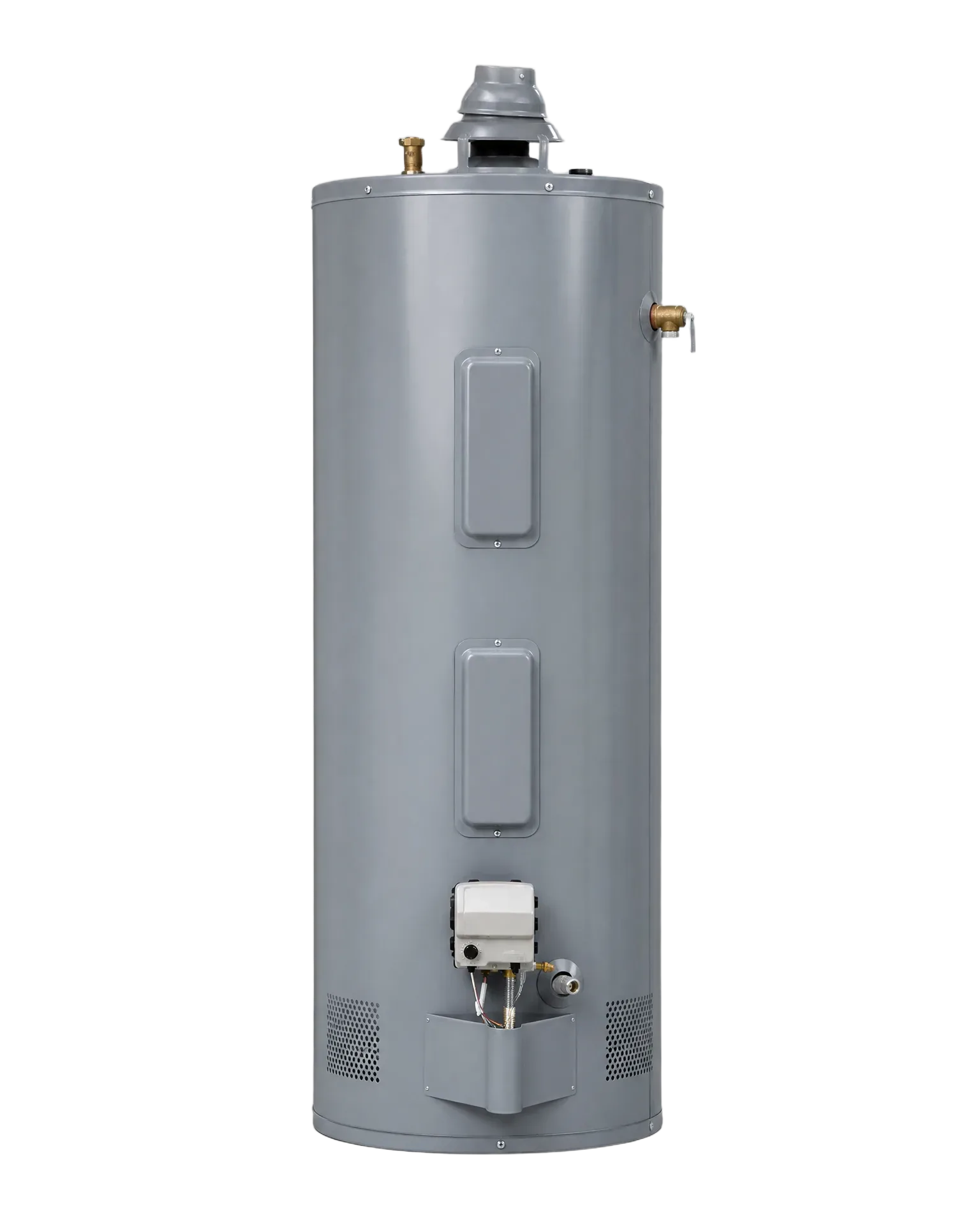
Repair it this time
A minor fix can buy you a few more months, especially if the tank itself still holds water without leaking. But parts get harder to find once a unit is past 10 years old.
A water heater that's past replacing usually tells you before it quits outright. Rusty water from the hot tap, a tank that's rumbling or popping, water pooling around the base, or a pilot and burner that won't stay lit are the signs to act on. Most of these come down to sediment built up inside the tank or the tank itself starting to corrode from the inside, and once that starts, it doesn't reverse. Age matters too. If yours is original to the house or you've never had it serviced, that's worth checking into regardless of symptoms, since tanks tend to fail from the inside with little warning once they're old enough. Kansas summers get sticky, and a water heater working harder than it should adds heat and humidity to a utility space that's already warm half the year. Catching it before it fails outright means you get to choose the timing instead of dealing with a flooded closet.




Most gas water heaters last 8 to 12 years. If yours came with the house and you don't know its age, check the label on the tank for the manufacture date before you plan around it.
Once a tank starts leaking at the seams, it doesn't get fixed. The tank itself is sealed steel, and a crack or rust-through means replacing it, not patching it.
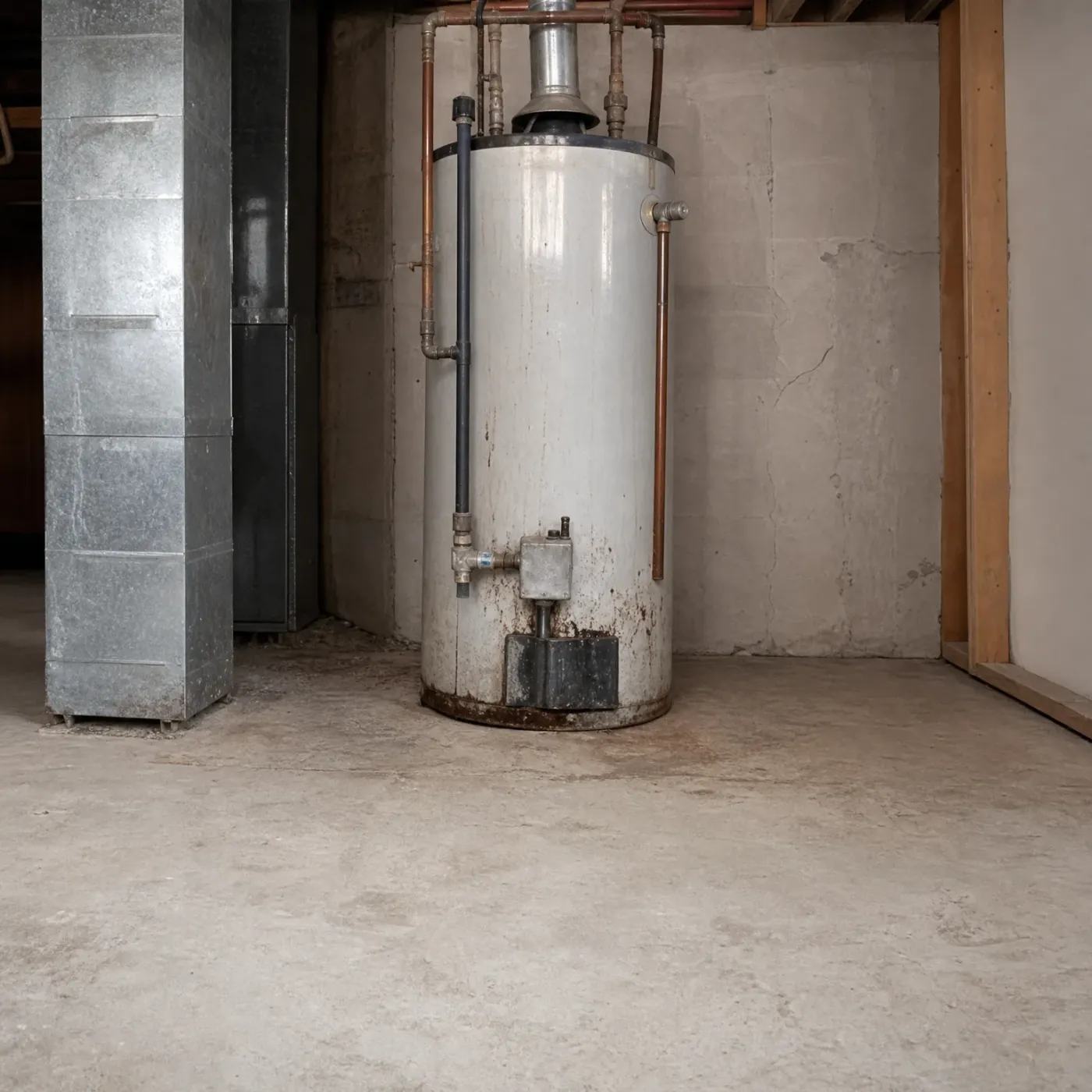
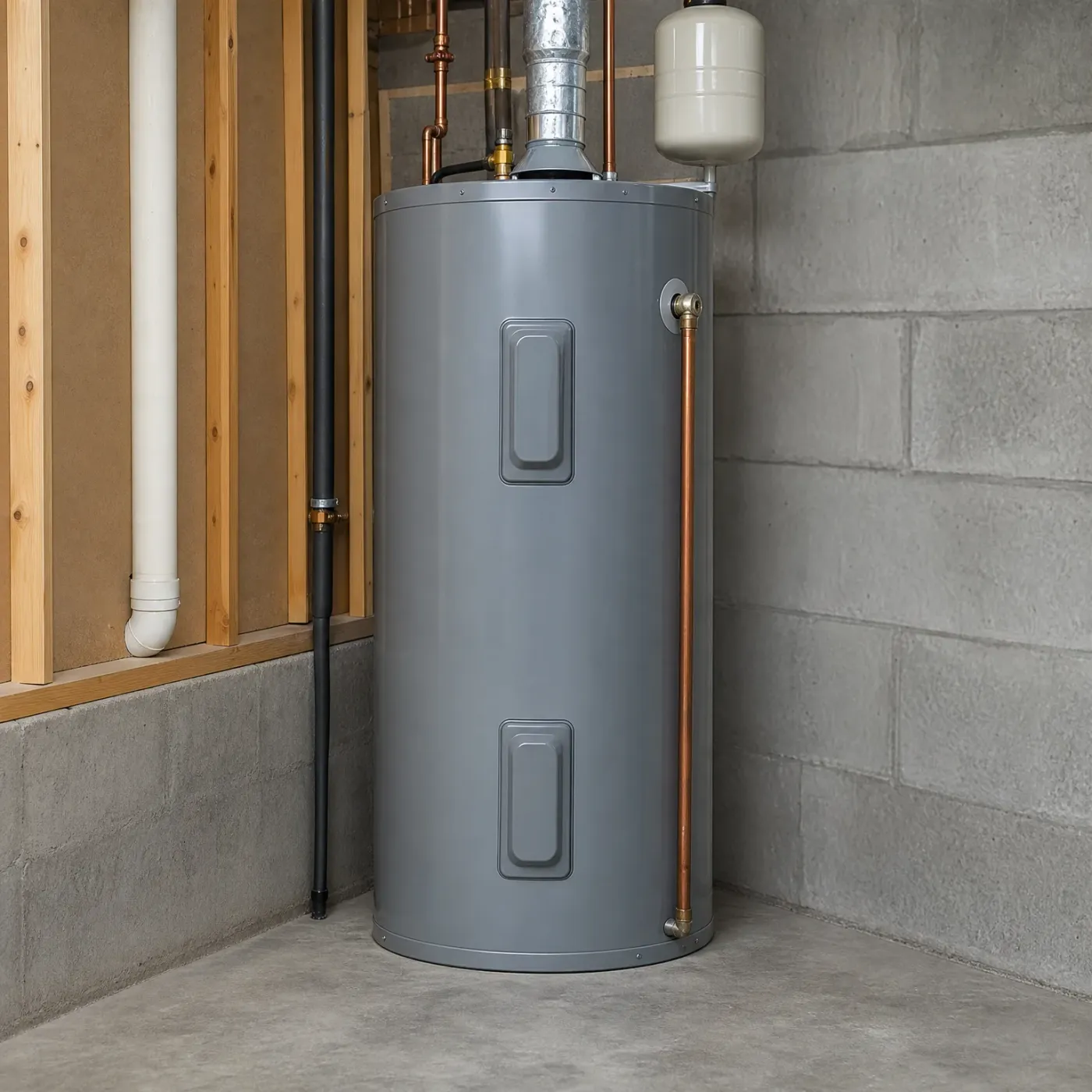
A water heater doesn't fail quietly. Rusty water stains a load of laundry. A tank that lets go overnight can soak a finished basement floor or the carpet near it, and that's drywall and flooring on top of a new water heater. None of that is likely while the tank is still holding water and heating it fine. But once it's rusting from the inside or weeping at a seam, the question isn't if, it's when, and winter is a bad time to find out, with a houseful of guests and a water heater that won't recover fast enough for the showers you need.
Most homes here heat with gas, and a water heater on its way out often shows it in the burner first. One that won't stay lit, or cycles on and off more than it used to, is burning gas without heating the water well. That shows up on the bill before the tank fails outright. Replacing it on your own schedule, in spring or fall, beats replacing it in a panic after a leak. You get to compare installers, ask about tank size and recovery rate, and pick a date, instead of calling around with water on the floor and taking whoever can come that day.


A minor fix can buy you a few more months, especially if the tank itself still holds water without leaking. But parts get harder to find once a unit is past 10 years old.
You pick the timing instead of dealing with a flooded utility closet in January. A new water heater also means you're not gambling on hot water through another Kansas winter.
Odds are your water heater runs on gas, like most homes in Kansas. Gas units show their age in the ways already covered, rust in the hot water, a tank that rumbles, a pilot that won't hold. Check the manufacture date on the tank label and plan your replacement before one of those signs shows up.
ACS 2020-2024 5-year B25040
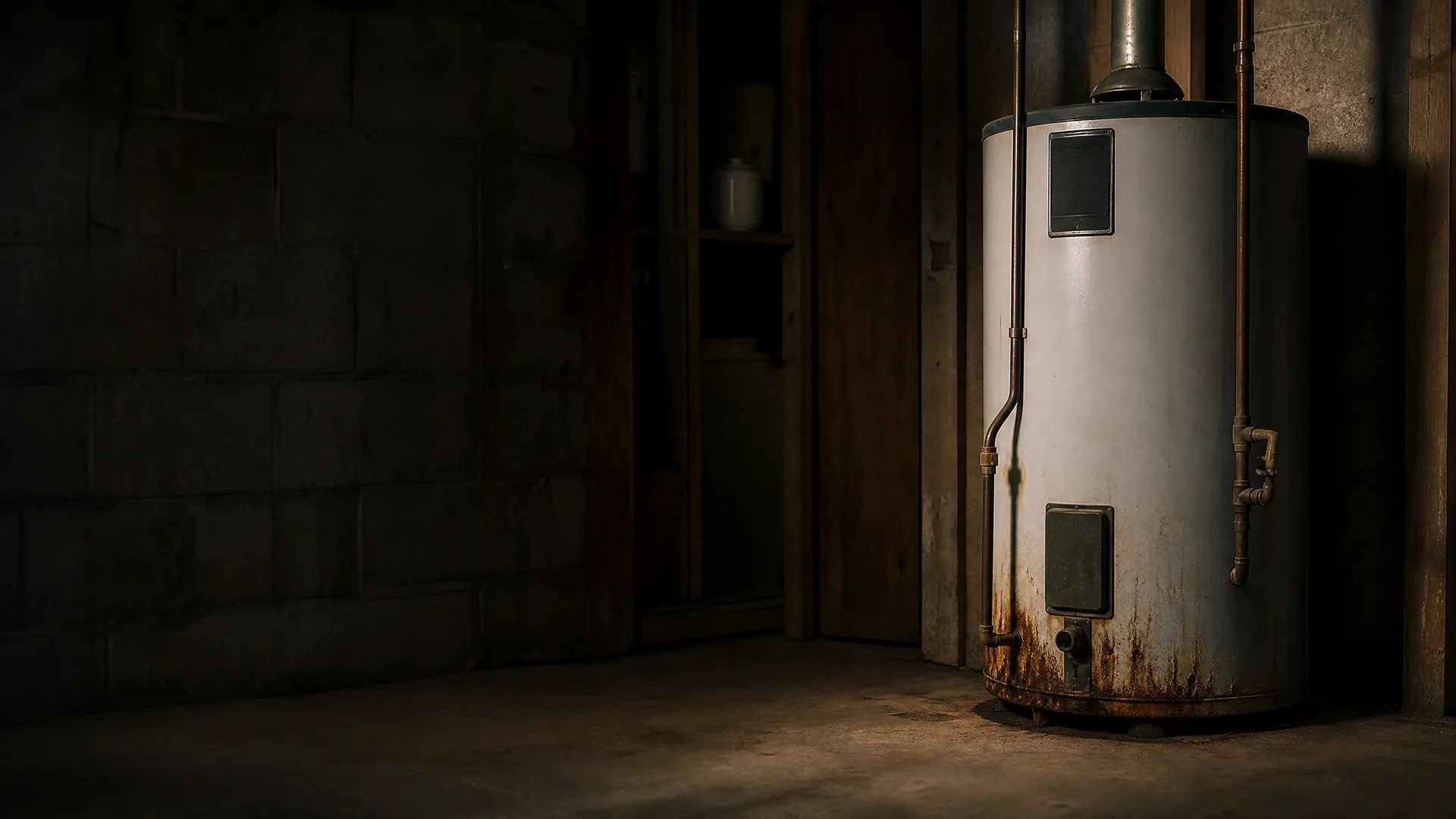
You're down in the utility room after dinner, grabbing the laundry detergent off the shelf above the water heater, and that's when you see it. A thin line of rust bleeding down the side of the tank, pooling into a dark ring on the concrete at its base. The furnace kicks on behind you in the next room. You crouch down and touch the floor near the tank and it's damp, not wet, just damp. Outside it's warm enough that the windows are still cracked from the day. You stand there a second, thinking about whether it held yesterday, whether it'll hold tonight, and whether you're the one who's going to be up at 2 a.m. with towels if it doesn't.
A tank already showing rust or a wet spot on the floor isn't waiting for a convenient time to fail. Gas water heaters in Kansas tend to go between 8 and 12 years, and once one starts going, you're looking around your house at the laundry, the flooring, whatever sits near that utility room, wondering what gets ruined first. Finding someone to look at it the normal way means calling a few numbers, telling each one the same story about the rust and the rumbling, waiting on quotes, trying to figure out who actually knows gas units. That's time you don't have once a tank is leaking at the seam. Submitting your information here means a contractor who installs water heaters in your area gets your request and reaches out to you directly. No more calls to make, no more explaining the same thing twice to five different voicemail boxes. You get to stop managing the search and start dealing with the actual water heater.
You've got a tank, and it's either showing its age or it isn't. Rust in the hot water, a rumble when it runs, a pilot that won't hold, water pooling at the base. Any one of those means the decision has already been made for you. No sign at all, and the label on the tank still gives you a window to plan around, since gas units in Kansas typically run 8 to 12 years before they're done.
What you do with that information is the only part left in your hands. A tank that's leaking at the seam isn't getting patched, it's getting replaced, so there's no sense calling around for a repair that won't hold. Catching the signs now, before the tank fails outright, means you're the one picking the day it gets swapped out instead of dealing with a soaked floor and a repair call at the same time.
The part that takes the real time isn't the water heater itself, it's everything around getting one installed. Finding a contractor who's available, calling a few more to compare what they quote, explaining the same rust stains and rumbling tank to each one. Getting matched with a contractor skips that. One call, one contractor reaching out, and you're talking about timing instead of still searching for who to talk to.

A local pro for your water heater installation



