

Tank or tankless water heater for a Kansas home

Get in touch with a local installer about a new water heater.

Get a water heater pro

Most Kansas homes do fine with a tank, and if yours runs on gas, that leans the decision further that way. A tank heater keeps 40 or 50 gallons hot and ready, which matters when a shower runs long or the washer and dishwasher both want hot water at once. A tankless unit heats water only as it flows, so it never runs out, but a gas tankless needs a bigger gas line and its own vent, and that changes what installing one actually involves in a house that wasn't built for it. If your current heater is a tank and it's gas-fired, replacing it with the same setup is usually the simpler job. Tankless makes more sense when a house is short on space or someone wants hot water that never quits, but it costs more to put in and the install itself is more involved. Either way, what fits your house depends on what's already there.

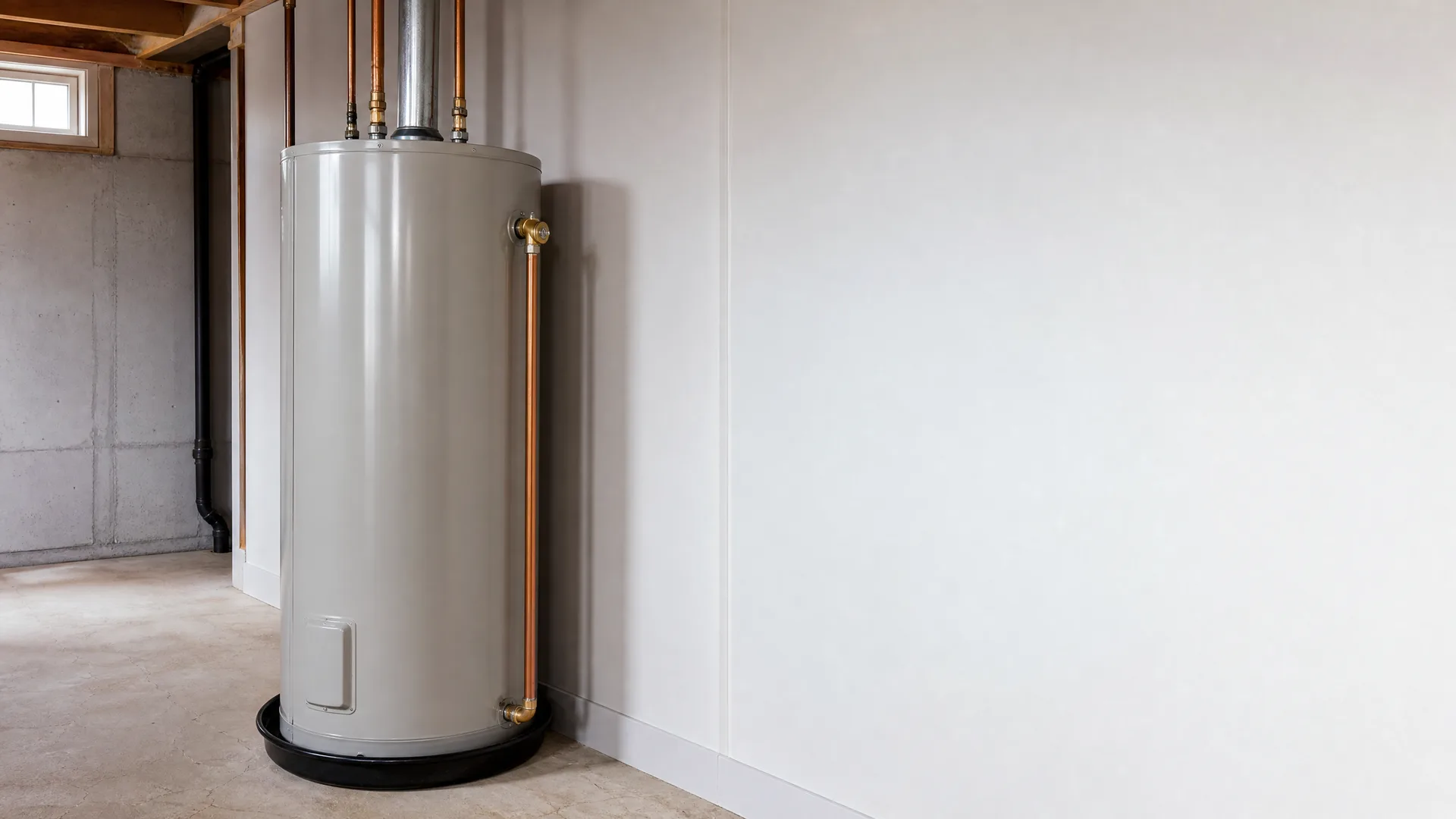
A beige cylindrical water heater with copper pipes and a black drain pan stands in a corner of a basement with white walls, a concrete wall and small window at left, and a concrete floor.

Gas tanks recover fast

A gas tank heats its next batch of water with a burner under the tank, not an electric element, so it recovers quicker than an electric tank does. That matters on a morning when someone runs a long shower and the dishwasher kicks on right after. If your home already has a gas line run to the water heater, that recovery speed comes with the install and doesn't add cost the way adding gas service would.

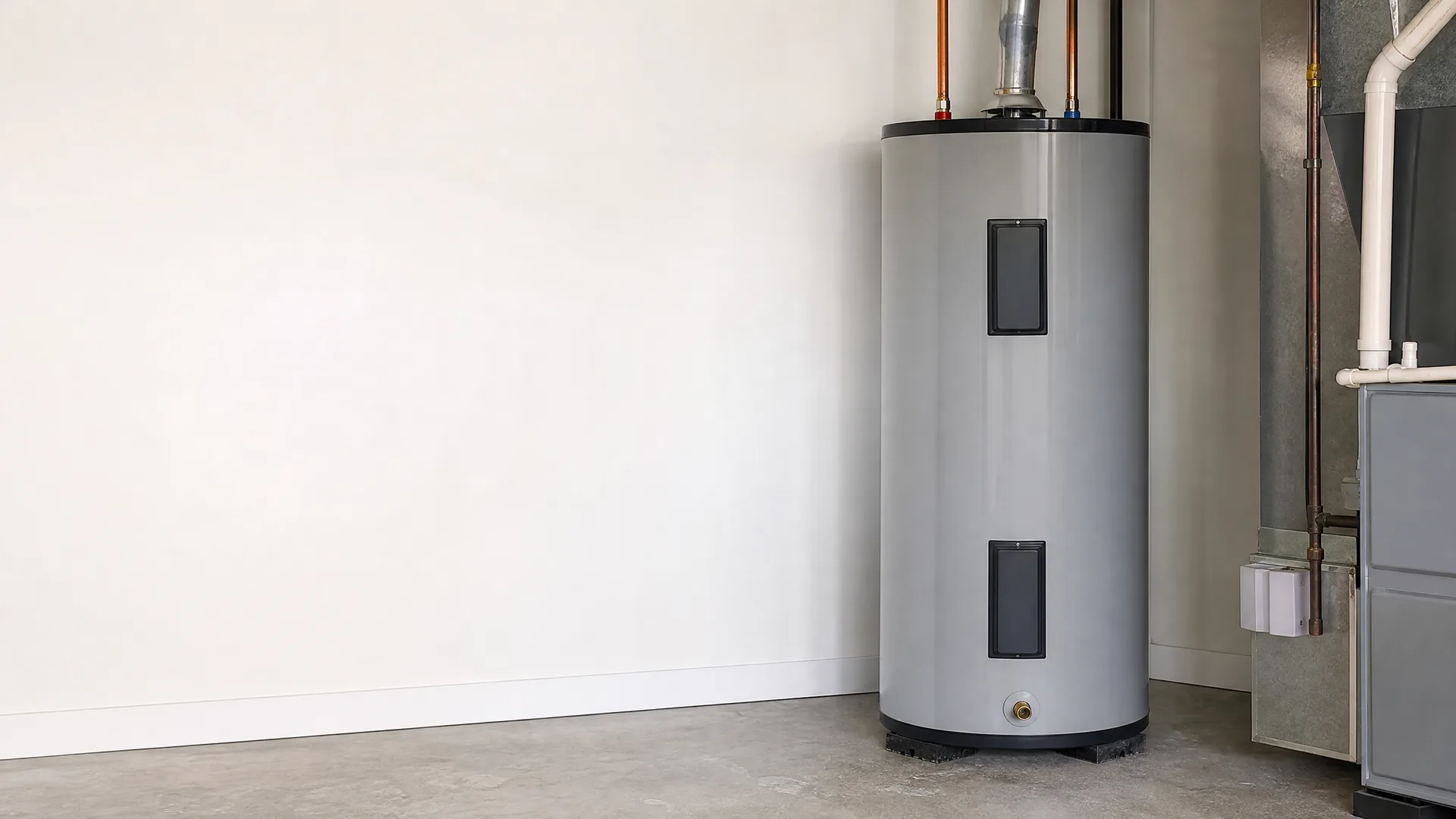
A gray cylindrical water heater with two black access panels stands on a concrete floor against a white wall, with copper pipes and a flue above it and ductwork to the right.

Tankless has real limits too

A tankless unit heats water only as it passes through, so it never runs out, but it also has a maximum flow rate. Ask for that number in gallons per minute and compare it to how many fixtures in your house might run hot water at the same time. Undersized for the house, a tankless unit means the shower turns cool when someone starts the dishwasher, which defeats the reason people choose one.

Tank or Tankless: Weighing Your Options

Tank

  • A gas tank costs less to install since it usually just swaps in where the old one sat, using the same gas line and vent.
  • Repairs are straightforward and most plumbers carry parts for one on the truck, so a bad thermocouple or heating element gets fixed same day.
  • It holds 40 or 50 gallons ready to go, so back to back showers before work don't run cold.
  • Standing pilot models keep working through a power outage since the burner doesn't need electricity to fire.
  • It takes up real floor or closet space, which matters if yours sits in a small utility room.
  • Once the tank runs out, the next batch takes time to heat, so a full house of showers back to back can outlast it.

Tankless

  • It heats water only as it's used, so there's no tank losing heat sitting idle between showers.
  • A gas tankless unit never runs out of hot water mid shower, since it heats on demand rather than drawing down a tank.
  • It mounts to a wall and takes up a fraction of the space a tank does, which helps in a tight utility closet.
  • Installing one in a home that's never had one often means upsizing the gas line or adding venting, since it draws more gas than a tank burner.
  • It needs a stronger gas line and proper venting to the outside, so swapping from a tank adds work a straight tank replacement doesn't.
  • Most units last longer than a tank heater does, which offsets the higher upfront cost over time.
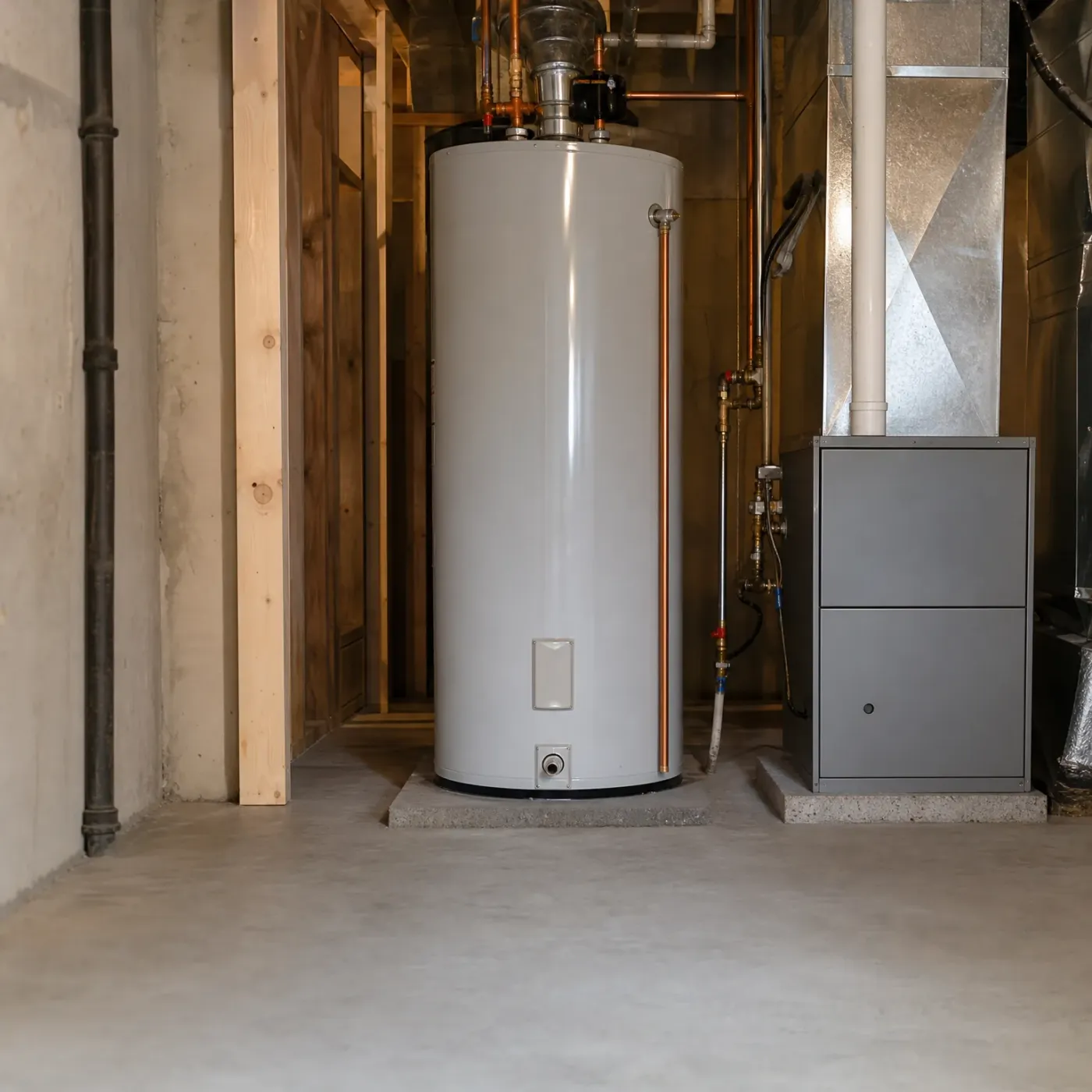
A white cylindrical water heater on a concrete pad in a basement, with copper and metal piping above it and a gray furnace cabinet with ductwork to the right.

A tank doing its job

This is what a working tank setup looks like, sitting next to the furnace with its copper lines and gas piping in place. No rust, no leaks, just a tank holding 40 or 50 gallons hot and ready for whatever the house needs that day.
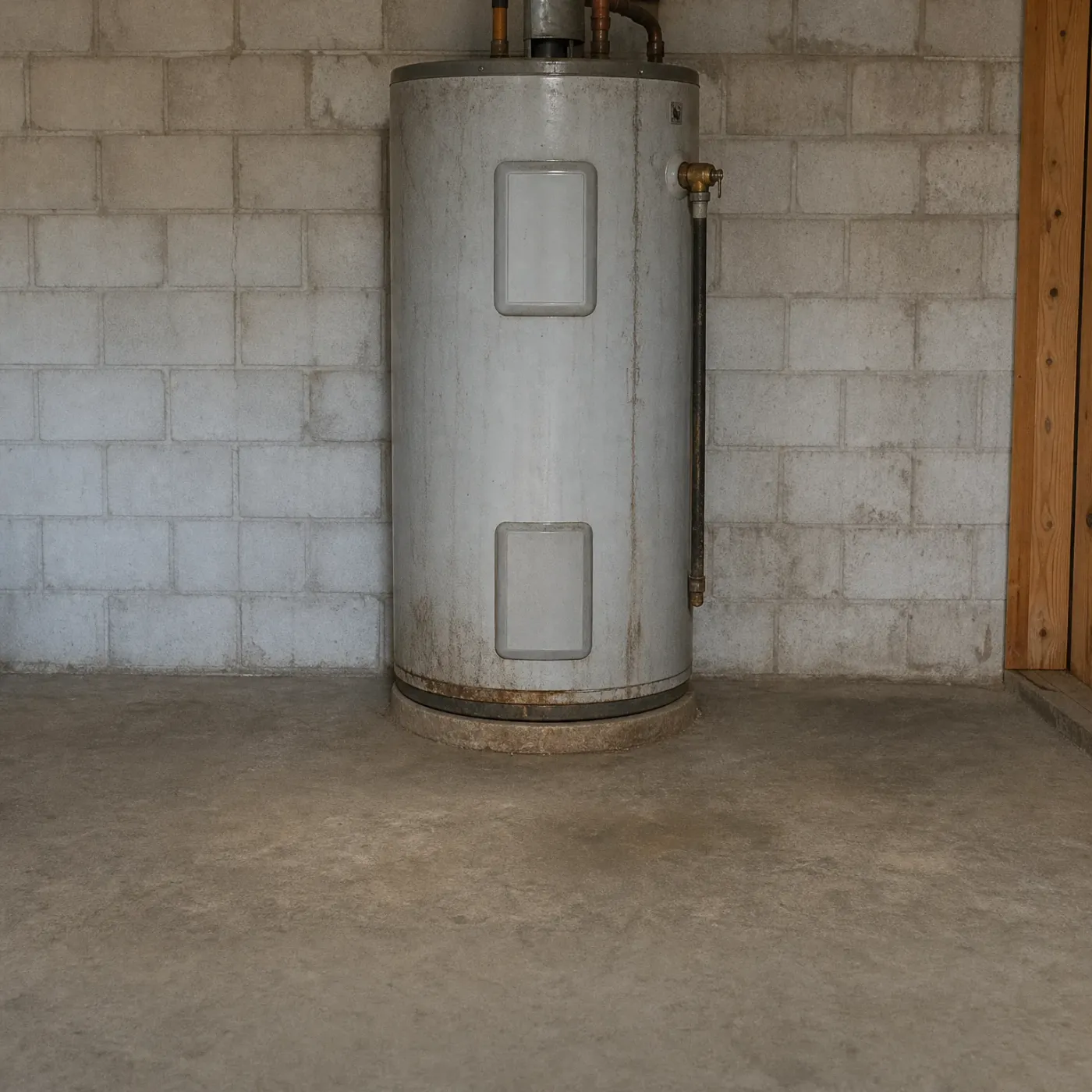

A cylindrical water heater with two access panels and copper pipes stands on a concrete floor against a painted concrete block wall.

A tank past its years

Rust along the seams and an aging tank like this one are signs the water heater is near the end of its life. Once a tank starts showing its age on the outside, the inside is usually further along, and a leak from that relief valve or the tank itself is often how homeowners find out.

A smiling bearded man in a dark green hooded jacket and blue t-shirt sits on a couch in a living room with shelves, a potted plant, and a bowl of popcorn on a wooden table.
A smiling man in a green long-sleeved shirt sits on a beige sofa in a living room, with a bowl of popcorn in the foreground, a large potted plant and shelving behind him.
A smiling man in a dark blue T-shirt sits on a couch in a dimly lit living room with a bowl of popcorn and a remote on a wooden table, a lit floor lamp and bookshelves behind him, and windows showing greenery.
A smiling bearded man in a dark green long-sleeved shirt sits on a leather couch in a living room, with a bowl of popcorn and a remote control on a wooden table in the foreground.

Get the right pro for your water heater

A gas tank is already the right call for most Kansas homes, and that doesn't change whether you're replacing a tank that failed overnight or planning ahead before it does. The decision gets harder when your house doesn't fit the usual case: a bigger household that keeps running out of hot water, a tight utility closet where a tankless unit's smaller footprint actually helps, or a gas line and vent that would need work either way. That's the kind of call worth walking through with someone who installs these for a living, because the right answer depends on your gas line, your vent, and how your household actually uses hot water, not just what works for most houses on your street. A cold shower in January isn't a great time to start comparing options. Send the request now, and a contractor who installs water heaters in Kansas takes it from there.

How each type actually works

  • A gas tank heats water with a burner that fires on a thermostat, cycling on and off to hold the tank at temperature.
  • The dip tube feeds cold water to the bottom of the tank while hot water draws off the top, so the tank never fully mixes.
  • A tankless unit fires its burner only when a faucet opens, running water across a heat exchanger on its way through.
  • Tankless output is measured in gallons per minute, so two hot taps running together can pull more than one unit delivers.
  • A gas tank vents through a flue pipe, while many tankless units vent through the sidewall with their own intake and exhaust.
  • The anode rod inside a tank corrodes on purpose, drawing the rust away from the steel tank so it lasts longer.

A gas tank works like a pot kept on low heat all day. The burner underneath fires when the thermostat calls for it, brings the water back up, then shuts off and waits. Cold water comes in through the dip tube and sinks to the bottom, while the hot water a shower or faucet pulls comes off the top of the tank. That's why a tank can keep delivering hot water even while it's still recovering from the last draw. A tankless unit skips the storage step. There's no reserve of hot water sitting around, so the burner only fires when a faucet or the washer opens and water starts moving through the unit's heat exchanger. That's efficient, but it means the unit has a ceiling on how much it can heat at once, rated in gallons per minute. Run a shower and the dishwasher at the same time and you can ask for more than the unit puts out, where a tank just draws down what's already hot. The two also vent differently. A gas tank sends exhaust up through a flue pipe, the same way it likely does now. Many tankless units vent out through the sidewall instead, with their own intake and exhaust pipes, which changes where the unit can go. Inside a tank, an anode rod corrodes in place of the steel, which is why a tank with a dead anode rod rusts through sooner than one where it's been kept up.

63.1% of homes statewide heat with gas

Most Kansas houses run on gas, and yours probably does too. That's worth knowing before you pick a water heater, because a gas tank or gas tankless unit uses the line already running to your house, without an electrician adding circuits for an electric model.

ACS 2020-2024 5-year B25040

A woman in a cream sweater and jeans stands in the open doorway of a white stucco house, holding the dark door, while a man in a dark quilted jacket seen from behind walks toward the entry past potted plants.

A gas tank is the right call for most houses in Kansas

A 40 or 50 gallon gas tank handles what a Kansas household asks of it, and it costs less to put in since it uses the same gas line and vent the old one used. Tankless makes sense when the house or the household doesn't fit that pattern, a bigger family, a long run to a far bathroom, a plan to stay in the house another twenty years. Outside of that, a tank does the job without asking more of the house than it already has.

Either way, the install matters more than the unit. A tank set up wrong or a tankless unit sized wrong costs you the same comfort you were trying to buy. Once you know which one fits your house, the next step is getting a contractor who installs them in Kansas on the phone, someone who can look at your gas line, your vent, your household, and tell you what it actually needs. Send the form and that part is off your plate.

A living room corner with a beige sofa and cushion, a round wooden coffee table holding a pale ceramic vase of eucalyptus stems and a wooden bowl, and a curtained window with a potted plant above a latticed radiator cover in the background.
A single-story stone-clad house with low-voltage path lights along a gravel bed and lawn at dusk, with a tree line and orange sky on the horizon.

Water Heater Installation

A pro who works on water heaters

Step 1 of 3: Equipment
  • A dimly lit living room corner with a beige upholstered sofa holding a dark green cushion and a chunky knit throw, beside a wooden sideboard with a lit ceramic table lamp, a small potted plant, and a wooden bowl, with a framed artwork on the wall and a mug on a book in the foreground.
    • Say what's going on with your water heater, and a pro who works on them reaches out.
    • A local pro who knows water heaters gets your details and gets in touch.
  • A round wooden coffee table holding a round stone vase of green foliage, a lit candle in a glass container, and a small dark bowl, with a beige sofa, cushions and knit throw behind and a window at left.
    • Once you send the form, finding a pro is off your list.
    • After you send the request, you're done searching.
  • Sunlit living room with a wooden coffee table holding a ceramic vase of leafy branches and a carved wooden tray with two stacked books, in front of a beige sofa with tan and green cushions and a potted plant near a window.
    • Skip collecting and comparing quotes for the new water heater.
    • Skip the round of in-home estimates for a new water heater.
  • Interior corner with a lit ceramic table lamp and wooden bowl on a wood sideboard, a framed picture and branch-filled vase behind, a knit throw over an upholstered chair, and a lit candle in a glass holder, stoneware mug and round planter of green foliage on a wooden table in the foreground.
    • One installer gets your project, so there's no bidding war over it.
    • Only one pro gets your request, so you hear from one company.









