Tell us about the job
Takes about a minute. No obligation.
A contractor quoting a water heater replacement in Mitchell County starts with the fuel the house already runs on. Utility gas heats more occupied homes in Mitchell County, Kansas than any other fuel, at 54.9% (2020-2024 ACS 5-year). Gas water heaters draw combustion air and exhaust through a flue, and the existing venting arrangement decides what a new unit is allowed to be. A direct-vent tankless and a standard atmospheric-vent tank are not interchangeable on the same flue, so the contractor inspects the vent path, the draft conditions, and the gas supply line before the equipment choice is final.
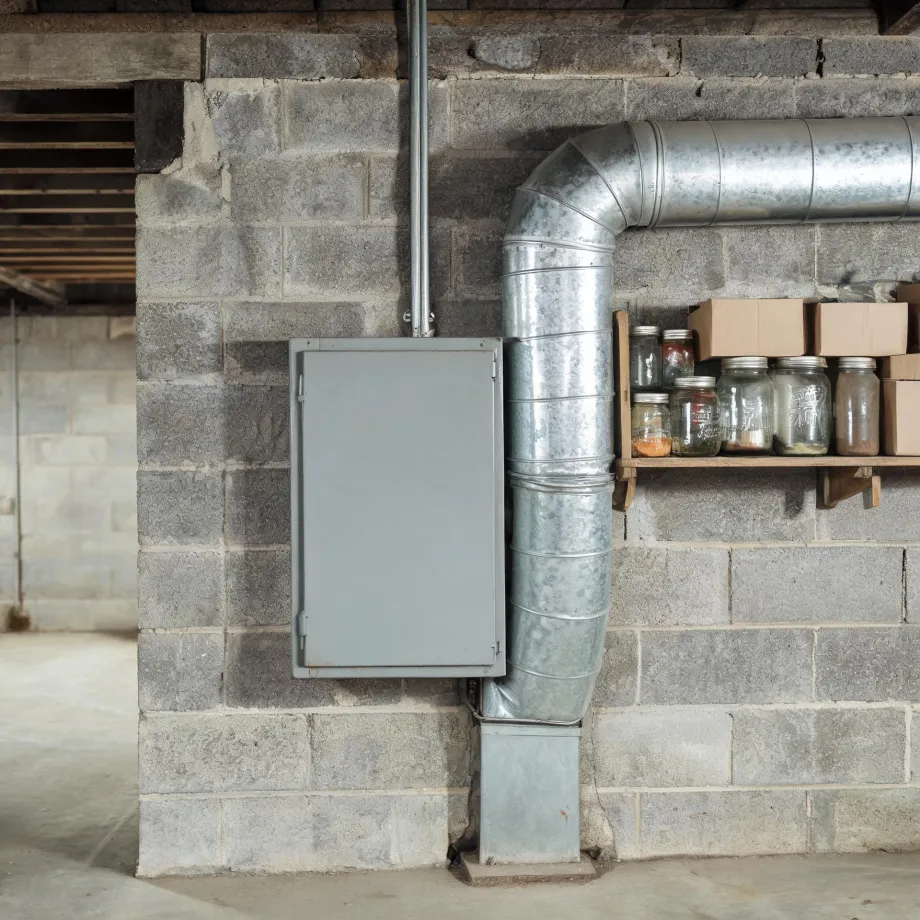
Ductwork laid down for equipment that no longer exists in a house tells a contractor almost nothing about what a new water heater install will need until they get in and look. Half the homes in Mitchell County, Kansas were built in 1958 or earlier (2020-2024 ACS 5-year). That history matters for installation because the plumbing runs, venting paths, and electrical service in a house this age were sized for something specific, and what a contractor finds when they open the walls or trace the existing lines decides how the job scopes out. A quote built without that inspection is a guess.
What a Water Heater Installation Covers
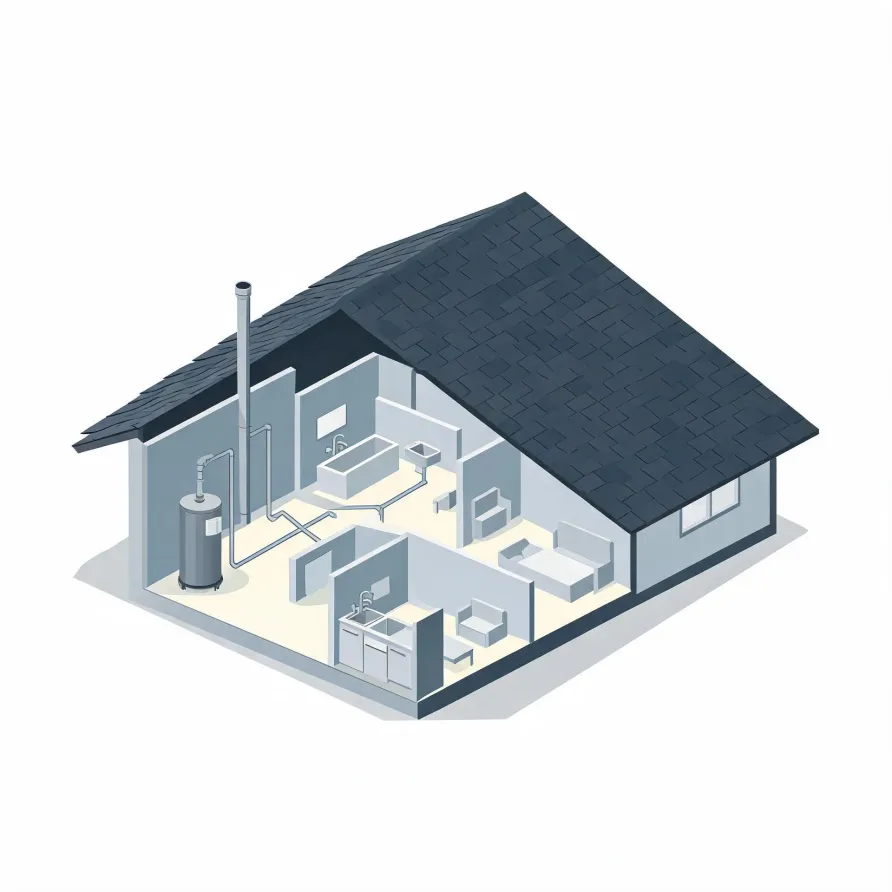
The water heater tank itself sits in a utility space, basement, or closet and holds the supply that feeds every hot-water fixture in the house. A contractor sets the unit in place, connects it to the cold-water inlet and hot-water outlet lines, and secures the temperature and pressure relief valve on the side of the tank.
The supply and return lines run from the tank to the rest of the plumbing, and the flue or exhaust vent exits through a wall or the roof depending on the fuel type. A gas unit also gets its gas line connection confirmed and tested at this stage, while an electric unit ties into its dedicated circuit at the unit itself.
The drawing shows a general layout of these components, and a licensed contractor determines exactly how each one applies to your home.
Find a contractor in Mitchell CountyMitchell County, Kansas, by the numbers
147 severe weather events were recorded in Mitchell County, Kansas between 2015 and 2024.
NOAA National Centers for Environmental Information, Storm Events Database, bulk CSV export, events 2015-01-01 through 2024-12-31.Half the homes in Mitchell County, Kansas were built in 1958 or earlier (2020-2024 ACS 5-year).
U.S. Census Bureau, 2020-2024 American Community Survey 5-Year EstimatesMitchell County, Kansas holds 3,116 housing units (2020-2024 ACS 5-year).
U.S. Census Bureau, 2020-2024 American Community Survey 5-Year EstimatesOwners occupy 69.0% of the occupied homes in Mitchell County, Kansas (2020-2024 ACS 5-year).
U.S. Census Bureau, 2020-2024 American Community Survey 5-Year EstimatesSevere Weather Events in Mitchell County
Extreme weather puts real stress on water heating equipment, shortening service life and driving up demand at the worst times. How hard that load runs in Mitchell County shapes what a water heater here needs to handle.
147 severe weather events, 2015–2024. Source: NOAA National Centers for Environmental Information, Storm Events Database.