Tell us about the job
Takes about a minute. No obligation.

Before a contractor can quote a water heater installation in Rice County, they have to establish what the house is already set up to burn. Utility gas heats more occupied homes in Rice County, Kansas than any other fuel, at 66.6% (2020-2024 ACS 5-year). That share means gas-fired storage and tankless units are the default replacement path for most homes here, and the venting arrangement already in the walls decides what a new unit is allowed to be. A power-vented unit cannot simply swap into a naturally drafted flue, and the combustion air calculation changes with the appliance. Contractors size the replacement to what the existing infrastructure will actually support.
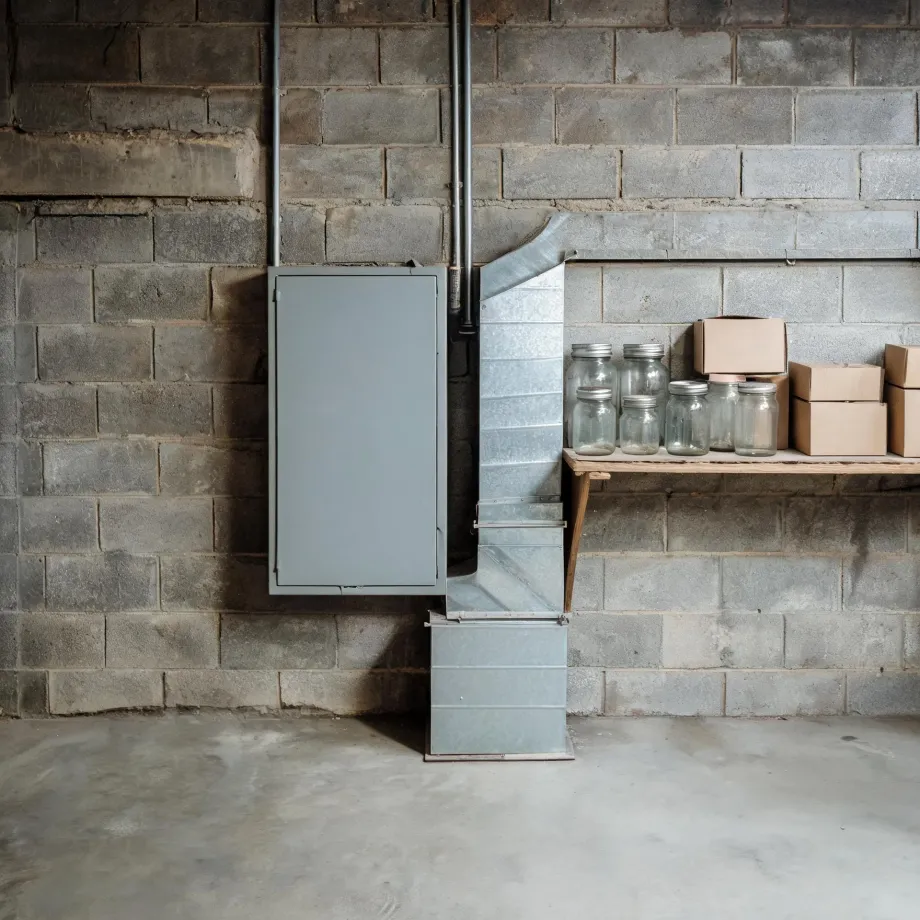
Ductwork and venting runs in a house this old were laid out for equipment that no longer exists. Half the homes in Rice County, Kansas were built in 1953 or earlier (2020-2024 ACS 5-year). What a contractor finds behind the walls in Rice County shapes the scope of a water heater installation more directly than the unit itself does, because the chase dimensions, flue routing, and clearances were built to a different standard. A new water heater may need an entirely different venting path, and the existing layout either accommodates that or it does not.
What a Water Heater Installation Covers
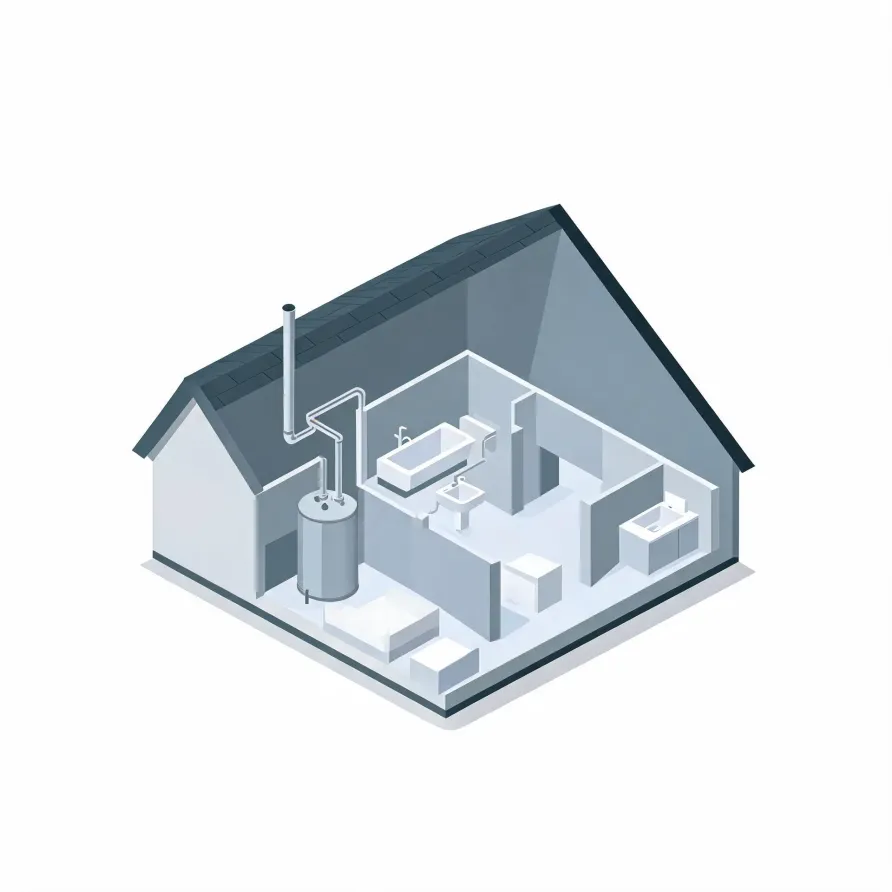
The tank or tankless unit is the heart of the system. A storage tank sits in a utility room, basement, or garage and holds a reservoir of heated water ready to draw from. A tankless unit mounts to a wall in the same general area and heats water on demand as it passes through.
Running alongside the unit are the cold-water supply line that feeds it and the hot-water outlet line that carries water to every fixture in the house. A pressure-relief valve mounts directly on the unit as a safety device, and a drain pan sits beneath it to catch any discharge or condensation.
The drawing shows a typical layout, and a licensed contractor determines exactly which components and configurations apply to your home.
Find a contractor in Rice CountyRice County by the Numbers
153 severe weather events were recorded in Rice County, Kansas between 2015 and 2024.
NOAA National Centers for Environmental Information, Storm Events Database, bulk CSV export, events 2015-01-01 through 2024-12-31.Half the homes in Rice County, Kansas were built in 1953 or earlier (2020-2024 ACS 5-year).
U.S. Census Bureau, 2020-2024 American Community Survey 5-Year EstimatesRice County, Kansas holds 4,384 housing units (2020-2024 ACS 5-year).
U.S. Census Bureau, 2020-2024 American Community Survey 5-Year EstimatesOwners occupy 77.4% of the occupied homes in Rice County, Kansas (2020-2024 ACS 5-year).
U.S. Census Bureau, 2020-2024 American Community Survey 5-Year EstimatesSevere Weather Events in Rice County
Extreme weather puts real demands on water heating equipment, shortening service life and driving up energy use when systems have to work harder to compensate. How much of that stress a water heater faces depends on where it sits, which makes local weather history a practical part of sizing and installation decisions in Rice County.
153 severe weather events, 2015–2024. Source: NOAA National Centers for Environmental Information, Storm Events Database.