Tell us about the job
Takes about a minute. No obligation.
A contractor quoting a water heater replacement in Marshall County starts with the fuel before anything else. Utility gas heats more occupied homes in Marshall County, Kansas than any other fuel, at 52.5% (2020-2024 ACS 5-year). Gas water heaters draw combustion air and push exhaust out through flue arrangements that vary by the age and layout of the house, and swapping a unit means confirming the existing venting still meets code for whatever the new heater requires. A power-vent model and a natural-draft model are not interchangeable on the same flue. Sizing the tank is a separate question, and it only comes after the venting is settled.
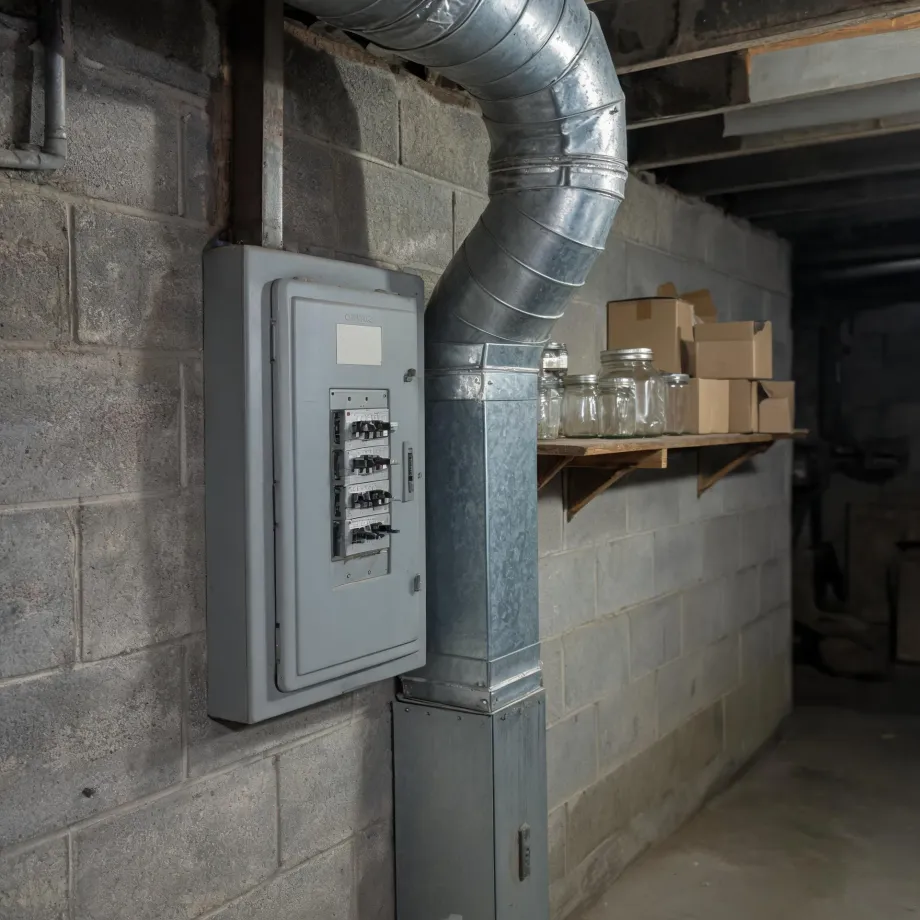
Older wiring is the variable a contractor prices before they price the unit. Half the homes in Marshall County, Kansas were built in 1959 or earlier (2020-2024 ACS 5-year). A house built for equipment of that era carries electrical service that fit what was available then, and a modern water heater draws more than that service was sized for. Before a new unit goes in, a contractor checks whether the panel can handle the load or whether an upgrade is part of the job. That answer changes the quote.
What a Water Heater Installation Covers
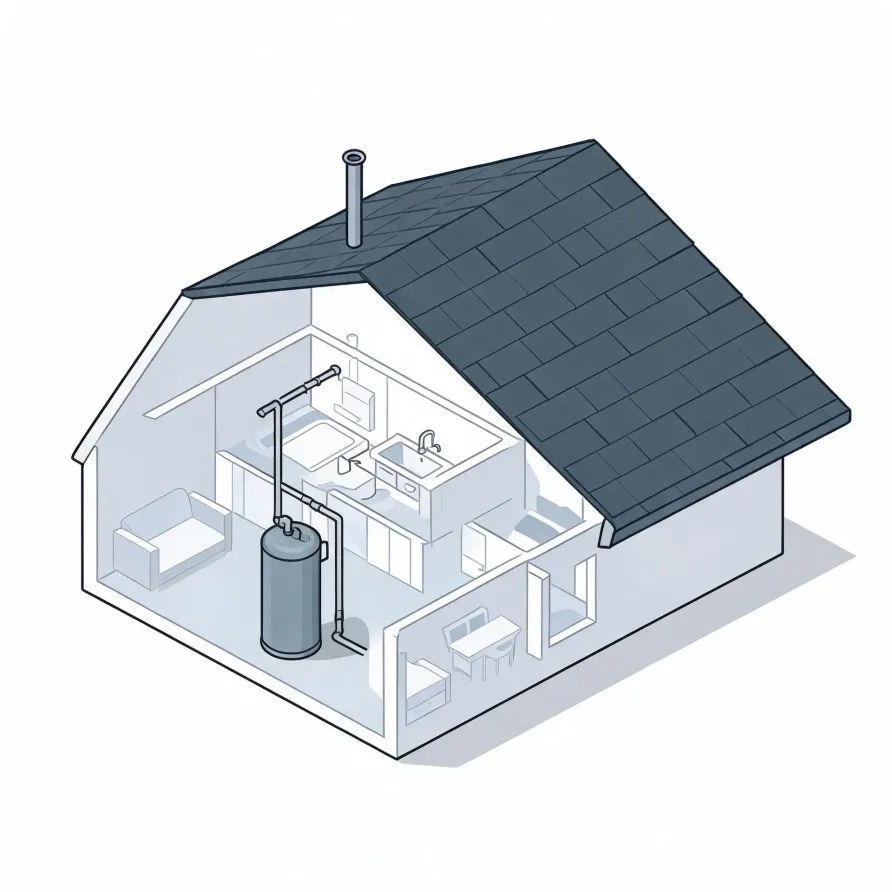
The storage tank is the piece a homeowner sees first, usually standing in a utility closet, basement, or garage. It holds and heats a supply of water, drawing cold water in at the bottom and sending hot water out at the top. The tank connects directly to the home's cold supply line and to every hot-water fixture in the house.
At the top of the tank, a pressure relief valve sits ready to release if internal pressure climbs too high. The anode rod runs down through the tank interior and protects the steel lining from corrosion. A drain valve near the base and a dip tube that directs incoming cold water to the bottom round out what a contractor puts in place alongside the tank itself.
The drawing shows the general layout of a water heater system, and a licensed contractor determines exactly which components apply to your house.
Find a contractor in Marshall CountyMarshall County, Kansas, by the numbers
172 severe weather events were recorded in Marshall County, Kansas between 2015 and 2024.
NOAA National Centers for Environmental Information, Storm Events Database, bulk CSV export, events 2015-01-01 through 2024-12-31.Half the homes in Marshall County, Kansas were built in 1959 or earlier (2020-2024 ACS 5-year).
U.S. Census Bureau, 2020-2024 American Community Survey 5-Year EstimatesMarshall County, Kansas holds 4,751 housing units (2020-2024 ACS 5-year).
U.S. Census Bureau, 2020-2024 American Community Survey 5-Year EstimatesOwners occupy 80.0% of the occupied homes in Marshall County, Kansas (2020-2024 ACS 5-year).
U.S. Census Bureau, 2020-2024 American Community Survey 5-Year EstimatesSevere Weather Events in Marshall County
Water heaters work harder when outdoor conditions swing hard, and Kansas weather can push that load in both directions. How much strain a unit absorbs over its life is a local question, and Marshall County's storm record is part of that picture.
172 severe weather events, 2015–2024. Source: NOAA National Centers for Environmental Information, Storm Events Database.