Tell us about the job
Takes about a minute. No obligation.
A contractor quoting a water heater replacement in Meade County starts with the gas system, not the unit. Utility gas heats more occupied homes in Meade County, Kansas than any other fuel, at 66.2% (2020-2024 ACS 5-year). That share of gas-fired homes means the existing venting and combustion air arrangement is almost certainly what the new heater has to work within, and both have to be confirmed before a flue size or BTU input can be settled. A storage tank that vents correctly and draws enough combustion air runs cleaner and holds its burner and ignition components longer than one installed without that groundwork.
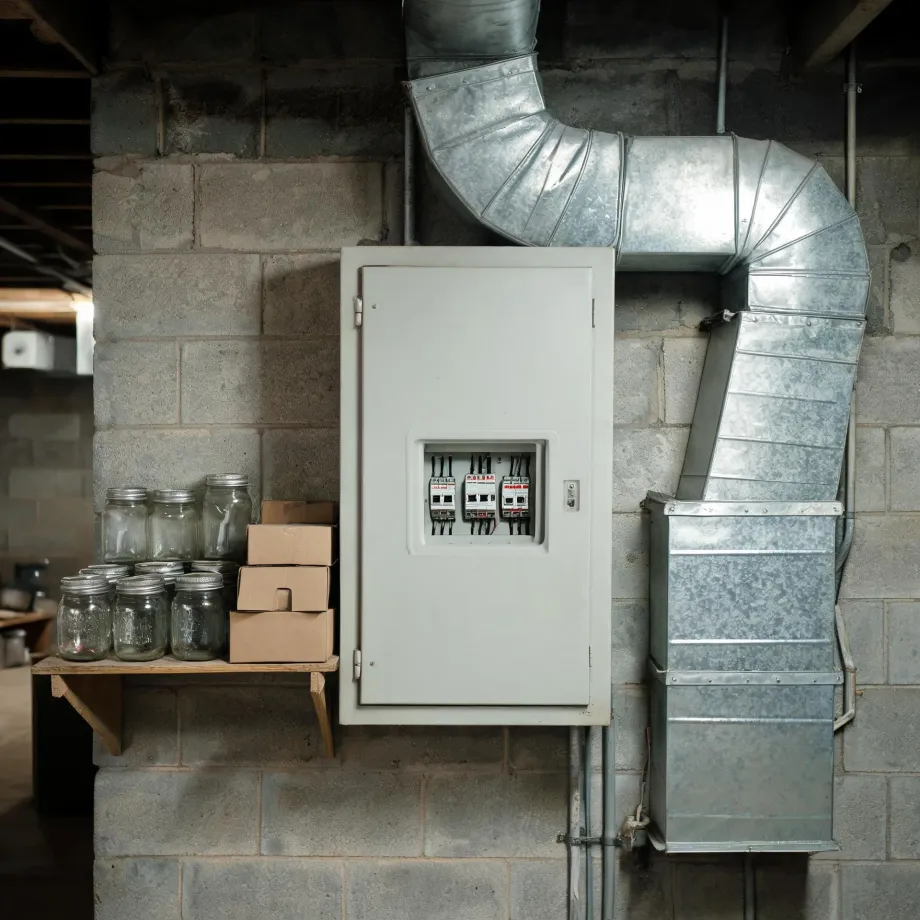
Ductwork and electrical service sized for equipment that has long since been replaced are what a contractor opens a wall or panel to verify before any new water heater goes in. Half the homes in Meade County, Kansas were built in 1959 or earlier (2020-2024 ACS 5-year). That generation of housing was built around systems that are not what runs in it now, which means the existing infrastructure is a question before it is an answer. A contractor who skips that check quotes against assumptions, and the job corrects him later.
What a Water Heater Installation Covers
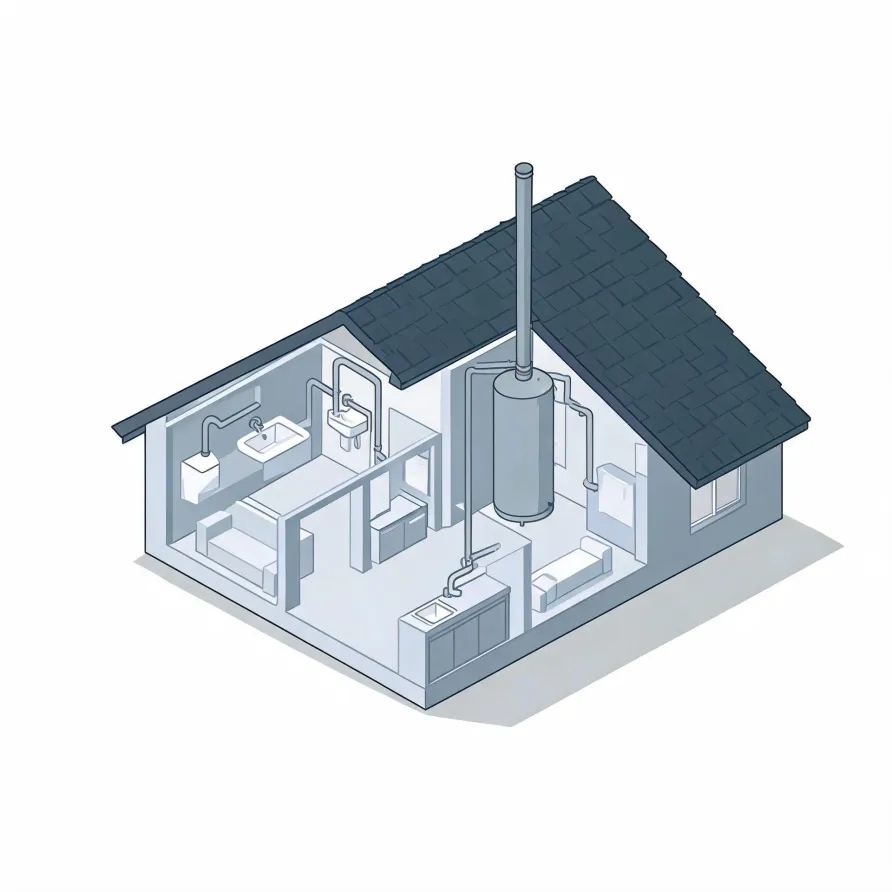
The water heater tank sits in a utility space, basement, or garage and holds the supply of heated water the house draws from. Attached to it are the inlet and outlet pipes that carry cold water in and hot water out, along with a pressure relief valve mounted to the tank body that releases if pressure inside climbs too high.
A drain valve at the base of the tank lets a contractor flush sediment during setup. The anode rod runs down through the top of the tank and slows corrosion of the tank walls from the inside. A thermostat, either on the unit itself or wired to a separate control, governs the target water temperature.
The drawing shows a general layout of these components, and a licensed contractor determines exactly what applies to the configuration in your home.
Find a contractor in Meade CountyMeade County, Kansas, by the numbers
117 severe weather events were recorded in Meade County, Kansas between 2015 and 2024.
NOAA National Centers for Environmental Information, Storm Events Database, bulk CSV export, events 2015-01-01 through 2024-12-31.Half the homes in Meade County, Kansas were built in 1959 or earlier (2020-2024 ACS 5-year).
U.S. Census Bureau, 2020-2024 American Community Survey 5-Year EstimatesMeade County, Kansas holds 1,898 housing units (2020-2024 ACS 5-year).
U.S. Census Bureau, 2020-2024 American Community Survey 5-Year EstimatesOwners occupy 74.0% of the occupied homes in Meade County, Kansas (2020-2024 ACS 5-year).
U.S. Census Bureau, 2020-2024 American Community Survey 5-Year EstimatesSevere Weather Events in Meade County
Water heaters work harder when local conditions swing hard, and Kansas weather puts real demands on equipment over time. How often those demands hit Meade County shapes what a water heater installation here needs to hold up to.
117 severe weather events, 2015–2024. Source: NOAA National Centers for Environmental Information, Storm Events Database.