Tell us about the job
Takes about a minute. No obligation.
Gas-fired water heater installation here starts with what is already in the wall. Utility gas heats more occupied homes in Wallace County, Kansas than any other fuel, at 66.4% (2020-2024 ACS 5-year). A contractor quoting a replacement has to establish how the existing flue is routed, whether the space supplies enough combustion air, and what venting category the new unit requires before the unit itself is chosen. Get those wrong and the installation fails inspection or runs unsafely regardless of the hardware. The dominant fuel share means most of these jobs involve atmospheric or direct-vent gas appliances, and each type carries its own rough-in requirements.
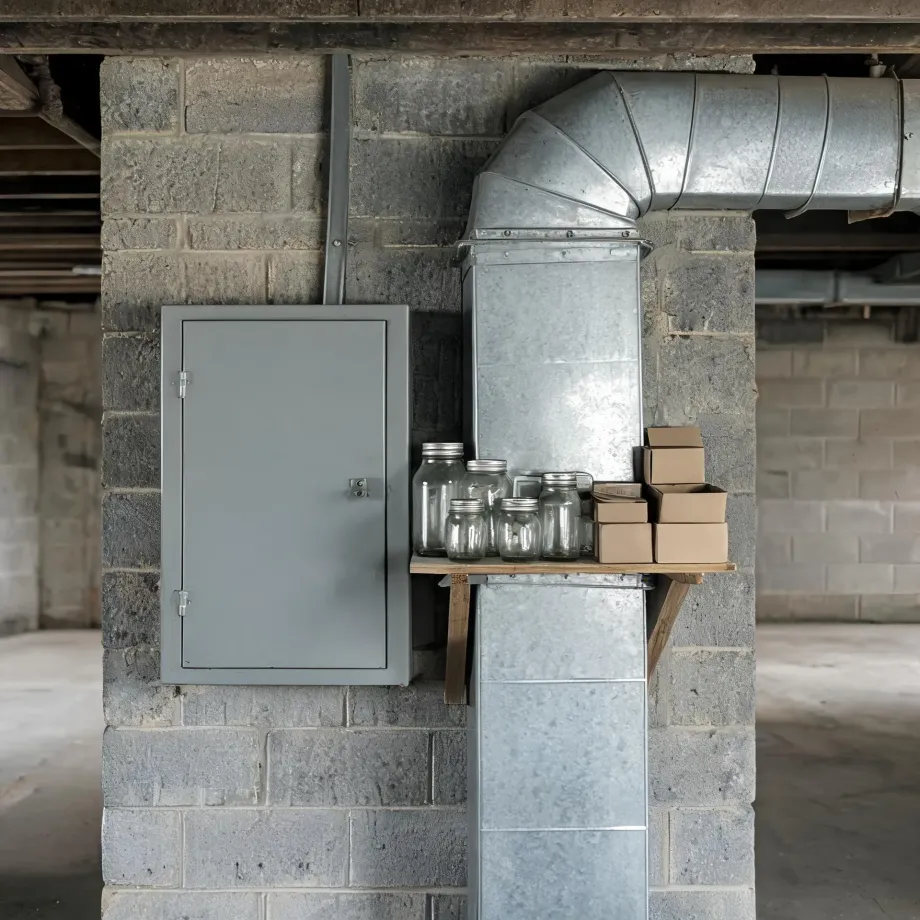
Electrical panels in houses built for the loads of an earlier era often cannot feed a modern water heater without an upgrade. Half the homes in Wallace County, Kansas were built in 1961 or earlier (2020-2024 ACS 5-year). A contractor quoting a water heater installation here looks at the panel and the existing wiring before settling on what the job costs, because the unit price is only part of the bill if the service has to be brought up to carry it.
What a Water Heater Installation Covers
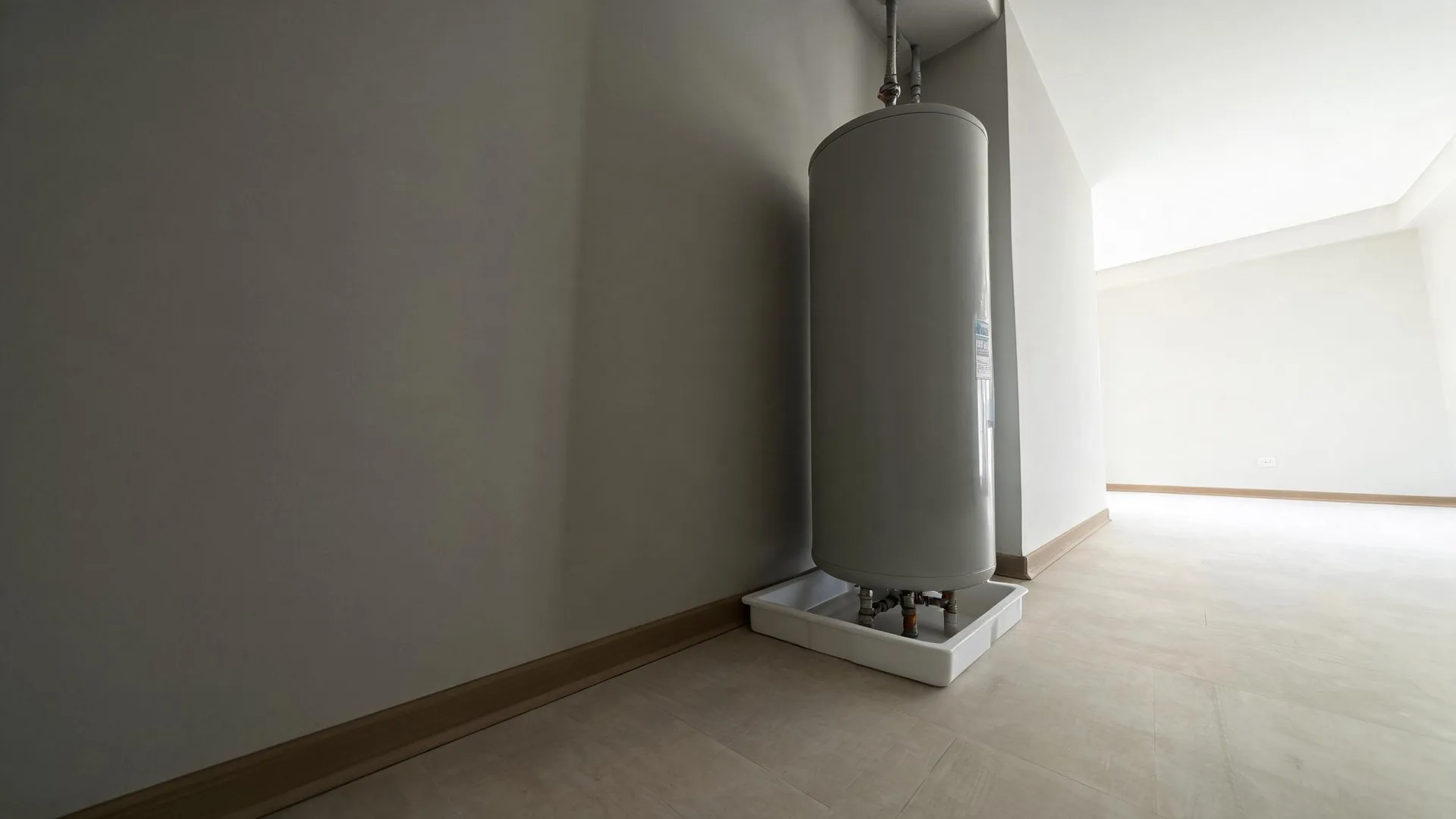
The tank or tankless unit is the heart of the system, sitting in a utility closet, basement, or garage depending on the house. It holds or heats water on demand and connects directly to the home's cold supply line. That connection point, along with the pressure relief valve mounted to the tank's side, is part of what a contractor addresses during installation.
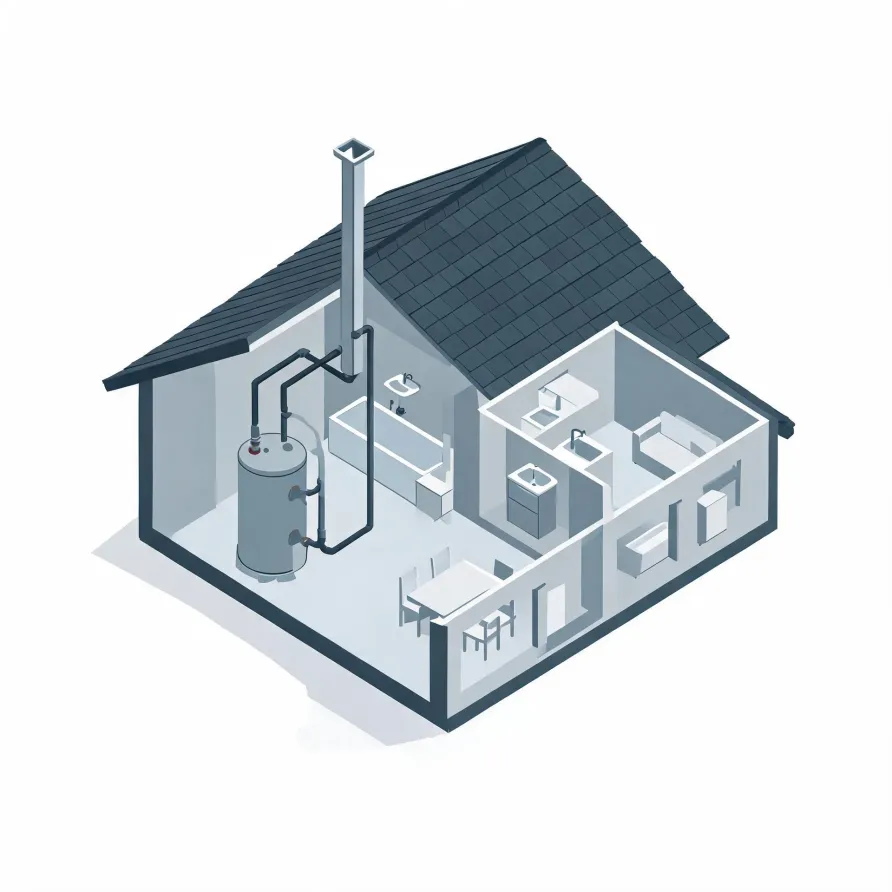
The supply and return lines run from the unit to every fixture in the house, and the flue or venting pipe carries combustion gases out through a wall or roof. Where the unit runs on gas, the gas line and shutoff valve are part of the installation scope. An expansion tank is often added near the cold inlet to handle pressure buildup in a closed system.
The drawing shows a representative layout, and a licensed contractor determines what the installation involves for this specific house.
Find a contractor in Wallace CountyWallace County, Kansas, by the numbers
232 severe weather events were recorded in Wallace County, Kansas between 2015 and 2024.
NOAA National Centers for Environmental Information, Storm Events Database, bulk CSV export, events 2015-01-01 through 2024-12-31.Half the homes in Wallace County, Kansas were built in 1961 or earlier (2020-2024 ACS 5-year).
U.S. Census Bureau, 2020-2024 American Community Survey 5-Year EstimatesWallace County, Kansas holds 717 housing units (2020-2024 ACS 5-year).
U.S. Census Bureau, 2020-2024 American Community Survey 5-Year EstimatesOwners occupy 74.8% of the occupied homes in Wallace County, Kansas (2020-2024 ACS 5-year).
U.S. Census Bureau, 2020-2024 American Community Survey 5-Year EstimatesSevere Weather History in Wallace County
Water heaters work harder when the weather swings hard, and Kansas weather does not hold still. How much stress the local climate puts on a system shapes what kind of equipment makes sense and how it should be installed.
232 severe weather events, 2015–2024. Source: NOAA National Centers for Environmental Information, Storm Events Database.