Tell us about the job
Takes about a minute. No obligation.
Gas water heater replacement in Trego County starts with the venting, not the tank. Utility gas heats more occupied homes in Trego County, Kansas than any other fuel, at 52.7% (2020-2024 ACS 5-year). A contractor quoting a new unit checks the flue diameter, the draft, and the combustion air supply against what the replacement appliance actually demands, because a vent that served the old heater may not serve the new one at the same input rating. Gas-fired units also require a confirmed shutoff and an approved connection at the appliance. Getting those details settled before the equipment is ordered is what keeps the install from stalling once the old unit is out.
Ductwork laid out for one system and then pressed into service for whatever replaced it accumulates compromises that a new water heater installation will surface. Half the homes in Trego County, Kansas were built in 1963 or earlier (2020-2024 ACS 5-year). That gap between what the house was built around and what it is running now is where a contractor's pre-installation assessment goes. Electrical service in stock of this vintage was sized for a different load profile, and whether the existing circuits can carry a new unit is something that gets answered before anything is priced or ordered.
The Parts of a Water Heater an Installer Works With
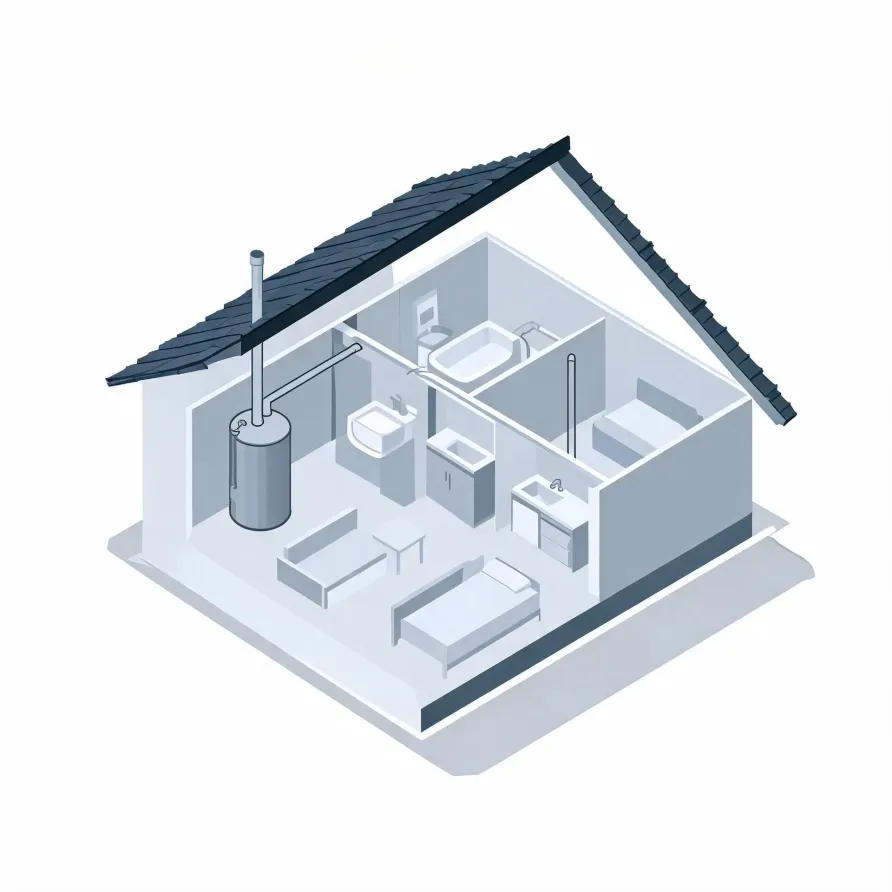
The tank is what most homeowners see first. It sits in a utility room, basement, or garage and holds the water that gets heated for household use. Attached to the tank are the supply and discharge lines, which bring cold water in and send hot water out to every fixture in the house.
The pressure relief valve mounts directly on the tank and acts as a safety release if pressure inside climbs too high. The anode rod hangs inside the tank to slow corrosion of the tank walls. A drain valve at the base gives a contractor access to flush sediment that collects at the bottom.
The drawing shows a general layout of these components, and a licensed contractor determines exactly how they apply to your home's specific setup.
Find a contractor in Trego CountyTrego County, Kansas, by the numbers
167 severe weather events were recorded in Trego County, Kansas between 2015 and 2024.
NOAA National Centers for Environmental Information, Storm Events Database, bulk CSV export, events 2015-01-01 through 2024-12-31.Half the homes in Trego County, Kansas were built in 1963 or earlier (2020-2024 ACS 5-year).
U.S. Census Bureau, 2020-2024 American Community Survey 5-Year EstimatesTrego County, Kansas holds 1,709 housing units (2020-2024 ACS 5-year).
U.S. Census Bureau, 2020-2024 American Community Survey 5-Year EstimatesOwners occupy 82.2% of the occupied homes in Trego County, Kansas (2020-2024 ACS 5-year).
U.S. Census Bureau, 2020-2024 American Community Survey 5-Year EstimatesSevere Weather Events in Trego County
Water heaters work harder when outdoor conditions swing wide, and Kansas weather can push equipment through real stress across a single season. How much of that pressure Trego County sees shapes what a water heater here needs to handle.
167 severe weather events, 2015–2024. Source: NOAA National Centers for Environmental Information, Storm Events Database.