



Sunflower Water Heaters

Water heater leaking in Topeka, KS

Skip the calls

A water heater leaking in Topeka doesn't wait for a good time. Water on the floor near the tank, or a drip you traced to a fitting, means it's time to get someone out to look at it rather than search around for who's free. You could start calling plumbers around Shawnee County, explain the leak to each one, wait on quotes, and sort through who sounds like they know the job. Or you could skip that and get matched with one licensed local contractor who works on water heaters in homes like yours all year, the kind who's seen what a leak at the bottom of a tank usually means versus one at a fitting up top. You tell your story once. One contractor calls, not five. No comparing bids from strangers, no repeating yourself to the next person on the list. Tell us what's going on and where you're located, and get connected with someone who can take it from here.

A puddle under the tank usually means the tank itself has failed. Steel tanks corrode from the inside over the years, and once the lining gives way, water finds the seam and works its way out. That leak won't seal itself, and it won't stay small. Water at a fitting or a valve is a different matter. The pressure relief valve, the drain valve, or a supply line connection can weep without the tank being bad at all, and that's often a repair rather than a replacement. Cold Kansas winters put more strain on these parts than most homeowners expect, since a tank works harder and longer to keep up. If the leak is coming from the top, check the connections first. If it's pooling underneath, the tank is the likely source, and it's worth having someone look before it fails outright and leaves you without hot water.

A gray-haired bearded man in a dark knit sweater sits on a light gray sofa in a sunlit living room, looking to his left, with a framed artwork, a potted palm, and a curtained glass door behind him.
A middle-aged man in a dark green sweater sits on a light grey sofa looking toward a sunlit window, with a wooden shelving unit, lamp and potted plants in the background.
A man in a dark green sweater sits on a light grey sofa in a sunlit living room, looking to his left, with a shelving unit, houseplants, framed art and a large window behind him.
A gray-haired bearded man in a dark green sweater sits on a light gray sofa in a sunlit living room with a potted plant, framed picture, and dark shelving in the background.
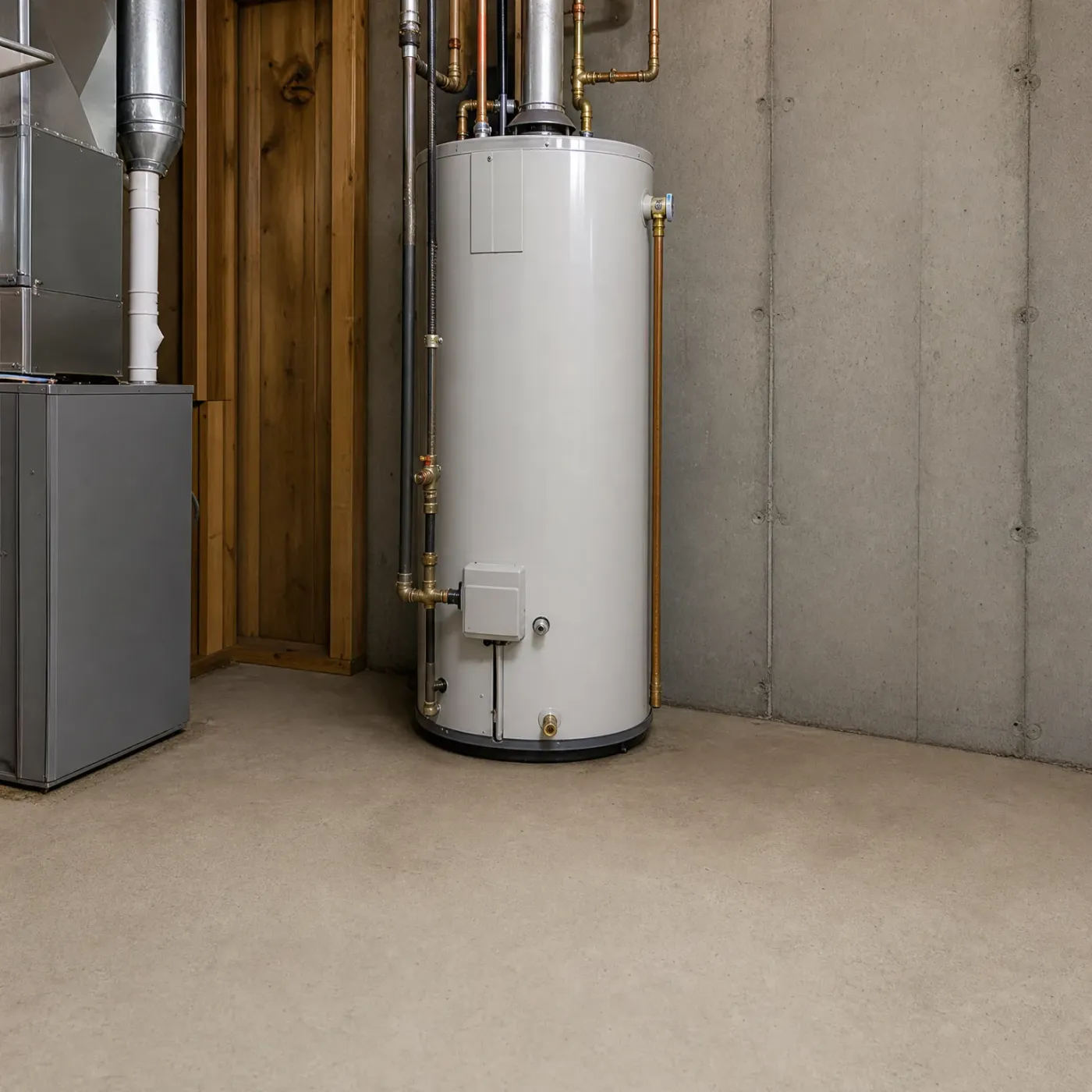
A white cylindrical gas water heater with copper and steel pipes stands against a concrete basement wall beside a gray furnace and wood-paneled wall.
A sound tank keeps its fittings dry and its connections tight, with no moisture at the base or along the seams.
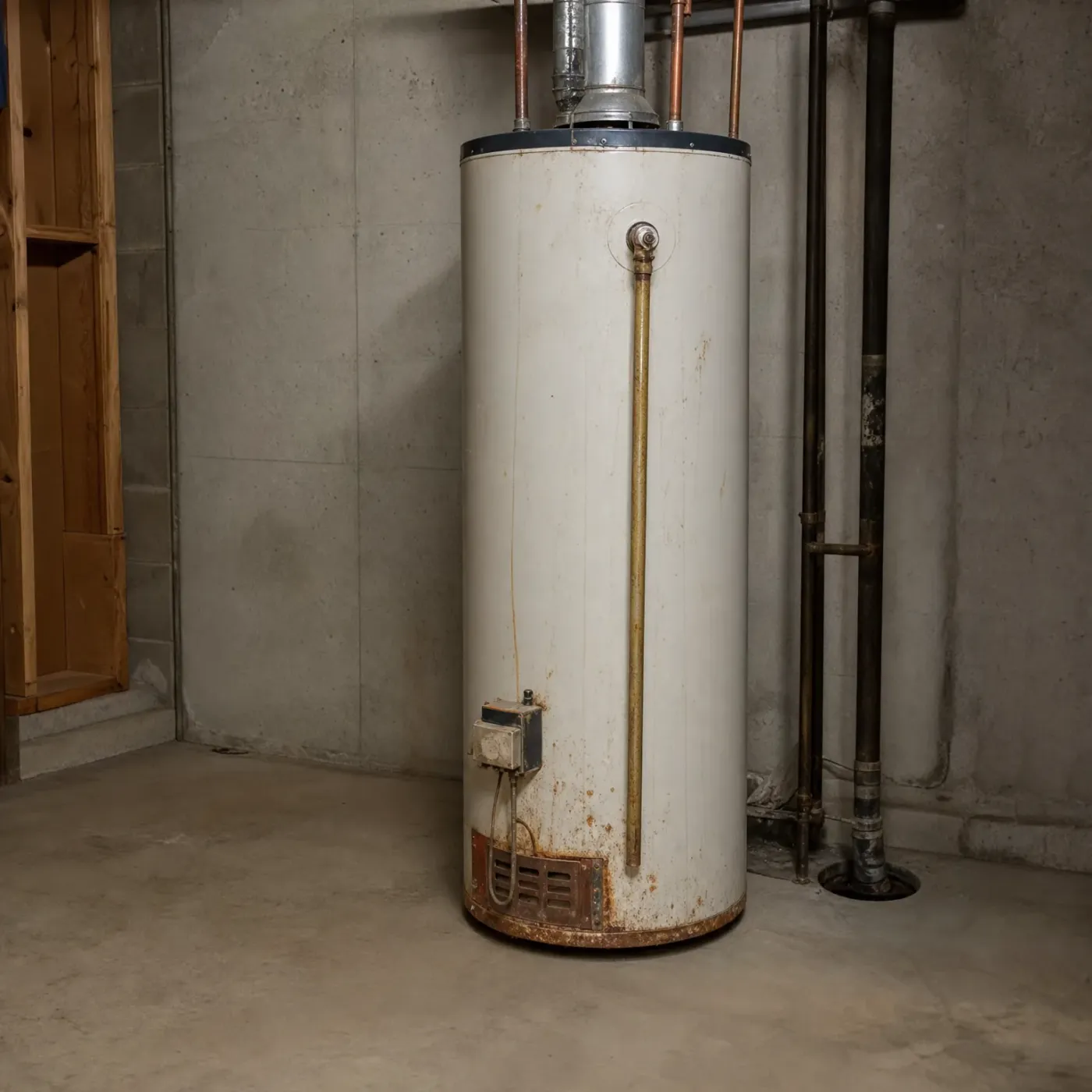
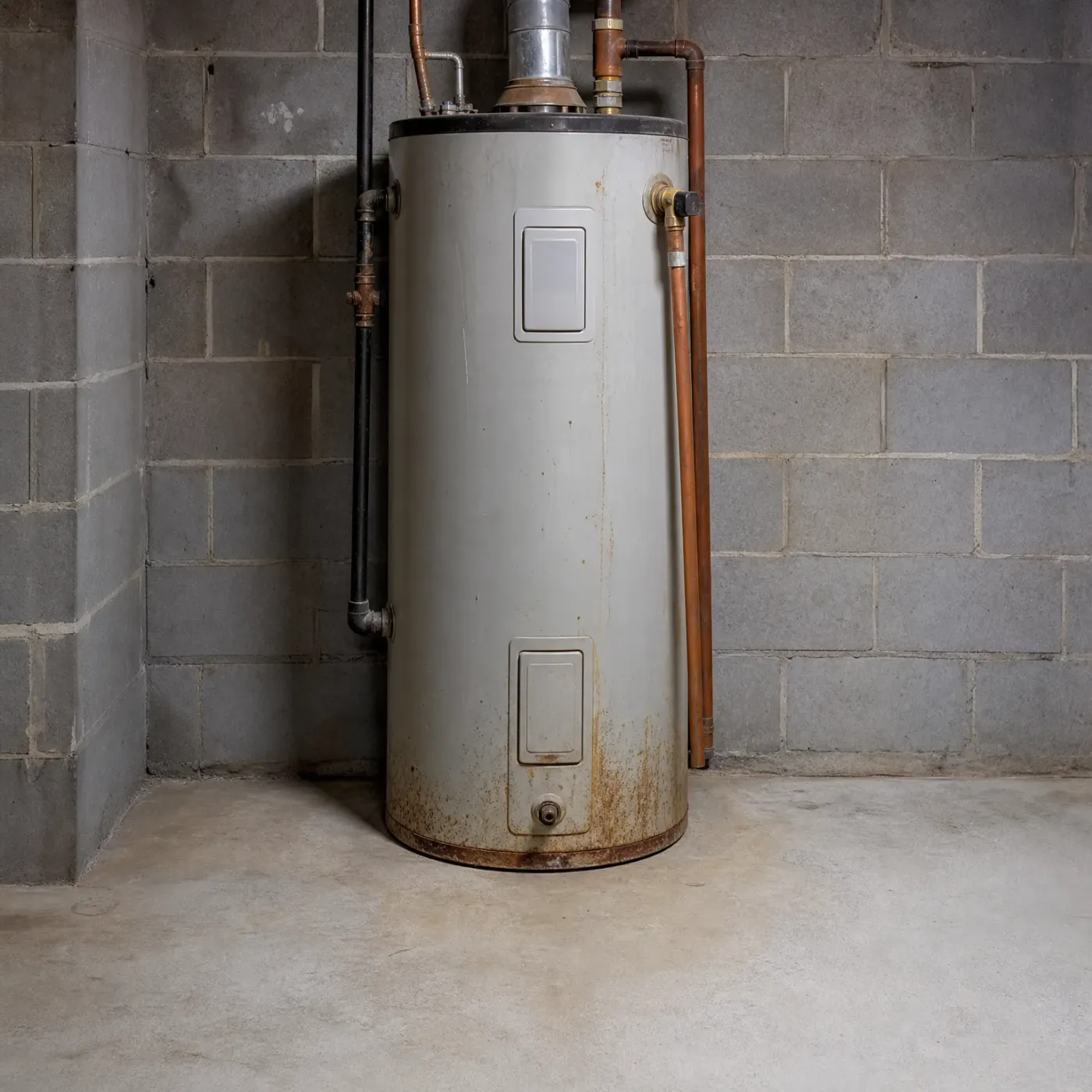
A rust-streaked cylindrical water heater with copper and black metal pipes stands in a concrete-block basement corner on a bare concrete floor.
Rust climbing the seams and pooling at the base means the tank is corroding from the inside and won't hold much longer.

What does a water heater leak mean for a house like yours?

  • 2.29 people per household on average

    Shawnee County households average 2.29 people, so most tanks here run close to their limit most days, with little room to spare when one starts failing.

  • Half the homes here were built by 1972

    Half the homes in Shawnee County were built in 1972 or earlier, old enough that the original gas line and shutoff valve may need a look alongside the tank itself.

  • 68% of homes heat with gas

    68% of homes in the county heat water with gas, so the tank is likely gas-fired, which means a leak near the base needs checking around the burner and flue too.

ACS 2020-2024

Leaks from the top

A leak that starts above the tank usually comes from a fitting, not the tank itself. The cold inlet and hot outlet connections, the pressure relief valve, or the threaded nipples on top can weep at the joint without the tank being at fault. Water running down the side from up high and dripping off the bottom can look like a tank failure when it's really a loose connection or a relief valve doing its job because pressure inside climbed too high. That kind of leak often stops with a part replaced or a fitting tightened, not a new tank.


Leaks from the bottom

Water that's actually coming from underneath the tank is a different problem. It can mean the drain valve near the base isn't sealing, which sometimes just needs a new valve. But if the water is coming from the tank wall itself, low near the floor, that's the steel giving out from corrosion on the inside. There's no fitting to tighten and no valve to swap. Once the tank is leaking from its own body, the only fix is replacing the unit, and that's worth knowing before someone spends time chasing a leak that a new part can't stop.

A woman with shoulder-length graying brown hair in a cream knit cardigan sits in a dark armchair indoors, looking off to the side with a slight smile, with a shelf, window and houseplant blurred behind her.
A woman with her hair in a bun sits wrapped in a beige knitted blanket on a couch, holding a sleeping child against her chest in a warmly lit room with a lamp and houseplant in the background.

No calling every shop in Shawnee County

A leaking water heater does not go on a waiting list. Once you know where the water is coming from, the next step is getting a plumber there to see it firsthand, and that usually means working the phone: finding names, calling each one to ask if they even do this kind of repair, describing the leak over and over, then weighing quotes that aren't quite comparing the same thing. This page sends the details to one licensed plumber working in Topeka and the rest of Shawnee County, someone who sees tank failures and fitting leaks in this area on a regular basis and knows what tends to fail first in a tank that's been running for years. That's one call to make instead of five, and one person who already has the picture before they arrive. With water already on the floor, the time that saves is the part that matters.

A water heater that leaks from the tank won't wait for a weekend. Left alone even a few days, it can soak the subfloor under it and ruin whatever is stored nearby in the garage or closet.

Once the tank itself has failed, the damage to the floor around it is already happening, not something further down the road. Getting a plumber out now is what keeps it from spreading past the water heater itself.

Power here costs 14.90 cents per kilowatt-hour

At 14.90 cents a kilowatt-hour, running a backup space heater or a fan to dry out a closet after a leak won't run up your bill much. If your water heater is electric, that same rate is what you've been paying to heat water all along, leak or no leak.

EIA-861 2025

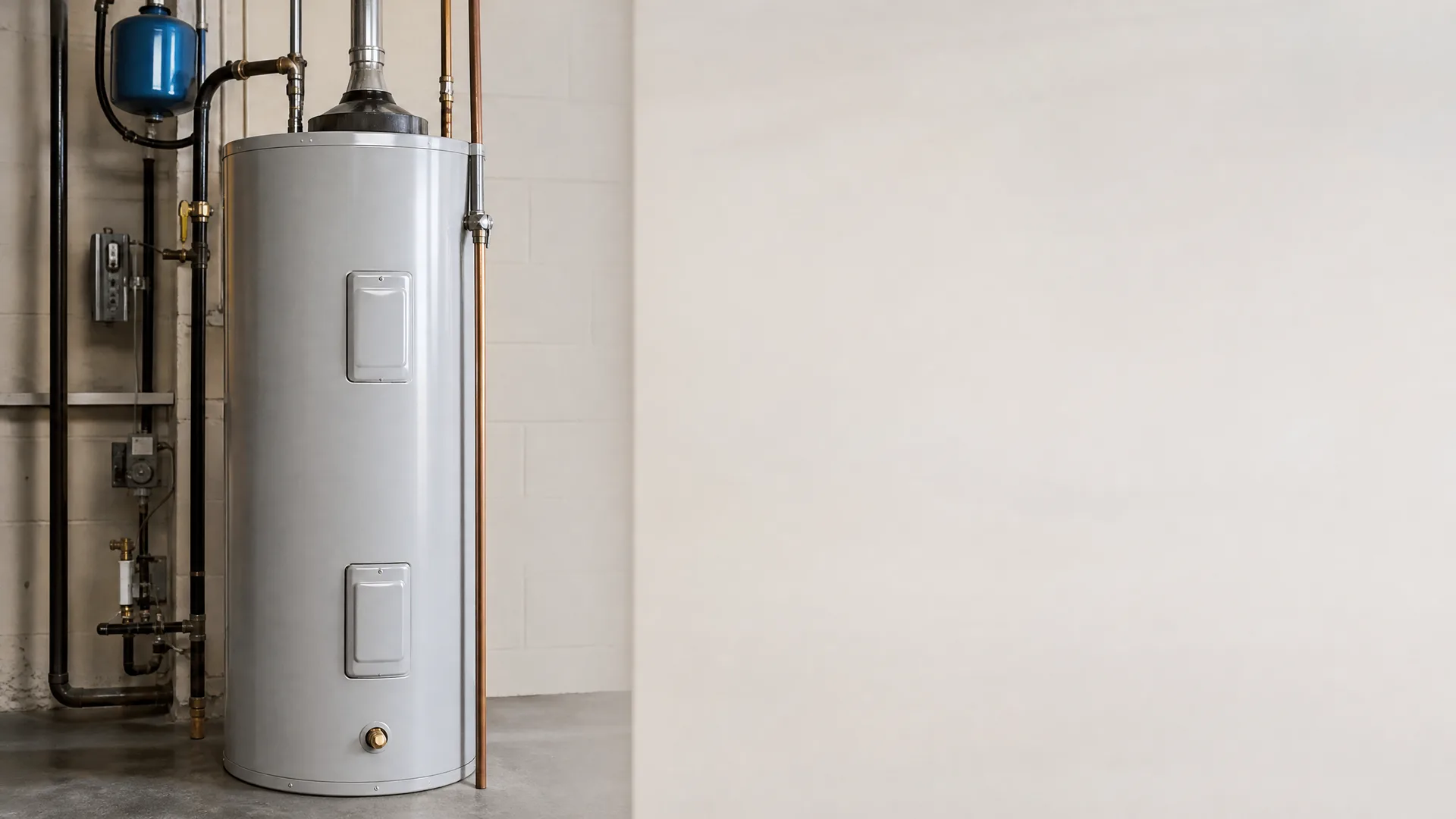
A gray cylindrical water heater with two access panels stands on a concrete floor beside copper and black pipes, a blue expansion tank, and an electrical box against a light wall.

Catch it early

A leak found the day it starts is a small job. The plumber shuts off the water and the power or gas to the tank, confirms where the water is actually coming from, and in many cases can replace a fitting or a valve in one visit. The floor underneath stays dry, nothing in the closet or garage gets ruined, and you're not waiting on a water damage crew on top of a plumber.

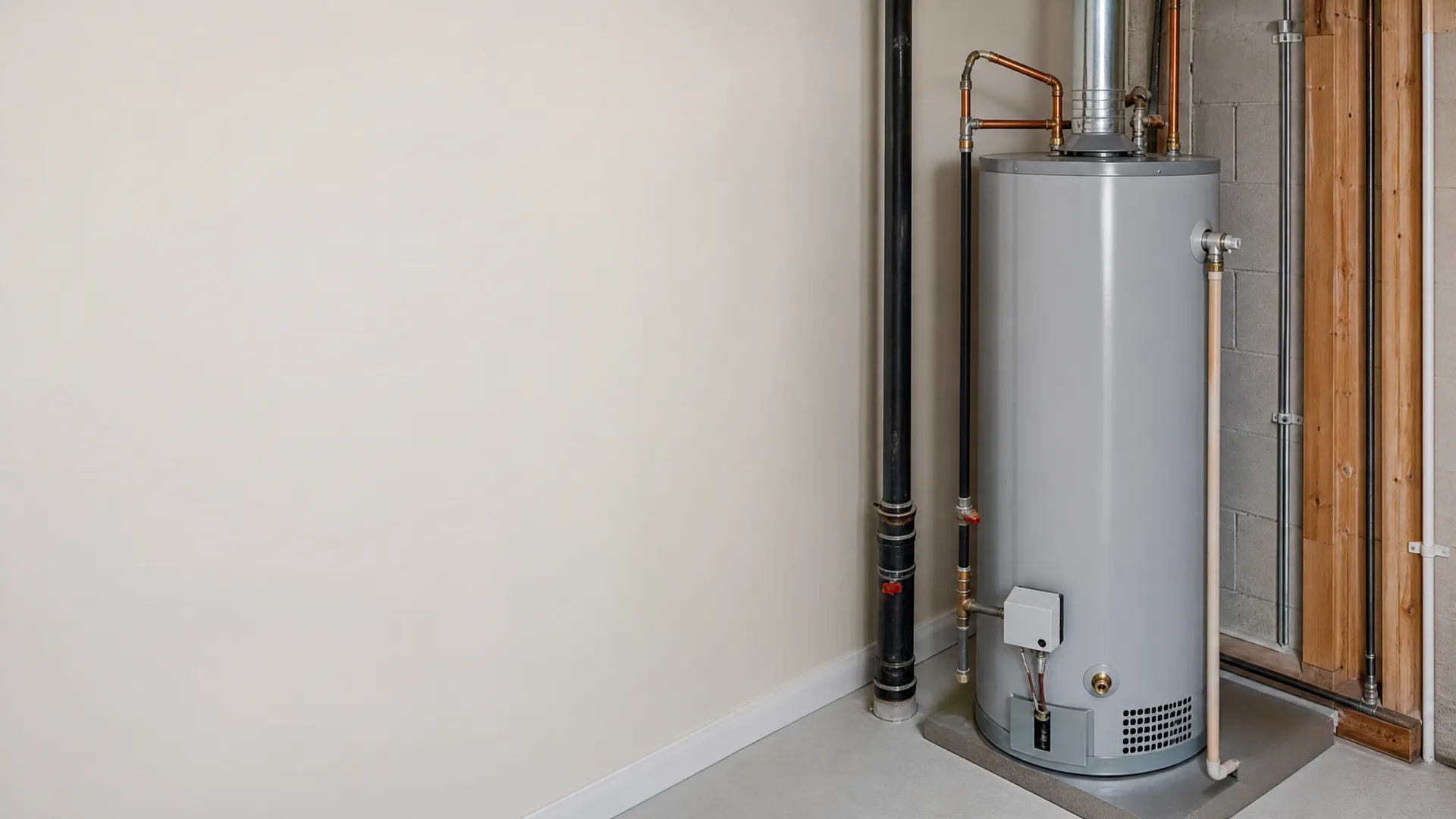
A gray gas water heater with copper and black pipes and a metal flue stands in the corner of a room with a beige wall, concrete block wall, and wood studs.

Wait and it spreads

A leak left for a few days turns into a bigger job. Water works its way under the tank and into the subfloor, and whatever is stored next to the heater, boxes, detergent, tools, gets wet too. By the time a plumber gets there, the work isn't just the tank anymore. It's drying out the floor, checking for soft spots, and sometimes pulling up flooring that soaked through before anyone noticed.

Why is water dripping from the pressure relief valve?

You spotted the drip coming from that little valve on the side or top of the tank, the one with a small pipe running down toward the floor. It's not the same as water pooling underneath from a cracked tank, and it doesn't mean the tank is bad. But it's not nothing either, and you want to know what's actually making it let water out.

It's releasing pressure or heat the tank built up past what it should hold

The pressure relief valve is there to open when the tank gets too hot or the pressure inside climbs too high, letting water out before something worse happens. A valve that drips on its own, with no one touching it, is usually doing that job because the tank is overheating or the pressure has nowhere else to go. Sometimes the valve itself has gone bad and won't seat right anymore, so it leaks even when pressure is normal. A plumber can tell which one it is by checking the tank's temperature setting and the valve itself. Either way, a dripping relief valve isn't something to cap off or ignore, since blocking it removes the one safeguard the tank has.

An older white gas water heater with rust staining and an exposed vertical pipe stands against a concrete block basement wall, with a metal flue above and black vertical pipes to the right.
Before you get your water heater repair
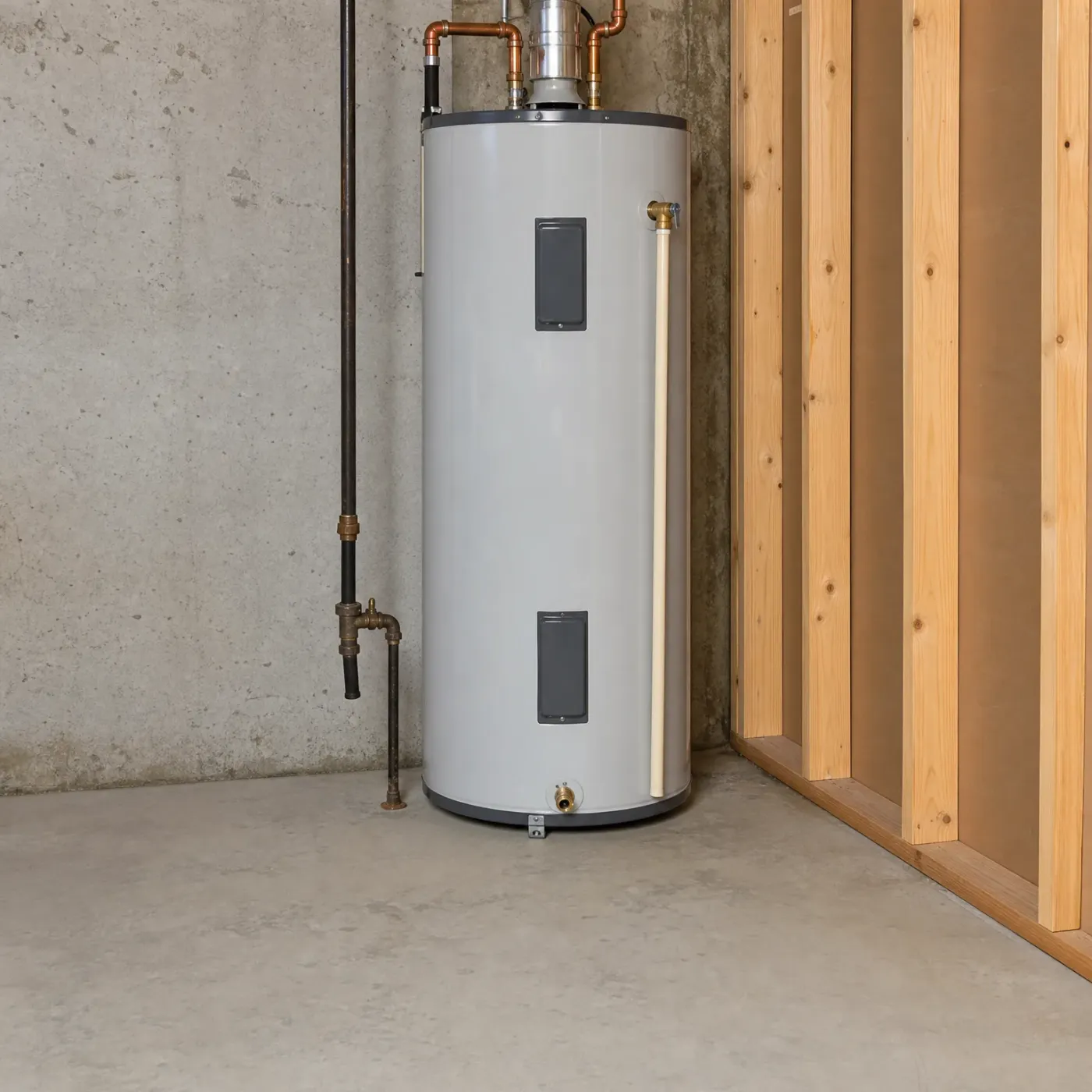
A light gray cylindrical water heater with two access panels stands on a concrete floor against a concrete wall, with copper and black pipes beside it and an unfinished wood stud wall to the right.
After you get your water heater repair
  1. Plumber shuts off the cold water supply line to the tank

  2. Power or gas to the water heater gets cut off next

  3. Tank and fittings get checked to find the leak's source

  4. A pressure test confirms whether the tank itself is holding

A closed silver laptop and a white cup of coffee on a saucer sit on a wooden table in front of a wooden chair, a plain beige wall, a potted leafy plant and a window with greenery outside.

A leaking water heater is a tank or a fitting, and either way it needs eyes on it

Water at the base usually means the tank has failed. Water from above it, dripping off a fitting or the pressure relief valve, often means a part can be swapped and the tank saved. Either way, the only way to know which one you have is to get a plumber there to look at it directly.

That's the part you don't have to do alone. Instead of calling around Topeka asking who works on water heaters and who can actually come out soon, you get matched with one licensed plumber who already knows this equipment and what tends to go wrong with it. You explain the leak once, to the person who's coming to fix it, not to three different companies while you compare who calls back first.

A wooden table holding a stone vase with a bare branch, two stacked books and a small dark bowl, beside a window with green foliage outside and a sofa in the dim background.
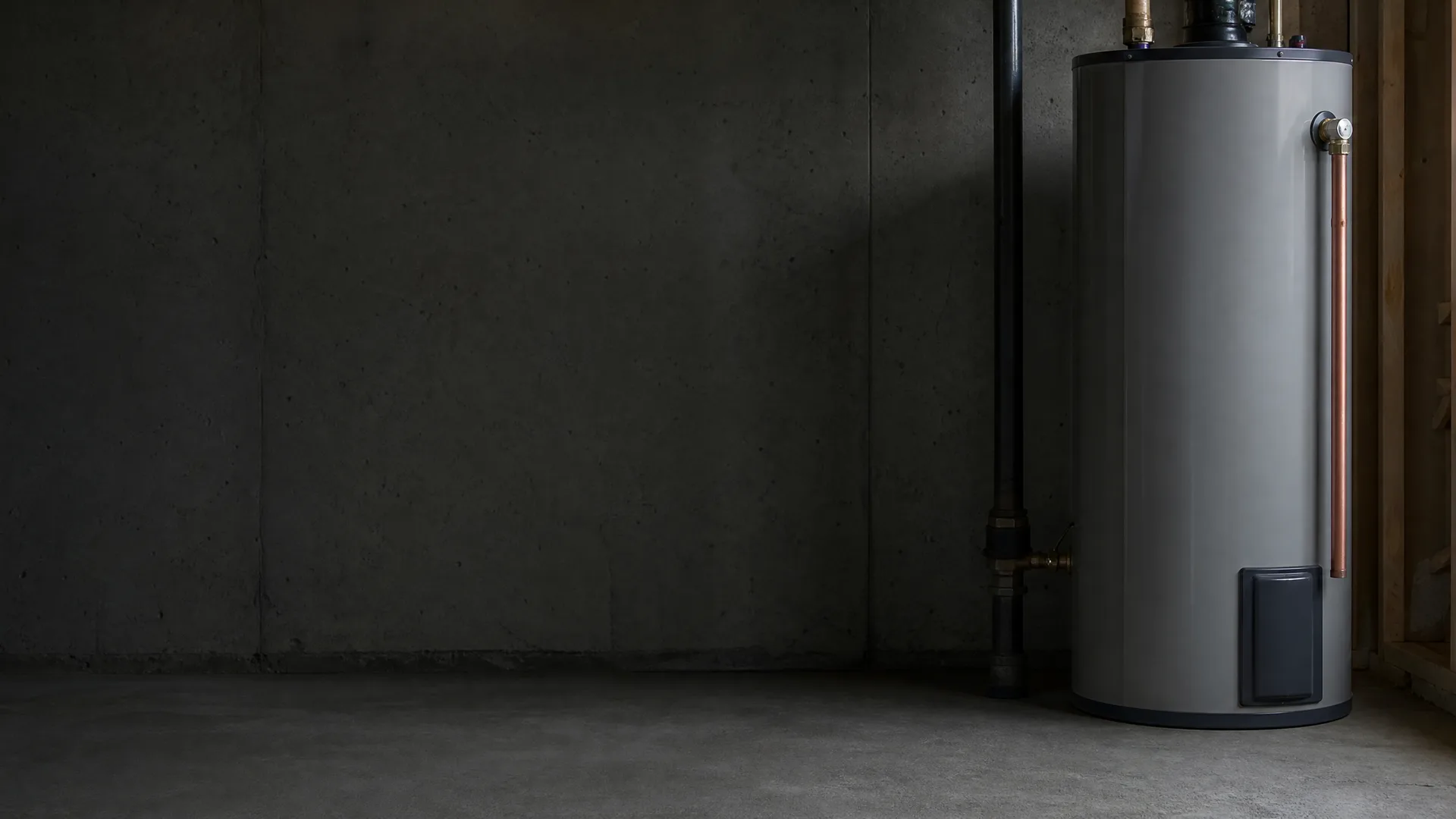
A white and gray water heater with copper piping and a black vent pipe stands against a dark concrete basement wall on a bare concrete floor.

Skip calling around

A licensed pro who works in Shawnee County gets your request.

Step 1 of 3: Equipment