Skip collecting and comparing quotes for the new water heater.
Sizing a water heater for a Kansas home comes down to how many people use it and how many things run at once. A household taking back to back showers in the morning while the dishwasher runs needs more capacity than two people living alone. Gas water heaters are the norm here, and gas recovers faster than electric, so a gas tank doesn't need to be as large to keep up with the same household.
Most homes end up needing a 40 or 50 gallon tank, but a bigger family, a second bathroom, or a tub that takes a long time to fill can push that higher. Get the size wrong and you notice it fast, either in a cold shower at the end of the line or in paying to heat more water than you ever use.
Figuring this out on your own usually means calling a few plumbers, explaining your household and your current setup to each one, and then sitting with a stack of quotes trying to tell what's actually being compared. One plumber bases the recommendation on your square footage, another on a quick guess, and you're left trying to referee it yourself without the background to know who's right.
Submit a request here and it goes to one licensed plumber working in your area, someone who installs water heaters in Kansas homes all year and has a feel for what a household like yours actually draws down in a day. You explain your situation once. No fielding calls from five different companies, no sorting through quotes that all size things differently. Just a straight read on what your home needs, from someone who installs this equipment locally and sees what size actually holds up in homes like yours through a hot Kansas summer and whatever winter brings.
The details below walk through sizing by household size and fixture count. When you're ready to get a number for your specific home, the request form is just below.
A family of four in a Kansas home with two bathrooms usually needs a 50 gallon gas water heater, enough to cover a morning where someone showers while the dishwasher runs. A household of two can often get by with 40 gallons. Gas units recover faster than electric ones, so the tank size matters less than it would otherwise, but running the dishwasher, a shower and the washing machine at the same time will still pull a 40 gallon tank down. If your house came with a smaller tank than your household needs, you likely already know it from the cold showers at the end of the night. Sizing up a little costs more to install but means fewer mornings spent waiting on the tank to catch back up.
Before you get your water heater installationAfter you get your water heater installation
A gas water heater reheats a full tank in about an hour, since the burner sits right under the tank and doesn't depend on the home's electric service. An electric unit with the same gallon rating can take twice that long to recover, because its elements heat water more slowly. That difference is why a 50 gallon gas tank can keep up with back to back showers and a dishwasher in the same morning, while an electric tank that size might run short. If your home heats with gas, as most do here, the recovery rate is doing real work, not just the tank size.
First hour rating matters more
The gallon number on a water heater is its storage size, not what it can actually deliver in an hour. The first hour rating, listed on the energy guide label, adds that storage to how fast the unit recovers, and it's the number that tells you whether a tank keeps up with real mornings. Two 50 gallon water heaters can have different first hour ratings depending on burner size and tank design. When you're comparing units for a two bathroom house, checking that number is worth more than comparing gallons alone.
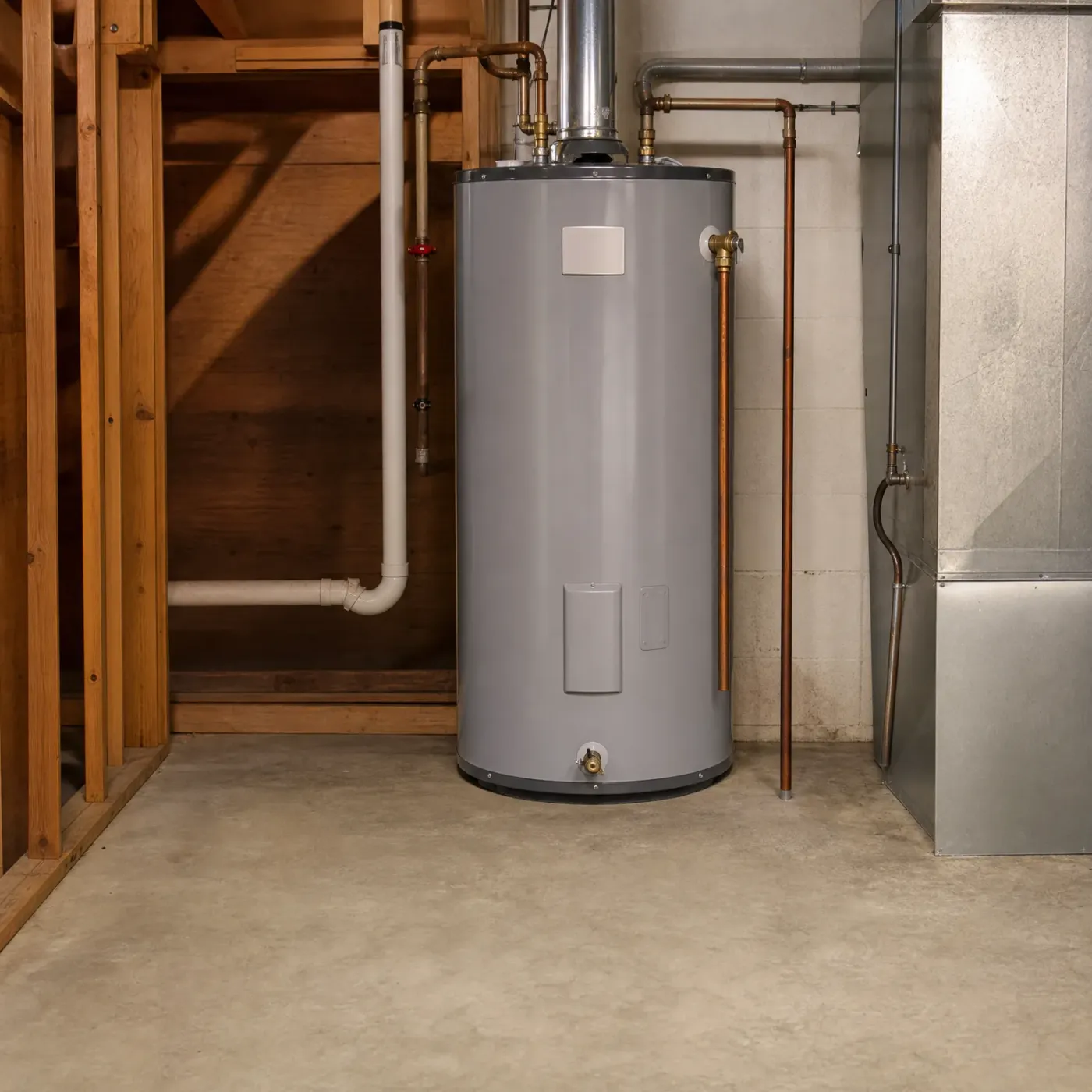
Undersized by 10 gallons
You run out of hot water mid shower, or the dishwasher leaves you cold at the sink. A 40 gallon tank can't keep up once a fourth person joins the morning routine.
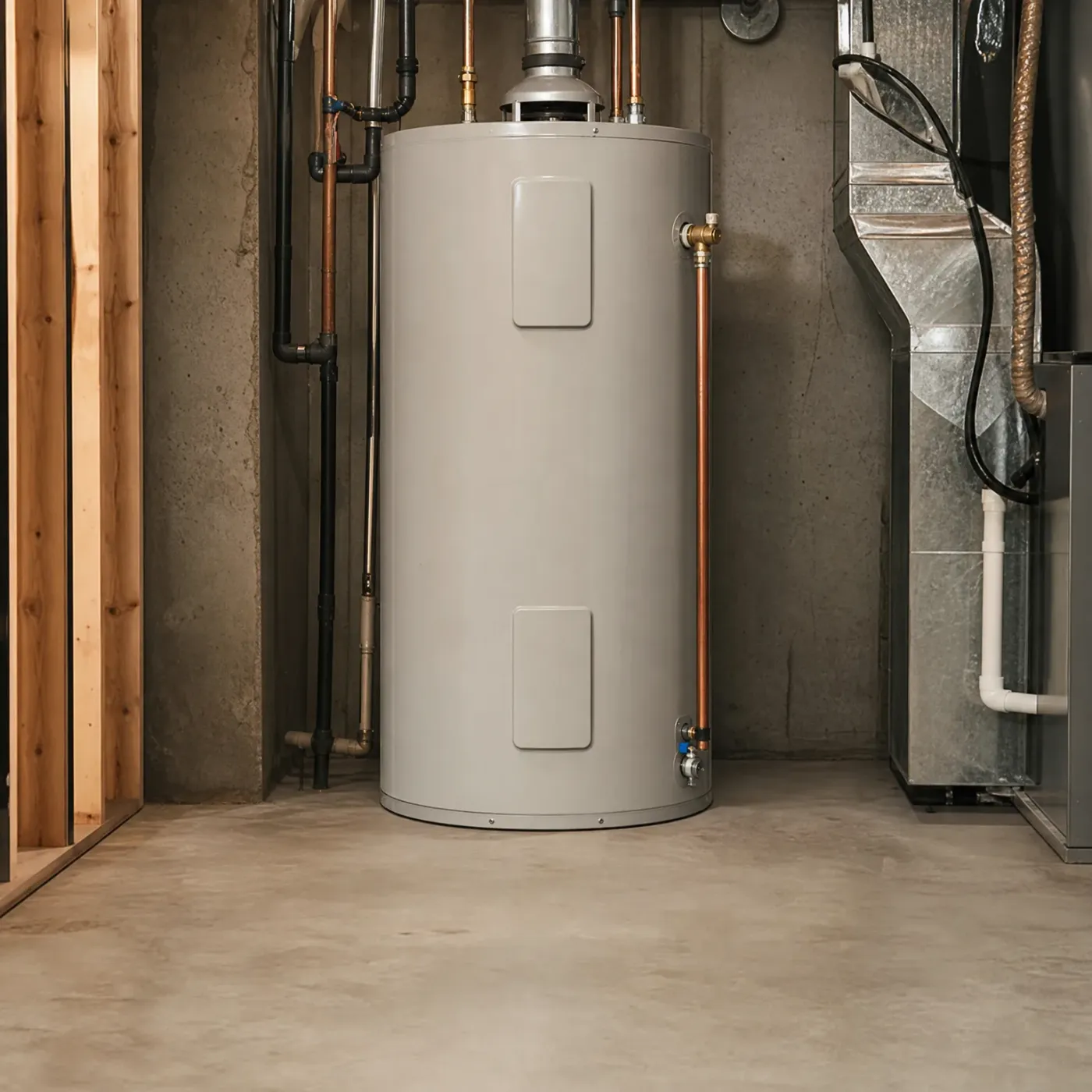
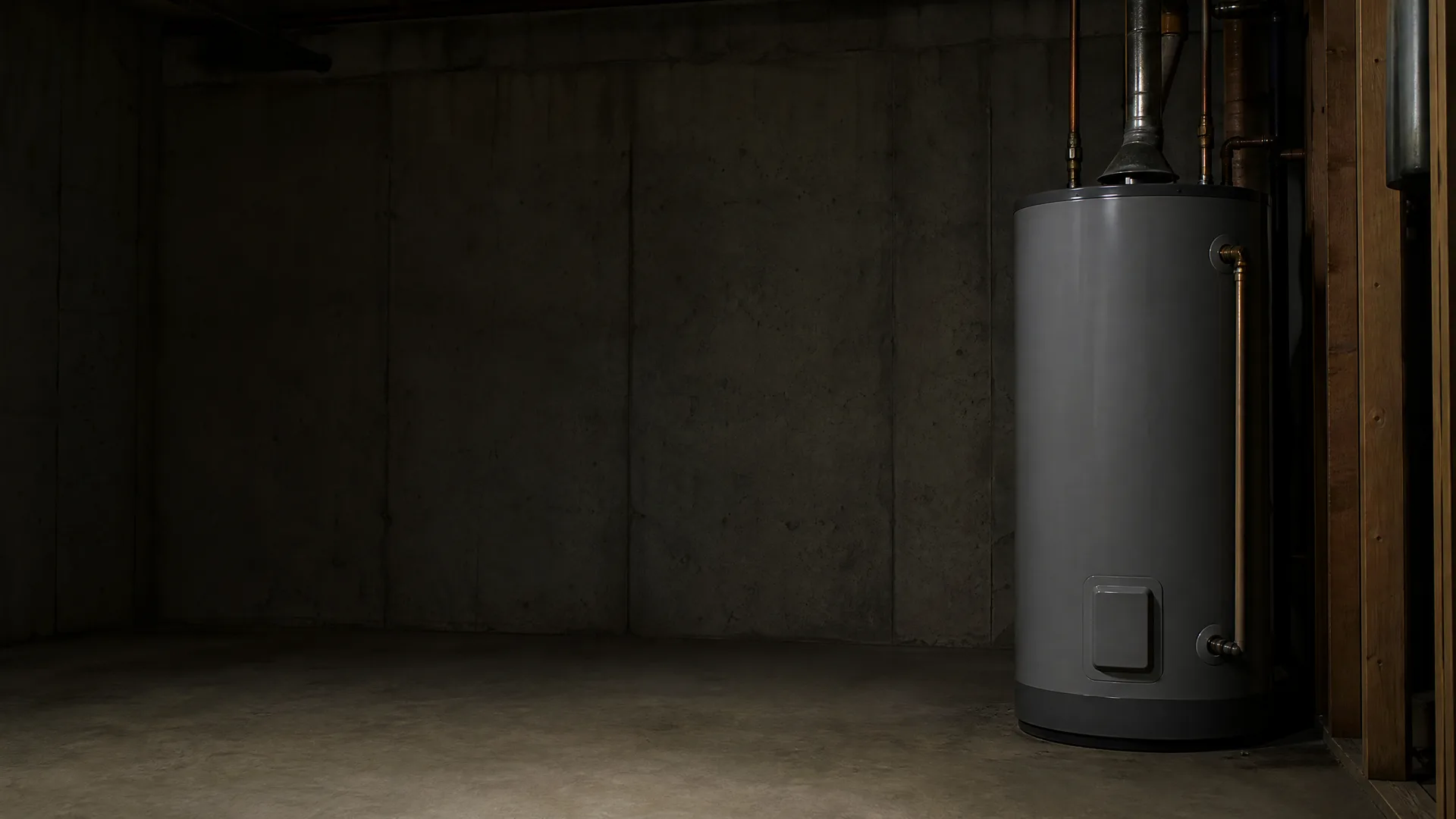
This is what a tank keeps up with the house, the copper and PVC lines feeding hot water where it's needed without a fight. No rust on the jacket, no strain on the connections. A unit sized for the household just does its job in the corner.
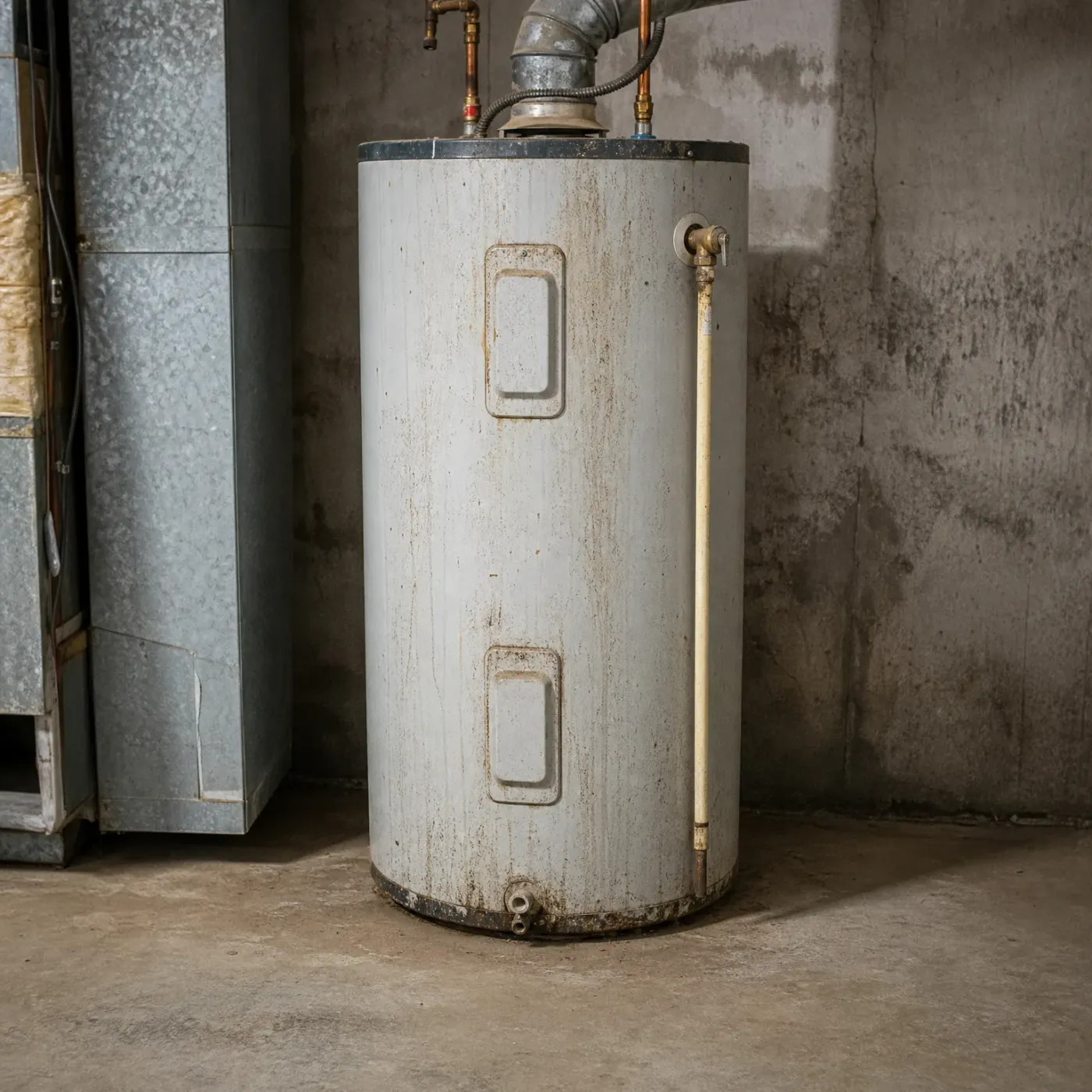
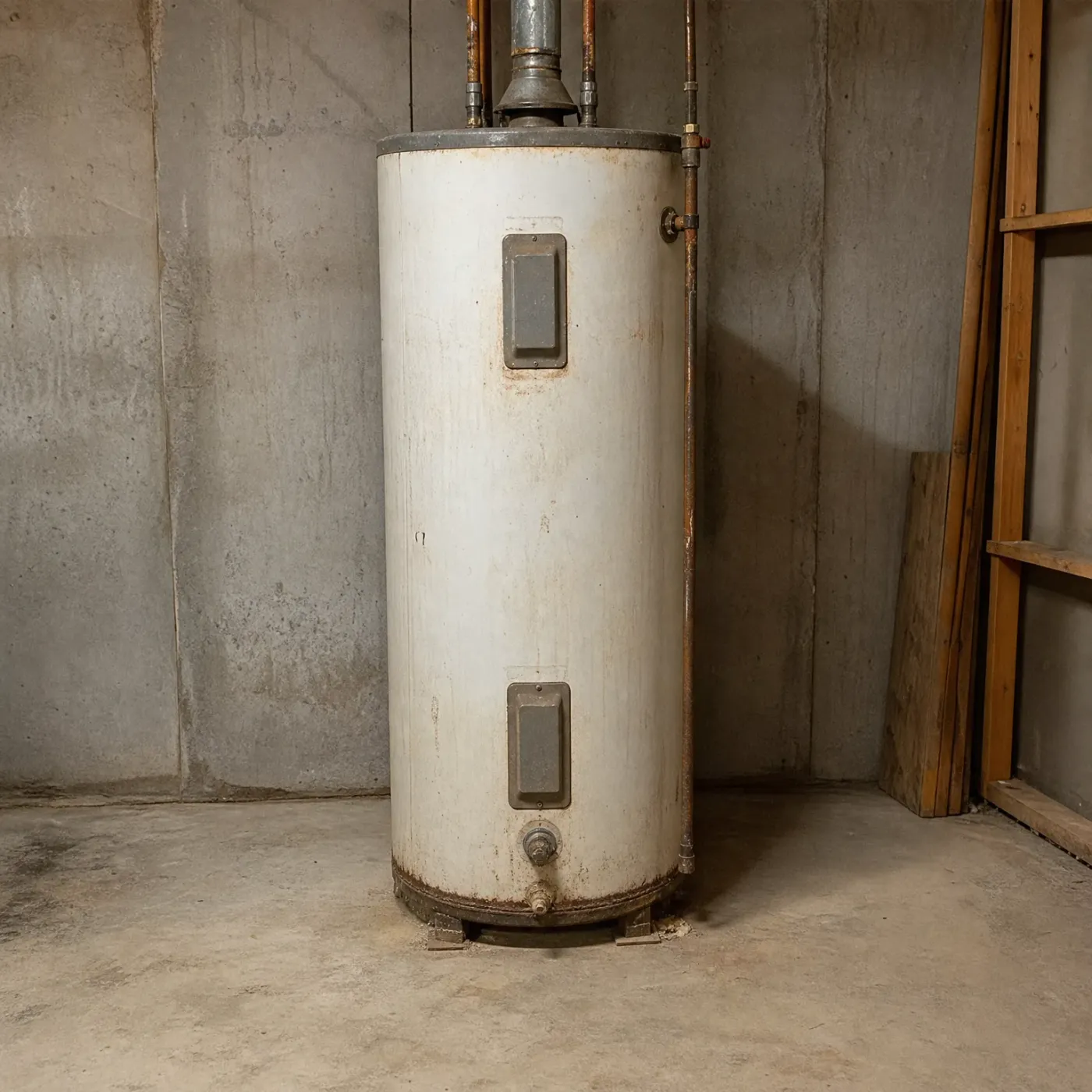
Rusted and running out
Rust like this on the tank usually means the inside is going the same way. Two old thermostat panels on a unit this corroded often point to a water heater near the end of its life, not just one sized wrong for the house.
63.1% of homes statewide heat with gas
Most houses in Kansas run their water heater off the same gas line as the furnace. That means sizing comes down to tank gallons and recovery rate, not the electric panel's capacity. If your gas service already handles a furnace, it can handle a 50 gallon tank without issue.
ACS 2020-2024 5-year B25040
1
Cold water enters the tank through the dip tube first.
2
The gas burner fires beneath the tank to heat it.
3
A thermostat holds the water at the set temperature.
4
Hot water rises and exits through the outlet on top.
A 50 gallon gas water heater covers a Kansas family of four
That's the number this comes down to. Two bathrooms, four people, mornings where someone's in the shower while the dishwasher runs: a 50 gallon tank keeps up. Two people living alone can run 40 gallons and be fine. The gas line that already feeds your furnace will feed a tank that size without any changes to your service.
Getting the install itself is the part that takes time: finding a plumber who's licensed, checking they actually work on water heaters and not just general repairs, explaining your setup more than once while you compare what each one quotes. A local contractor who installs these every week in Kansas homes already knows what a 50 gallon gas unit needs and what usually goes wrong with one. You deal with one contractor, not a handful of callbacks.
No phone calls to make
One installer gets your project, so there's no bidding war over it.