How the thermostat actually reads heat
- The thermostat dial on a gas water heater sits on the outside of the gas valve, not inside the tank.
- A thermocouple or flame sensor reads the pilot and keeps the gas valve from opening if the pilot is out.
- The dip tube pushes incoming cold water to the bottom of the tank so the burner heats fresh water first.
- At 140 degrees, minerals in Kansas water drop out of solution faster and settle as scale on the tank bottom.
- The burner cycles on when the sensing bulb at the bottom of the tank reads a drop in water temperature.
- Sediment buildup over the burner makes the thermostat read the water as hotter than it actually is.
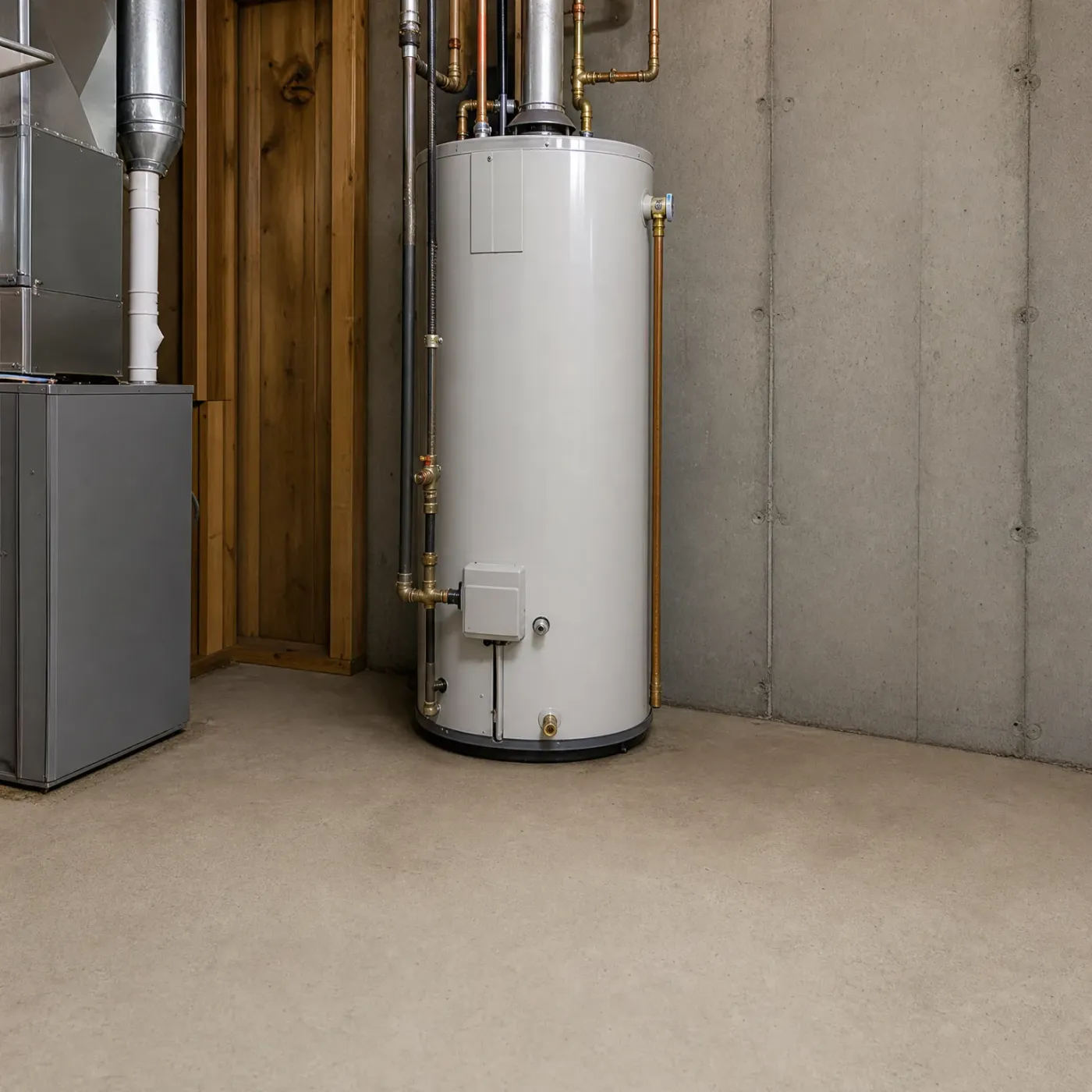
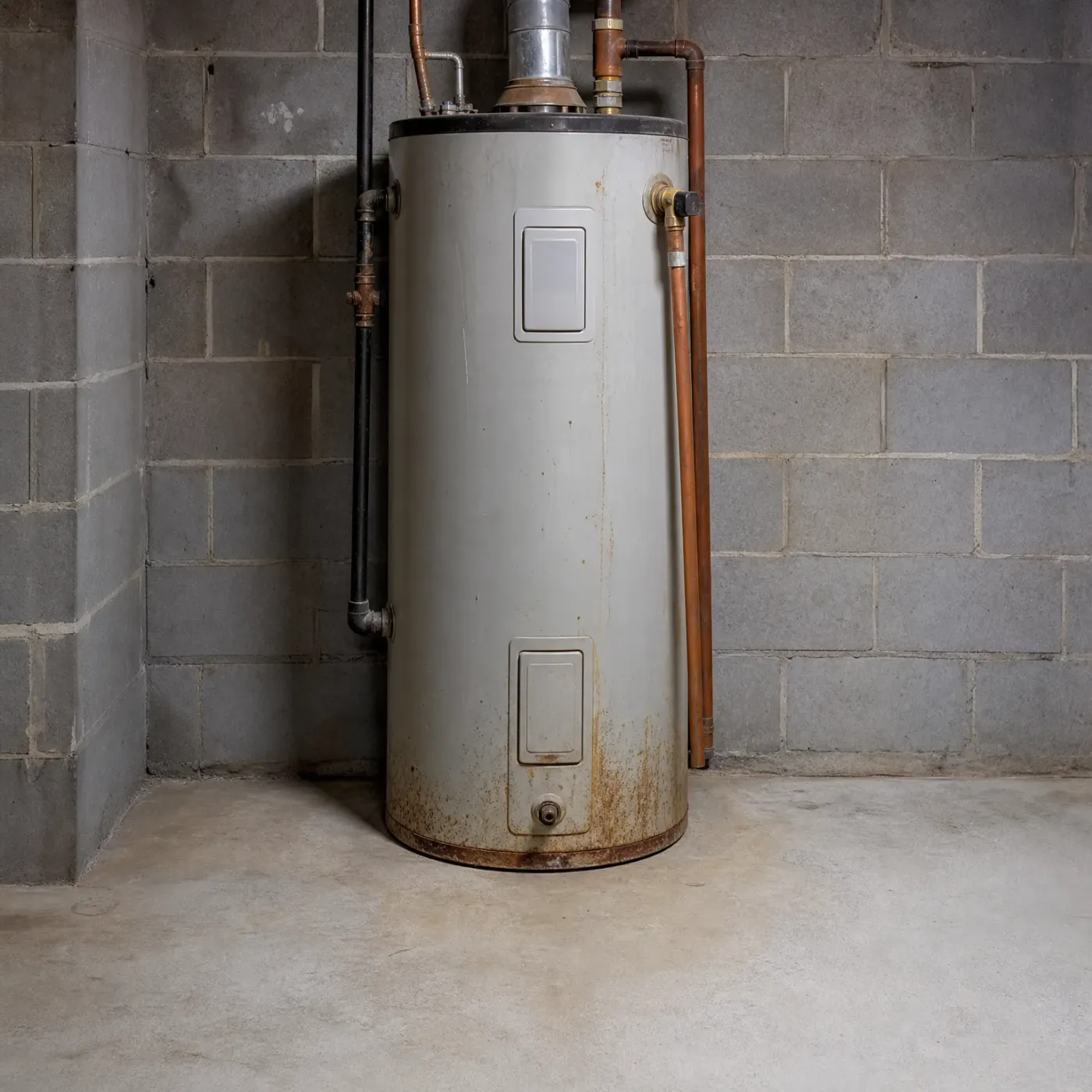
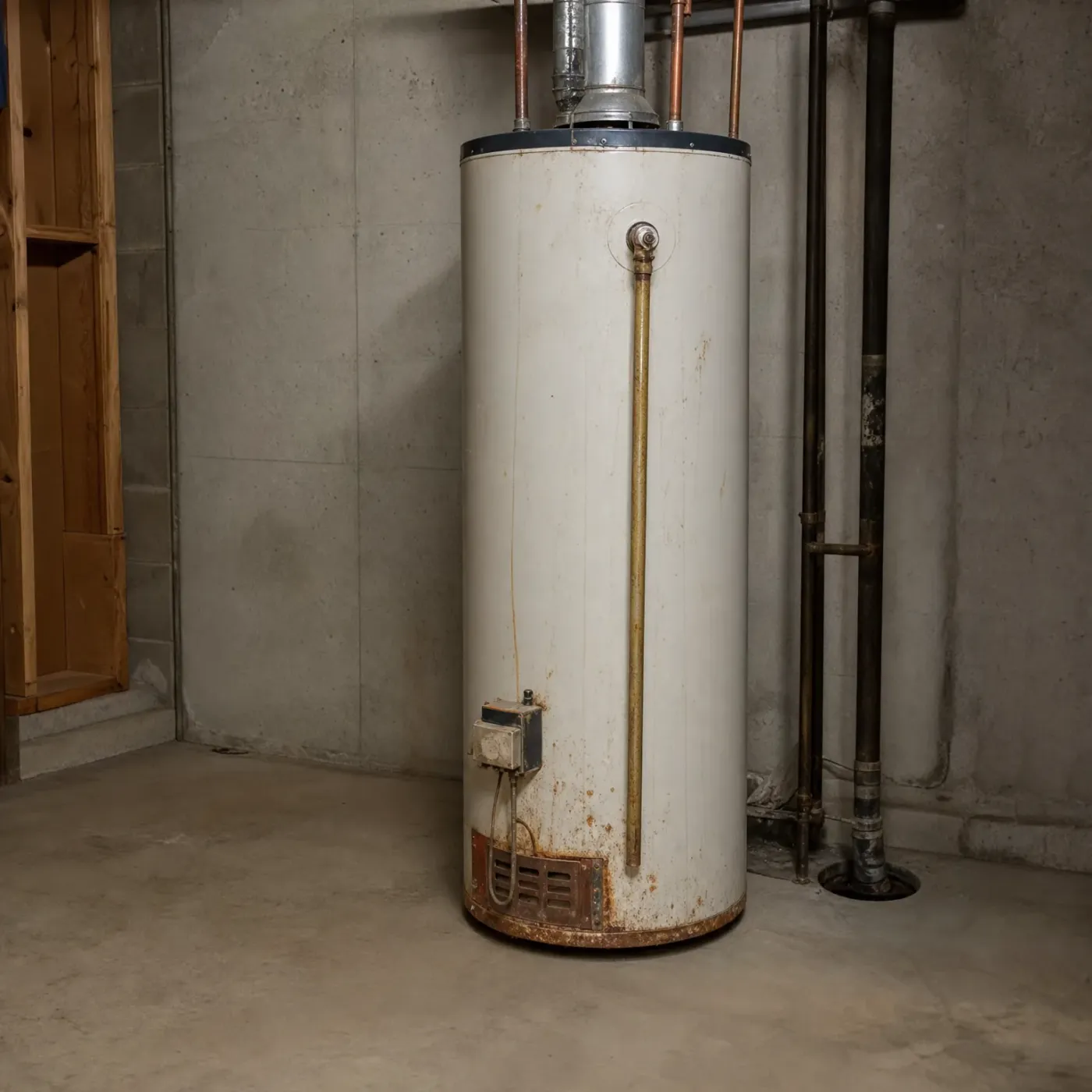
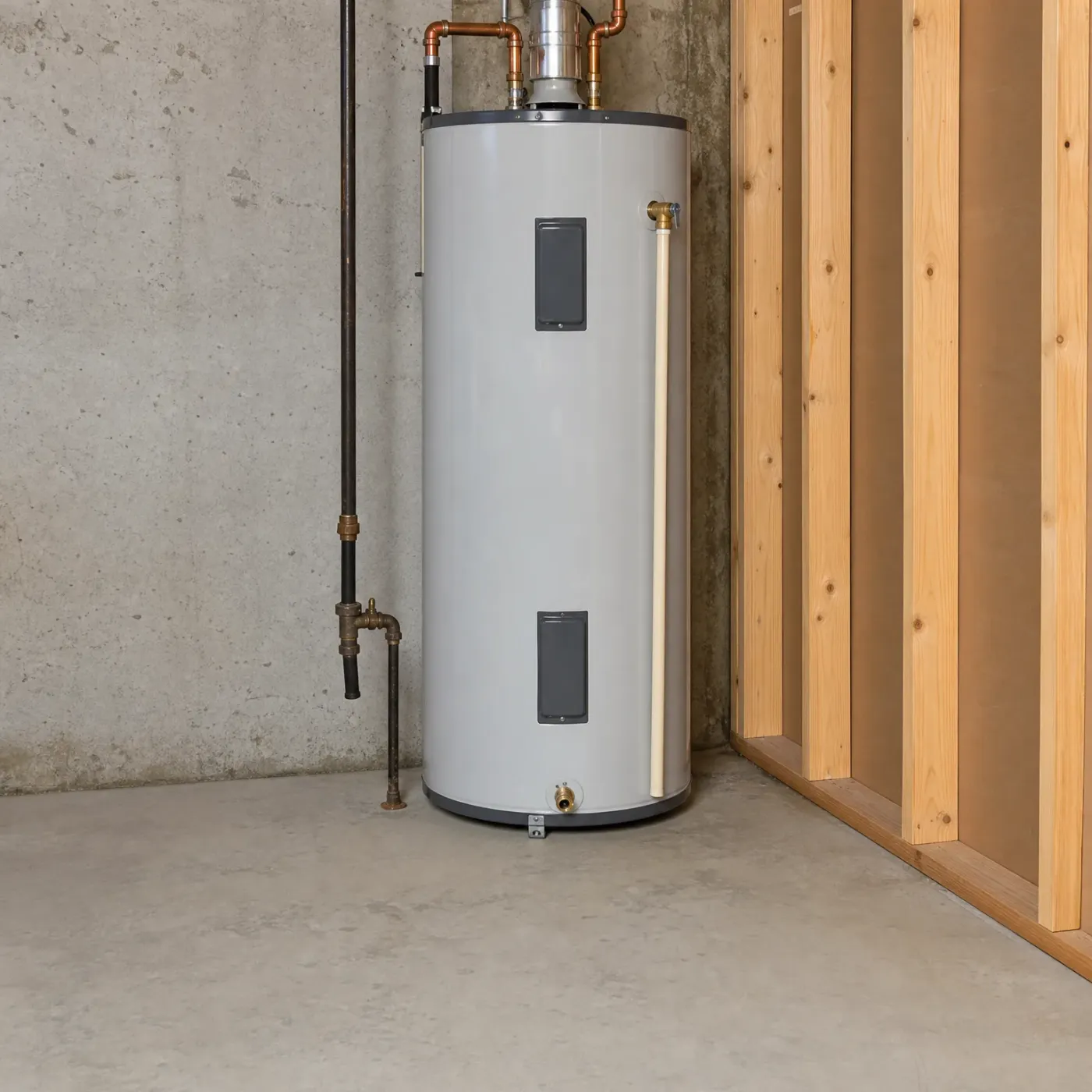
Gas water heaters don't work the way most people picture. The dial you turn sits on the outside of the gas valve, and that valve controls a pilot watched over by a thermocouple or flame sensor. If the pilot goes out, that sensor shuts the gas off rather than letting it flow unlit. Inside the tank, a dip tube carries the incoming cold water down to the bottom, so the burner underneath is always heating fresh water rather than water that's already been through a cycle. A sensing bulb near the bottom reads the temperature of that water and tells the burner when to fire. This is where Kansas water matters. At 140 degrees, the minerals in it come out of solution faster than they do at 120, and they settle on the tank bottom as scale. Once that layer builds up between the burner and the sensing bulb, the thermostat starts reading the water as hotter than it is, because the metal under the bulb is holding heat from the burner rather than from the water itself. That makes the burner shut off early, so the tank holds water that's cooler than the dial says. Setting the dial correctly from the start, at 120, keeps that scale from forming as fast and keeps the sensing bulb reading the water instead of a layer of buildup. It's a small adjustment that works with how the tank is actually built.