Profile view of a bearded man wearing a dark baseball cap and a dark gray T-shirt against a plain off-white background.

When to replace a water heater in Lawrence, KS

Step 1 of 3: Equipment

When should I replace my water heater in Lawrence, KS?

A water heater doesn't give much warning before it fails outright, and by the time it does, you're usually standing in a cold shower or mopping up a utility closet. You're trying to figure out if the one in your house now still has some life left in it, or if it's time to get ahead of it before it picks its own moment.

Replace it at 10 to 12 years, or sooner if it's leaking or struggling to keep up

Most tank water heaters last 10 to 12 years before the tank itself starts to go. That's not a part that gets fixed. Once it rusts through or starts weeping at a seam, the tank is done, and the only real fix is a new one. If yours is in that age range and you're already seeing rust-colored water, a popping sound when it heats, or water pooling at the base, don't wait for it to fail outright. A failed tank in Douglas County usually means a flooded closet or garage floor, and with most homes here running on gas, a straight swap keeps you on the fuel that already heats your home.

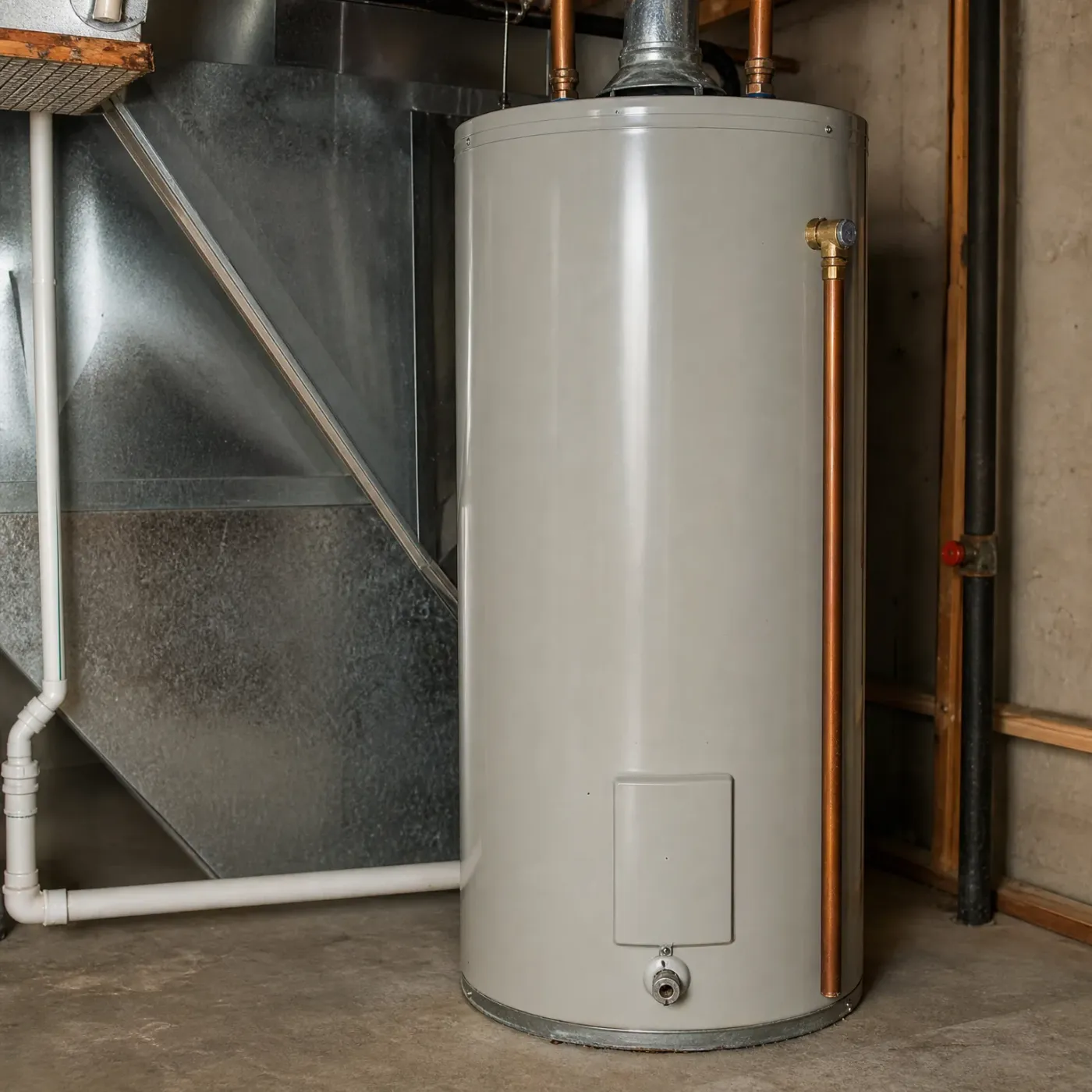
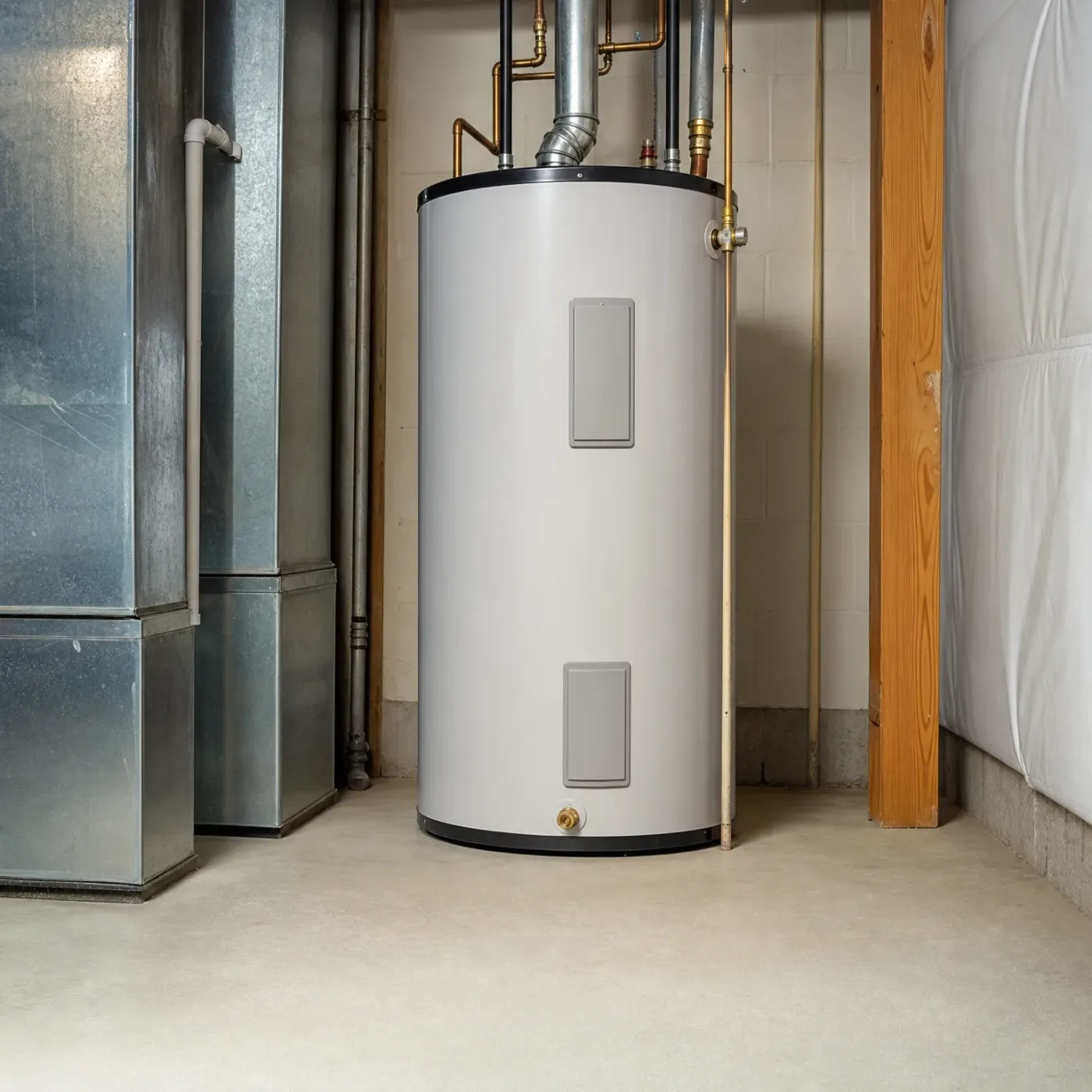
A white cylindrical water heater with two access panels stands on a concrete floor in a basement corner, beside galvanized ductwork, copper and metal pipes, a wooden post, and a concrete block wall.

Still doing its job

If your water heater looks like this, with clean connections and no rust at the fittings, it's still worth keeping. Check the age on the tag. If it's running fine and under ten years old, repairs usually make more sense than replacement.

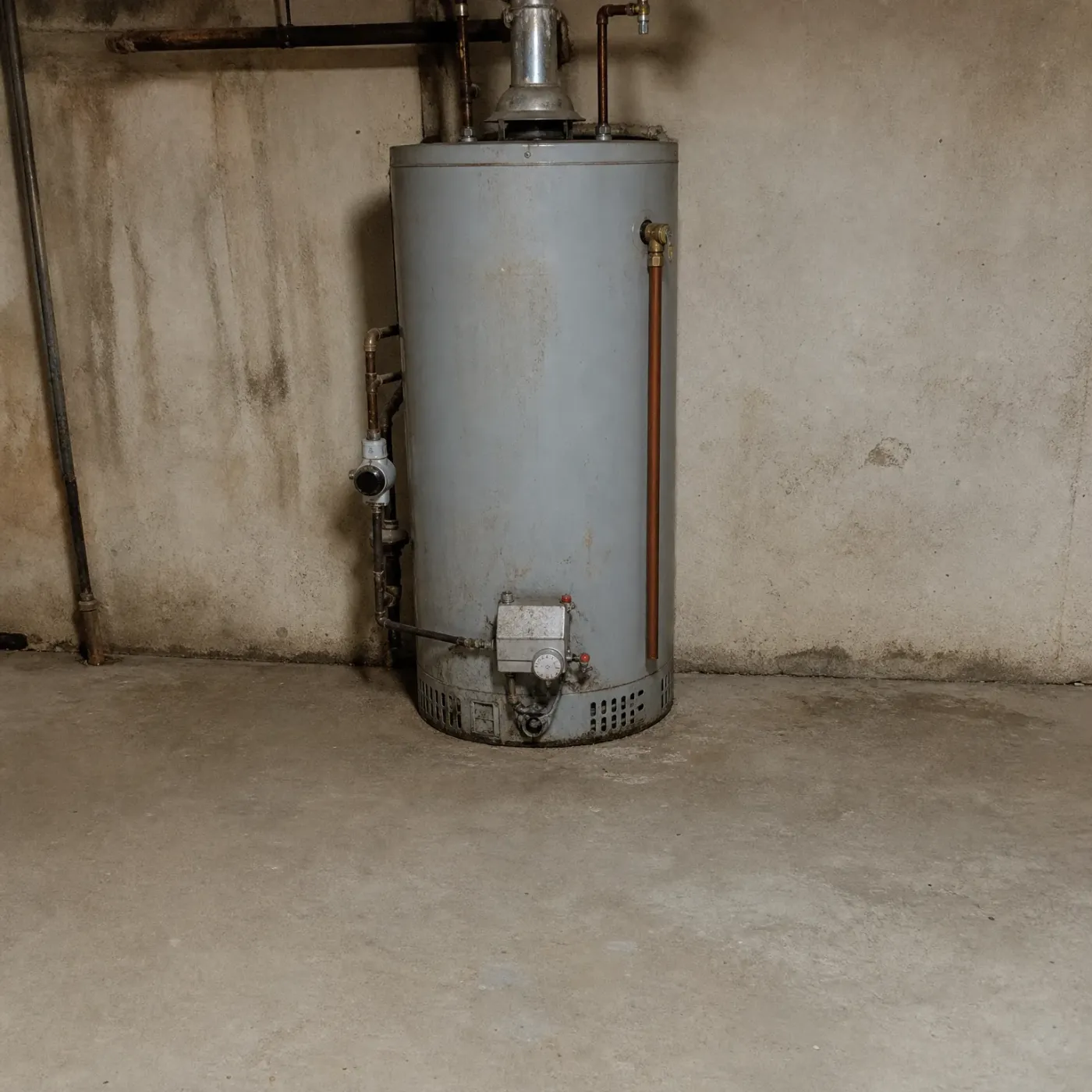
An older gray cylindrical gas water heater with copper and steel piping and a flue, standing on a concrete floor against a stained concrete wall.

Running on borrowed time

A gas water heater against bare concrete with a worn flue vent and an aging gas control unit is telling you something. Rust near the relief valve or at the base means the tank is corroding from the inside. Once that starts, it doesn't stop.

What does your household actually need from a water heater?

  • 2.21 people per household on average

    Most households in the county run 2.21 people. That's the number a standard 40 to 50 gallon tank is sized for, so if yours is failing, you're likely replacing like for like.

  • Half the homes here were built by 1988

    Half the homes in Douglas County were built in 1988 or earlier. A water heater that age is long gone, but the pipes and fittings it connects to may still be original.

  • 59.3% of homes heat with gas

    Gas heats 59.3% of homes here, more than any other fuel. Most replacements end up being gas for gas, which keeps the vent and line work straightforward.

ACS 2020-2024

Why tanks fail from the inside

A water heater tank is glass lined, and that lining has pinholes from the day it's made. The anode rod inside is there to corrode first and protect the steel underneath it. Once the rod is used up, the tank itself starts to rust, and there's no fixing that from outside. You can't patch a leaking tank. Once it's leaking at a seam or at the bottom, the only way forward is a new unit. That's why age on the tag matters more than how the unit looks or sounds. A ten year old heater can still run quiet and hot right up until the day it opens up.

What a slow failure costs you

A failing water heater usually gives small signs before the big one: rusty water, a popping sound from sediment on the bottom, a pilot that won't stay lit. None of those stop the tank from working day to day, so it's easy to put off a decision. But a tank that fails outright in a closet or a basement does damage well beyond the unit itself, and that repair isn't covered by anything related to the heater. Replacing on your schedule, before it fails, means picking the day and the installer instead of dealing with both at once.

A man in a blue sweatshirt reclines with closed eyes in a brown leather armchair in a living room with a bookshelf, houseplant, sofa, window, and a side table holding newspapers and a dark mug.
A bearded man in a gray pullover reclines with closed eyes on a brown leather sofa in a sunlit room with a window, framed picture, potted plant, and a wooden cabinet holding papers and a dark mug.
A man in a gray sweater leans back with closed eyes in a brown leather armchair beside a wooden side table holding a dark mug and a folded newspaper, with bookshelves and a window seat behind him.
A man in a green sweater reclines in an armchair with his eyes closed and a slight smile, beside a window with plants, a small table holding a mug and folded newspaper, and bookshelves behind him.
A beige cylindrical water heater with copper pipes and a brass valve stands on a concrete floor in a basement beside galvanized ductwork, white PVC piping, and a black vertical pipe along a concrete wall.

Let someone else find the pro

Describe the project once instead of to every installer.

Send the form and stop researching installers for the new water heater.

Start one form

There's no charge for the request.

A wooden table in the foreground holds a closed laptop and a ceramic mug of coffee, with a spindle-back wooden chair behind it, a beige wall with paneled wainscoting, a window at left, and a kitchen counter with a cutting board, bowl of fruit and greenery at right.

What a failing tank costs you at home

A rusted tank doesn't stay quiet. It leaks onto the floor of the closet or the garage, and if that closet shares a wall with anything that matters, the water finds it. Carpet, drywall, whatever's stacked nearby. You're not just out a water heater at that point, you're drying out a room too.

If yours is already past ten years old, waiting on it means waiting to see which morning it lets go. That's a different kind of search than planning ahead. Instead of reading tags and comparing tanks on your own time, you're calling around while standing in an inch of water, trying to find someone who can come today, explaining the same thing to three different companies. Send the form now and that search is already done. You pick a time that works, not whatever's left over after an emergency.

Interior corner of a dining room with a round wooden table, a ceramic vase holding olive branches, a dark spindle-back chair near a curtained window, and a sideboard with a lamp against beige walls.
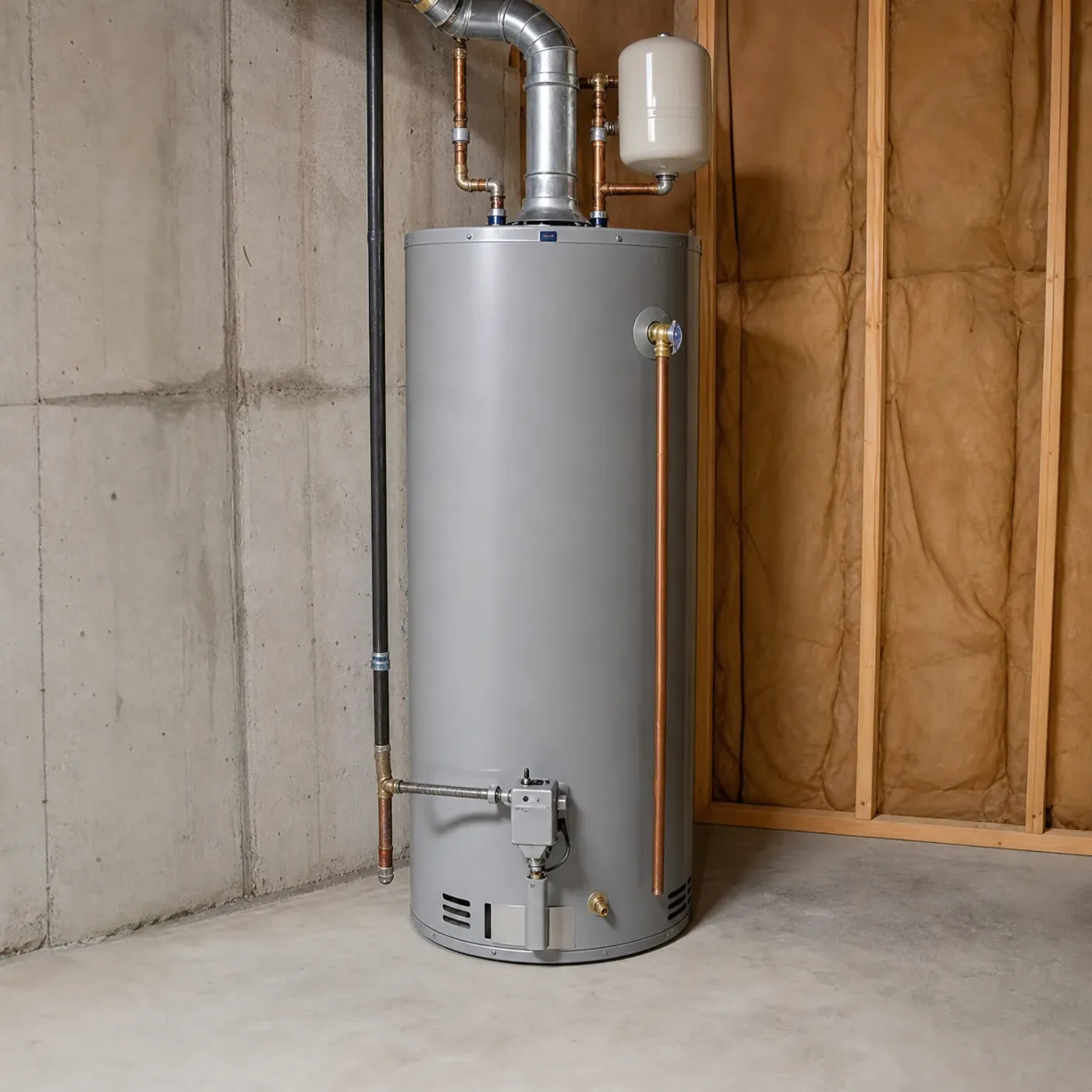
A gray cylindrical gas water heater with copper piping, flue vent, and a small expansion tank stands in a basement corner between a concrete wall and an insulated stud wall.

Working as it should

This is what a water heater looks like when it's doing fine. The fittings are clean, the flue vent sits right, and the expansion tank above it means the system's been set up properly. Pipes like this, copper and black iron, hold up for years without trouble.

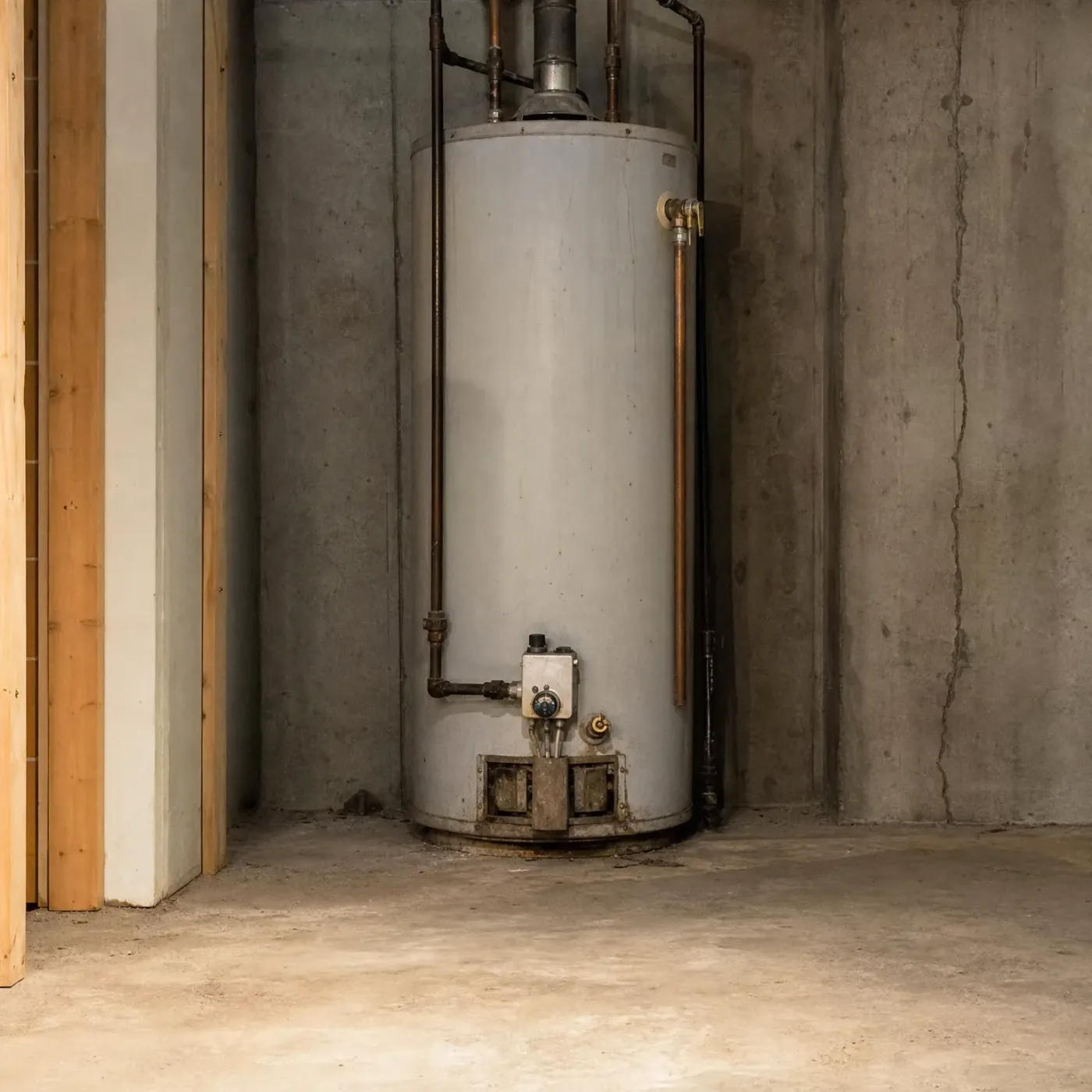
An older gas water heater with copper and black pipes stands in the corner of a bare concrete basement next to a wood-framed partition wall.

Past its point

This tank has been in that corner a long time. The gas control valve at the base is original, and so are the pipes running up from it. Nothing here is actively failing yet, but a tank this old is running on borrowed time, and you won't get much warning when it goes.

Fix It or Replace It

Repair

  • A thermocouple or heating element runs well under what a new water heater costs installed, so if that's the only failure, fixing it makes sense.
  • A tank under ten years old with no rust at the fittings and no water pooling underneath has years of service left in it.
  • If the anode rod still has life in it, a plumber can often replace just the rod and buy the tank several more years.
  • A pressure relief valve that's stuck or dripping is a cheap part to swap and doesn't mean the tank itself is failing.
  • Sediment buildup that's slowing recovery time can sometimes be flushed out instead of replacing the whole unit.

Replace

  • Once rust shows up at the fittings or the tank itself is weeping, the glass lining has already failed and no repair fixes that.
  • A tank past ten to twelve years old is working on borrowed time, even if it hasn't leaked yet.
  • If the anode rod is gone and the tank has started rusting from the inside, you're replacing the unit, not the part.
  • A unit that can't keep up with your household anymore, running cold halfway through a shower, often means it's undersized or failing, not just due for a tune-up.
  • Repeated repairs on the same tank inside a year or two usually cost more over time than putting in a new one.
  • A tank that's already leaked once, even a small amount, is telling you where it's headed next.
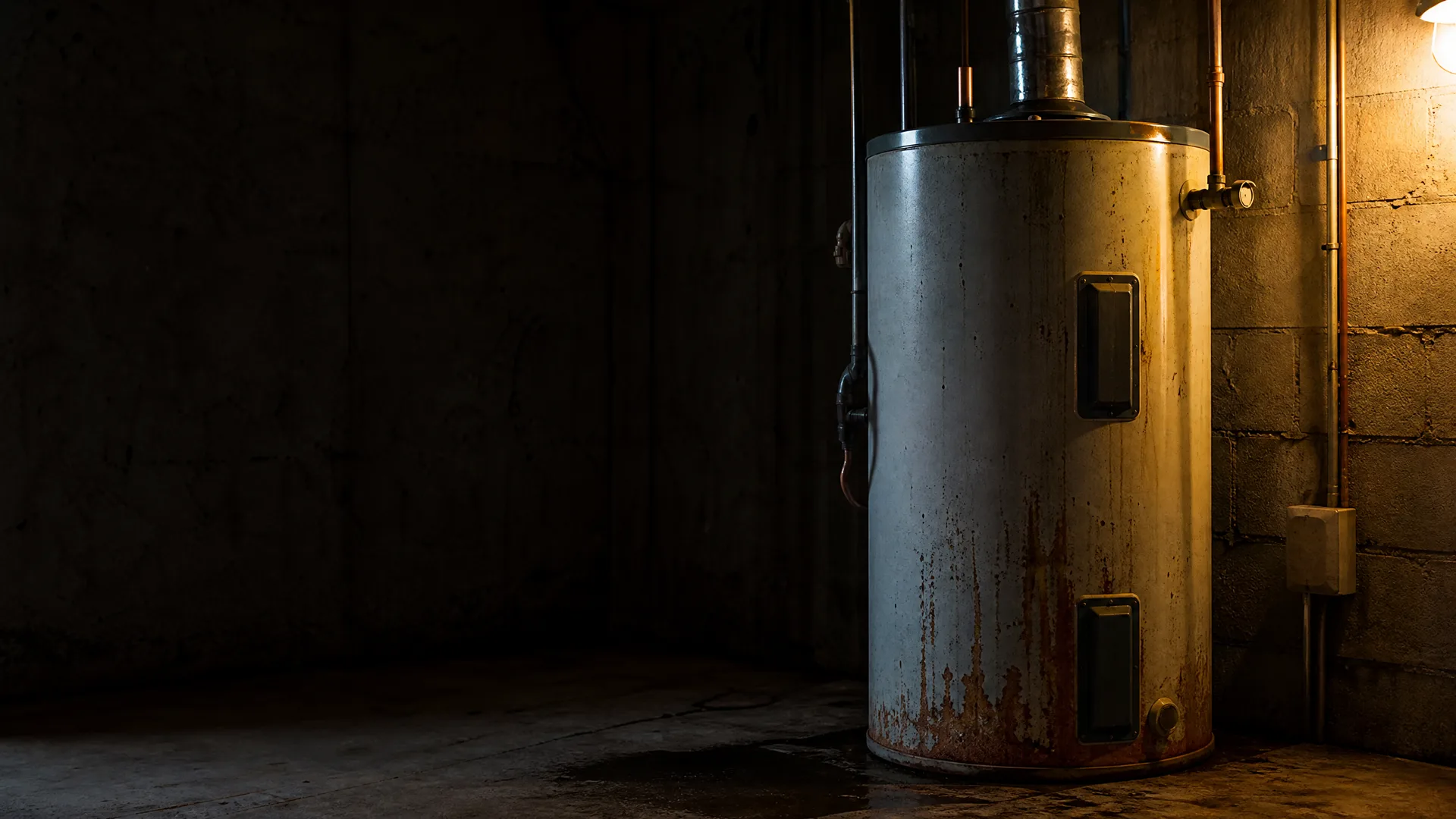
A rusty cylindrical water heater with copper pipes and a flue stands against a concrete block wall in a dim basement, lit by a single bare bulb at the right.

It's past seven on a weeknight and you're down in the utility room looking for a breaker. The tank's against the wall where it's always been, and the light from the bare bulb catches it at an angle you don't usually see. There's rust at the base, streaked down over the drain valve and onto the concrete, a dry stain that's been there longer than you've noticed. You crouch down and touch the floor near it. Dry tonight. You think about the load of towels going in tomorrow morning, whether the water will still be hot by the time it's your turn in the shower, and whether this is the week you finally call someone before it picks the morning for you.

Power here costs 14.77 cents per kilowatt-hour

At 14.77 cents per kilowatt-hour, an electric water heater here is cheaper to run than in most places that pay more. If yours runs on electric and is still in good shape, that works in your favor. If gas makes more sense for your home, a contractor can tell you which fits your setup better.

EIA-861 2025

A water heater tells you where it stands if you know what to check. Clean fittings and a tank under ten years old mean you likely have years left. Rust at the base, a tank past ten or twelve years, or water pooling underneath means it's time to plan the replacement instead of waiting for the failure. Most homes in Lawrence and the rest of Douglas County are set up for a straightforward swap, gas or electric, same size tank. Once you know which side of that line you're on, the only work left is finding someone licensed to do the install, pricing it out, and getting on a schedule before winter makes a cold shower a daily problem instead of a one-time scare. That's the part that usually eats an evening or two, calling around, explaining the same thing to each one, waiting on quotes to compare. Send the form and that part is done. You'll know where you stand, and you won't be the one tracking down who can do the work.

A curving paver walkway runs alongside a house with beige lap siding and a white-trimmed window, bordered by low shrubs, grassy plants, and trees in sunlight.
A dark-framed casement window with divided upper panes set in a stucco wall beside a stone-clad section, with hydrangeas, hostas and trimmed shrubs in a mulched bed above a lawn.
White horizontal lap siding wall with a single six-pane double-hung window, above a mulched bed of hydrangea shrubs with browning blooms, bordered by mown grass in low sunlight.
Interior corner with tan plaster walls, a potted olive tree in a large terracotta urn beside a floor-to-ceiling window, and a wooden bench with a beige cushion on a herringbone brick floor partly covered by a woven jute rug.
A wooden bench beneath a window holds a green linen cushion and a fringed cream throw, with a woven basket stored underneath on a wood plank floor.

One request and it's handed off

Skip collecting and comparing quotes for the new water heater.

Skip calling around

You only hire the pro if you want to.