Explain the job once and skip repeating it on every call.
Lukewarm water in Kansas usually means the water heater is losing a fight it used to win. In summer, when everyone in the house showers more and the dishwasher runs more, a heater that's slipping shows it fastest. Most homes here run gas, and a gas water heater that can't keep up is often down to one part: the thermocouple, the gas valve, or a burner that isn't lighting the way it should. Sediment sitting in the tank can do it too, insulating the water from the heat instead of letting it through.
Figuring out which one it is from your kitchen table is hard. Figuring out who to call about it shouldn't be. You could spend an evening searching contractor names, reading reviews that don't say much, calling two or three places and explaining the same thing each time: the water never gets hot, or it does and then runs out fast, or it's warm but never actually hot. Then you wait for quotes to trickle in and try to compare them against each other with no way to know if they're even looking at the same problem.
This page skips that. You tell it what's happening once, and it goes to a contractor who works on water heaters in Kansas as a matter of course, someone who's seen what the sediment and the gas lines in homes around here tend to do to a tank over time. One contractor gets your request, not five, so you're not fielding calls all afternoon from companies competing for the job. You get someone local who already knows what usually fails first and can tell you quickly if it's the thermocouple, the valve, or something further along.
From here, the button takes you the rest of the way.
Why is my hot water lukewarm instead of hot?
You turn on the tap expecting hot water and get something in between. It's not cold, not really hot either, and it's been doing this for a while now. With more showers running and the dishwasher going most nights this time of year, you've noticed it more, and you want to know what's actually causing it before it gets worse or just quits.
A failing heating element or burner can't keep up with demand anymore
On a gas water heater, lukewarm water usually means the burner isn't staying lit long enough or the thermocouple is reading wrong and cutting the gas early. On an electric one, it's often a heating element that's partly burned out, still working but not enough to bring a full tank up to temperature. Either way, the tank is trying to keep pace with more demand than it can produce. A full tank's worth of showers and a running dishwasher in the same stretch will expose a heater that's already struggling, which is why it shows up now instead of some quieter week. It's rarely something that fixes itself.
What a bad thermocouple or sensor does
A gas water heater reads the pilot or ignition flame before it lets the main burner run. If that sensor is dirty or failing, it cuts the burner short or won't let it fire long enough to heat a full tank. You get water that warms partway, then stalls. A contractor checks this part first because it's a common reason a tank heats inconsistently rather than not at all.
Sediment sitting between fire and water
Gas burners heat the tank from below. Over time, minerals in the water settle on the bottom of the tank and build up there. That layer sits between the flame and the water, so heat has to pass through it before it reaches anything you can use. A tank with a thick layer takes longer to recover between uses and may never get the water as hot as the thermostat is set for.
63.1% of homes statewide heat with gas
Most houses in Kansas run a gas water heater, not electric. That means the usual suspects are the pilot, the thermocouple or igniter, and the gas valve, not a heating element or breaker. If yours has been running lukewarm, those gas-side parts are where a contractor will look first.
Asking costs nothing, and the choice to hire stays yours.
A gas water heater that's slowly failing usually still gives you something. The burner lights, the tank heats some, and you get water that's warm but not hot, which is why it's easy to put off calling anyone about it.
Waiting rarely fixes a thermocouple or gas valve on its own. Most of the time the tank keeps underperforming or gets worse until a licensed contractor checks the burner and the gas-side parts that are likely behind it.
Hot water draws off the top of the tank while cold comes in through a dip tube near the bottom, and if that tube is cracked or sitting too high, the two mix before the water ever reaches your tap. Sediment is another quiet cause. It settles on the bottom of a gas tank over time and sits between the burner and the water like a layer of insulation, so the burner fires normally but the heat doesn't transfer the way it should. The thermostat matters too, since it's what tells the gas valve how wide to open, and one that's drifted will call for a smaller flame than your dial shows. Sometimes the tank itself isn't the problem. Two showers back to back, or a shower running while the dishwasher's going, can pull more hot water than the heater recovers in time, especially with summer adding more loads to the day. And if you've already swapped the anode rod hoping for warmer water, that part controls corrosion, not temperature, so it was never going to fix this.
What's Actually Happening Inside the Tank
Cold water enters near the bottom of the tank through a dip tube while hot water draws off the top, so a short or bent dip tube lets incoming cold mix straight into your hot supply.
Sediment settling on the bottom of a gas tank acts like a layer of insulation between the burner and the water, so the burner runs but the heat doesn't reach the tank the way it should.
The gas valve only opens as wide as the thermostat tells it to, and a thermostat that's drifted or failed will call for a lower flame than your setting shows.
Two people running hot water at once, back to back showers or a shower during a dishwasher cycle, can outpace recovery even on a heater that's otherwise working fine.
A tank sized for a smaller household runs out of stored hot water faster once summer adds more loads a day, and what's left coming out of the tap reads as lukewarm.
The anode rod inside the tank has nothing to do with temperature, so a reader who's replaced one expecting warmer water is ruling out the wrong part first.
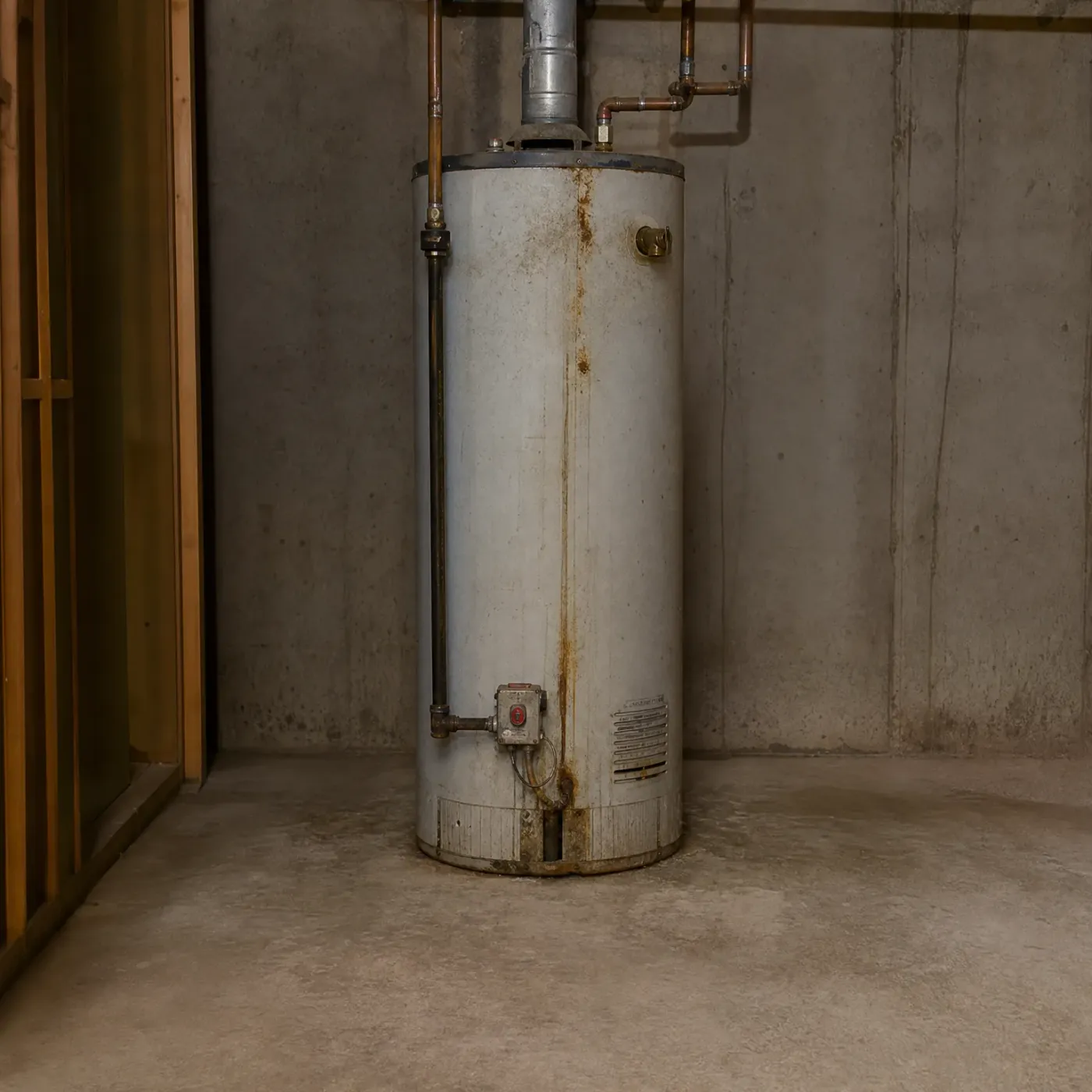
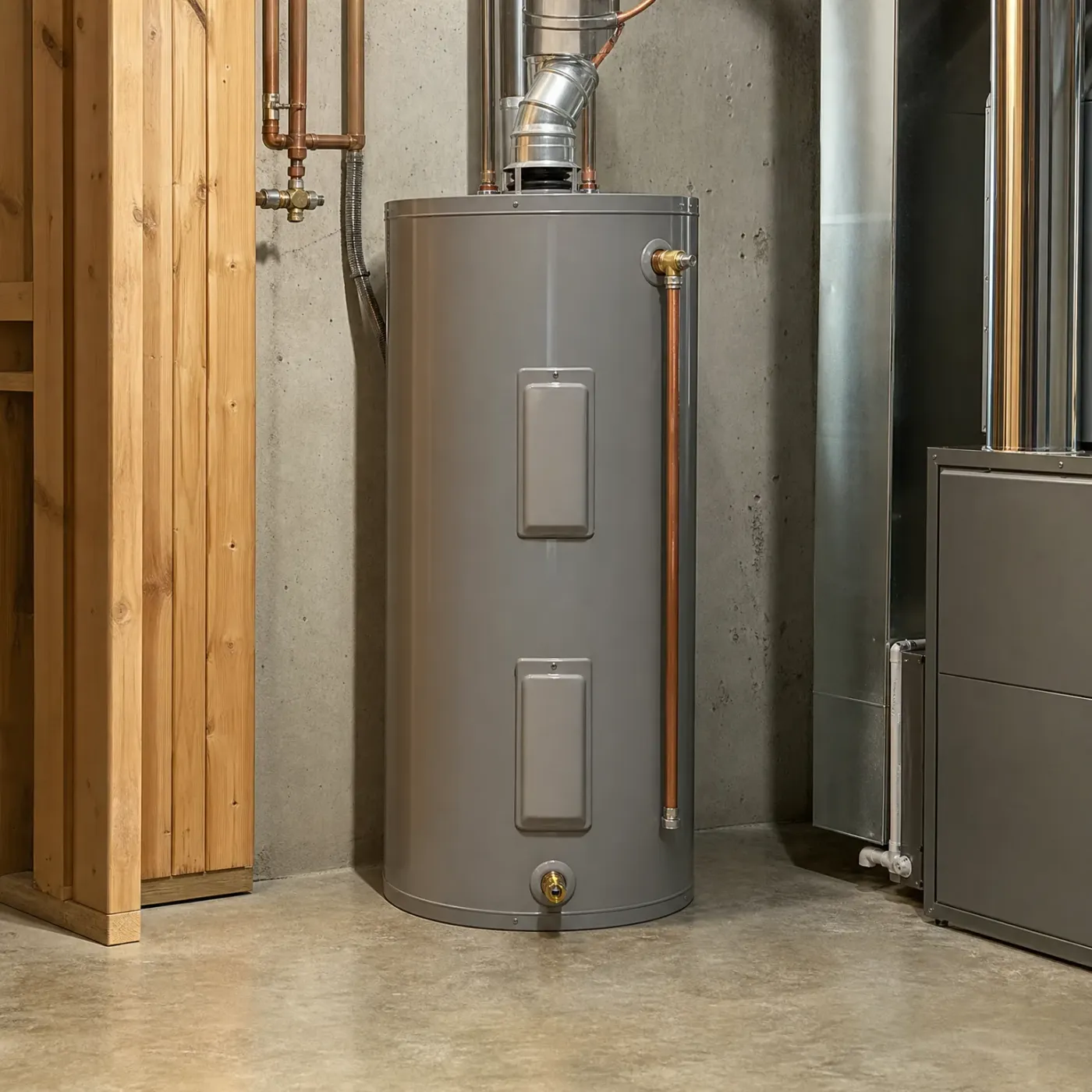
Before you get your water heater repairAfter you get your water heater repair
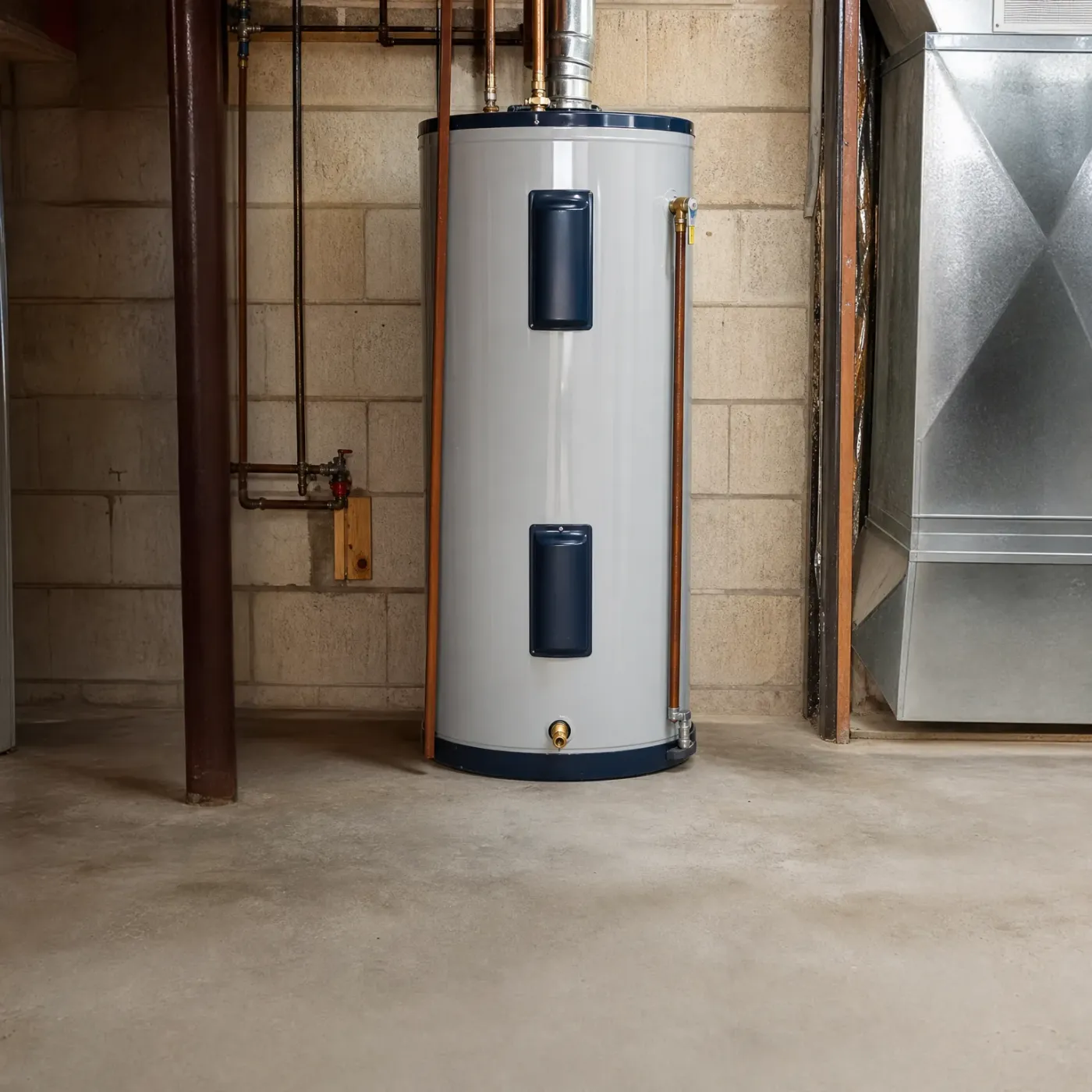
Tank holding steady
This is a water heater keeping up with the house: tank intact, lines and fittings clean, no rust creeping up the jacket. A unit in this shape heats a full tank and holds it, even on a night with back-to-back showers and the dishwasher running.
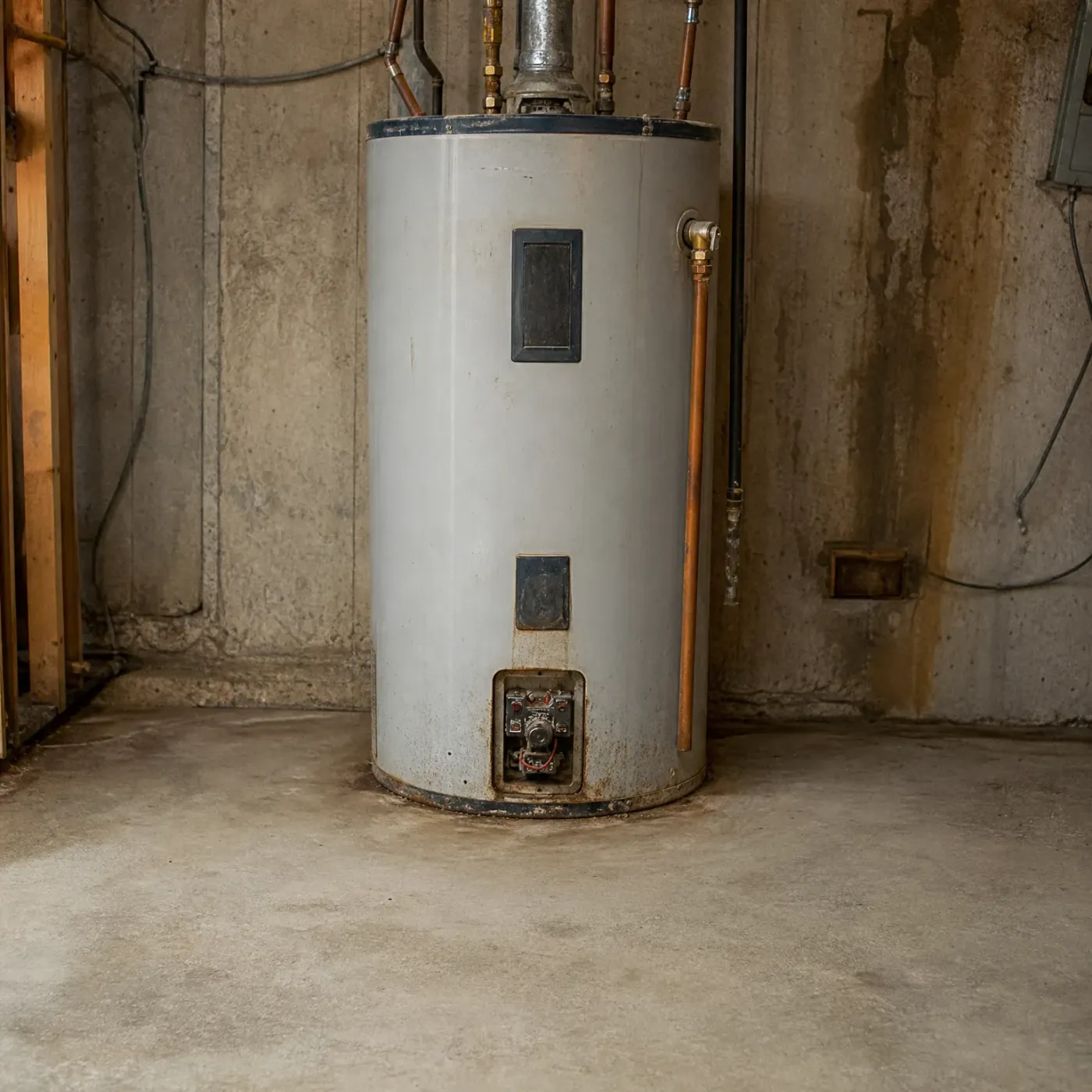
Tank losing ground
Rust on the jacket and around the access panels is a sign the tank has been fighting corrosion for a while, and a gas valve or thermocouple working inside a tank like this is more likely to misfire. This is the point where lukewarm water stops being occasional and starts being every day.
Lukewarm water in a gas heater almost always traces back to the pilot, the thermocouple, the igniter, or the gas valve, and a tank that's just warm instead of hot is telling you one of those is on its way out. That's a gas-side repair, not a guess, and it's worth having someone look at who works on these tanks all season and knows which part usually gives out first in a heater your age. A licensed contractor local to Kansas can check the flame, the sensor, and the valve, find which one's failing, and fix it without sending the job through a string of companies calling you about it. You'll have one contractor looking at your tank, not four competing for the work. Once that part's replaced, the tank goes back to holding a full load of hot water through back-to-back showers and a dishwasher running at the same time, which is what it was doing before any of this started.
Skip the search
Only one pro gets your request, so you hear from one company.