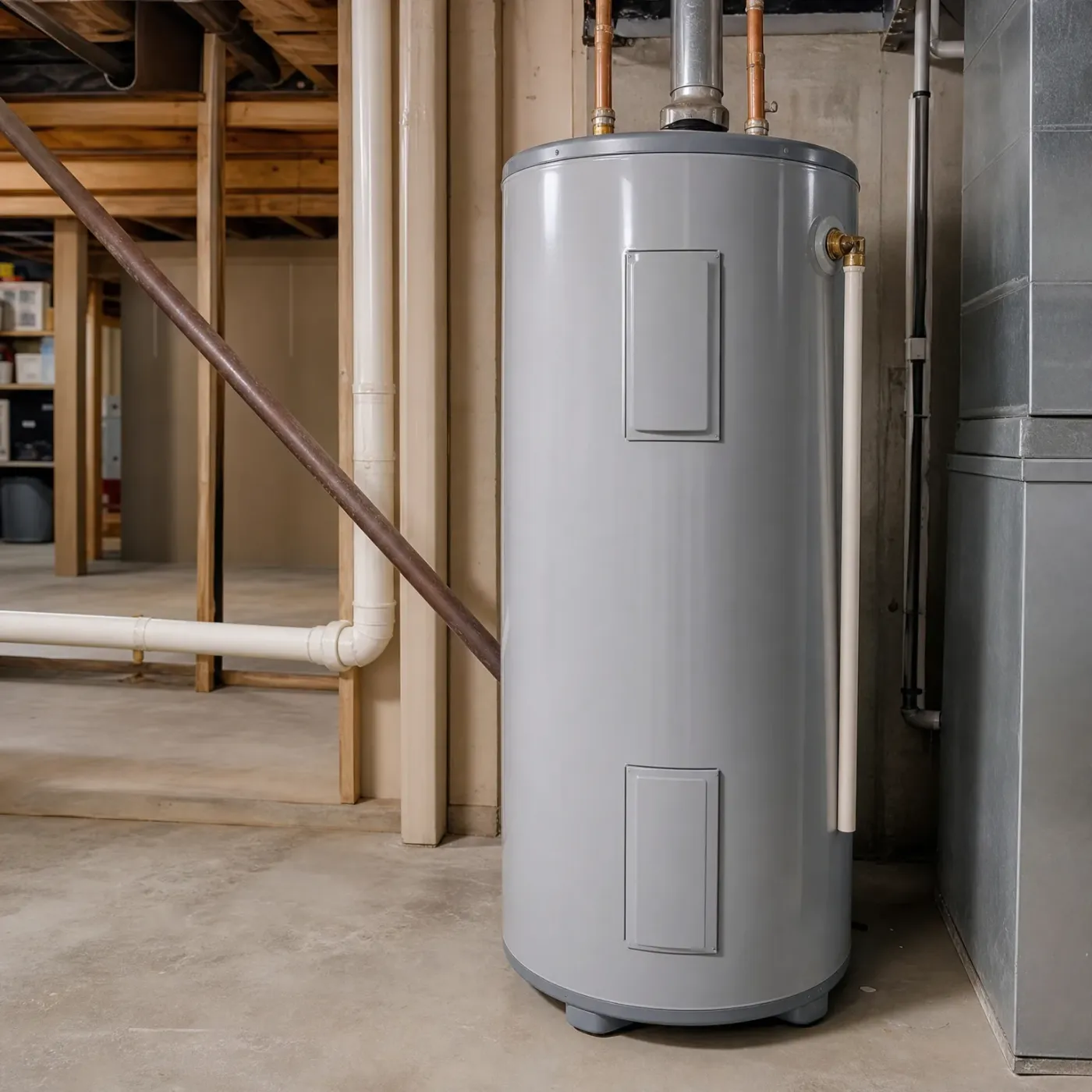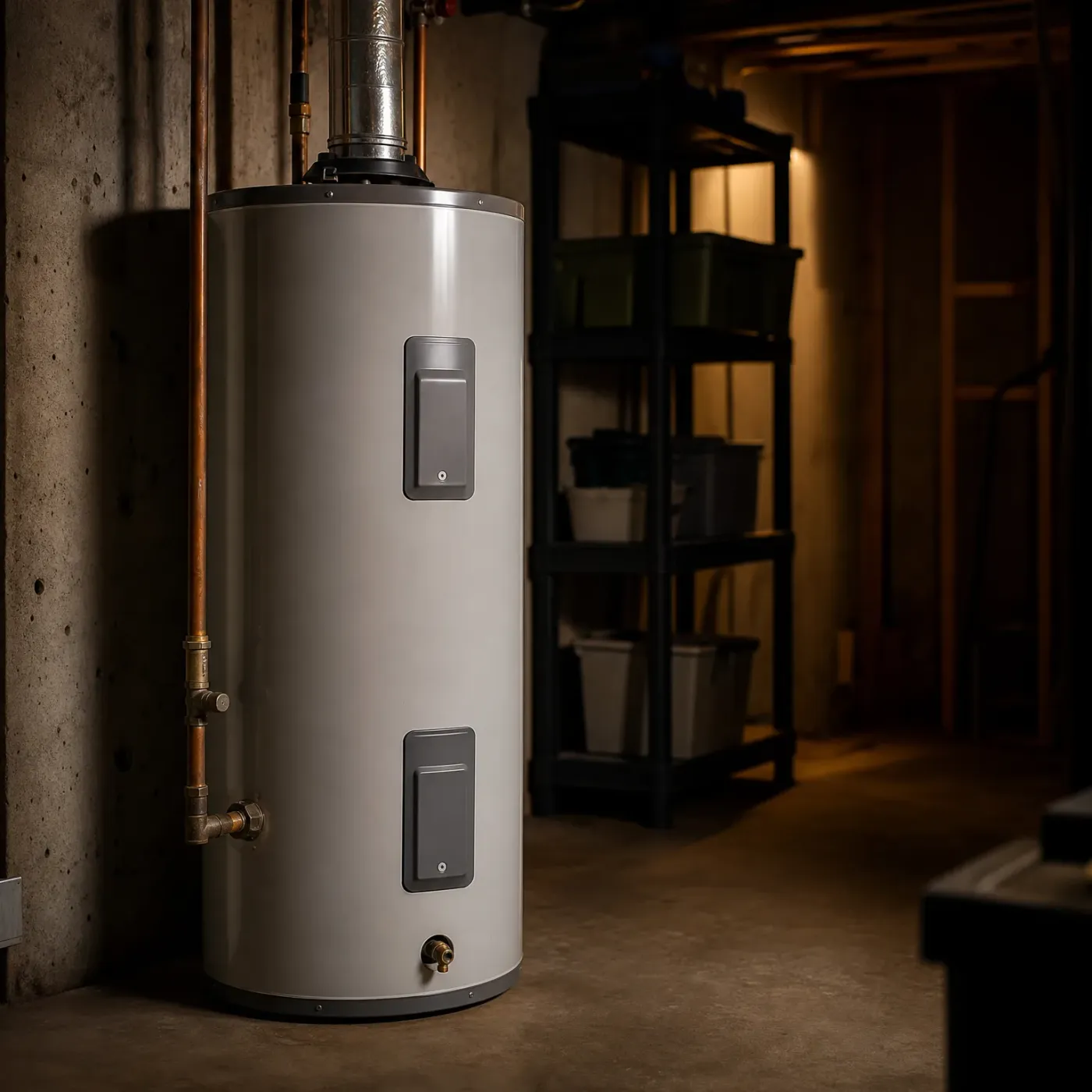
A tall cylindrical water heater with a metal flue pipe and copper plumbing stands against a concrete wall in a dim basement, with a black shelving unit holding plastic storage bins nearby.

Get your water heater to the right pro

Why your water heater makes popping noises in Kansas

That popping or rumbling comes from sediment sitting at the bottom of the tank, trapped under the burner. This page covers why it builds up faster in some Kansas homes, what it means for a gas water heater over time, and when the noise points to a repair worth calling in a local contractor who handles this equipment regularly to look at.

Get my match

That popping or rumbling sound is water boiling under a layer of sediment that's settled at the bottom of your tank. Kansas water runs hard, and the minerals in it drop out as scale over time, building a crust between the burner and the water above it. Once that layer forms, the burner has to heat through it, and the water trapped underneath flashes to steam that pushes up through the sediment. That's the popping. It gets worse the longer it sits, because the crust insulates the tank bottom, makes the burner work harder, and can scorch the steel underneath it. A water heater that's been popping for a while is often running hotter at the tank bottom than it should, and that shortens how long the tank itself lasts. The noise alone won't tell you if a flush will clear it or if the sediment has already done damage worth having a repair technician look at.

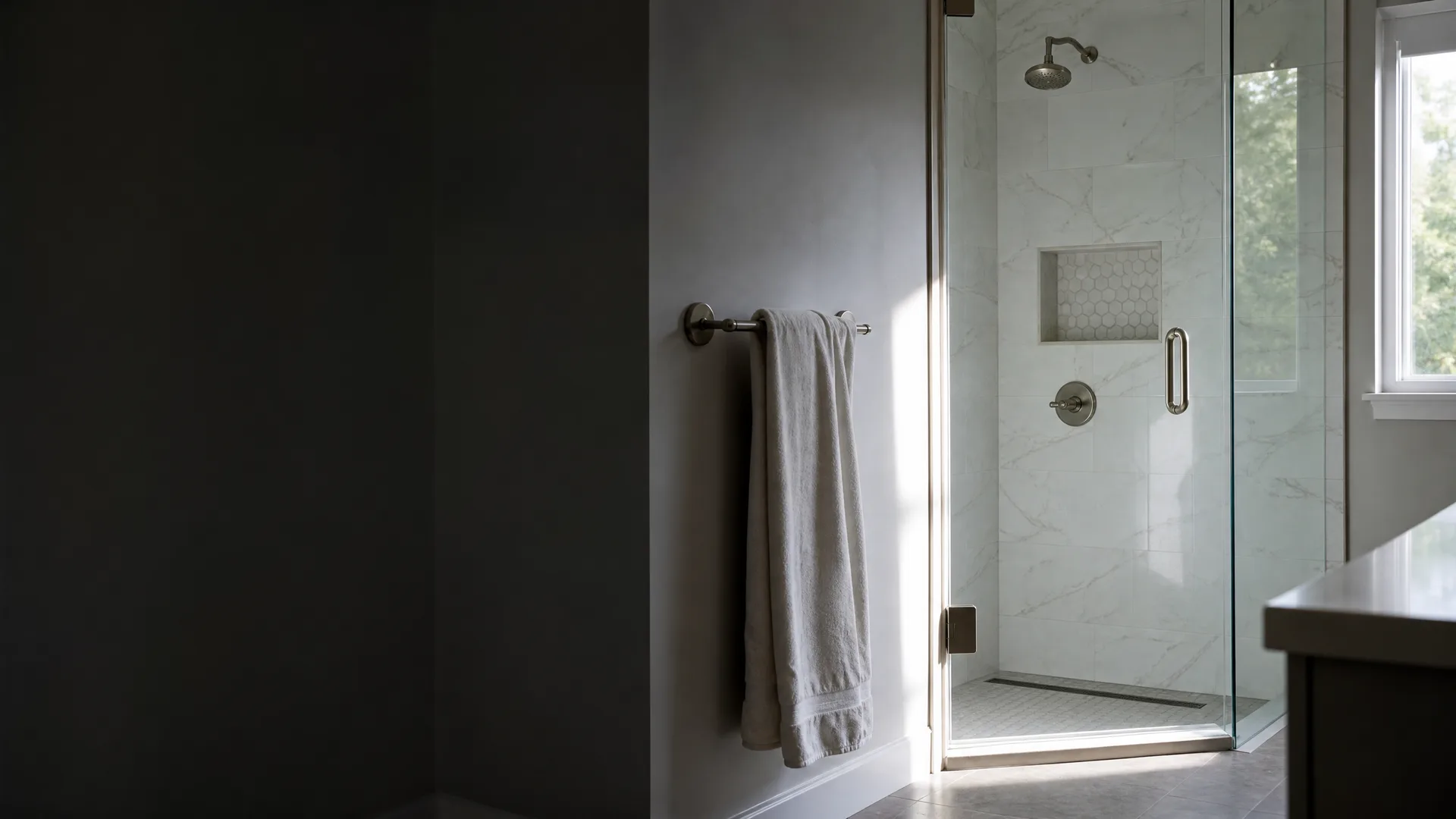
A bathroom with a glass-door shower lined in marble-look tile with a recessed niche and showerhead, a white towel hanging on a wall-mounted bar, and a window with green foliage outside.

You turn the shower on and step back to let it warm up, towel already on the rail. Most mornings the water's hot before you've got your toothbrush rinsed off. Today it's still cool after thirty seconds, and underneath the tap running you can hear it, a popping sound coming up through the floor from the water heater below. No steam yet on the mirror. You wait another few seconds, hand under the stream, and it's just starting to turn. The popping keeps going, slow and uneven, the whole time you're standing there waiting on it.

What are you noticing with your own water heater

The popping is probably loudest right after the burner kicks on, then it quiets down as the water heats through. You might notice the tank takes longer to recover between showers, or the water doesn't get quite as hot as it used to. Some homeowners see rusty or gritty water out of the hot tap, especially if you run it after the tank's sat for a few hours. The burner may also be cycling on and off more than it used to, working harder to heat water through that layer of scale. Left alone, the sediment keeps building, the burner keeps overworking to push heat through it, and the bottom of the tank is the part most likely to fail first.

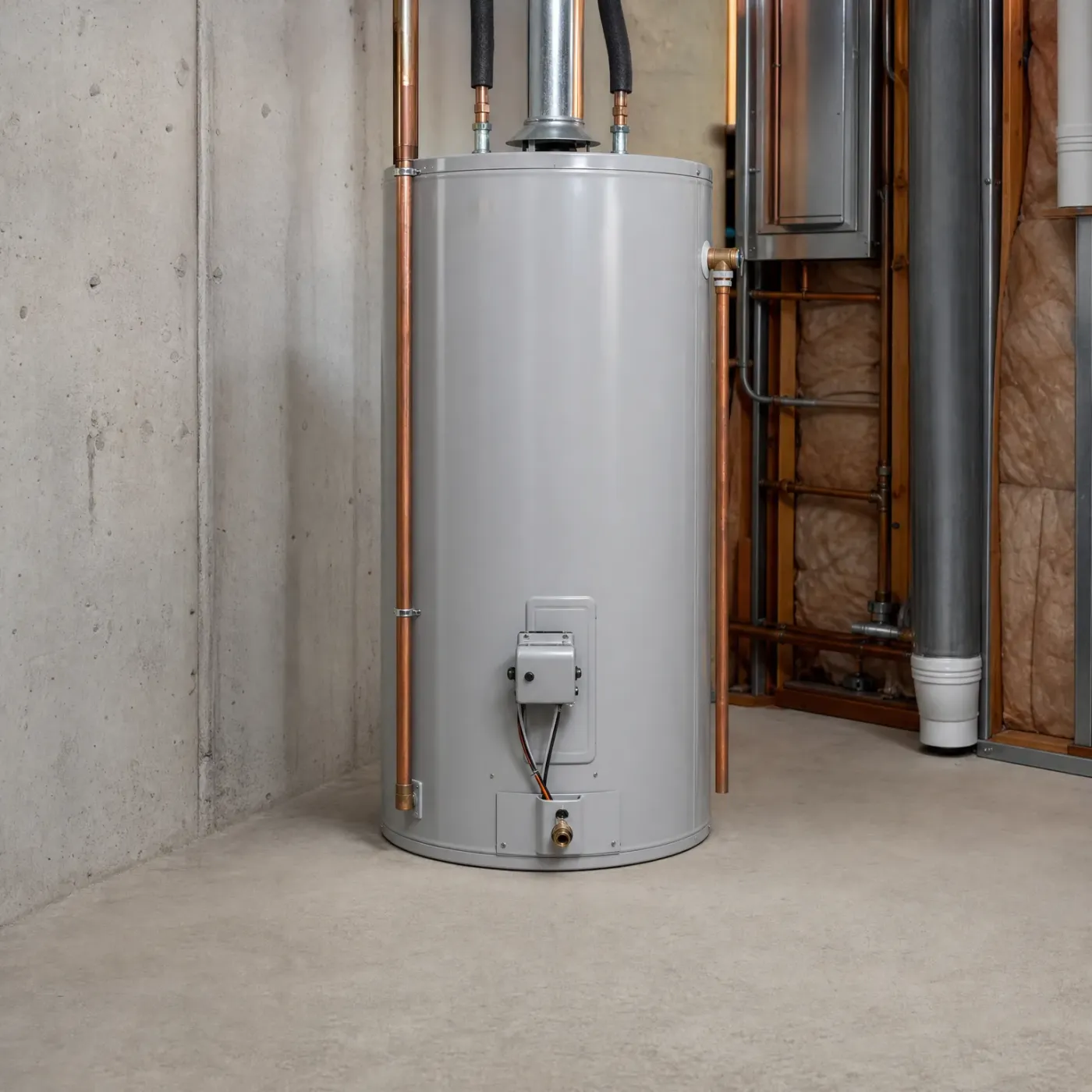
A gray cylindrical water heater stands in a basement corner against a concrete wall, with copper pipes, insulated flex lines, a metal flue, and insulated wall framing with ductwork to the right.

Popping, but still heating fine

A gas water heater can pop for months while it still does its job. The burner fires, the sediment layer cracks and rumbles underneath it, and the tank still delivers hot water on schedule. The noise is sediment, not a sign the tank is about to quit.
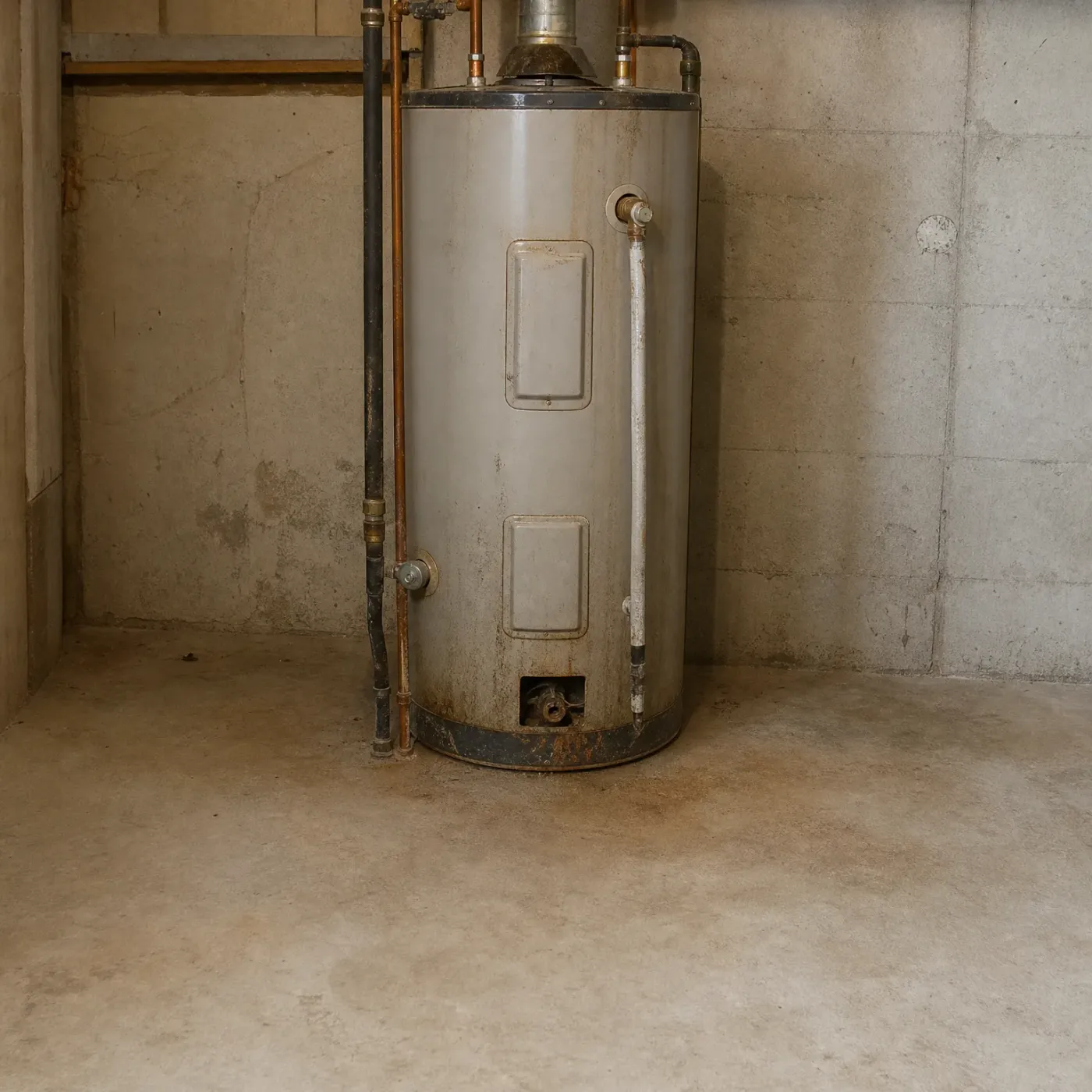

A rusting gas water heater with copper and steel pipes stands against a concrete block wall on a bare concrete floor.

Rust at the base changes the question

Once you see rust along the seams or crusted at the bottom, the popping isn't just about sediment anymore. Corrosion at the tank itself means the steel is wearing through, and a leak at the base is a different repair than scale buildup.

Why does the popping happen right when the burner fires up?

You notice the timing isn't random. The popping starts the second the burner lights, not before, and it fades as the burner cycle goes on. You're not imagining a pattern. Something about the moment the flame comes on is what sets it off, and that's worth understanding if you're the type who likes to know why before deciding whether it's worth a call.

The burner heats the sediment layer faster than the water above it

The burner sits under the tank, so the sediment resting on the bottom is the first thing it heats, before the water above it ever warms. Water trapped in the gaps of that sediment layer gets hot fast and turns to steam. The steam pushes up through the crust and collapses when it hits cooler water above, and that collapse is the pop you hear. Once the burner's been firing a while, the water nearby heats through and the temperature difference shrinks, so the popping settles down. That's why it's loudest right at ignition and quietest toward the end of the cycle. The pattern itself tells you it's sediment and not a burner problem, since a bad burner wouldn't follow the heating cycle this closely.

A bearded man in a blue and brown plaid flannel shirt stands indoors looking out a window at snow-covered trees, with a ceramic mug on the windowsill.
A man in a blue T-shirt sits on a light gray sofa, laughing while looking at an open laptop in the foreground, with a framed picture, lamp and potted plant behind him.
A gray cylindrical water heater with copper and white pipes stands on a concrete basement floor beside a metal duct and wooden framing.

The right pro for this job

Your request stays with one local pro.

Tell a local repair pro what your water heater is doing.

Find a licensed pro

You only hire the pro if you want to.

A gray cylindrical water heater standing in a basement corner against a concrete wall, with copper and black pipes, a metal flue, and ductwork nearby, next to wood framing on the right.
The water heater is heating evenly, with no sound from the tank as the burner cycles under it.
A gray cylindrical gas water heater with copper and black pipes stands in the corner of a basement with concrete block walls and a bare concrete floor.
This is the same tank once sediment has crusted over the burner and started trapping water underneath it.
  1. Hard water minerals settle out and drop to the tank bottom.

  2. Sediment packs into a crust over the burner.

  3. Water seeps underneath that crust and gets trapped there.

  4. The burner fires and heats the water pocket under the crust.

Live With It or Call Someone

Leave it alone

  • The tank is still heating water on schedule and the burner cycles the way it always has.
  • Flushing the tank yourself can loosen a crust that's been sitting there for years and send it into the drain valve, clogging it.
  • A tank that's popped for months without a drop in hot water output usually isn't close to failing yet.
  • If you're not seeing rust-colored water or a drop in recovery time, the sediment hasn't caused damage you need to act on today.
  • Scheduling a flush now, before it gets worse, costs less time and trouble than waiting for the burner to fail outright.

Get it looked at

  • Recovery time has stretched out, so showers run cooler sooner than they used to.
  • The popping has gotten louder or more frequent over the past few weeks instead of staying steady.
  • A gas water heater that's overheating a trapped pocket of water under the sediment is putting stress on the tank wall above the burner.
  • You've noticed the pilot or burner cycling more often to keep up with the same amount of hot water.
  • A local contractor who works on gas water heaters through Kansas's hard water sees this sediment pattern often and can tell you from a look at the tank whether a flush will clear it or whether the burner assembly's already taken damage.
  • Catching it with a repair now can mean the difference between a flush and a full tank replacement later.
A woman in a gray turtleneck sweater stands by a window looking outside at snowy ground, with a dimly lit living room containing a sofa, shelves, lamp and a lit candle behind her.
A woman in a cream cable-knit turtleneck sweater stands in a warmly lit living room with a fireplace and shelves behind her, looking out a window toward snow-covered trees and a railed deck.
A woman in a cream knit turtleneck sweater stands by a window looking out at snow, with a lit fireplace, sofa and lamp in the room behind her.
A woman in a gray knit sweater sits by a window looking out at falling snow, with a dimly lit living room containing a sectional sofa, pillows, a lamp and houseplants behind her.

63.1% of homes statewide heat with gas

Most homes around you run on gas, and gas water heaters are the ones that pop. The burner sits right under the tank, so when sediment packs onto the bottom, the flame is heating straight through that crust instead of the water itself.

ACS 2020-2024 5-year B25040

Where Your Water Heater Stands

  • The popping comes from sediment trapped under the burner, not from a failing part.
  • Kansas water leaves scale behind faster than soft water does, so the crust builds up over years of normal use.
  • A tank that still heats on schedule can keep popping for a long time before it needs attention.
  • Slower recovery or lukewarm water alongside the noise usually means the crust has grown thick enough to matter.
  • A plumber who works on gas water heaters across Kansas every week knows how much sediment is normal and how much calls for a flush or a repair.
  • Matching with one licensed local contractor means you deal with a single call back, not several companies competing for the job.

The noise has one source. Sediment settled on the tank bottom, packed into a crust under the burner, and water trapped beneath it is boiling and popping its way out. Kansas water pushes that process along faster than it would somewhere with softer water, so the crust in your tank has likely had years of hard water behind it. None of that means trouble today. A tank that still delivers hot water on the schedule you're used to can pop for a long stretch without needing anything done. What changes the picture is what else you notice alongside the sound. Recovery that's slower than it used to be, or water that doesn't quite get hot before it runs out, means the crust has grown thick enough to get between the burner and the water it's supposed to heat. That's the point where it's worth having someone look at the tank rather than wait it out. A plumber who works on gas water heaters across Kansas every week has seen this exact buildup often enough to know the difference between a tank that's fine to leave alone and one that's due for a flush. When you request service through this page, you're matched with one licensed local contractor, not a handful of companies calling you back at once. That contractor is the one who'll look at your tank, your water heater, and tell you plainly which side of that line you're on.

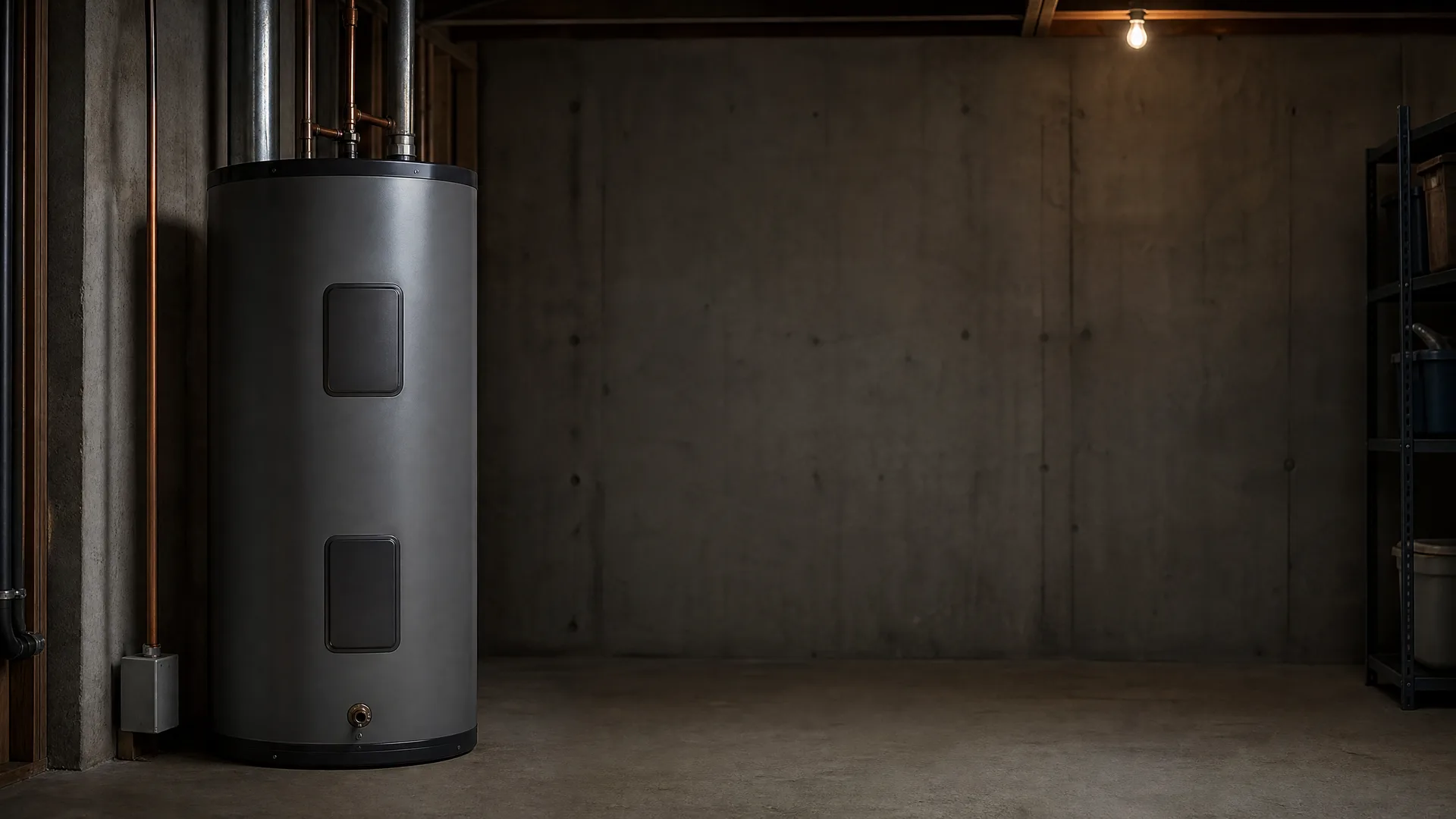
A gray cylindrical water heater with copper pipes stands against a concrete wall in a dim basement, with a bare hanging light bulb and a metal shelving unit at right.

Matched to your water heater job

Your request goes to one pro, not a list of companies.

Step 1 of 3: Equipment