Tell us about the job
Takes about a minute. No obligation.
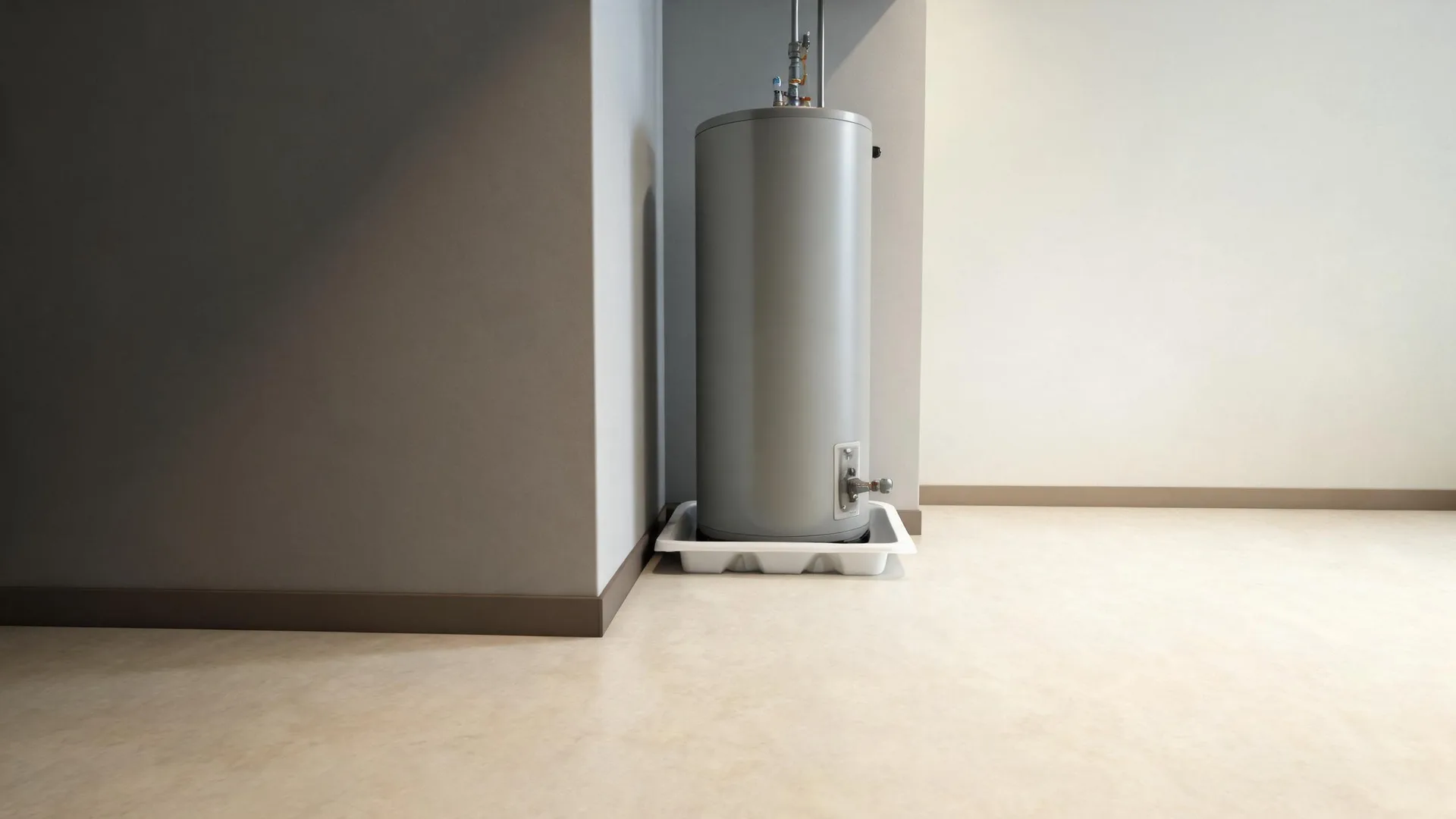
Contractors quoting a water heater replacement here start with the fuel the house already runs on. Utility gas heats more occupied homes in Dickinson County, Kansas than any other fuel, at 63.7% (2020-2024 ACS 5-year). A gas water heater draws combustion air and exhausts through a flue sized for gas, and swapping to a different fuel type means that venting gets reworked too. Gas supply line sizing, draft requirements, and local code clearances all follow from that single decision. A contractor who confirms the fuel type first prices the job accurately; one who skips it often has to reprice it mid-install.
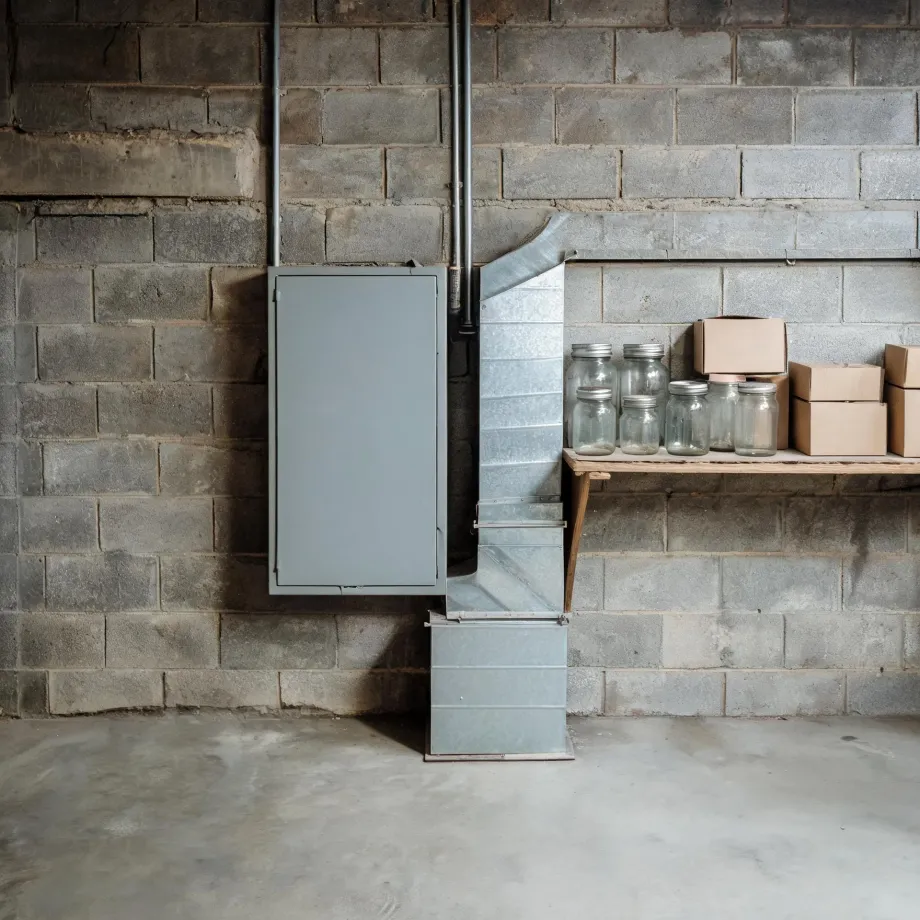
Ductwork and electrical service in a house get built around whatever was running at the time. Half the homes in Dickinson County, Kansas were built in 1956 or earlier (2020-2024 ACS 5-year). That gap between what the infrastructure was sized for and what a new water heater requires is where a contractor's assessment actually starts. Older flues, supply runs laid out for a different system, panel capacity that was not calculated for today's equipment: a contractor opening up access points in stock like this finds those variables first, and they determine what a new installation takes.
What a Water Heater Installation Covers
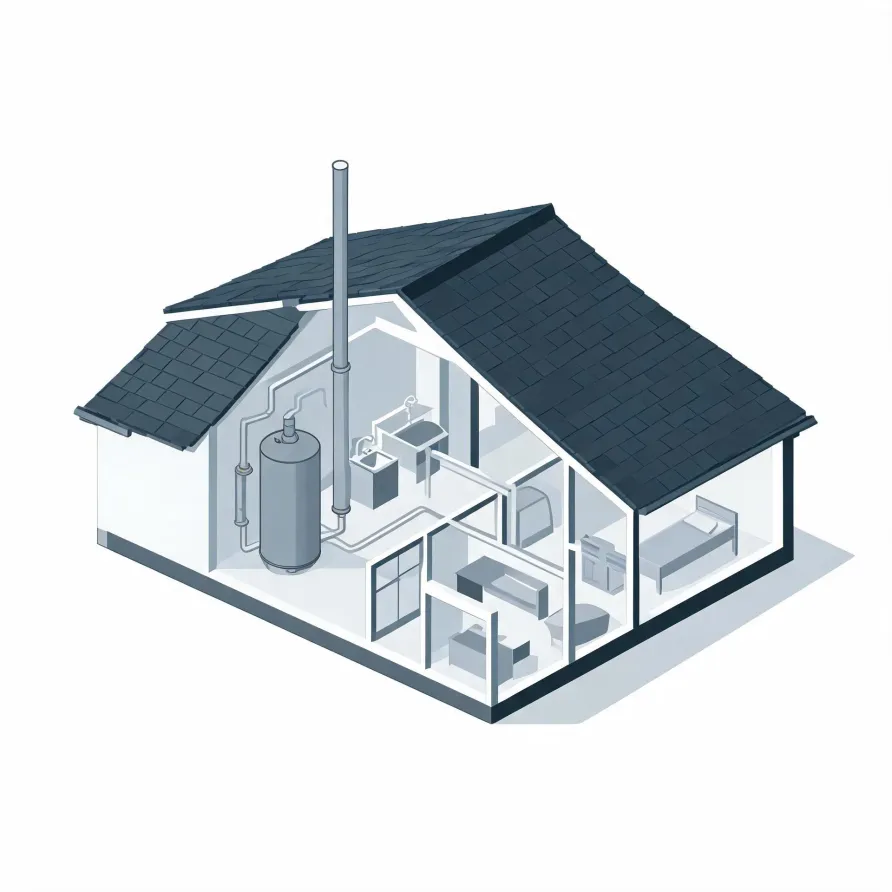
The tank or storage vessel sits in a utility room, basement, or garage and holds the water that gets heated before it travels to your faucets and fixtures. Attached to it are the inlet and outlet connections, a pressure relief valve, and the heating element or burner assembly that does the actual work of raising the water temperature.
A flue or exhaust vent runs from the unit to the outside of the house, carrying combustion gases away on gas-fired models. The cold water supply line feeds into the bottom of the unit, and the hot water line exits from the top, with shutoff valves on both sides so a contractor can isolate the unit during the work.
The drawing shows a typical layout, and a licensed contractor determines exactly what applies to your home and its existing setup.
Find a contractor in Dickinson CountyDickinson County, Kansas, by the numbers
200 severe weather events were recorded in Dickinson County, Kansas between 2015 and 2024.
NOAA National Centers for Environmental Information, Storm Events Database, bulk CSV export, events 2015-01-01 through 2024-12-31.Half the homes in Dickinson County, Kansas were built in 1956 or earlier (2020-2024 ACS 5-year).
U.S. Census Bureau, 2020-2024 American Community Survey 5-Year EstimatesDickinson County, Kansas holds 8,789 housing units (2020-2024 ACS 5-year).
U.S. Census Bureau, 2020-2024 American Community Survey 5-Year EstimatesOwners occupy 78.6% of the occupied homes in Dickinson County, Kansas (2020-2024 ACS 5-year).
U.S. Census Bureau, 2020-2024 American Community Survey 5-Year EstimatesSevere Weather Events in Dickinson County
Kansas weather puts real strain on water heating equipment, and Dickinson County gets its share of conditions that push systems hard. How often that happens locally shapes what a water heater here needs to handle over its life.
200 severe weather events, 2015–2024. Source: NOAA National Centers for Environmental Information, Storm Events Database.