Tell us about the job
Takes about a minute. No obligation.
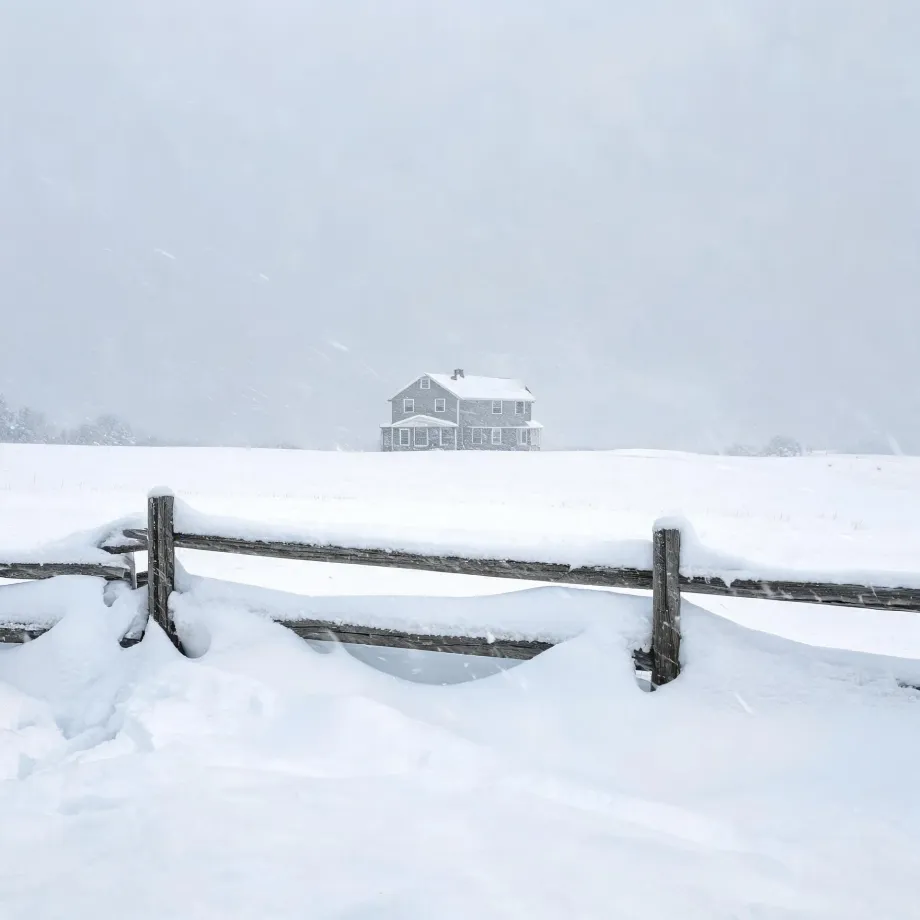
Gas plumbing in the walls and venting through the roof are conditions a contractor has to confirm before a water heater quote means anything. Utility gas heats more occupied homes in Osage County, Kansas than any other fuel, at 48.6% (2020-2024 ACS 5-year). That share of the housing stock runs on utility gas, which means most replacements here are gas-to-gas swaps, and the combustion air and flue path already in place either works for the new unit or it does not. A contractor checks draft, clearances, and vent diameter for the replacement model before any price is final.
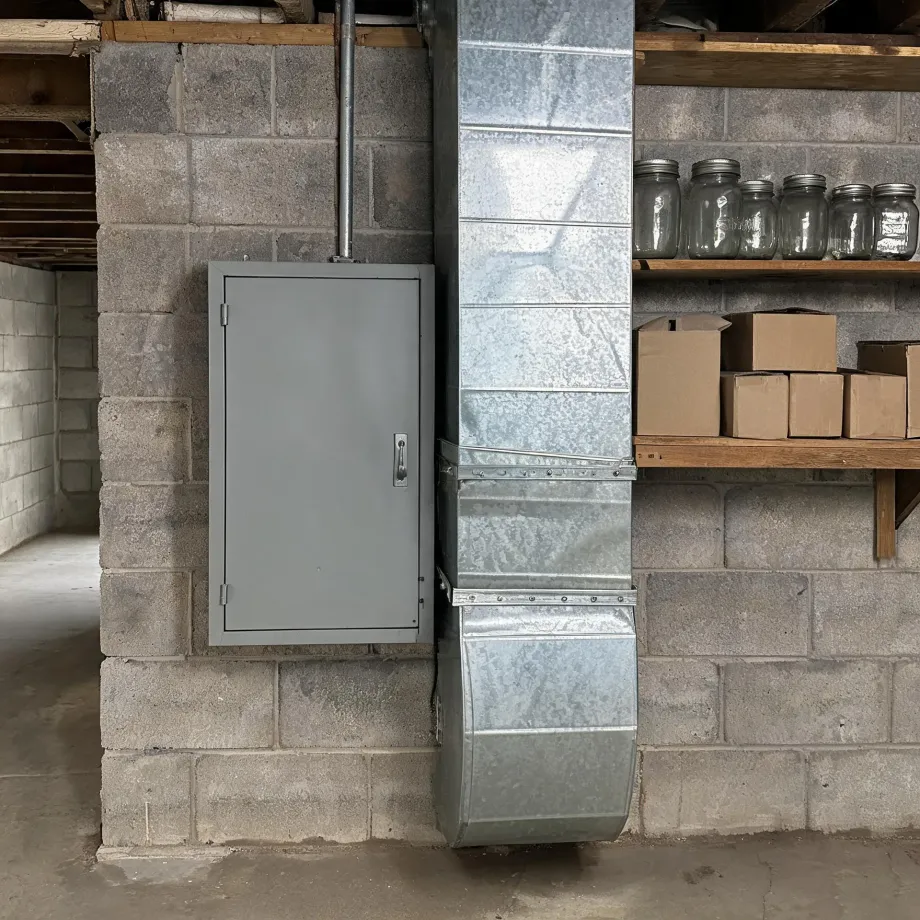
Ductwork sized and routed for systems that were replaced years ago shapes what a licensed contractor actually finds when they open the job. Half the homes in Osage County, Kansas were built in 1974 or earlier (2020-2024 ACS 5-year). That history means the existing runs, joints, and service connections belong to a different era of equipment, and a contractor quoting a water heater installation prices those conditions, not just the unit. What is already in the walls decides whether the installation is straightforward or not.
What a Water Heater Installation Covers
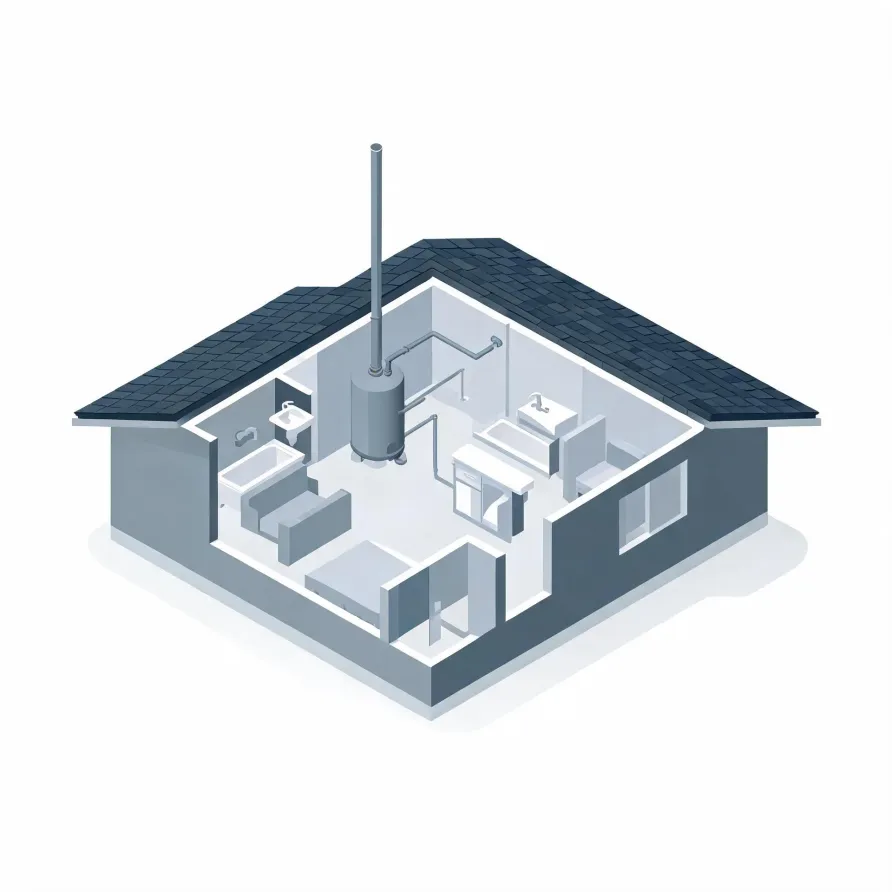
The water heater tank sits in a utility space, basement, or garage and is the piece a homeowner sees most often. It holds and heats a supply of water for the whole house. A pressure relief valve mounts to the tank's side as a safety device, and the anode rod hangs inside it to slow corrosion of the tank walls.
Cold water enters through a dedicated supply line at the top of the tank, and hot water leaves through a separate outlet that feeds the home's fixtures. A drain valve at the base of the tank allows sediment to be flushed out. The flue or exhaust vent runs from the top of the unit to an exterior wall or roof, carrying combustion gases out of the house.
The drawing shows a representative layout, and a licensed contractor determines exactly what applies to this house and its existing setup.
Find a contractor in Osage CountyOsage County, Kansas, by the numbers
157 severe weather events were recorded in Osage County, Kansas between 2015 and 2024.
NOAA National Centers for Environmental Information, Storm Events Database, bulk CSV export, events 2015-01-01 through 2024-12-31.Half the homes in Osage County, Kansas were built in 1974 or earlier (2020-2024 ACS 5-year).
U.S. Census Bureau, 2020-2024 American Community Survey 5-Year EstimatesOsage County, Kansas holds 7,337 housing units (2020-2024 ACS 5-year).
U.S. Census Bureau, 2020-2024 American Community Survey 5-Year EstimatesOwners occupy 82.4% of the occupied homes in Osage County, Kansas (2020-2024 ACS 5-year).
U.S. Census Bureau, 2020-2024 American Community Survey 5-Year EstimatesSevere Weather Events in Osage County
Water heaters work harder when outdoor conditions swing hard, and Kansas weather puts real pressure on residential equipment over time. How often that pressure arrives in Osage County shapes what a unit needs to handle and how a contractor sizes and installs it.
157 severe weather events, 2015–2024. Source: NOAA National Centers for Environmental Information, Storm Events Database.