Tell us about the job
Takes about a minute. No obligation.
A contractor quoting a water heater replacement here starts with the fuel, because it decides almost everything that follows: the venting path, the combustion air supply, and what code allows on the wall or in the utility room. Utility gas heats more occupied homes in Wilson County, Kansas than any other fuel, at 57.0% (2020-2024 ACS 5-year). Gas-fired water heaters draw combustion air and exhaust flue gases in ways that electric units never have to, and an installer who skips that assessment can put in a unit the house cannot safely support. The vent configuration that worked on the old heater may not suit a new one with a different input rating.
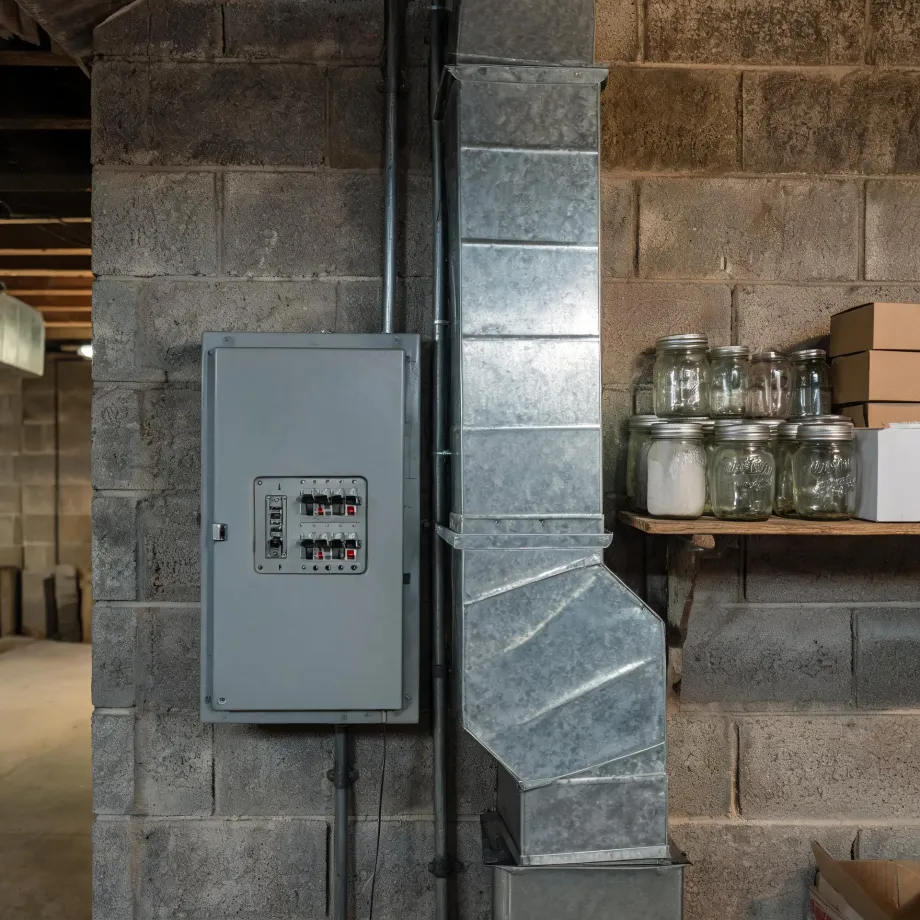
Ductwork and electrical service in Wilson County houses were put in for equipment that is no longer there. Half the homes in Wilson County, Kansas were built in 1965 or earlier (2020-2024 ACS 5-year). That gap between what the house was built to carry and what a contractor is now asked to run through it is where a water heater installation gets complicated or straightforward. A contractor assessing an older property here opens walls and traces lines before pricing anything, because what the house already contains decides whether the job is a swap or a retrofit.
What a Water Heater Installation Covers
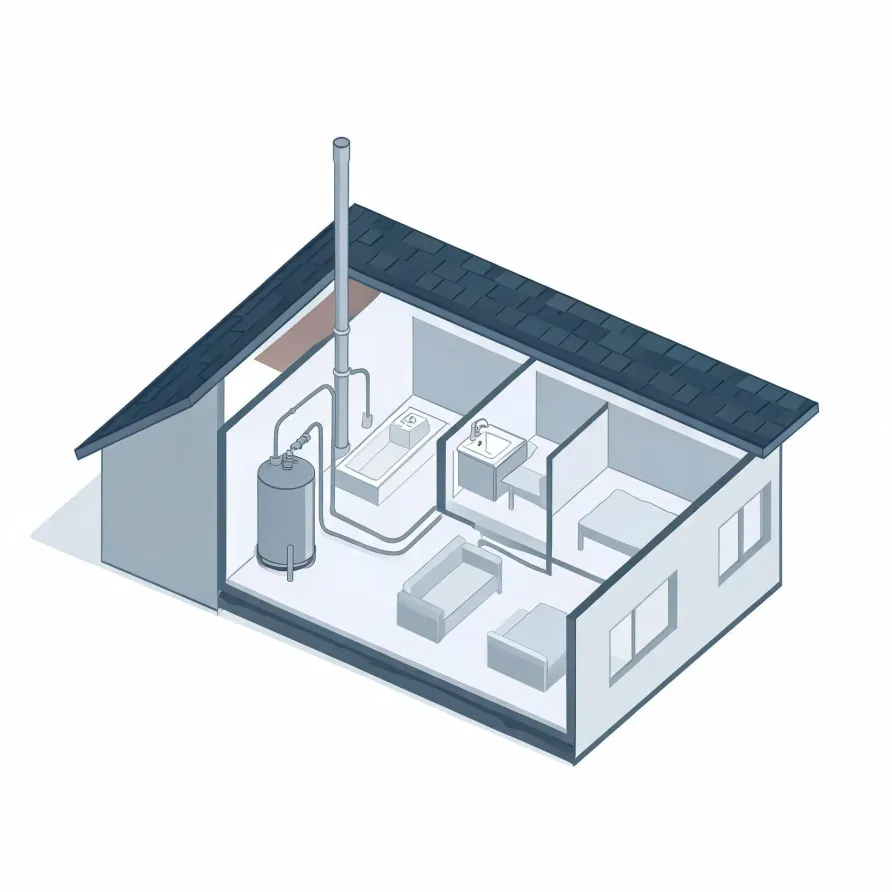
The tank or tankless unit is the heart of the system, sitting in a utility room, basement, or garage, and it holds or heats the water your household draws on. Attached directly to it are the supply and discharge connections, which bring cold water in and send hot water out to every fixture in the house.
A pressure relief valve mounts to the side of the unit and protects against unsafe pressure buildup. The flue or venting assembly runs from the top of the unit to an exterior wall or roof, carrying combustion gases out of the living space, and the gas line or electrical supply connects at the unit itself to deliver the energy that drives the whole system.
The drawing shows a typical layout, and a licensed contractor determines exactly what applies to your home.
Find a contractor in Wilson CountyWilson County, Kansas, by the numbers
76 severe weather events were recorded in Wilson County, Kansas between 2015 and 2024.
NOAA National Centers for Environmental Information, Storm Events Database, bulk CSV export, events 2015-01-01 through 2024-12-31.Half the homes in Wilson County, Kansas were built in 1965 or earlier (2020-2024 ACS 5-year).
U.S. Census Bureau, 2020-2024 American Community Survey 5-Year EstimatesWilson County, Kansas holds 4,493 housing units (2020-2024 ACS 5-year).
U.S. Census Bureau, 2020-2024 American Community Survey 5-Year EstimatesOwners occupy 77.7% of the occupied homes in Wilson County, Kansas (2020-2024 ACS 5-year).
U.S. Census Bureau, 2020-2024 American Community Survey 5-Year EstimatesSevere Weather Events in Wilson County
Weather puts real stress on water heating equipment, and that stress varies by where you live. Wilson County's weather history shapes what a water heater installed here has to handle over its working life.
76 severe weather events, 2015–2024. Source: NOAA National Centers for Environmental Information, Storm Events Database.