Tell us about the job
Takes about a minute. No obligation.
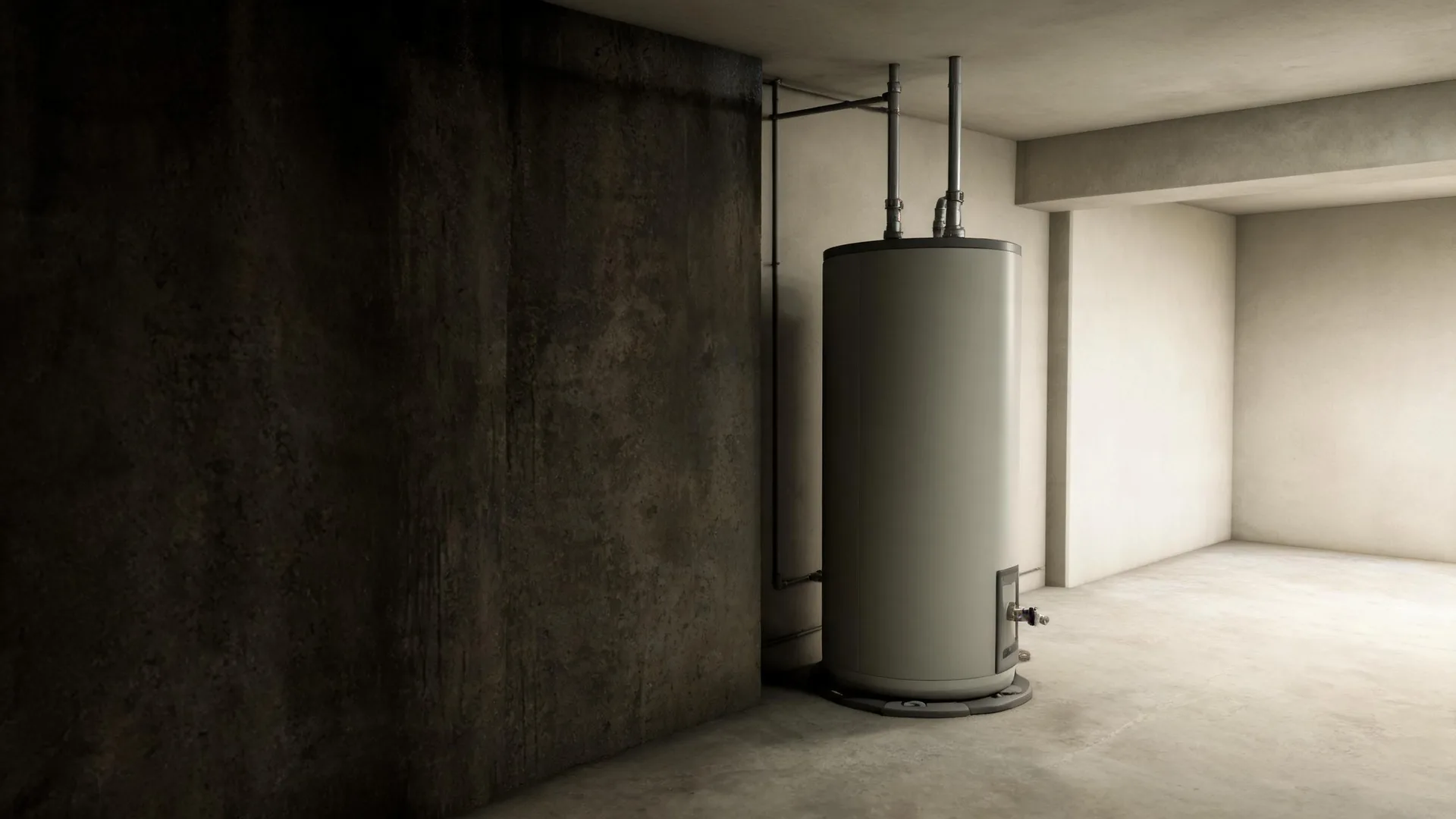
A gas water heater in Grant County runs against a fuel supply that nearly every neighbor shares. Utility gas heats more occupied homes in Grant County, Kansas than any other fuel, at 67.7% (2020-2024 ACS 5-year). That concentration means a contractor quoting a replacement works from a known starting point on fuel type, but the venting path, combustion air supply, and BTU draw still have to be confirmed for the specific house. A unit that fits the fuel but mismatches the vent configuration corrodes faster at the flue connection and can backdraft. The installer has to check what is already in the wall before the new heater goes in.
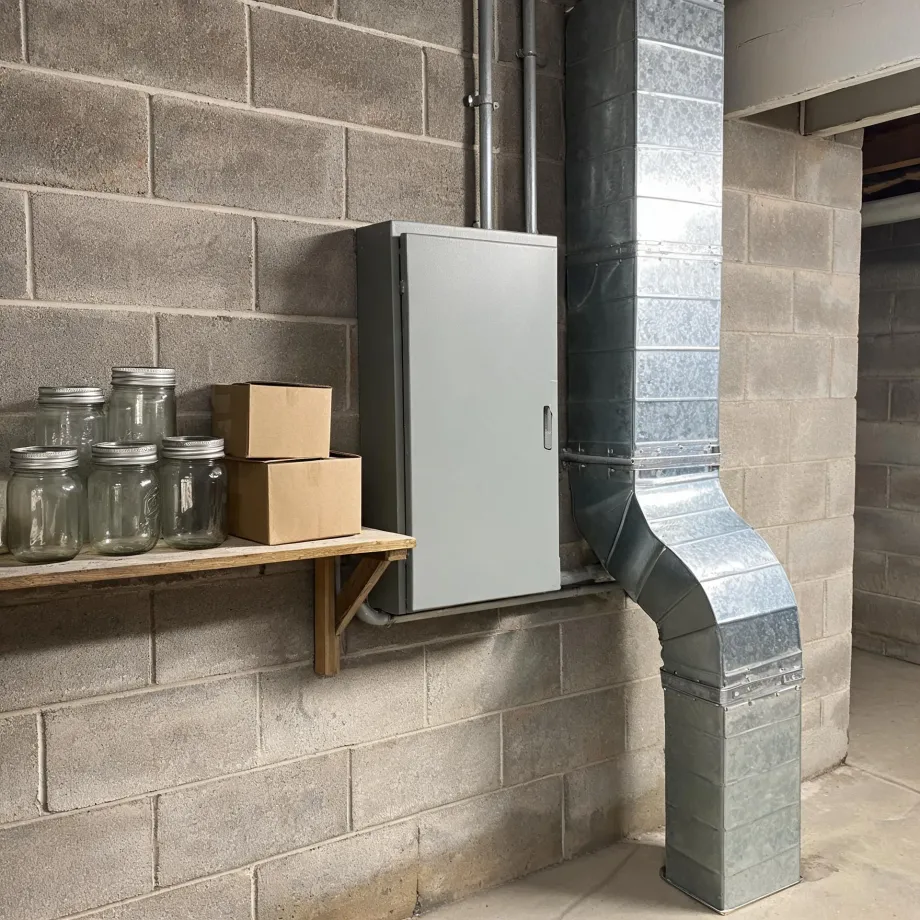
Ductwork and electrical service put in for one generation of equipment often carry the decisions on the next job. Half the homes in Grant County, Kansas were built in 1974 or earlier (2020-2024 ACS 5-year). A contractor installing a water heater in housing this old is working inside systems that have been patched and adapted across multiple replacements, and the existing configuration, not the new unit, is what determines the scope. Whether the current venting and electrical service match what the new equipment requires is the question that gets answered on site, not in advance.
The Parts of a Water Heater an Installation Covers
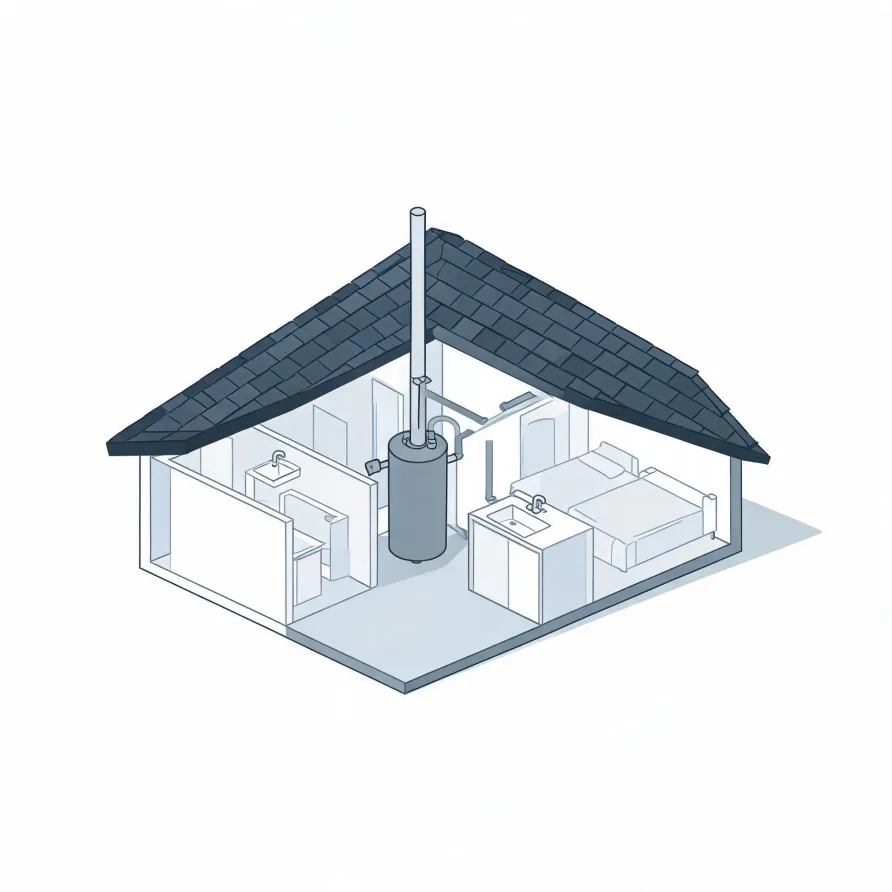
The tank is the centerpiece of the system, sitting in a utility room, basement, or garage, and its job is to hold and heat a ready supply of water for the house. Attached to the tank is the burner assembly or heating element, depending on fuel type, which applies heat directly to the stored water.
The pressure relief valve mounts to the side of the tank and opens automatically if pressure inside climbs too high. A drain valve sits near the base, and the flue or exhaust vent runs from the top of a gas unit up through the wall or roof to carry combustion gases out of the house.
The drawing shows a general layout of these components, and a licensed contractor determines exactly what applies to your home's setup.
Find a contractor in Grant CountyGrant County, Kansas, by the numbers
149 severe weather events were recorded in Grant County, Kansas between 2015 and 2024.
NOAA National Centers for Environmental Information, Storm Events Database, bulk CSV export, events 2015-01-01 through 2024-12-31.Half the homes in Grant County, Kansas were built in 1974 or earlier (2020-2024 ACS 5-year).
U.S. Census Bureau, 2020-2024 American Community Survey 5-Year EstimatesGrant County, Kansas holds 2,933 housing units (2020-2024 ACS 5-year).
U.S. Census Bureau, 2020-2024 American Community Survey 5-Year EstimatesOwners occupy 76.7% of the occupied homes in Grant County, Kansas (2020-2024 ACS 5-year).
U.S. Census Bureau, 2020-2024 American Community Survey 5-Year EstimatesSevere Weather Events in Grant County
Extreme weather puts a direct load on water heating equipment, shortening service life and pushing systems past the conditions they were sized for. How hard that hits depends on what the local climate actually does, which is why the pattern here in Grant County shapes what a water heater installation needs to hold up to.
149 severe weather events, 2015–2024. Source: NOAA National Centers for Environmental Information, Storm Events Database.